Volume discount levels for heat sink orders?

Buyers often ask when heat sink prices start to drop with volume. Many worry they’re overpaying for small orders. This guide explains how B2B volume pricing works for thermal components.
Heat sink volume discounts start around 500–1,000 units, with more significant breaks at 5,000 and 10,000 units. Project size, part complexity, and order frequency all affect discount levels.
Not all heat sinks follow the same pricing rules. Knowing how manufacturers structure their discount tiers helps you plan orders and budget more effectively.
What quantities trigger price breaks in B2B?
Most suppliers won’t share their exact pricing model upfront. But in practice, there are common thresholds in B2B heat sink orders where price reductions begin.
Typical volume discount breaks begin at 500 pieces, with better rates at 1,000, 5,000, and 10,000 units. Custom parts may require higher volumes to reach significant discounts.
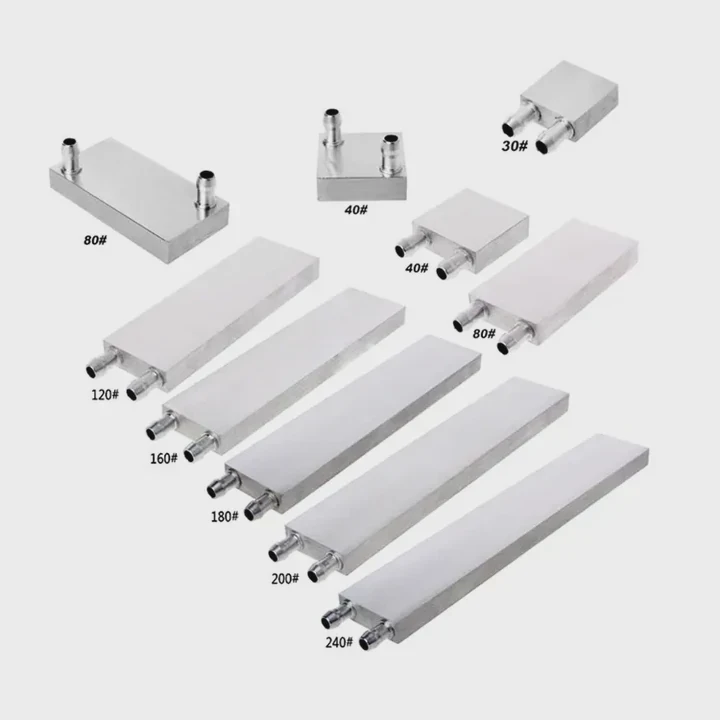
Common breakpoints
| Quantity Level | Expected Discount Impact |
|---|---|
| < 100 pcs | No discount; includes setup and tooling costs |
| 500 pcs | Small batch discount (5–8%) |
| 1,000 pcs | Standard production rate (8–12%) |
| 5,000 pcs | Mid-volume rate (15–20%) |
| 10,000 pcs | High-volume discount (20–30%) |
| >20,000 pcs | Custom contract pricing |
Tooling amortization also plays a role. At low volumes, tooling cost may be included in unit price. As order size grows, that portion gets spread out or waived.
Suppliers generally quote better rates when:
- Heat sinks use standard profiles
- Surface treatments are minimal
- Machining steps are simple
Keep in mind
Price breaks depend on stable forecasting. One-time large orders help, but long-term commitment through annual volume contracts unlocks the best rates.
How steep are typical heat sink volume discounts?
Many buyers wonder whether volume pricing truly saves money—or if it’s just a sales trick. Understanding the math behind supplier cost structure can clarify what’s realistic.
Typical heat sink discounts range from 5% to 30%, depending on design complexity, batch size, and surface finish. Larger savings come with simpler designs and longer production runs.
What drives the slope of the discount curve?
- Setup Cost: Spreads over more parts
- Material Usage: Bulk buys reduce aluminum cost
- Machining Efficiency: Higher output lowers labor cost per unit
- Finishing Batches: Surface treatment becomes cheaper per part at scale
Let’s look at an example:
| Quantity | Unit Price (Simple Heat Sink) | Unit Price (Complex Heat Sink) |
|---|---|---|
| 100 pcs | $5.80 | $9.20 |
| 1,000 pcs | $4.95 | $8.10 |
| 5,000 pcs | $4.25 | $6.90 |
| 10,000 pcs | $3.85 | $6.30 |
That’s a 33% drop from 100 pcs to 10,000 pcs for simple parts. For complex designs, it’s closer to 30%.
When to expect a flat discount curve
Some parts don’t benefit much from scale:
- Very tight tolerances
- High scrap rates
- Specialized coatings In those cases, the discount curve flattens earlier.
Can mixed models count toward volume pricing?
Procurement managers often want to group different heat sink models together to reach volume tiers. This strategy works—but only under certain conditions.
Mixed model orders can qualify for volume pricing if the heat sinks share similar profiles, materials, and processing steps. Tooling and setup cost still influence discounts.
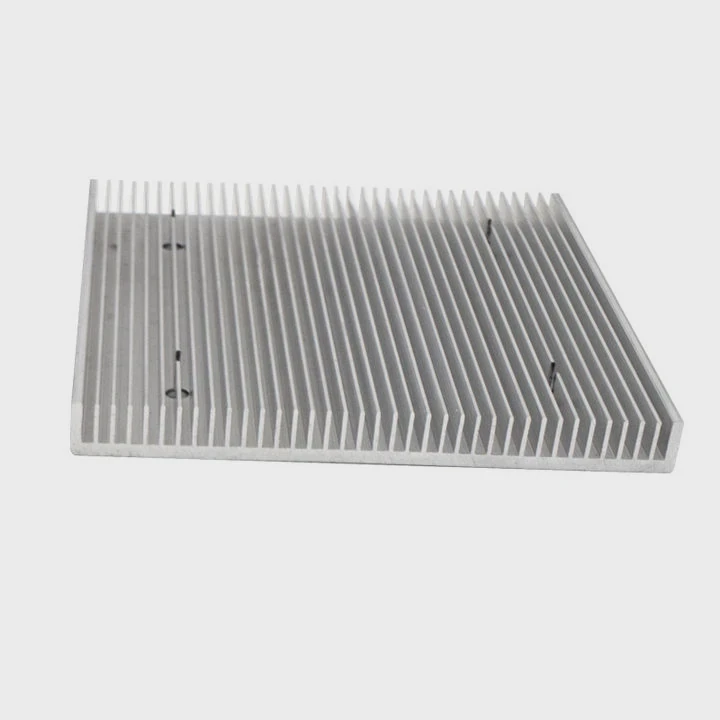
When bundling works
Grouping SKUs makes sense when:
- Models use the same extrusion base
- Only small CNC changes differentiate parts
- Surface treatment is identical
- Orders ship together
| Example Group | Bundled for Discount? | Reason |
|---|---|---|
| Same profile, different lengths | ✅ Yes | One die, simple cutting changes |
| Different profiles, same finish | ⚠️ Maybe | Depends on tool changes |
| Different profiles & finishes | ❌ No | Separate setups and treatments needed |
Supplier’s view
From a production side, the key question is: Can we run these parts on the same setup without resetting the machine? If yes, then suppliers can treat them as a batch and offer discounts.
For example, a supplier may allow:
- “Family pricing” for variants within 10% size range
- Mixed shipping if total monthly quantity exceeds threshold
Talk to your vendor about combining models. Be specific about similarities in process, not just function.
Are discount tiers negotiable by project size?
Some buyers assume the price list is final. But for heat sinks—especially in custom projects—there’s often room to negotiate based on total value and commitment.
Yes, heat sink discount tiers are negotiable, especially for large contracts, multi-year commitments, or orders that reduce supplier risk.
Leverage points for negotiation
- Annual Volume Contracts: Promise a yearly volume to unlock better pricing now.
- Tooling Investment: Offer to cover tooling in exchange for volume discounts.
- Flexible Delivery Windows: Let the supplier schedule production when convenient.
- Long-term Relationship: Share future project roadmap to show ongoing demand.
How suppliers think
Suppliers weigh:
- Total aluminum usage
- Impact on capacity planning
- Inventory holding risk
- Complexity of logistics
A buyer who provides a 12-month forecast, pays tooling upfront, and offers consolidated shipping will almost always get better terms.
| Buyer Commitment Type | Impact on Price Flexibility |
|---|---|
| One-time PO | Low |
| Monthly blanket PO | Medium |
| Annual commitment with forecast | High |
| Multi-year supply agreement | Very High |
The key is to position your project not just as a single order, but as part of a longer pipeline. This reduces risk for the supplier and opens the door to deeper discounts.
Conclusion
Volume discounts for heat sinks aren’t fixed—they depend on batch size, product type, and relationship terms. Grouping models, negotiating forecasts, and committing long-term can all help lower your unit price and improve supply stability.
TAGS
Latest Articles
Volume discount levels for heat sink orders?
Buyers often ask when heat sink prices start to drop with volume. Many worry they’re overpaying for small orders. This guide explains how B2B volume pricing works for thermal components. Heat sink
21 Dec,2025
Heat sink long-term supply contract options?
Many buyers want stable pricing and reliable delivery for heat sinks. But without a clear contract, risks grow over time. This article explores how to secure better long-term supply deals. Long-term
21 Dec,2025
Tooling cost for new heat sink profiles?
Many engineers struggle to understand why tooling for custom heat sinks costs so much. They worry about budgeting and production timelines. This article breaks down the cost drivers behind tooling.
21 Dec,2025
Heat sink custom sample process steps?
Sometimes, starting a custom heat sink project feels overwhelming—too many steps, too many unknowns, and too many risks. You want a sample, but not endless delays. The process for requesting and
20 Dec,2025
Standard B2B terms for heat sink payments?
When buyers and sellers in B2B heat sink markets talk about payment, many don’t fully understand what’s standard. This can lead to delayed orders, miscommunication, and even lost business
20 Dec,2025
Heat sink pricing factors for large orders?
Heat sinks are vital for many systems. When prices rise, projects stall and budgets break. This problem can hit teams hard without warning. Large order heat sink pricing depends on many factors. You
20 Dec,2025Related Articles
- Heat sink long-term supply contract options?
- Tooling cost for new heat sink profiles?
- Heat sink custom sample process steps?
- Standard B2B terms for heat sink payments?
- Heat sink pricing factors for large orders?
- Prototype lead time for heat sink samples?
- Heat sink MOQ for custom extrusion orders?
- Conflict-mineral declarations for heat sink metals?
- International Safety Standards for Heat Sink?
- Heat Sink Environmental Compliance for EU Markets?
- UL Certification Options for Heat Sink Products?
- REACH document needs for heat sink?
Author
Dr. Emily Chen
Chief AI Researcher
Leading expert in thermal dynamics and AI optimization with over 15 years of experience in data center efficiency research.
Categories
Latest Products






Recommend Categories
- Liquid cooling plate Manufacturer
- Industrial Heat Sink Manufacturer
- Standard Heat Sink Manufacturer
- Aluminum Heat Sink Manufacturer
- Copper Heat Sink Manufacturer
- Anodized Heatsink Manufacturer
- Stamping heat sink Manufacturer
- Die Casting Heatsink Manufacturer
- Soldering heat sink Manufacturer
- CNC Parts Manufacturer
Latest Products
- Wholesale Aluminum Radiator
- Water Cooling Plate Kit
- Water Cooling Heat Sink
- Water Cooling Heat Sink Kit
- Stainless Steel Water Distributor
- Server Water Cooling Plate Kit
- Server Liquid Cooling System
- Server Aluminum Cooling Kit
- S19 Full Cover Cooling Plate
- S19 Cooling Plate Kit
- S19 Aluminum Cooling Plate
Contact Expert
Have questions about this article? Reach out to our experts directly.