What is direct liquid cooling?
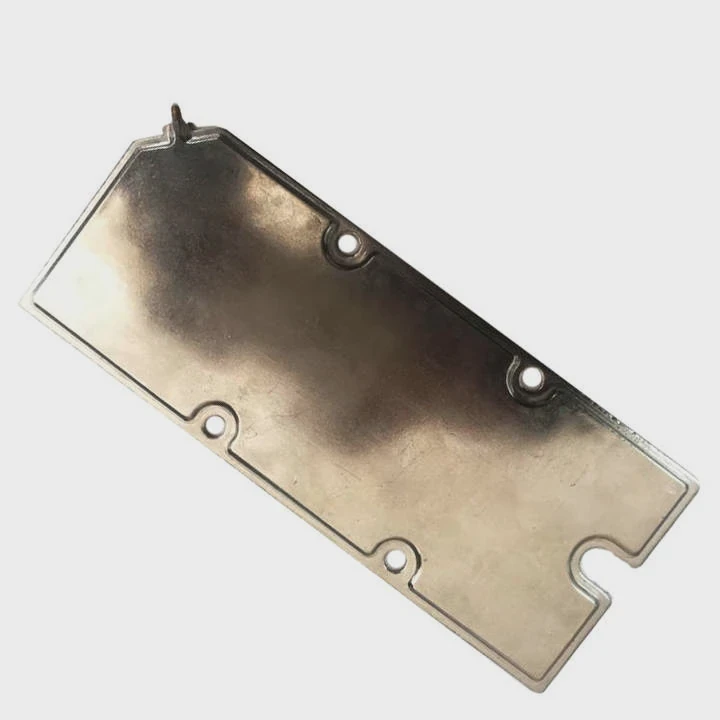
High-density servers make a lot of heat. Air is often not enough to remove it. So we move the coolant closer to the source.
Direct liquid cooling (DLC) is a method where liquid is brought very close to, or directly in contact with, the heat-generating components to remove heat faster than air.
This approach is different from classic computer room air conditioning. It targets the chip, not the room. That is why it is popular in AI, HPC, and modern data centers.
How does direct liquid cooling work?
Data center servers generate hotspots on CPUs, GPUs, memory, and sometimes on power modules. Air can cool the whole chassis, but it struggles with these tiny high-heat areas.
In DLC, a coolant flows through cold plates or channels mounted on components; heat transfers from the chip to the plate, then to the liquid, and finally to a heat exchanger.
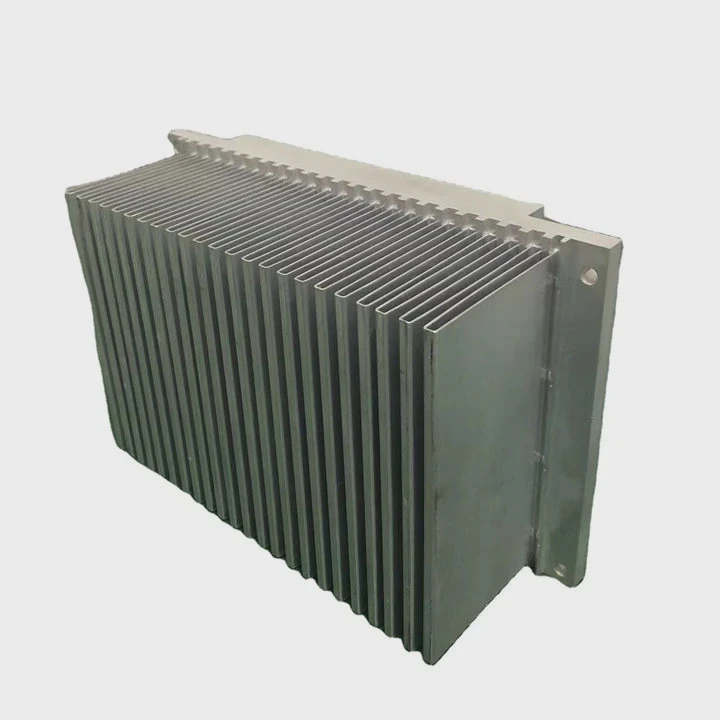
The basic flow looks like this: the server has cold plates fixed on CPUs or GPUs. Each plate has internal microchannels. A pump moves coolant through these channels. The liquid absorbs heat and carries it to a facility loop or rear-door heat exchanger. The liquid then releases the heat to building water or an external cooling system, and returns to the server loop.
Inside the cold plate, heat transfer is very efficient because the liquid is close to the surface of the chip. There is no thick air layer. The thermal path is short. This allows higher power processors to run at stable temperatures. In many setups, we can also cool memory, accelerators, or even power delivery parts using the same loop.
This method needs careful design. Flow rate, pressure drop, manifold design, and material compatibility all affect performance. If flow is too low, components overheat. If flow is too high, the pump wastes energy. So engineers balance thermal performance and hydraulic resistance to reach the sweet spot.
What are its advantages for data centers?
Traditional air cooling works well up to a point. But as racks go beyond 30–40 kW, fans get louder, energy use rises, and hotspots still appear.
Direct liquid cooling enables higher rack densities, lower energy consumption, and more stable component temperatures than air-only systems.
Key Advantages for Operators
| Advantage | What It Means | Why It Matters |
|---|---|---|
| Higher power density | More kW per rack | Fits AI/HPC in same floor space |
| Better thermal control | Direct heat capture | Longer hardware life |
| Lower fan energy | Less air movement | Improved PUE/OPEX |
| Use of warm water | No chillers in some cases | Lower CAPEX and simpler plants |
When the liquid reaches the chip, heat is removed before it enters the room. This lowers the demand on CRAC units and building air handlers. Some DLC systems can even run on “warm-water cooling,” where the supply water can be 30–45°C. That means no mechanical chilling in some climates. The waste heat can even be reused.
For AI training servers with multiple high-wattage GPUs, DLC lets the data center operator run full performance without throttling. Air cooling often forces derating. DLC keeps GPUs at stable setpoints. This translates directly into faster workloads and better server utilization.
DLC also reduces noise and airflow complexity. With less air to move, the data hall can be simpler. Cable management, containment, and hot/cold aisle strategies become less critical. This gives operators more freedom in layout and retrofits.
Finally, better temperature control improves hardware reliability. Components that run cooler age slower. Power supplies, VRMs, and memory benefit from this more stable thermal environment.
How to implement it safely?
Many teams hesitate to bring liquid inside a server. The concern is always the same: what if it leaks?
Safe DLC depends on closed-loop design, reliable quick-disconnects, leak detection, proper coolant choice, and maintenance procedures.
To implement DLC, start with a closed, pressure-controlled loop. The loop should have expansion capability so that temperature changes do not cause excessive pressure. Use dripless, self-sealing quick couplings between the rack manifold and each server. These connectors are designed to close when disconnected, so even if a technician pulls a node, liquid will not spill.
Next, pick a coolant compatible with server metals, seals, and plastics. Many systems use treated water or water-glycol mixes. Add corrosion inhibitors and biocides. This stops metal corrosion and microbial growth. Poorly treated water will damage cold plates over time, so water quality management is part of safety.
Add leak detection at critical points. Some racks use moisture sensors under manifolds. Others monitor pressure drop and flow rate. If the system detects abnormal flow, it can shut down pumps or isolate a branch. This turns a possible failure into a controlled event.
Operator training is also essential. Technicians must know how to hot-swap a liquid-cooled node, how to purge air, and how to lock out the system during service. Documented maintenance intervals for filters, pumps, and coolant replacement keep the loop reliable.
Finally, integrate the IT loop with the facility loop using a CDU (Coolant Distribution Unit). The CDU separates facility water from IT water. If the building water is dirty or at a higher pressure, the CDU protects the racks. It also gives temperature and flow control. This is the heart of a safe DLC deployment.
What are the innovations in enterprise cooling?
Cooling needs in enterprises are changing fast because of AI, edge computing, and sustainability rules.
New enterprise cooling trends include hybrid air–liquid racks, rear-door heat exchangers, immersion variants, warm-water recovery, and smarter, software-defined thermal control.
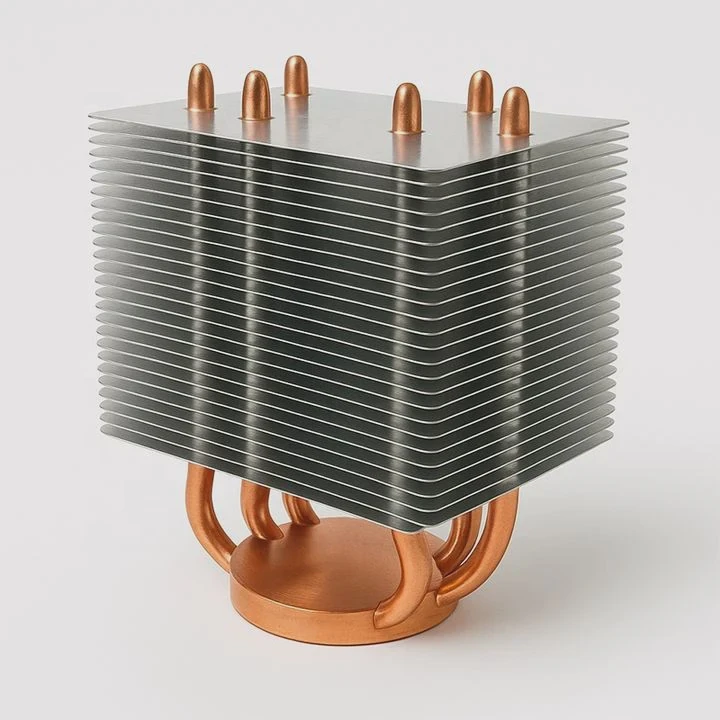
Emerging Cooling Innovations
| Innovation | Description | Typical Use |
|---|---|---|
| Hybrid racks | Air + direct liquid in same rack | Mixed IT loads |
| Rear-door HX | Air-cooled servers, water-cooled door | Retrofits |
| Immersion DLC | Components in dielectric liquid | High-density / noisy sites |
| Warm-water reuse | Capture waste heat | Green buildings |
| AI thermal control | Software-optimized flow/fans | Large fleets |
Many enterprises cannot switch to full DLC in one step. So vendors are offering hybrid racks. In these, high-power nodes use DLC cold plates, while the rest stay on air. This makes upgrades possible without changing the whole facility.
Rear-door heat exchangers are another innovation. They let operators keep standard servers, but remove most of the heat at the rack. This is useful in older sites. It reduces hot aisle temperatures without redesigning the room.
Immersion-based DLC is also moving from labs to real sites. In this model, servers are placed in dielectric liquid baths. Heat is removed very efficiently. This approach is attractive for edge sites, mining, and AI clusters because it is quiet and dense.
On the facility side, enterprises are starting to capture warm water from DLC loops and reuse it for building heating or absorption cooling. This improves overall energy efficiency and helps meet ESG goals.
Finally, control systems are getting smarter. Instead of fixed pump speeds, modern CDUs use sensors and algorithms to deliver just enough flow to each rack. This reduces power use and protects components. Over time, this trend will make cooling autonomous and reactive to IT load.
Conclusion
Direct liquid cooling brings the coolant right to the heat source. It boosts density, protects hardware, and can cut energy use. With good connectors, CDUs, and monitoring, it is safe to run even in enterprise data centers. New hybrid and smart solutions will make adoption easier and faster.
TAGS
Latest Articles

Volume discount levels for heat sink orders?
Buyers often ask when heat sink prices start to drop with volume. Many worry they’re overpaying for small orders. This guide explains how B2B volume pricing works for thermal components. Heat sink
21 Dec,2025
Heat sink long-term supply contract options?
Many buyers want stable pricing and reliable delivery for heat sinks. But without a clear contract, risks grow over time. This article explores how to secure better long-term supply deals. Long-term
21 Dec,2025
Tooling cost for new heat sink profiles?
Many engineers struggle to understand why tooling for custom heat sinks costs so much. They worry about budgeting and production timelines. This article breaks down the cost drivers behind tooling.
21 Dec,2025
Heat sink custom sample process steps?
Sometimes, starting a custom heat sink project feels overwhelming—too many steps, too many unknowns, and too many risks. You want a sample, but not endless delays. The process for requesting and
20 Dec,2025
Standard B2B terms for heat sink payments?
When buyers and sellers in B2B heat sink markets talk about payment, many don’t fully understand what’s standard. This can lead to delayed orders, miscommunication, and even lost business
20 Dec,2025
Heat sink pricing factors for large orders?
Heat sinks are vital for many systems. When prices rise, projects stall and budgets break. This problem can hit teams hard without warning. Large order heat sink pricing depends on many factors. You
20 Dec,2025Related Articles
- What is in a liquid CPU cooler?
- What’s better, liquid cooling or fan?
- How often to replace liquid cooling?
- What liquid is used for immersion cooling?
- Is liquid cooling or air cooling better?
- What happens when liquid is cooled?
- What Is Super-Cooled Liquid?
- Heat Sink Manufacturers in Turkey
- Heat Sink Manufacturers in Netherlands
- Heat Sink Manufacturers in Saudi Arabia
- Heat Sink Manufacturers in Switzerland
- Heat Sink Manufacturers in Taiwan
Author
Dr. Emily Chen
Chief AI Researcher
Leading expert in thermal dynamics and AI optimization with over 15 years of experience in data center efficiency research.
Categories
Latest Products






Recommend Categories
- Liquid cooling plate Manufacturer
- Industrial Heat Sink Manufacturer
- Standard Heat Sink Manufacturer
- Aluminum Heat Sink Manufacturer
- Copper Heat Sink Manufacturer
- Anodized Heatsink Manufacturer
- Stamping heat sink Manufacturer
- Die Casting Heatsink Manufacturer
- Soldering heat sink Manufacturer
- CNC Parts Manufacturer
Latest Products
- Wholesale Aluminum Radiator
- Water Cooling Plate Kit
- Water Cooling Heat Sink
- Water Cooling Heat Sink Kit
- Stainless Steel Water Distributor
- Server Water Cooling Plate Kit
- Server Liquid Cooling System
- Server Aluminum Cooling Kit
- S19 Full Cover Cooling Plate
- S19 Cooling Plate Kit
- S19 Aluminum Cooling Plate
Contact Expert
Have questions about this article? Reach out to our experts directly.