Can we manufacture to CNS or JIS heat sink standards?
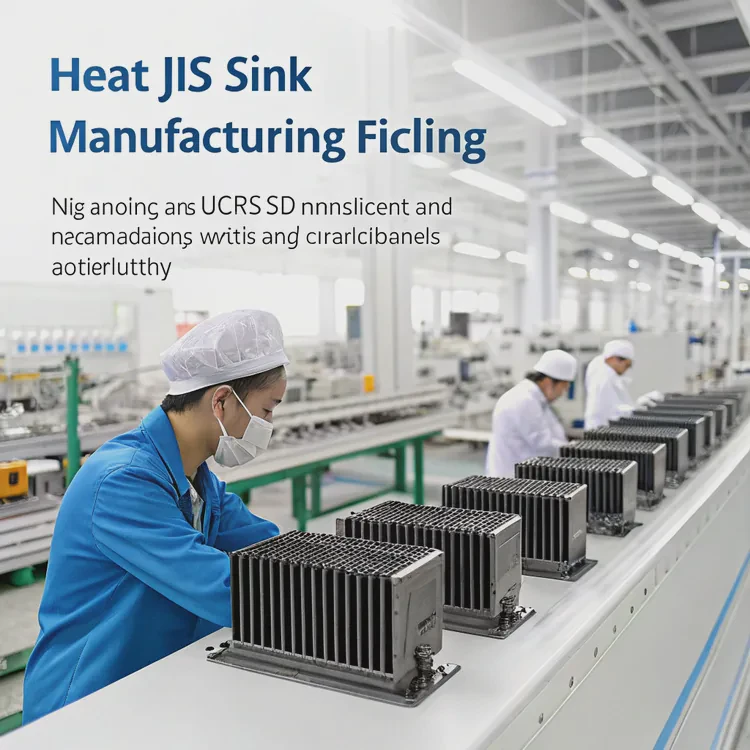
When global clients source heat sinks, they often face a key challenge — local standards like CNS (Taiwan) and JIS (Japan) differ from ISO or ASTM systems.
Yes, we can manufacture heat sinks that fully comply with CNS and JIS standards, covering both material composition and dimensional tolerances.
Over the years, we have collaborated with Japanese and Taiwanese customers in electronics, automotive, and medical industries. This has given us deep familiarity with these regional standards and their technical nuances.
Our production lines, materials, and inspection systems are all adaptable to non-ISO norms, ensuring precise compliance for each market.
What experience do we have with international material standards?
Every country defines its own system for aluminum alloys and mechanical performance. To serve global clients, a manufacturer must speak all “languages of materials.”
We have over a decade of experience working with international standards, including JIS, CNS, ASTM, EN, and GB.
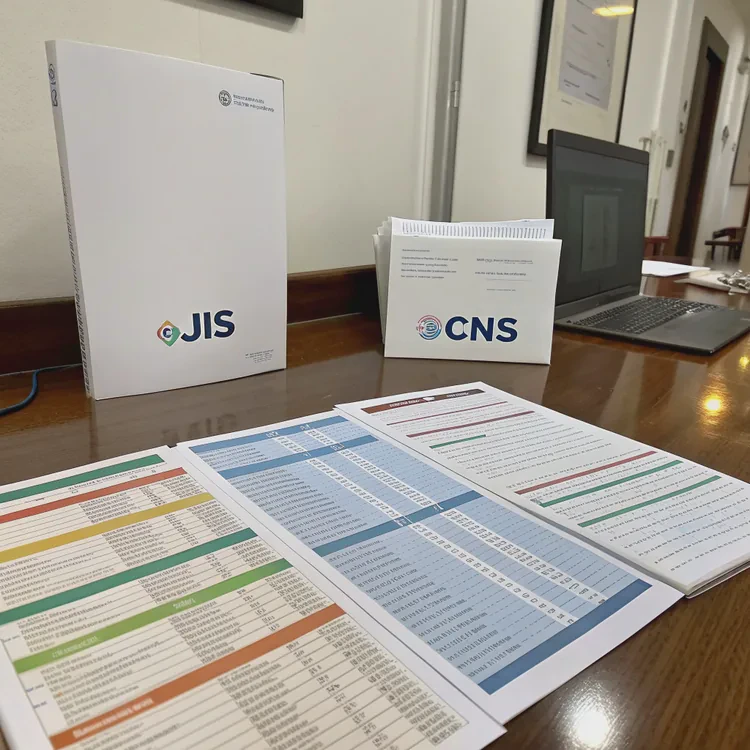
We routinely produce heat sinks and aluminum assemblies for clients in Japan, Germany, the U.S., and Taiwan, where local material codes differ. Our engineering team maintains a complete database of cross-reference standards that link equivalent alloys across systems.
Common International Alloy Equivalents
| Alloy (China GB/T) | Equivalent JIS | Equivalent CNS | Equivalent ASTM | Notes |
|---|---|---|---|---|
| 6063 | A6063 | A6063 | 6063 | High thermal conductivity, easy extrusion |
| 1050 | A1050 | A1050 | 1100 | Pure aluminum, high heat transfer rate |
| 3003 | A3003 | A3003 | 3003 | Enhanced corrosion resistance |
| 5052 | A5052 | A5052 | 5052 | High strength, used for structural cooling parts |
| 6061 | A6061 | A6061 | 6061 | Balanced strength and machinability |
This table helps our engineers and clients communicate easily across regions. We can interpret customer drawings written in JIS or CNS codes, then source materials locally that meet those same performance criteria.
Cross-Standard Engineering Experience
We also understand that compliance involves more than alloy names — it extends to mechanical tests, surface finish, and tolerance definitions.
For example:
- JIS H4000 defines aluminum plate and sheet tolerances.
- CNS 2511 regulates aluminum extrusion dimensional deviation.
- ASTM B209 specifies mechanical test methods and flatness.
Our lab can conduct tensile strength, hardness, and microstructure tests according to the testing method specified by each standard system. This ensures that every product meets both local expectations and international reliability requirements.
Supporting Multinational Projects
When multinational clients need consistency across multiple factories, we act as the bridging supplier. For instance, a Japanese automotive client requested A6061-T6 profiles under JIS H4040. At the same time, their European branch referenced EN AW-6061.
We translated both into a unified control plan, validated mechanical performance in-house, and achieved consistent results. This ability to align cross-standard expectations is one of our key strengths in global supply.
Do we maintain inventory of JIS/CNS compliant profiles?
For customers with repeat orders, delivery speed is often as critical as compliance. Maintaining ready-to-use profiles can significantly reduce lead time.
Yes, we maintain a standing inventory of JIS and CNS compliant aluminum profiles for our key customers.
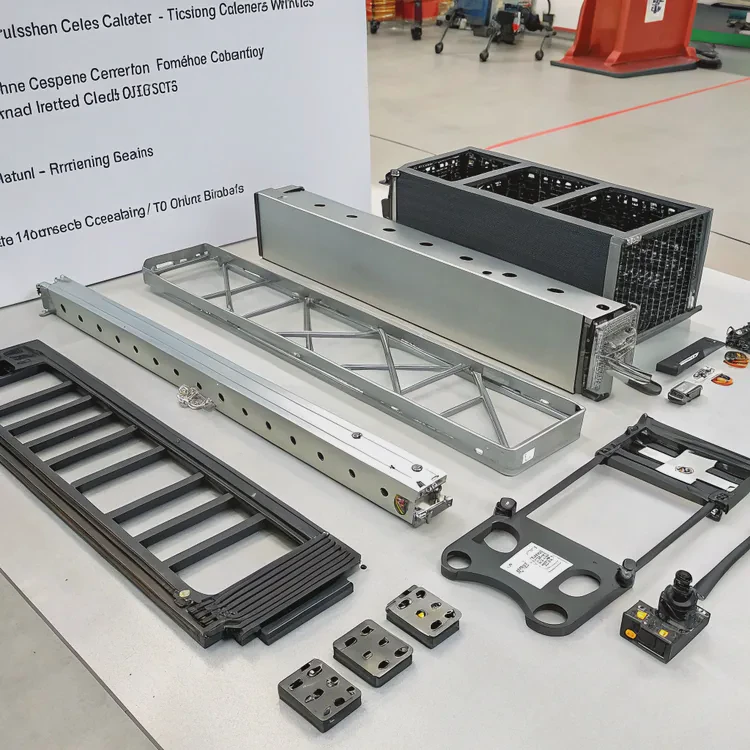
We stock standard heat sink and extrusion profiles that meet JIS H4100, JIS H4040, and CNS 2511 specifications. This enables us to support clients who require small-batch or rapid production runs without long raw material lead times.
Standard Profiles in Our Inventory
| Profile Type | Standard | Typical Alloy | Application |
|---|---|---|---|
| Flat Plate | JIS H4000 / CNS 2511 | A1050 / A3003 | Vapor chambers, heat spreaders |
| Extruded Fin Type | JIS H4100 / CNS 2515 | A6063-T5 / T6 | Power module cooling |
| Structural Bracket | JIS H4040 / CNS 2516 | A6061-T6 | Chassis, battery modules |
| Precision Bar | JIS H4100 | A5052-H32 | Frame and thermal structures |
Our supply partners include certified extrusion mills that specialize in JIS and CNS material grades. All profiles are verified with material certification and batch traceability, allowing us to quickly support both new sampling and long-term production orders.
Inventory Management and Forecasting
We use ERP and MES systems to monitor stock levels dynamically. When an order is placed, our system automatically checks for available JIS/CNS stock, ensuring fast response.
For key customers, we also offer VMI (Vendor Managed Inventory) or safety stock arrangements. This keeps their production lines uninterrupted even under volatile material supply conditions.
How do we verify compliance with these standards?
Ensuring compliance is not just about documentation — it’s about evidence.
We verify compliance with JIS and CNS standards through material testing, third-party inspection, and documented traceability reports.
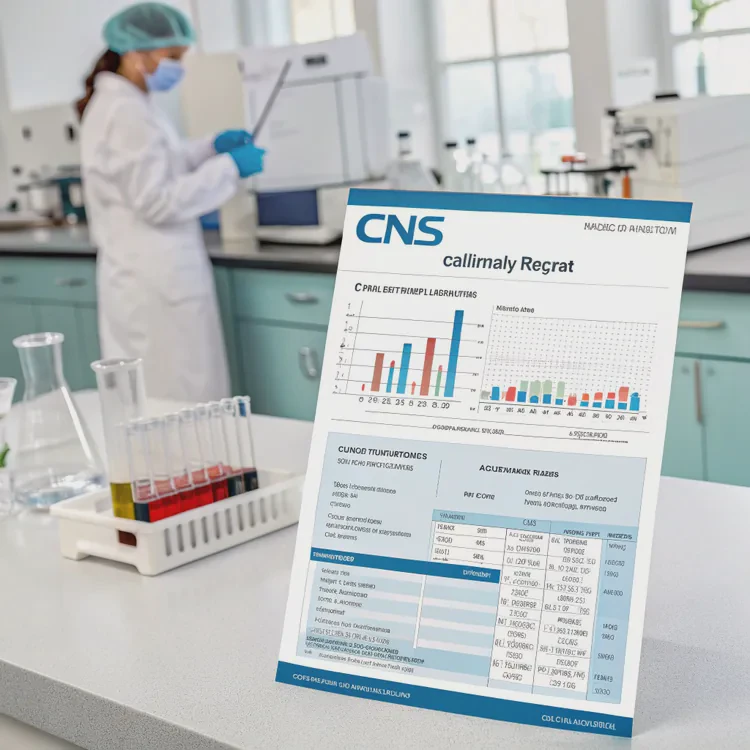
We follow a systematic verification procedure from raw material to final product, ensuring each step aligns with the specific regional standard.
Step-by-Step Verification Process
Material Certification Check:
Each incoming batch must include a mill certificate that lists chemical composition, alloy designation, and mechanical performance. Our QC verifies this data against the target JIS or CNS standard.Spectrometer Analysis:
For cross-checking, we perform in-house elemental analysis using a spectrometer. Results are compared with the allowable range from JIS H4000 or CNS 2511.Mechanical Testing:
We conduct tensile and hardness tests according to JIS Z2241 or CNS 14705 standards to verify yield strength, elongation, and hardness.Dimensional and Surface Inspection:
Profile dimensions are checked using CMM and calipers, referencing the tolerance tables defined in JIS H4100 or CNS 2515.Third-Party Validation:
When required, we cooperate with certified laboratories like SGS or TÜV to issue third-party reports under JIS or CNS compliance.
Compliance Report Example
| Report Type | Content | Standard Reference |
|---|---|---|
| Chemical Analysis Report | Element composition data | JIS H4040 / CNS 2511 |
| Mechanical Test Report | Yield strength, tensile, hardness | JIS Z2241 / CNS 14705 |
| Dimensional Report | Measured vs nominal dimensions | JIS H4100 / CNS 2515 |
| Certificate of Conformity | Summary of compliance | Customer specification |
All data is stored in our digital traceability system, so every lot can be traced back to its raw material and test results.
This structured verification process builds customer trust and allows for seamless compliance audits by end users or government agencies.
Example: Japanese Client Verification
One of our Japanese clients required JIS A5052-H34 extruded heat sinks with flatness tolerance within ±0.05 mm. We validated each batch through CMM inspection, issued a full JIS-based inspection report, and attached the mill certificate for every lot. The client later confirmed that our documentation matched their in-house audit system perfectly.
Can we adapt our QC to non-ISO standards?
Every standard has its own logic, symbols, and sampling methods. For a flexible manufacturer, the real test is whether the quality system can adapt without confusion.
Yes, our quality control system is fully adaptable to non-ISO standards such as CNS, JIS, or customer-specific technical requirements.
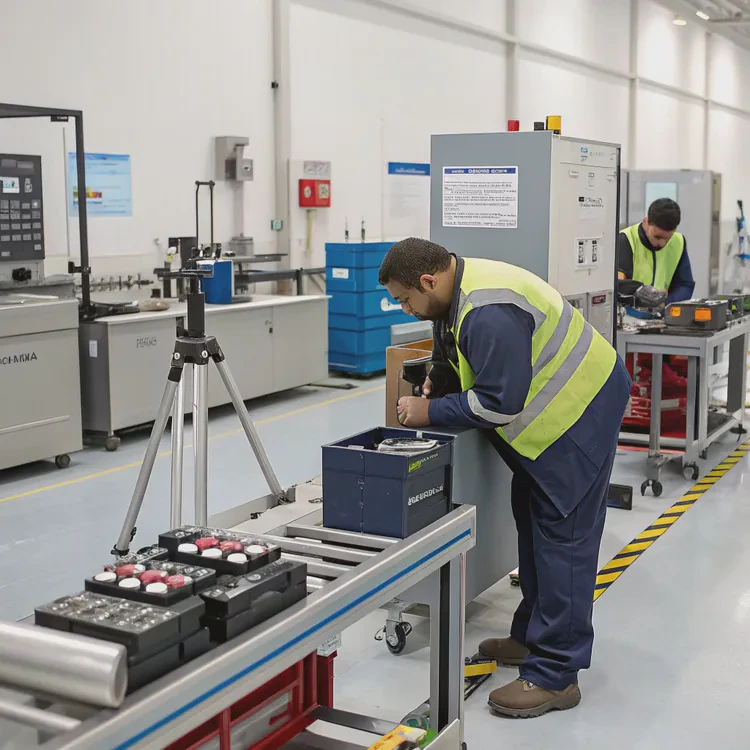
Our baseline QC system is ISO 9001 and IATF 16949 certified, but it is designed to integrate custom quality plans. Each project begins with a control plan customization phase, during which we align measurement methods, tolerance definitions, and inspection frequencies with the target standard.
How We Customize QC Systems
| QC Element | Adaptation Method | Example |
|---|---|---|
| Sampling Frequency | Adjust to match JIS Z9001 or CNS 14705 | Increased inspection during first production batch |
| Inspection Tools | Calibrated to local units and tolerance levels | JIS gauge blocks and micrometers |
| Control Plan | Updated format to match customer document style | JIS-based PFMEA and inspection forms |
| Statistical Analysis | Compatible with JIS Z9002 standards | Cp/Cpk studies for Japanese clients |
Custom QC Workflow
- Review Client Standard: Our engineers study the target standard, identifying unique clauses and test conditions.
- Create Control Plan: We build a new control plan document referencing that specific standard instead of ISO defaults.
- Operator Training: Production staff receive targeted training, using simplified visual guides based on JIS or CNS tolerances.
- Trial Production Run: We produce pilot batches and perform additional inspections to confirm compliance.
- Feedback and Adjustment: QC data is reviewed jointly with the client, and any deviation is corrected before mass production.
Real-World Adaptation Example
For a Taiwanese industrial cooling project, the customer required compliance with CNS 2515 aluminum extrusions. We translated all inspection forms into bilingual (Chinese-English) format, calibrated instruments to CNS-defined tolerances, and used local sampling rules (AQL 0.65).
The project passed customer audit with zero findings and later expanded into mass production for their 5G equipment line.
This flexibility is a result of our multi-standard experience. Our quality system is modular — we can switch between ISO, JIS, CNS, or even military standards without disrupting operations.
We believe adaptability is not only a skill but also a responsibility when serving global clients.
Conclusion
We can manufacture heat sinks fully compliant with both JIS and CNS standards. Our experience spans multiple international systems, supported by verified materials, standing inventory, and adaptable QC frameworks. Whether the project follows ISO, JIS, or CNS norms, our team ensures full compliance, documentation integrity, and consistent performance.
TAGS
Latest Articles

Volume discount levels for heat sink orders?
Buyers often ask when heat sink prices start to drop with volume. Many worry they’re overpaying for small orders. This guide explains how B2B volume pricing works for thermal components. Heat sink
21 Dec,2025
Heat sink long-term supply contract options?
Many buyers want stable pricing and reliable delivery for heat sinks. But without a clear contract, risks grow over time. This article explores how to secure better long-term supply deals. Long-term
21 Dec,2025
Tooling cost for new heat sink profiles?
Many engineers struggle to understand why tooling for custom heat sinks costs so much. They worry about budgeting and production timelines. This article breaks down the cost drivers behind tooling.
21 Dec,2025
Heat sink custom sample process steps?
Sometimes, starting a custom heat sink project feels overwhelming—too many steps, too many unknowns, and too many risks. You want a sample, but not endless delays. The process for requesting and
20 Dec,2025
Standard B2B terms for heat sink payments?
When buyers and sellers in B2B heat sink markets talk about payment, many don’t fully understand what’s standard. This can lead to delayed orders, miscommunication, and even lost business
20 Dec,2025
Heat sink pricing factors for large orders?
Heat sinks are vital for many systems. When prices rise, projects stall and budgets break. This problem can hit teams hard without warning. Large order heat sink pricing depends on many factors. You
20 Dec,2025Related Articles
- Do our heat sinks comply with IATF 16949 automotive standards?
- Heat Sink Manufacturers in Indonesia
- Heat Sink Manufacturers in Mexico
- Heat Sink Manufacturers in Australia
- Heat Sink Manufacturers in Spain
- Heat Sink Manufacturers in Canada
- Do our anodizing processes meet MIL-A-8625 standards?
- Can we provide MSDS or material certificates for heat sinks?
- What export regulations apply to heat sinks for the US market?
- Do we have green certifications for our production processes?
- Can full test reports and certifications be delivered with orders?
- Does a 4090 need liquid cooling?
Author
Dr. Emily Chen
Chief AI Researcher
Leading expert in thermal dynamics and AI optimization with over 15 years of experience in data center efficiency research.
Categories
Latest Products






Recommend Categories
- Liquid cooling plate Manufacturer
- Industrial Heat Sink Manufacturer
- Standard Heat Sink Manufacturer
- Aluminum Heat Sink Manufacturer
- Copper Heat Sink Manufacturer
- Anodized Heatsink Manufacturer
- Stamping heat sink Manufacturer
- Die Casting Heatsink Manufacturer
- Soldering heat sink Manufacturer
- CNC Parts Manufacturer
Latest Products
- Wholesale Aluminum Radiator
- Water Cooling Plate Kit
- Water Cooling Heat Sink
- Water Cooling Heat Sink Kit
- Stainless Steel Water Distributor
- Server Water Cooling Plate Kit
- Server Liquid Cooling System
- Server Aluminum Cooling Kit
- S19 Full Cover Cooling Plate
- S19 Cooling Plate Kit
- S19 Aluminum Cooling Plate
Contact Expert
Have questions about this article? Reach out to our experts directly.