What export regulations apply to heat sinks for the US market?
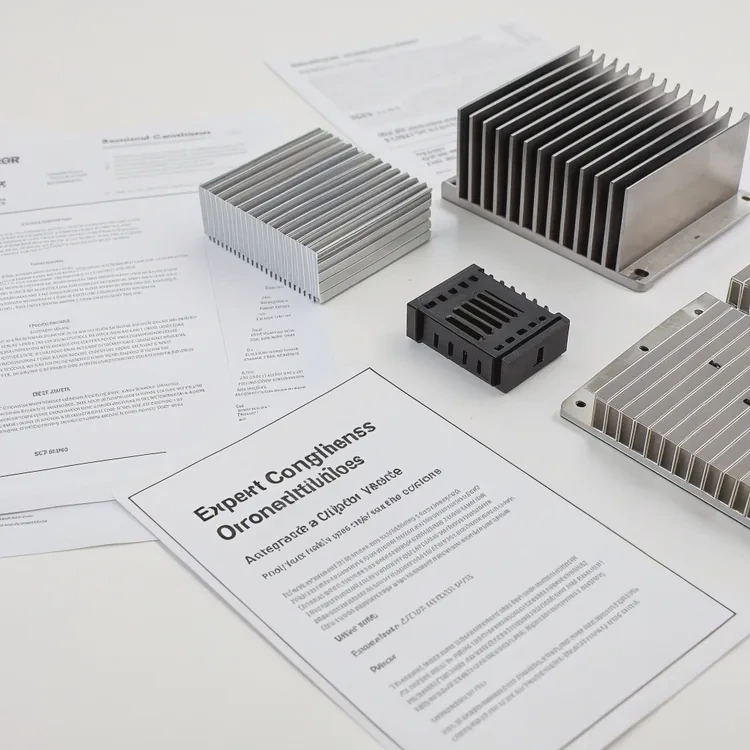
Exporting thermal components like heat sinks to the United States involves more than logistics. It requires strict compliance with U.S. trade, safety, and energy regulations.
Yes, our aluminum heat sinks fully comply with U.S. export regulations, including EAR classification, customs documentation, and safety labeling requirements.
We maintain detailed export control records for all products shipped to North America. Each shipment is classified according to its HS code and ECCN, ensuring full alignment with the U.S. Export Administration Regulations (EAR) and customs procedures.
Our experience in global trade allows us to handle technical documentation, labeling, and import paperwork smoothly, minimizing delays during U.S. Customs and Border Protection (CBP) clearance.
Do our products comply with US energy or safety standards?
The U.S. market places strong emphasis on energy efficiency and product safety. Even though heat sinks themselves are passive devices, they are often part of larger systems that fall under federal energy and safety frameworks.
Yes, our heat sinks comply with all applicable U.S. energy and safety standards, including RoHS, REACH, and DOE requirements when integrated into electronic systems.
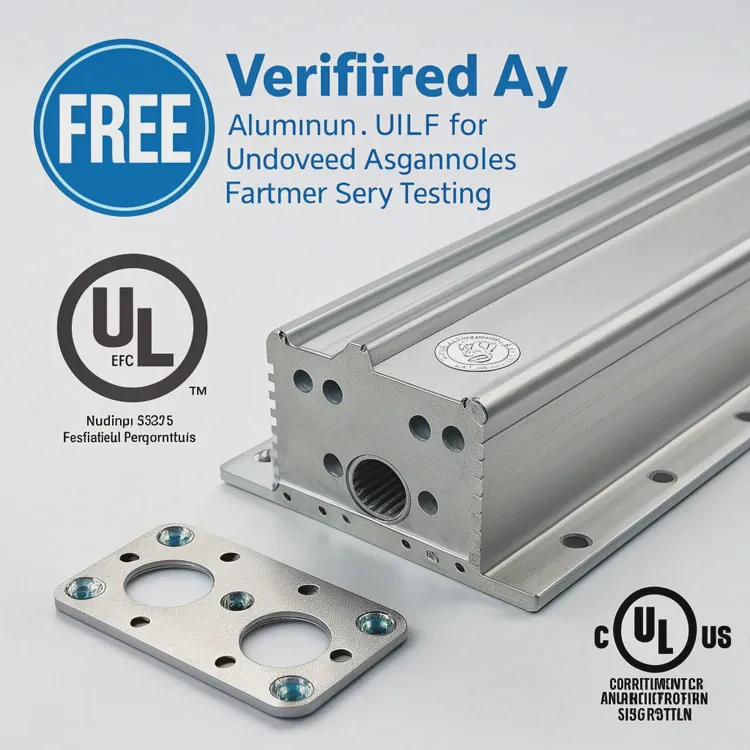
Our materials, surface treatments, and production methods follow environmentally safe and energy-efficient guidelines. This ensures that our products are suitable for use in systems certified under UL, CE, DOE, and Energy Star programs.
Key Compliance Frameworks for the U.S. Market
| Standard / Regulation | Applicability | Compliance Method |
|---|---|---|
| RoHS 3 (EU Directive 2015⁄863) | Restricts hazardous substances in electrical components | Verified through supplier declarations and internal testing |
| REACH (EC No. 1907⁄2006) | Chemical registration and safety data | MSDS and raw material traceability maintained |
| DOE Energy Efficiency | Applies to thermal systems in electronic or HVAC assemblies | Verified through partner OEM system testing |
| UL (Underwriters Laboratories) | Safety certification for integrated assemblies | Aluminum components pre-qualified for UL system testing |
| Prop 65 (California) | Restricts listed substances | Verified compliance with lab analysis |
| TSCA (Toxic Substances Control Act) | Chemical inventory management | Reviewed during raw material procurement |
While aluminum heat sinks are typically exempt from direct DOE efficiency labeling, they must still conform to safe and environmentally compliant manufacturing practices.
Energy and Environmental Responsibility
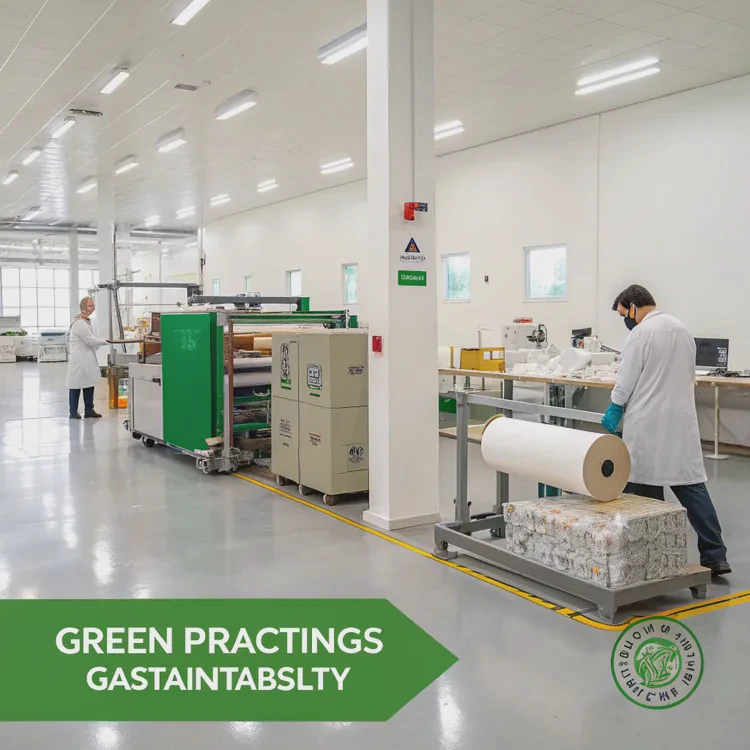
We use high-conductivity aluminum alloys that reduce energy losses in thermal transfer systems. Combined with low-carbon anodizing processes, our heat sinks support sustainable manufacturing goals for U.S. clients.
All coatings and sealants used in anodizing and surface finishing are chromium-free and compliant with EPA environmental standards, ensuring both workplace safety and eco-responsibility.
Have we shipped aluminum heat sinks to North America?
Experience matters when it comes to cross-border trade. Every market has its own documentation requirements and certification preferences.
Yes, we have exported aluminum heat sinks and liquid cooling assemblies to the United States, Canada, and Mexico for over a decade.
Our products are used in diverse U.S. industries — from electric vehicles and power converters to telecom and data center cooling systems.
Examples of North American Projects
| Application | Product Type | Destination | Standard Compliance |
|---|---|---|---|
| EV Charging System | Liquid Cold Plate | California, USA | UL, RoHS |
| Power Inverter | Extruded Aluminum Heat Sink | Texas, USA | DOE, REACH |
| 5G Base Station | Vapor Chamber Module | Ontario, Canada | CE, FCC (system-level) |
| Industrial Automation | Machined Heat Sink | Illinois, USA | UL File Reference |
| Battery Energy Storage | Cooling Assembly | Mexico | USMCA, DOE |
All shipments are handled through well-known logistics partners, with documentation prepared under Incoterms 2020 (FOB, CIF, or DDP) depending on the buyer’s requirements.
North American Supply Experience
We have worked closely with U.S.-based OEMs who require:
- Certificates of Conformity
- Material Safety Data Sheets (MSDS)
- UL recognition support
- Customs packing lists and commercial invoices
Our familiarity with U.S. Customs Harmonized Tariff Schedule (HTS) ensures the correct classification of goods, minimizing import delays or duty disputes.
Logistics and Distribution
Shipments are typically routed through ports such as Los Angeles, Long Beach, or Houston, and for Canadian deliveries via Vancouver. We use ISPM-15 certified wooden pallets and fumigation-free packaging materials to meet U.S. Department of Agriculture (USDA) import regulations.
This extensive logistics experience ensures timely, compliant, and damage-free deliveries to our North American customers.
Are we familiar with FCC, UL, or DOE compliance?
When our heat sinks are integrated into larger systems, such as electronic devices or power modules, the overall product must comply with relevant U.S. technical standards.
Yes, we are familiar with FCC, UL, and DOE compliance frameworks and can support customers with documentation for system-level certification.
Although a heat sink itself does not require direct FCC or UL labeling, its material and performance must enable the end system to achieve certification smoothly.
Overview of Relevant U.S. Standards
| Agency | Standard Focus | Our Role |
|---|---|---|
| UL (Underwriters Laboratories) | Electrical and mechanical safety | Provide anodized, corrosion-resistant, UL-recognized aluminum alloys |
| FCC (Federal Communications Commission) | Electromagnetic interference (EMI/EMC) compliance | Design heat sink structures that support EMI shielding in assemblies |
| DOE (Department of Energy) | Energy efficiency and thermal management | Supply high-efficiency thermal components that improve system energy use |
| EPA (Environmental Protection Agency) | Green manufacturing and emissions | Use eco-friendly coatings and recyclable packaging |
UL Compliance Support
Many of our customers obtain UL 508A or UL 94 system-level certification for power modules and electronic enclosures. We provide all supporting documentation for the aluminum components, including:
- UL-recognized material test data
- Anodizing process certification (MIL-A-8625 or equivalent)
- RoHS and REACH declarations
- Material composition reports
This documentation ensures that our parts integrate seamlessly into UL-certified assemblies, minimizing delays in customer certification cycles.
DOE and Energy Efficiency Considerations
For clients in energy storage, EV, and industrial automation, our design engineers provide thermal simulation data (CFD analysis) and efficiency improvement reports. These help OEMs demonstrate compliance with DOE or Energy Star requirements at the system level.
Our advanced heat sink designs — such as liquid cooling plates and phase-change modules — contribute directly to lowering thermal resistance and power losses, aligning with DOE’s efficiency goals.
Can we help prepare customs documents for US exports?
Export documentation can be complex, especially for high-value or regulated components. Each detail, from the HS code to country-of-origin labeling, must be accurate to ensure smooth customs clearance.
Yes, we provide full support for preparing U.S. export and import customs documentation, including HS classification, commercial invoices, packing lists, and certificates of origin.
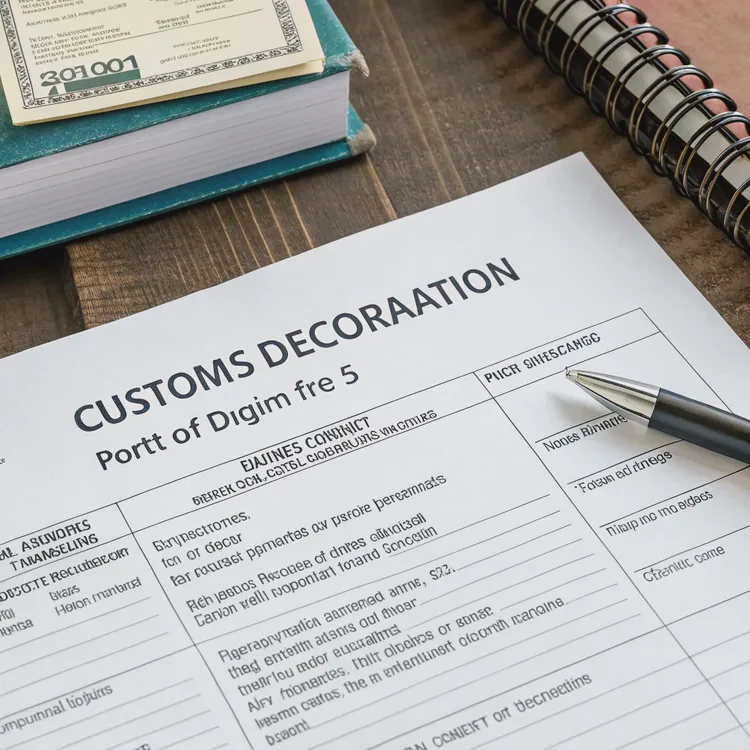
Our international trade team manages all paperwork according to U.S. CBP, USMCA, and Department of Commerce requirements.
Typical Export Documentation Package
| Document Type | Description | Purpose |
|---|---|---|
| Commercial Invoice | Detailed pricing and product description | Required for CBP valuation and duty calculation |
| Packing List | Lists quantities, dimensions, and packaging details | Used for physical verification during inspection |
| Certificate of Origin (Form USMCA or GSP) | Declares product origin | Qualifies for reduced or zero import duty |
| Bill of Lading / Airway Bill | Freight transport record | Proof of shipment |
| Export Control Classification (ECCN) | Identifies if product is controlled | EAR compliance verification |
| Material Certificate & CoC | Confirms quality and conformity | Technical verification for importer |
| MSDS & RoHS Declarations | Safety and environmental compliance | Required for industrial and electronic systems |
Export Control and ECCN Classification
Most heat sinks and passive aluminum components are classified under ECCN EAR99, meaning they are not subject to specific export license requirements. However, we still provide full documentation for compliance transparency.
For dual-use or defense-related products, we work with clients to determine the appropriate ECCN (e.g., 3A001, 9A991) and apply for any required export licenses.
Customs Assistance Services
We assist customers in:
- Preparing U.S. Customs entry documents (CBP Form 3461)
- Generating commercial invoices with correct Incoterms
- Applying for USMCA preferential tariff treatment
- Coordinating with freight forwarders and customs brokers
By managing both technical and trade compliance, we ensure that customers receive their goods without administrative hurdles.
Example: US Client Shipment
A U.S. EV component manufacturer required rapid import clearance for 1,000 liquid-cooled heat sinks. We prepared all customs documents within 48 hours, including USMCA certificate, packing list, and RoHS declarations. The shipment cleared Los Angeles Customs in one day without any inspection hold.
This level of efficiency is possible because of our familiarity with both commercial and regulatory frameworks in U.S. trade.
Conclusion
Our aluminum heat sinks meet all U.S. export, energy, and safety regulations. We have extensive experience shipping to North America, support UL and DOE system compliance, and handle complete customs documentation. From EAR classification to MSDS and CoC reports, we ensure every shipment is compliant, traceable, and ready for immediate clearance in the U.S. market.
TAGS
Latest Articles

Volume discount levels for heat sink orders?
Buyers often ask when heat sink prices start to drop with volume. Many worry they’re overpaying for small orders. This guide explains how B2B volume pricing works for thermal components. Heat sink
21 Dec,2025
Heat sink long-term supply contract options?
Many buyers want stable pricing and reliable delivery for heat sinks. But without a clear contract, risks grow over time. This article explores how to secure better long-term supply deals. Long-term
21 Dec,2025
Tooling cost for new heat sink profiles?
Many engineers struggle to understand why tooling for custom heat sinks costs so much. They worry about budgeting and production timelines. This article breaks down the cost drivers behind tooling.
21 Dec,2025
Heat sink custom sample process steps?
Sometimes, starting a custom heat sink project feels overwhelming—too many steps, too many unknowns, and too many risks. You want a sample, but not endless delays. The process for requesting and
20 Dec,2025
Standard B2B terms for heat sink payments?
When buyers and sellers in B2B heat sink markets talk about payment, many don’t fully understand what’s standard. This can lead to delayed orders, miscommunication, and even lost business
20 Dec,2025
Heat sink pricing factors for large orders?
Heat sinks are vital for many systems. When prices rise, projects stall and budgets break. This problem can hit teams hard without warning. Large order heat sink pricing depends on many factors. You
20 Dec,2025Related Articles
- Can we provide MSDS or material certificates for heat sinks?
- Do our anodizing processes meet MIL-A-8625 standards?
- Can we manufacture to CNS or JIS heat sink standards?
- Do our heat sinks comply with IATF 16949 automotive standards?
- Heat Sink Manufacturers in Indonesia
- Heat Sink Manufacturers in Mexico
- Do we have green certifications for our production processes?
- Can full test reports and certifications be delivered with orders?
- Does a 4090 need liquid cooling?
- Which is better, air cooled or liquid cooled engine?
- How does liquid cooling work in PCs?
- What is a liquid cooling system?
Author
Dr. Emily Chen
Chief AI Researcher
Leading expert in thermal dynamics and AI optimization with over 15 years of experience in data center efficiency research.
Categories
Latest Products






Recommend Categories
- Liquid cooling plate Manufacturer
- Industrial Heat Sink Manufacturer
- Standard Heat Sink Manufacturer
- Aluminum Heat Sink Manufacturer
- Copper Heat Sink Manufacturer
- Anodized Heatsink Manufacturer
- Stamping heat sink Manufacturer
- Die Casting Heatsink Manufacturer
- Soldering heat sink Manufacturer
- CNC Parts Manufacturer
Latest Products
- Wholesale Aluminum Radiator
- Water Cooling Plate Kit
- Water Cooling Heat Sink
- Water Cooling Heat Sink Kit
- Stainless Steel Water Distributor
- Server Water Cooling Plate Kit
- Server Liquid Cooling System
- Server Aluminum Cooling Kit
- S19 Full Cover Cooling Plate
- S19 Cooling Plate Kit
- S19 Aluminum Cooling Plate
Contact Expert
Have questions about this article? Reach out to our experts directly.