Can we provide MSDS or material certificates for heat sinks?
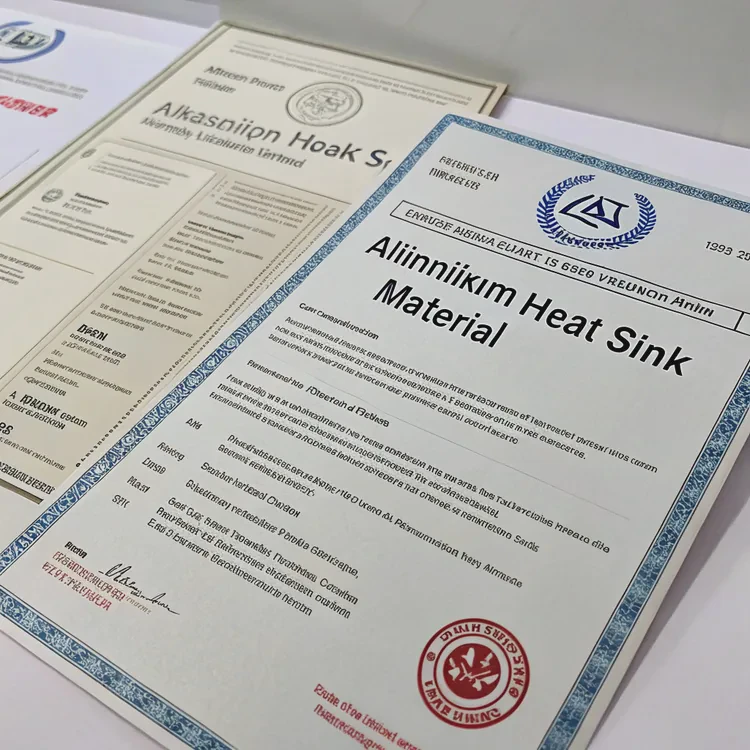
In international projects, documentation can be just as important as the product itself. Without verified material data, even the best heat sink may fail to pass a customer audit or safety review.
Yes, we provide full MSDS (Material Safety Data Sheets) and material certificates for all aluminum heat sinks, ensuring full traceability and regulatory compliance.
Every batch of aluminum used in our heat sinks comes with complete metallurgical data, mechanical performance reports, and chemical composition analysis. These documents follow both international and regional standards, including ASTM, JIS, CNS, and EN specifications.
We understand that different industries — from electronics to aerospace — require verified data to ensure quality consistency. That’s why we maintain a digital database linking every material batch to its certificate and MSDS record.
What data is included in our aluminum material reports?
Every aluminum batch is tested and recorded before production begins. Our reports are designed to give customers a full picture of what’s inside their product.
Our material reports include chemical composition, mechanical properties, heat treatment condition, surface finish details, and production traceability.
This level of documentation allows customers to confirm that each heat sink meets their technical and compliance requirements.
Key Data in Our Material Reports
| Report Category | Description | Standard Reference |
|---|---|---|
| Alloy Designation | Specifies grade (e.g., 6061-T6, 6063-T5, 5052-H32) | ASTM B209 / JIS H4000 / EN573 |
| Chemical Composition | Elemental breakdown (Si, Fe, Cu, Mn, Mg, Cr, Zn, Ti) | ASTM E1251 |
| Mechanical Properties | Tensile strength, yield strength, elongation | ASTM E8 / JIS Z2241 |
| Heat Treatment Condition | Indicates T4, T5, T6 temper | Internal process control record |
| Dimensional Tolerance | Measured vs. nominal data | JIS H4100 / CNS 2511 |
| Surface Finish | Anodizing or coating type, roughness (Ra) | MIL-A-8625 / ISO 1302 |
| Batch Traceability | Supplier name, batch number, production date | ISO 9001 / IATF 16949 traceability protocol |
All values are presented with units, testing standards, and tolerance limits. We also include digital signatures and approval stamps from our quality department to validate authenticity.
Example: Chemical Composition Table (6063-T5)
| Element | Specified Range (%) | Test Result (%) |
|---|---|---|
| Si | 0.20–0.60 | 0.45 |
| Fe | ≤0.35 | 0.23 |
| Cu | ≤0.10 | 0.05 |
| Mn | ≤0.10 | 0.02 |
| Mg | 0.45–0.90 | 0.68 |
| Cr | ≤0.10 | 0.03 |
| Zn | ≤0.10 | 0.06 |
| Ti | ≤0.10 | 0.04 |
| Al | Balance | Balance |
This data proves that the material composition conforms to the required standard. Similar tables are provided for all alloys, ensuring clarity and consistency across projects.
Test Equipment and Validation
We use optical emission spectrometers (OES) to test chemical elements and universal tensile testing machines to measure mechanical properties. Each piece of test equipment is calibrated periodically according to ISO/IEC 17025 calibration standards.
This ensures our reports are accurate, reproducible, and acceptable in any third-party audit or material review.
Do we issue certificates of conformity with each shipment?
For many B2B clients, the Certificate of Conformity (CoC) is a mandatory part of procurement. It officially confirms that the delivered parts match agreed standards and specifications.
Yes, every shipment from our factory includes a Certificate of Conformity confirming compliance with customer drawings, material specifications, and applicable standards.
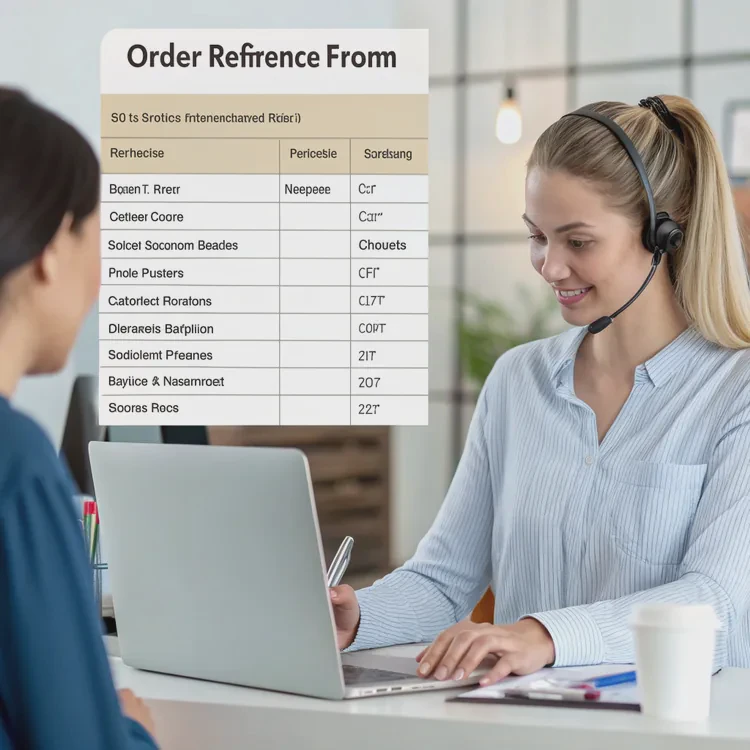
Each CoC is linked to the production order, inspection records, and test results. This creates a traceable record from raw material to finished product.
Contents of the Certificate of Conformity
| Section | Description |
|---|---|
| Customer and Order Reference | Customer name, PO number, and shipment ID |
| Product Description | Part name, model, material grade, and surface finish |
| Drawing Number / Revision | Confirms latest design version was followed |
| Material Certificate No. | Links to batch material report and MSDS |
| Test and Inspection Summary | Key dimensional and visual inspection results |
| Standard Reference | Lists applicable ASTM, JIS, EN, or MIL standards |
| Authorized Signature | Signed and stamped by QA Manager |
Each CoC is printed and digitally archived. Customers can also request electronic copies for integration with their ERP or quality management systems.
Traceability Through the Production Chain
From extrusion to machining and anodizing, every process step is recorded. The CoC consolidates all these records into a single verifiable document.
For clients in aerospace, defense, and medical sectors, this document becomes the cornerstone of supplier quality assurance, ensuring consistent compliance and accountability.
Example Workflow
- Material Input Verification: Receive and verify mill certificate.
- In-Process Inspections: Record key measurements.
- Final Inspection: Verify all dimensional and surface parameters.
- Documentation: Combine all data into the CoC and material report.
- Shipment Release: Ship only after QA manager’s final approval.
With this process, customers never receive unverified or undocumented materials.
Are MSDS documents available for all alloy types?
Safety and environmental compliance are equally important as performance. MSDS documents describe chemical hazards, storage conditions, and safe handling information.
Yes, MSDS (Material Safety Data Sheets) are available for all aluminum alloy types we use, including 1050, 3003, 5052, 6061, and 6063 series.
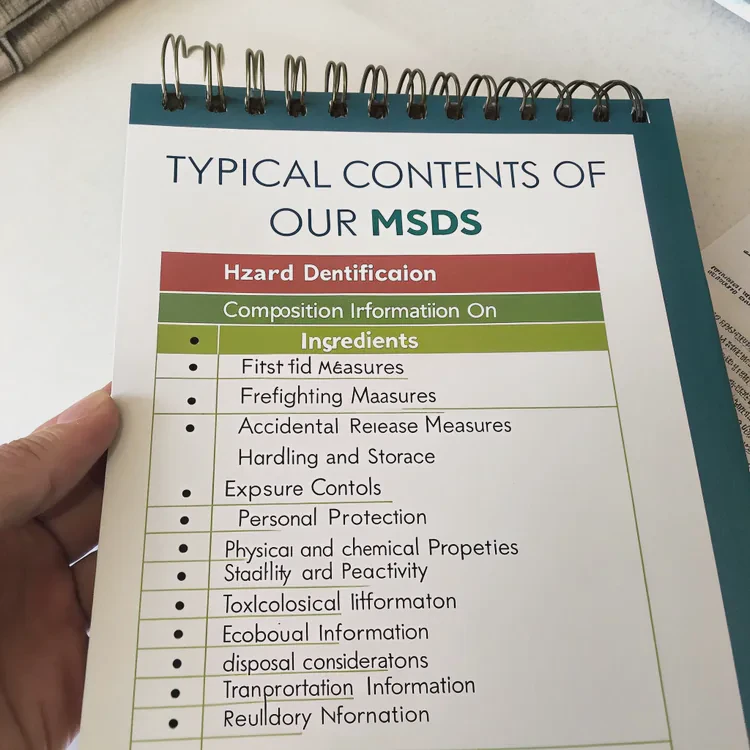
These documents are prepared according to the Globally Harmonized System (GHS) and meet requirements of REACH, RoHS, and OSHA standards.
Our MSDS records are updated periodically to reflect the latest environmental and safety regulations.
Typical Contents of Our MSDS
| Section | Information Included |
|---|---|
| Section 1 | Product and Company Identification |
| Section 2 | Composition / Information on Ingredients |
| Section 3 | Hazard Identification |
| Section 4 | First Aid Measures |
| Section 5 | Firefighting Measures |
| Section 6 | Accidental Release Measures |
| Section 7 | Handling and Storage Guidelines |
| Section 8 | Exposure Controls and Personal Protection |
| Section 9 | Physical and Chemical Properties |
| Section 10 | Stability and Reactivity |
| Section 11 | Toxicological Information |
| Section 12 | Ecological Information |
| Section 13 | Disposal Considerations |
| Section 14 | Transport Information |
| Section 15 | Regulatory Information |
These MSDS files are available in both English and Chinese, with region-specific adaptations for Japan (JIS Z7253) or Europe (CLP regulation).
Digital Access and Updates
Customers can request MSDS copies at any time. For regular buyers, we provide cloud access through our document management system, ensuring 24⁄7 availability.
If new alloys or coatings are introduced, updated MSDS files are automatically sent to registered clients.
Example of Alloy-Specific Notes
- 5052 Aluminum: Non-combustible, low reactivity, suitable for high-corrosion environments.
- 6061-T6 Aluminum: Stable under normal conditions but generates fine dust during machining — requires ventilation.
- 7075 Aluminum: Contains zinc and copper; proper disposal and recycling required.
These notes help customers meet workplace safety and environmental management requirements.
Can third-party verification be requested for materials?
Sometimes, clients need independent verification — especially in high-risk or government projects.
Yes, third-party verification can be requested for any material batch or finished heat sink, through recognized laboratories such as SGS, TÜV, or Intertek.

We welcome external validation because transparency strengthens customer confidence. Our systems are designed to cooperate smoothly with independent auditors and testing institutions.
Available Third-Party Tests
| Test Type | Description | Standard Reference |
|---|---|---|
| Chemical Composition | Elemental analysis by OES | ASTM E1251 / JIS H1353 |
| Mechanical Properties | Tensile, yield, and elongation | ASTM E8 / CNS 14705 |
| Metallographic Examination | Grain size, structure, inclusions | ASTM E407 |
| Hardness Test | Brinell or Vickers | ASTM E10 / E384 |
| Corrosion Test | Salt spray or humidity chamber | ASTM B117 / JIS Z2371 |
Upon completion, clients receive official third-party reports that can be cross-referenced with our internal data. The comparison ensures that all results align with the required specification.
Verification Workflow
- Sample Collection: Witnessed or sealed sampling from production batch.
- Independent Testing: Performed by accredited third-party lab.
- Report Issuance: Results sent directly to both client and us.
- Data Reconciliation: Cross-check with internal test results.
- Archiving: Reports linked to production records for traceability.
This process adds an extra layer of confidence for international clients who require objective quality validation.
Example: Aerospace Client Verification
A European aerospace customer required TÜV verification of 6061-T6 aluminum heat sink plates. The independent test confirmed our internal data on composition and tensile strength. The client later included us in their approved supplier list for long-term cooperation.
Conclusion
We provide complete MSDS documents, material certificates, and Certificates of Conformity for all aluminum heat sinks. Our reports cover chemical composition, mechanical data, and traceability details. With optional third-party verification and strict adherence to global standards, we ensure that every component is safe, compliant, and fully documented from raw material to delivery.
TAGS
Latest Articles

Volume discount levels for heat sink orders?
Buyers often ask when heat sink prices start to drop with volume. Many worry they’re overpaying for small orders. This guide explains how B2B volume pricing works for thermal components. Heat sink
21 Dec,2025
Heat sink long-term supply contract options?
Many buyers want stable pricing and reliable delivery for heat sinks. But without a clear contract, risks grow over time. This article explores how to secure better long-term supply deals. Long-term
21 Dec,2025
Tooling cost for new heat sink profiles?
Many engineers struggle to understand why tooling for custom heat sinks costs so much. They worry about budgeting and production timelines. This article breaks down the cost drivers behind tooling.
21 Dec,2025
Heat sink custom sample process steps?
Sometimes, starting a custom heat sink project feels overwhelming—too many steps, too many unknowns, and too many risks. You want a sample, but not endless delays. The process for requesting and
20 Dec,2025
Standard B2B terms for heat sink payments?
When buyers and sellers in B2B heat sink markets talk about payment, many don’t fully understand what’s standard. This can lead to delayed orders, miscommunication, and even lost business
20 Dec,2025
Heat sink pricing factors for large orders?
Heat sinks are vital for many systems. When prices rise, projects stall and budgets break. This problem can hit teams hard without warning. Large order heat sink pricing depends on many factors. You
20 Dec,2025Related Articles
- Do our anodizing processes meet MIL-A-8625 standards?
- Can we manufacture to CNS or JIS heat sink standards?
- Do our heat sinks comply with IATF 16949 automotive standards?
- Heat Sink Manufacturers in Indonesia
- Heat Sink Manufacturers in Mexico
- Heat Sink Manufacturers in Australia
- What export regulations apply to heat sinks for the US market?
- Do we have green certifications for our production processes?
- Can full test reports and certifications be delivered with orders?
- Does a 4090 need liquid cooling?
- Which is better, air cooled or liquid cooled engine?
- How does liquid cooling work in PCs?
Author
Dr. Emily Chen
Chief AI Researcher
Leading expert in thermal dynamics and AI optimization with over 15 years of experience in data center efficiency research.
Categories
Latest Products






Recommend Categories
- Liquid cooling plate Manufacturer
- Industrial Heat Sink Manufacturer
- Standard Heat Sink Manufacturer
- Aluminum Heat Sink Manufacturer
- Copper Heat Sink Manufacturer
- Anodized Heatsink Manufacturer
- Stamping heat sink Manufacturer
- Die Casting Heatsink Manufacturer
- Soldering heat sink Manufacturer
- CNC Parts Manufacturer
Latest Products
- Wholesale Aluminum Radiator
- Water Cooling Plate Kit
- Water Cooling Heat Sink
- Water Cooling Heat Sink Kit
- Stainless Steel Water Distributor
- Server Water Cooling Plate Kit
- Server Liquid Cooling System
- Server Aluminum Cooling Kit
- S19 Full Cover Cooling Plate
- S19 Cooling Plate Kit
- S19 Aluminum Cooling Plate
Contact Expert
Have questions about this article? Reach out to our experts directly.