How does a liquid cooling system work?
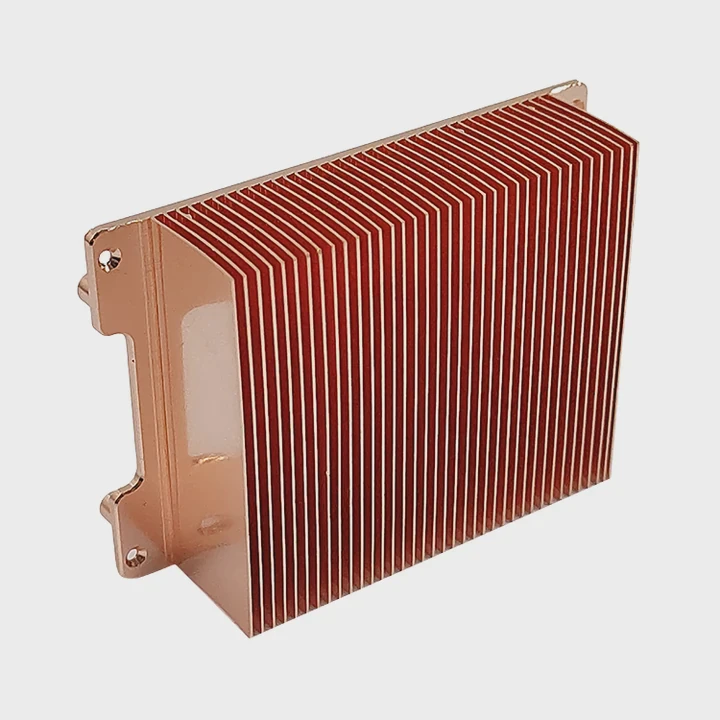
Liquid cooling systems are becoming essential for high-performance electronics, servers, and electric vehicles. As heat density increases, air cooling alone struggles to maintain safe operating temperatures.
A liquid cooling system works by circulating a coolant fluid through heat-generating components to absorb and transport heat away, maintaining stable performance and extending the system’s lifespan.
When I first started working on cooling modules, I noticed how air systems hit their limit fast. Fans alone could not handle the thermal load. That was when I turned to liquid cooling. It gave me more flexibility, efficiency, and control.
What components make up the system?
Every liquid cooling system is a balance of thermal science and mechanical design. Understanding its components is key to optimizing its efficiency.
A complete liquid cooling system includes a cold plate, pump, heat exchanger (or radiator), reservoir, and coolant, all connected through flexible or rigid tubing.
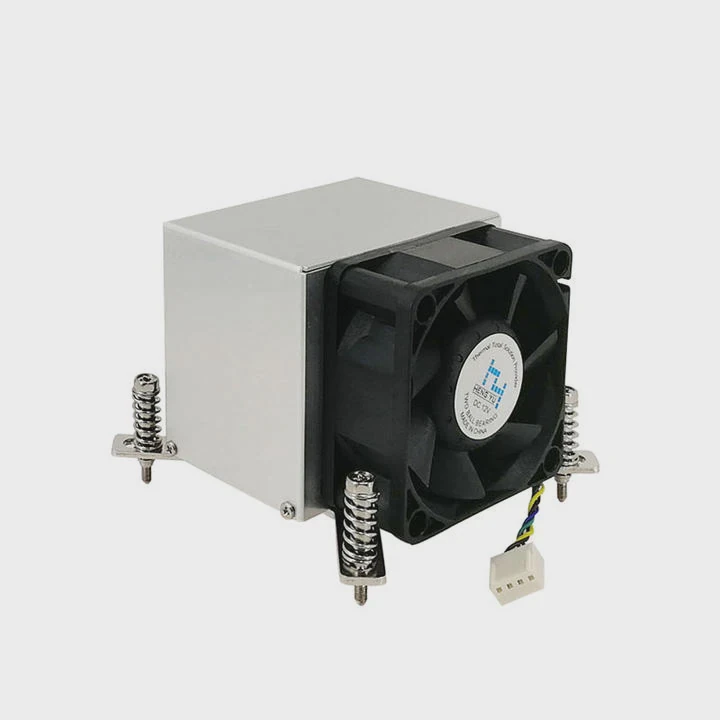
When I design systems for industrial clients, I often explain that each part has a distinct job. Below is a simplified table I use during technical presentations:
| Component | Function | Key Material |
|---|---|---|
| Cold Plate | Absorbs heat from the source | Aluminum or Copper |
| Pump | Circulates coolant through the loop | Magnetic drive or mechanical |
| Heat Exchanger | Transfers heat from coolant to air | Aluminum fins, brazed core |
| Reservoir | Holds excess coolant, manages flow stability | Acrylic or Aluminum |
| Tubing | Connects all components | Rubber, Silicone, or Metal |
Cold Plate Design
The cold plate sits directly on the heat source—like a CPU, inverter, or laser diode. Inside, it has microchannels or pin fins that enhance surface contact with the coolant. The coolant flows through these channels, carrying heat away.
Pump and Flow Rate
The pump is the heart of the system. It defines the flow rate and determines how fast the coolant moves through the loop. If the pump is too weak, hotspots develop. If it’s too strong, turbulence increases, reducing heat transfer efficiency. Finding the right balance is both art and science.
Heat Exchanger
The heat exchanger (often called a radiator) releases the heat into the ambient air. Fans mounted on it accelerate this process. The larger the surface area and the more optimized the fin geometry, the better the performance.
When these components are assembled into a closed loop, they create a stable and efficient thermal management network. This modularity also allows engineers like me to customize systems for very specific industries—from 5G base stations to EV battery packs.
What are its advantages over air cooling?
When we move from air to liquid cooling, the entire concept of heat management changes. Liquid cooling opens new levels of performance, control, and design flexibility.
Liquid cooling provides higher heat transfer efficiency, quieter operation, compact design options, and greater reliability compared to air cooling systems.
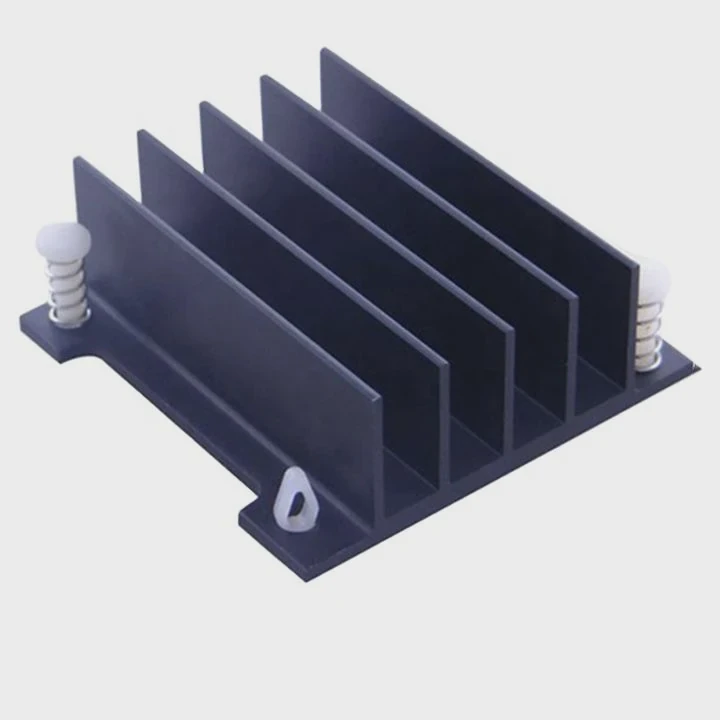
In my experience, air cooling works fine for low-power electronics, but it quickly becomes noisy and space-consuming in high-performance systems. Let’s compare their characteristics clearly.
| Feature | Air Cooling | Liquid Cooling |
|---|---|---|
| Heat Transfer Efficiency | Low to Moderate | High |
| Noise Level | Moderate to High | Low |
| Space Requirement | Larger fans and heat sinks | Compact modules |
| Maintenance Frequency | Low | Moderate |
| Temperature Uniformity | Uneven | Stable and balanced |
Higher Efficiency
Liquid has a much higher heat capacity and thermal conductivity than air. This means it can absorb and move more heat with less volume. When I implemented liquid cooling in a server project, we saw temperature drops of up to 20°C compared to fans alone.
Design Flexibility
Since liquid can travel through narrow channels, the system design becomes more modular. Engineers can separate hot zones from sensitive areas easily, leading to compact and integrated architectures.
Reduced Noise
Fans are noisy when running at high speed. Liquid systems only need small pumps and moderate fan speeds for radiators, so the operation remains quiet. This is important in laboratories and medical applications where silence matters.
Reliability and Longevity
Thermal cycling can fatigue components. With liquid cooling, the temperature stays stable, reducing mechanical stress on electronic joints and materials. In my line of work, this directly translates to longer component life and fewer warranty claims.
How does coolant circulate inside?
Coolant circulation is the lifeblood of any liquid cooling system. Without proper flow, even the best design fails.
Coolant moves through the closed loop by the pump’s pressure, absorbing heat from the cold plate and releasing it through the radiator before returning to repeat the cycle.

Flow Mechanics
Inside the system, the coolant follows a continuous path:
Pump → Cold Plate → Radiator → Reservoir → Pump
This closed-loop structure maintains pressure and prevents contamination. The flow direction can be adjusted, but the basic sequence always ensures heat absorption before dissipation.
Fluid Dynamics in Channels
The cold plate channels are designed to create turbulence at a micro level. This increases surface contact between the coolant and the hot surface. I often use CFD (Computational Fluid Dynamics) simulations to analyze flow velocity and pressure drop.
When the coolant absorbs heat, its temperature rises slightly. The heat exchanger then cools it down before it returns to the source. The key parameters I track are:
| Parameter | Typical Range | Effect |
|---|---|---|
| Flow Rate | 1–3 L/min | Determines heat removal rate |
| Pressure Drop | 20–100 kPa | Affects pump efficiency |
| Coolant Temperature | 25–60°C | Influences overall system balance |
Coolant Composition
The coolant is usually a mixture of water and glycol or other additives. The additives prevent corrosion, algae growth, and freezing. In high-end systems, dielectric fluids are used for electrical insulation and higher thermal stability.
I once replaced pure water with a glycol-water mix in a high-humidity lab setup. The corrosion issues disappeared instantly. It proved how critical coolant chemistry is to system reliability.
Thermal Expansion and Reservoir Role
The reservoir acts as a pressure buffer. When coolant heats up, it expands. The reservoir allows for this change, keeping the system sealed and balanced. It also helps remove air bubbles, which otherwise reduce heat transfer efficiency.
Monitoring and Maintenance
Modern systems often include temperature sensors and flow meters. They feed data into a control module, which adjusts pump speed or triggers alarms. This smart monitoring has made liquid cooling not just efficient but intelligent.
What are the innovations in system efficiency?
The world of thermal management is evolving fast. Every year, new materials and designs push the limits of what liquid cooling can achieve.
Recent innovations focus on microchannel design, phase-change materials, integrated cold plates, and smart control systems that optimize temperature and energy use in real-time.

Microchannel and Jet Impingement Structures
Microchannel cold plates now feature structures smaller than 1 mm. These channels create high heat flux removal rates, perfect for chips and power modules. Jet impingement technology adds another layer by directing high-speed coolant jets onto the surface, improving uniformity.
I remember testing a prototype with microchannels machined by laser etching. The result was stunning—thermal resistance dropped by 35%, while pressure loss remained stable.
Phase-Change Integration
Some designs now combine traditional liquid cooling with phase-change materials (PCM). These materials absorb heat during melting and release it during solidification. It smooths out temperature spikes and prevents overheating in dynamic load conditions.
This hybrid approach is now common in energy storage systems and aerospace electronics, where temperature stability is critical.
Advanced Materials and Surface Treatments
New coatings like nickel-phosphorus or diamond-like carbon enhance corrosion resistance and heat conduction. Aluminum alloys are also being optimized for lightweight yet high-conductivity performance.
I once collaborated with a supplier who introduced sintered micro-porous coatings on cold plates. The micro-pores increased wettability, making coolant spread faster across the surface.
Smart Control Systems
Efficiency is no longer just about materials. AI-based controllers can now monitor thermal loads and adjust pump or fan speed dynamically. This saves power while keeping components within optimal temperature ranges.
Such systems are especially useful in data centers, where thousands of cooling loops must operate in sync. With digital twins, engineers can simulate behavior before actual deployment, reducing risk and cost.
Sustainable Coolants and Recycling
Environmental responsibility has become another focus area. Researchers are developing biodegradable and low-GWP (Global Warming Potential) coolants. Some modern systems are even designed for coolant recovery and re-use after purification.
This sustainable shift ensures that liquid cooling not only supports performance but also contributes to environmental goals.
Conclusion
Liquid cooling systems redefine how we manage heat in modern electronics and machinery. By understanding how they work, their components, and the innovations behind them, we can design systems that are cooler, quieter, and far more efficient.
TAGS
Latest Articles
Volume discount levels for heat sink orders?
Buyers often ask when heat sink prices start to drop with volume. Many worry they’re overpaying for small orders. This guide explains how B2B volume pricing works for thermal components. Heat sink
21 Dec,2025
Heat sink long-term supply contract options?
Many buyers want stable pricing and reliable delivery for heat sinks. But without a clear contract, risks grow over time. This article explores how to secure better long-term supply deals. Long-term
21 Dec,2025
Tooling cost for new heat sink profiles?
Many engineers struggle to understand why tooling for custom heat sinks costs so much. They worry about budgeting and production timelines. This article breaks down the cost drivers behind tooling.
21 Dec,2025
Heat sink custom sample process steps?
Sometimes, starting a custom heat sink project feels overwhelming—too many steps, too many unknowns, and too many risks. You want a sample, but not endless delays. The process for requesting and
20 Dec,2025
Standard B2B terms for heat sink payments?
When buyers and sellers in B2B heat sink markets talk about payment, many don’t fully understand what’s standard. This can lead to delayed orders, miscommunication, and even lost business
20 Dec,2025
Heat sink pricing factors for large orders?
Heat sinks are vital for many systems. When prices rise, projects stall and budgets break. This problem can hit teams hard without warning. Large order heat sink pricing depends on many factors. You
20 Dec,2025Related Articles
- Heat Sink Manufacturers in Malaysia
- Heat Sink Manufacturers in the Philippines
- Heat Sink Manufacturers in Bangladesh
- Heat Sink Manufacturers in South Africa
- Heat Sink Manufacturers in Nigeria
- Heat Sink Manufacturers in Argentina
- Does Ryzen 5 7600X need liquid cooling?
- Does Liquid Cooling Work Better Than Fans?
- Which is better, oil-cooled or liquid-cooled?
- Why is a Liquid Cooling System Pressurized?
- When a gas is cooled to form a liquid?
- How to build a liquid cooling system for PC?
Author
Dr. Emily Chen
Chief AI Researcher
Leading expert in thermal dynamics and AI optimization with over 15 years of experience in data center efficiency research.
Categories
Latest Products






Recommend Categories
- Liquid cooling plate Manufacturer
- Industrial Heat Sink Manufacturer
- Standard Heat Sink Manufacturer
- Aluminum Heat Sink Manufacturer
- Copper Heat Sink Manufacturer
- Anodized Heatsink Manufacturer
- Stamping heat sink Manufacturer
- Die Casting Heatsink Manufacturer
- Soldering heat sink Manufacturer
- CNC Parts Manufacturer
Latest Products
- Wholesale Aluminum Radiator
- Water Cooling Plate Kit
- Water Cooling Heat Sink
- Water Cooling Heat Sink Kit
- Stainless Steel Water Distributor
- Server Water Cooling Plate Kit
- Server Liquid Cooling System
- Server Aluminum Cooling Kit
- S19 Full Cover Cooling Plate
- S19 Cooling Plate Kit
- S19 Aluminum Cooling Plate
Contact Expert
Have questions about this article? Reach out to our experts directly.