When a gas is cooled to form a liquid?
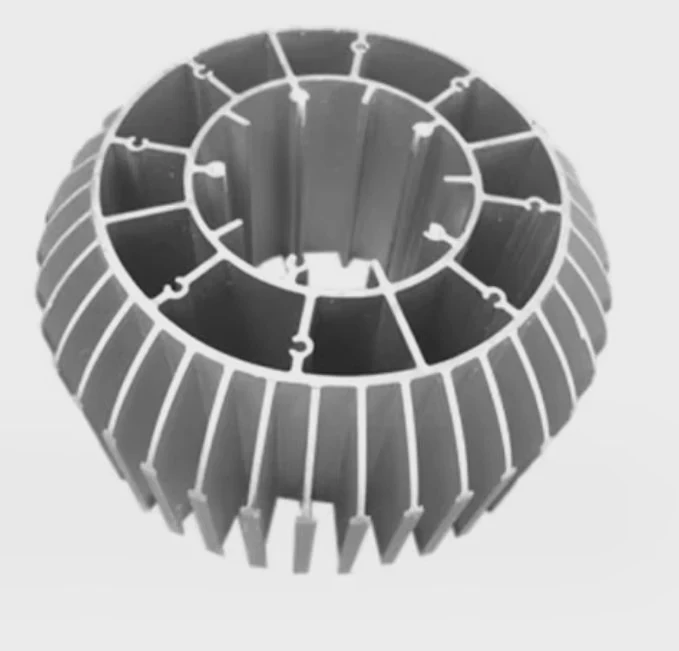
When gas turns into liquid, it is not just about temperature—it is about how energy leaves the system. The process reshapes how particles move and interact.
Condensation happens when gas loses enough thermal energy that its molecules come closer together to form a liquid phase.
As heat energy escapes, molecular motion slows down, allowing intermolecular forces to take over and pull the gas molecules into a denser, liquid state.
This process is fundamental in nature and industry—from dew on leaves to industrial heat exchangers, condensation defines how energy transforms between phases.
What is condensation?
When I first studied thermodynamics, condensation seemed simple. But it is a highly dynamic process that bridges microscopic motion and macroscopic energy transfer.
Condensation is the phase change in which vapor molecules lose energy and transition into a liquid state as temperature drops or pressure increases.
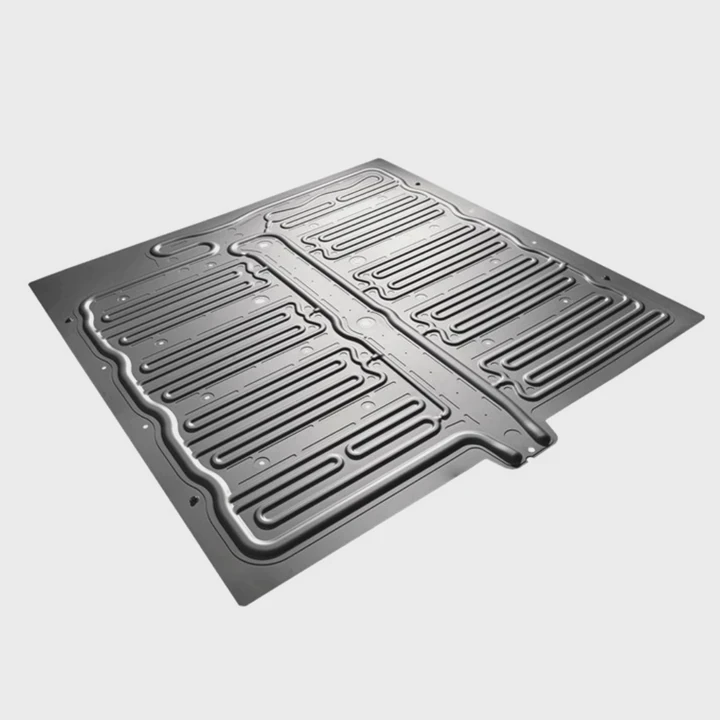
When a gas cools, its internal energy decreases. Molecules collide less energetically, allowing attractive forces such as van der Waals interactions to dominate. When enough energy is lost, these molecules can no longer overcome these forces, forming clusters that grow into liquid droplets.
Stages of condensation
| Stage | Description |
|---|---|
| Cooling | Temperature decreases, reducing kinetic energy |
| Nucleation | Molecules begin forming small clusters |
| Growth | Clusters merge into visible liquid droplets |
| Stabilization | A dynamic equilibrium forms between gas and liquid |
Condensation occurs in many systems: clouds forming in the sky, water droplets on a cold bottle, or even in cryogenic engineering where gases like nitrogen turn to liquid under controlled cooling.
What happens to gas molecules during cooling?
I often explain this to students with a simple idea: cooling a gas is like slowing down a crowd of dancers until they stop and stand close together.
When gas cools, its molecules lose kinetic energy, move more slowly, and come closer, allowing intermolecular forces to bind them into a liquid structure.
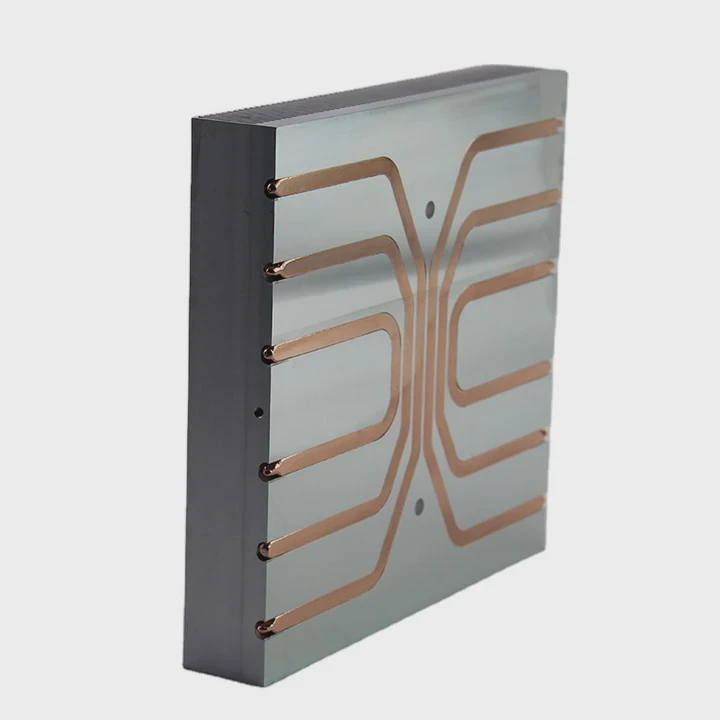
When the gas cools, the average kinetic energy (E_k = \frac{3}{2}kT) drops, where (k) is the Boltzmann constant and (T) is temperature. As molecules lose energy, their collisions weaken, and attractive forces dominate. Eventually, they gather to form liquid clusters.
In systems like steam turbines or refrigeration loops, this behavior is critical. Understanding molecular energy distribution allows engineers to control condensation efficiently. For example, the rate of cooling determines whether the resulting liquid forms as fine mist, large droplets, or a continuous film.
Key differences between gas and liquid behavior
| Property | Gas | Liquid |
|---|---|---|
| Molecular distance | Large | Close |
| Kinetic energy | High | Moderate |
| Intermolecular forces | Weak | Strong |
| Volume | Expands freely | Fixed |
| Compressibility | High | Low |
This microscopic transformation also explains why heat exchangers or condensers need precise temperature control. If cooling is too fast, surface condensation may cause uneven heat transfer. If it is too slow, energy efficiency drops.
At the molecular level, the cooling process demonstrates how energy, motion, and structure are linked in physical systems.
How to measure the phase change accurately?
I learned that measuring condensation is not only about knowing the temperature. It is about observing when energy exchange stops and equilibrium begins.
The phase change is measured accurately by monitoring temperature, pressure, and energy flow during the transition, often using calorimetry or advanced thermal sensors.
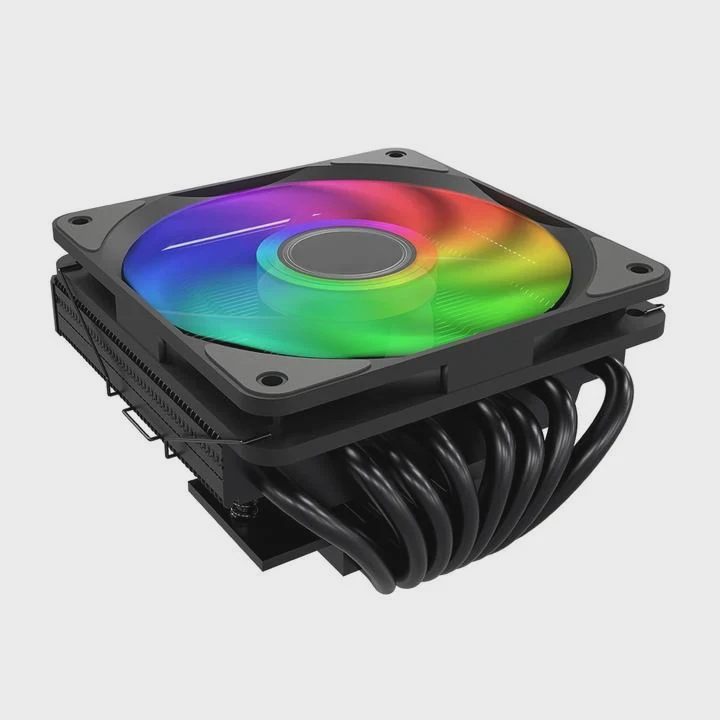
Phase change occurs at a fixed temperature and pressure for pure substances—known as the saturation point. To measure it accurately, scientists use precise tools like differential scanning calorimeters (DSC) and pressure-temperature sensors.
Common measurement techniques
| Method | Principle | Application |
|---|---|---|
| Calorimetry | Measures heat absorbed or released | Research & material testing |
| Thermocouples | Detect rapid temperature shifts | Industrial control |
| Infrared thermography | Captures surface temperature distribution | Condensation visualization |
| Pressure transducers | Track vapor pressure changes | Boiling and condensation analysis |
In laboratories, calorimeters can capture minute energy changes as gas transitions to liquid. The heat released during condensation is called the latent heat of vaporization, which must be removed from the system for complete phase transition.
For instance, water condenses at 100°C under 1 atm pressure, but under vacuum or higher pressures, this point shifts. Therefore, controlling external conditions is vital. Engineers use phase diagrams to map how temperature and pressure interact during phase transitions.
Practical consideration in accurate measurement
- Purity of gas — Impurities can alter condensation temperature.
- Surface conditions — Smooth surfaces promote film condensation, while rough ones cause droplet formation.
- Cooling rate — Rapid cooling can create supercooled states before condensation begins.
- Environmental factors — Humidity and air flow affect equilibrium behavior.
Accurate phase change measurement is fundamental in fields such as cryogenics, power generation, and materials research. It helps engineers design efficient heat exchangers, optimize refrigeration systems, and develop new energy materials.
What are the research trends in thermodynamics?
In my years following thermal research, I’ve seen how classic thermodynamics evolved from textbook equations to modern computational and nanoscale applications.
Current research in thermodynamics focuses on energy efficiency, nanoscale heat transfer, phase-change materials, and data-driven modeling for complex systems.
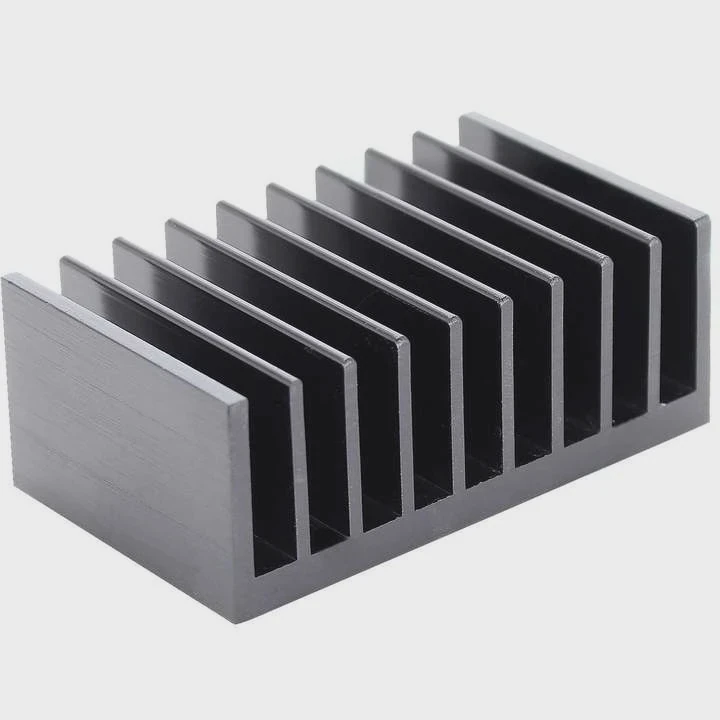
The traditional thermodynamic laws remain the same, but how we apply them has changed dramatically. Researchers now explore thermal phenomena at scales once unimaginable—from molecular interactions to quantum heat flow.
1. Advanced Phase-Change Materials (PCMs)
Phase-change materials are substances that absorb or release heat during transitions like melting or condensation. They are now used in thermal batteries, building insulation, and spacecraft cooling systems.
Recent studies focus on microencapsulation techniques that improve thermal conductivity and cycle stability, enabling long-term use in real-world systems.
2. Nanoscale Thermodynamics
At the nanoscale, heat transfer behaves differently because surface effects dominate over bulk properties. For example, liquid–vapor interfaces at nanometer thickness show quantum confinement effects. Researchers use molecular dynamics simulations to visualize how atoms move during phase transitions.
3. Computational and AI-driven modeling
Machine learning and AI have entered thermodynamics. Predictive models can now simulate condensation and evaporation at atomic accuracy, reducing the need for costly experiments. Neural networks help predict phase equilibrium, latent heat, and heat transfer coefficients for new materials.
4. Sustainable Energy and Heat Recovery
In power systems, thermodynamics guides the recovery of waste heat from industrial processes. Through organic Rankine cycles and supercritical CO₂ cycles, engineers achieve higher efficiency with lower emissions. Condensation control is central to these cycles, as it determines how effectively heat is reclaimed.
5. Cryogenic and Space Applications
Spacecraft cooling systems depend on controlled condensation in microgravity. Research now investigates how gas molecules behave when there is no gravity to guide liquid flow. Cryogenic condensation also supports liquid hydrogen and nitrogen storage, crucial for next-generation energy technologies.
Global research trends summary
| Research Field | Focus Area | Emerging Application |
|---|---|---|
| Phase-change materials | Thermal storage, conductivity | Renewable energy systems |
| Nanothermodynamics | Interfacial energy, quantum heat | Semiconductor cooling |
| Computational thermodynamics | AI-based prediction models | Process optimization |
| Sustainable energy cycles | Waste heat recovery | Industrial energy saving |
| Cryogenic condensation | Low-temperature dynamics | Space and hydrogen storage |
What makes today’s research exciting is its combination of classic physics and advanced computation. Condensation, once studied with simple lab setups, is now modeled atom by atom. The boundaries between physics, chemistry, and data science are merging, allowing researchers to create materials that manage heat with unprecedented precision.
Looking to the future
Future thermodynamic research aims for zero energy loss systems. By understanding molecular energy transfer during condensation, scientists can design surfaces that control droplet formation, enabling self-cleaning or anti-fogging technologies. In the next decade, we may see smart thermal systems that adapt automatically to temperature changes using AI algorithms linked with real-time sensors.
These advancements will transform industries—making refrigeration, energy conversion, and even space exploration more efficient and sustainable.
Conclusion
Condensation is more than a cooling effect; it is a bridge between energy and matter. When gas turns into liquid, it reveals how energy moves, how molecules interact, and how thermodynamics drives technology forward. Understanding this process helps us master energy systems across nature and industry.
TAGS
Latest Articles

Volume discount levels for heat sink orders?
Buyers often ask when heat sink prices start to drop with volume. Many worry they’re overpaying for small orders. This guide explains how B2B volume pricing works for thermal components. Heat sink
21 Dec,2025
Heat sink long-term supply contract options?
Many buyers want stable pricing and reliable delivery for heat sinks. But without a clear contract, risks grow over time. This article explores how to secure better long-term supply deals. Long-term
21 Dec,2025
Tooling cost for new heat sink profiles?
Many engineers struggle to understand why tooling for custom heat sinks costs so much. They worry about budgeting and production timelines. This article breaks down the cost drivers behind tooling.
21 Dec,2025
Heat sink custom sample process steps?
Sometimes, starting a custom heat sink project feels overwhelming—too many steps, too many unknowns, and too many risks. You want a sample, but not endless delays. The process for requesting and
20 Dec,2025
Standard B2B terms for heat sink payments?
When buyers and sellers in B2B heat sink markets talk about payment, many don’t fully understand what’s standard. This can lead to delayed orders, miscommunication, and even lost business
20 Dec,2025
Heat sink pricing factors for large orders?
Heat sinks are vital for many systems. When prices rise, projects stall and budgets break. This problem can hit teams hard without warning. Large order heat sink pricing depends on many factors. You
20 Dec,2025Related Articles
- Why is a Liquid Cooling System Pressurized?
- Which is better, oil-cooled or liquid-cooled?
- Does Liquid Cooling Work Better Than Fans?
- Does Ryzen 5 7600X need liquid cooling?
- How does a liquid cooling system work?
- Heat Sink Manufacturers in Malaysia
- How to build a liquid cooling system for PC?
- Where to install liquid cooler for best performance?
- How to liquid cool your GPU?
- Do you need thermal paste for liquid cooling CPU?
- How to check liquid cooling?
- How to install Cooler Master liquid cooler?
Author
Dr. Emily Chen
Chief AI Researcher
Leading expert in thermal dynamics and AI optimization with over 15 years of experience in data center efficiency research.
Categories
Latest Products






Recommend Categories
- Liquid cooling plate Manufacturer
- Industrial Heat Sink Manufacturer
- Standard Heat Sink Manufacturer
- Aluminum Heat Sink Manufacturer
- Copper Heat Sink Manufacturer
- Anodized Heatsink Manufacturer
- Stamping heat sink Manufacturer
- Die Casting Heatsink Manufacturer
- Soldering heat sink Manufacturer
- CNC Parts Manufacturer
Latest Products
- Wholesale Aluminum Radiator
- Water Cooling Plate Kit
- Water Cooling Heat Sink
- Water Cooling Heat Sink Kit
- Stainless Steel Water Distributor
- Server Water Cooling Plate Kit
- Server Liquid Cooling System
- Server Aluminum Cooling Kit
- S19 Full Cover Cooling Plate
- S19 Cooling Plate Kit
- S19 Aluminum Cooling Plate
Contact Expert
Have questions about this article? Reach out to our experts directly.