Why does evaporation lead to cooling of the liquid?
When I first learned about evaporation, I thought it was just water disappearing into air. Later I found out it is a selective escape of the fastest molecules. That simple idea explains why the liquid that stays behind becomes cooler.
Evaporation leads to cooling because the highest-energy molecules leave the liquid first, so the average energy of the remaining liquid drops, which means its temperature goes down.
This is not magic. It is energy bookkeeping. If we follow the energy of the liquid and the energy of the escaping molecules, we can see the full picture. Then we can connect it to real cooling devices that engineers use today.
What is the science behind evaporation?
When I try to explain evaporation, I always start at the surface. Not every molecule inside a liquid can escape. Only the ones at the surface and with enough kinetic energy can break free from the attraction of nearby molecules.
Evaporation is a surface phenomenon where fast-moving molecules overcome intermolecular forces and escape into the gas phase, lowering the average kinetic energy of the liquid.
At any temperature, molecules in a liquid do not move with the same speed. Their speeds follow a distribution. Some are slow, some are average, some are very fast. The very fast ones are the ones that can leave. When they leave, the liquid loses some of its most energetic members.
What controls the rate of evaporation?
| Factor | Effect on Evaporation | Why it Matters |
|---|---|---|
| Temperature | Higher temp → faster evaporation | More molecules have enough energy to escape |
| Surface Area | Larger area → faster evaporation | More molecules exposed to air |
| Air Movement | More airflow → faster evaporation | Removes saturated air near surface |
| Humidity | Higher humidity → slower evaporation | Air is already full of vapor |
| Intermolecular Forces | Weaker forces → faster evaporation | Easier escape from liquid |
So evaporation is not random. It responds to the environment. Warm, dry, windy air will pull water off a surface very fast. Cool, humid, still air will slow it down.
Why this is important
This surface-based view helps us understand why sweat works, why wet clothes dry, and why liquids cool themselves down in open containers. It is the same physics, just in different settings.
How does energy transfer occur during evaporation?
When I wanted to truly understand cooling by evaporation, I focused on energy transfer. Temperature is not a mysterious number. It is the average kinetic energy of molecules. If the average goes down, the temperature goes down.
During evaporation, high-energy molecules leave the liquid, so the liquid loses internal energy. Since temperature is linked to internal energy, the liquid cools.
Let me break it down simply.
- Molecules at the surface collide with others.
- Some gain enough kinetic energy to break away.
- Those that escape take that energy with them.
- The remaining molecules now have lower average energy.
- Lower average energy = lower temperature.
This is like a classroom where the smartest students leave; the class average drops. The liquid loses its “smartest” (most energetic) molecules.
Energy View vs Temperature View
| Viewpoint | What We Track | What We See |
|---|---|---|
| Energy View | Internal energy (U) decreases as molecules escape | Cooling is loss of energy |
| Temperature View | Average kinetic energy drops | Thermometer shows lower temperature |
| Molecular View | Fastest molecules leave first | Distribution shifts to lower speeds |
A bit deeper
In thermodynamics terms, evaporation requires latent heat of vaporization. If the liquid is not being heated from outside, it will supply this heat from its own internal energy. That is why it cools.
If we keep supplying heat from outside (like sunlight on a pond), the temperature may stay constant while evaporation continues. The energy from outside replaces the energy taken away by the escaping molecules. That is why some liquids can keep evaporating without becoming ice cold: they are being reheated continuously.
Why energy transfer matters
Once we see evaporation as “energy carried away,” we can design systems to use it. We can make water pass through a porous surface, we can blow air over it, and it will cool. That is exactly what engineers do.
How is this used in cooling technologies?
When I first saw an evaporative cooler working in a hot, dry place, I was surprised how something so simple could make a room feel cooler without a compressor. It was just using the physics we discussed.
Evaporative cooling technologies force a liquid to evaporate faster so that it absorbs heat from its surroundings, lowering air or surface temperature.
There are many ways to do this. Some use water pads and fans. Some use spray nozzles. Some use porous ceramics. Some even use phase-change materials that switch between liquid and vapor.
Common Evaporation-Based Cooling Methods
| Technology | How It Works | Typical Use |
|---|---|---|
| Direct Evaporative Cooler | Air is blown through wet media; water evaporates and cools air | Dry climate building cooling |
| Cooling Tower | Warm water is exposed to air so part of it evaporates and cools the rest | HVAC, industrial plants |
| Sweat (biological) | Water on skin evaporates, taking heat from body | Human thermoregulation |
| Porous Pot / Clay Pot | Water seeps through, evaporates on surface, cooling inside | Low-tech food storage |
Where engineers use it
- Data centers in dry regions use indirect or direct evaporative systems to cut energy cost.
- Industrial cooling towers use evaporation to remove waste heat from chillers and condensers.
- Agriculture uses fogging systems to protect plants from heat.
- Wearable cooling sometimes uses phase change and evaporation together.
Practical limits
Evaporative cooling works best when the air is dry. If the air is already humid, the evaporation rate goes down. That is why deserts love swamp coolers, but tropical cities rely on compressor-based air conditioning.
My note
The beauty of evaporation-based cooling is that it can be passive, low-energy, and low-cost. We are not forcing heat into a refrigerant. We are just helping nature do what it already does, but faster.
What are the thermodynamics research trends?
In recent years, I have seen more papers and engineering projects trying to make evaporation smarter, faster, and more selective. The basic physics has not changed, but the materials and systems have.
Current thermodynamics research trends focus on enhanced evaporation surfaces, hybrid cooling cycles, low-GWP working fluids, and integration of evaporation with renewable energy.
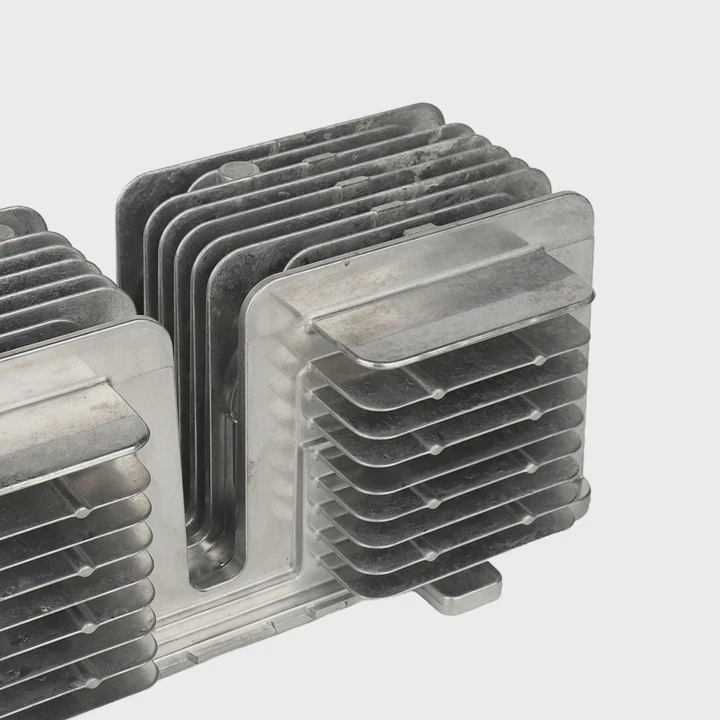
1. Structured and Wettability-Engineered Surfaces
Researchers design surfaces with micro- and nano-patterns that spread water into thin films. Thin films evaporate faster because the surface-to-volume ratio is higher. Some surfaces even guide liquid to hot spots.
2. Hybrid Cycles
There is a push to combine evaporative cooling with traditional vapor-compression or absorption systems. The goal is to reduce compressor work. For example, pre-cooling intake air with evaporation can increase the efficiency of the AC unit.
3. Non-Traditional Working Fluids
Because of environmental rules, many groups study low-global-warming-potential (low-GWP) fluids and also water-based systems where possible. Water is still king for evaporation, but surfaces now help water evaporate even at lower temperatures.
4. Passive and Radiative + Evaporative Systems
Some cutting-edge designs combine radiative cooling (sending heat to the cold sky at night) with evaporative cooling to achieve sub-ambient temperatures without power. This is useful for off-grid cooling and vaccine storage.
5. Data-Driven Thermal Management
Modern cooling systems, even evaporative ones, now use sensors and algorithms. They can adjust airflow, water flow, and surface wetting to match real-time heat loads. This makes old physics meet new control theory.
Why this matters
The big picture is clear: we want cooling with less electricity and fewer harmful refrigerants. Evaporation is an old tool, but with new materials, it can compete again, especially in places with dry climates.
Conclusion
Evaporation cools a liquid because the fastest, highest-energy molecules escape first. This lowers the average energy of what stays, so the temperature drops. Nature uses this in sweating. Engineers use this in towers, pads, and porous materials. And researchers keep improving surfaces, fluids, and hybrid systems to make evaporation-based cooling cleaner and more efficient.
TAGS
Latest Articles

Volume discount levels for heat sink orders?
Buyers often ask when heat sink prices start to drop with volume. Many worry they’re overpaying for small orders. This guide explains how B2B volume pricing works for thermal components. Heat sink
21 Dec,2025
Heat sink long-term supply contract options?
Many buyers want stable pricing and reliable delivery for heat sinks. But without a clear contract, risks grow over time. This article explores how to secure better long-term supply deals. Long-term
21 Dec,2025
Tooling cost for new heat sink profiles?
Many engineers struggle to understand why tooling for custom heat sinks costs so much. They worry about budgeting and production timelines. This article breaks down the cost drivers behind tooling.
21 Dec,2025
Heat sink custom sample process steps?
Sometimes, starting a custom heat sink project feels overwhelming—too many steps, too many unknowns, and too many risks. You want a sample, but not endless delays. The process for requesting and
20 Dec,2025
Standard B2B terms for heat sink payments?
When buyers and sellers in B2B heat sink markets talk about payment, many don’t fully understand what’s standard. This can lead to delayed orders, miscommunication, and even lost business
20 Dec,2025
Heat sink pricing factors for large orders?
Heat sinks are vital for many systems. When prices rise, projects stall and budgets break. This problem can hit teams hard without warning. Large order heat sink pricing depends on many factors. You
20 Dec,2025Related Articles
- Do AIO coolers ever run out of liquid?
- How does liquid cooling CPU work?
- How to make an air-cooled engine liquid-cooled?
- Where to buy liquid cooling parts?
- How to set up a liquid cooling system?
- Is Liquid Cooling Worth It for PC?
- Does 9800X3D need liquid cooling?
- Heat Sink Manufacturers in Singapore
- Heat Sink Manufacturers in Hong Kong
- Heat Sink Manufacturers in Colombia
- Heat Sink Manufacturers in Denmark
- Heat Sink Manufacturers in Egypt
Author
Dr. Emily Chen
Chief AI Researcher
Leading expert in thermal dynamics and AI optimization with over 15 years of experience in data center efficiency research.
Categories
Latest Products






Recommend Categories
- Liquid cooling plate Manufacturer
- Industrial Heat Sink Manufacturer
- Standard Heat Sink Manufacturer
- Aluminum Heat Sink Manufacturer
- Copper Heat Sink Manufacturer
- Anodized Heatsink Manufacturer
- Stamping heat sink Manufacturer
- Die Casting Heatsink Manufacturer
- Soldering heat sink Manufacturer
- CNC Parts Manufacturer
Latest Products
- Wholesale Aluminum Radiator
- Water Cooling Plate Kit
- Water Cooling Heat Sink
- Water Cooling Heat Sink Kit
- Stainless Steel Water Distributor
- Server Water Cooling Plate Kit
- Server Liquid Cooling System
- Server Aluminum Cooling Kit
- S19 Full Cover Cooling Plate
- S19 Cooling Plate Kit
- S19 Aluminum Cooling Plate
Contact Expert
Have questions about this article? Reach out to our experts directly.