Which is better, air cooled or liquid cooled engine?
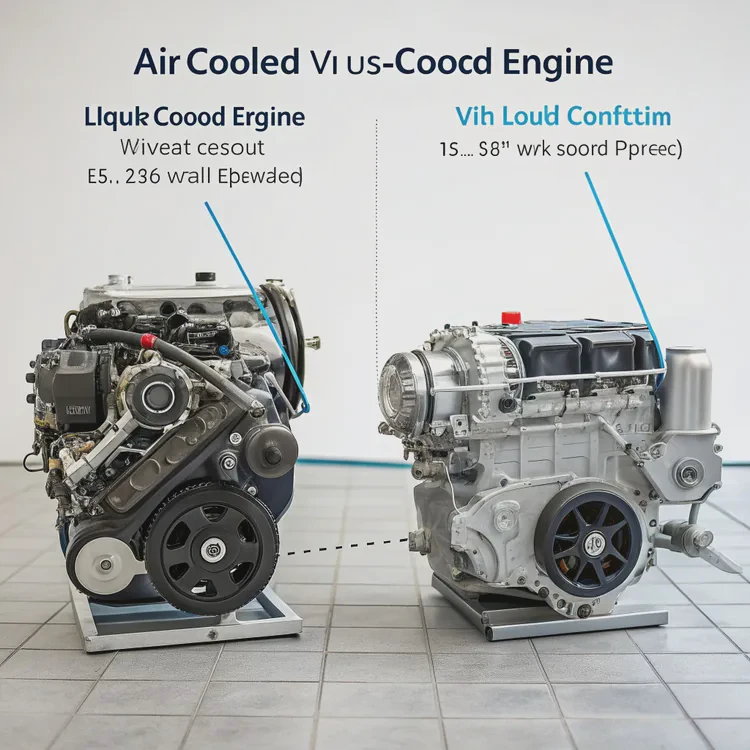
For over a century, engineers have debated one simple question: Which is better — air-cooled or liquid-cooled engines? The answer depends on how you define “better”: efficiency, simplicity, or reliability.
Overall, liquid-cooled engines offer better thermal stability, performance, and durability, while air-cooled engines are simpler, lighter, and easier to maintain.
The choice between them depends on the application. Air-cooled engines thrive in motorcycles, small aircraft, and low-cost vehicles, while liquid-cooled systems dominate modern cars, heavy machinery, and high-performance engines where precise temperature control is critical.
How do air-cooled and liquid-cooled engines differ?
While both systems perform the same job — managing engine temperature — they do it in very different ways.
Air-cooled engines use direct airflow over fins to dissipate heat, while liquid-cooled engines circulate coolant through passages to carry heat to a radiator for controlled cooling.
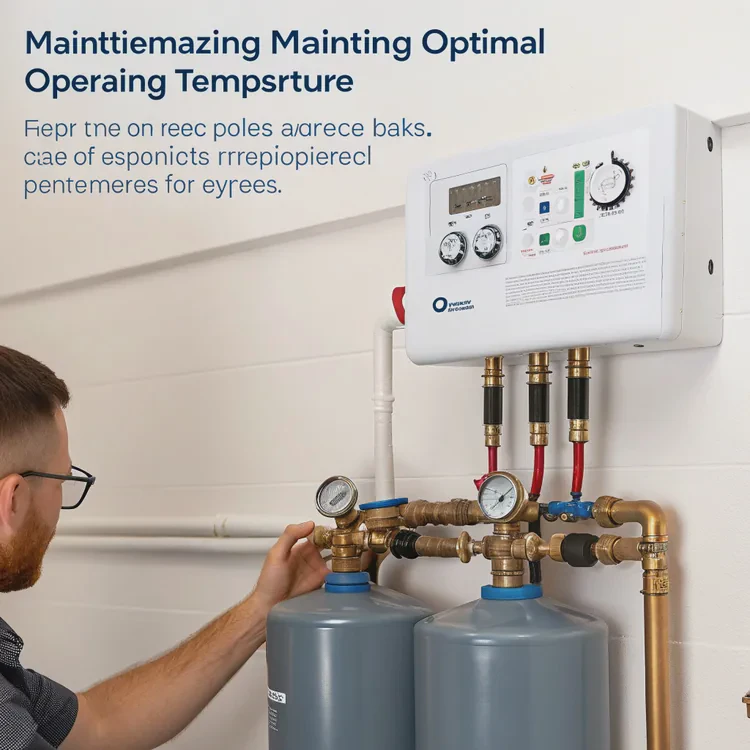
Understanding their design and operation helps explain why each system excels in certain environments.
Key Structural Differences
| Feature | Air-Cooled Engine | Liquid-Cooled Engine |
|---|---|---|
| Cooling Medium | Air | Liquid coolant (water/antifreeze mix) |
| Main Components | Fins, fans, ducts | Water jacket, pump, radiator, thermostat |
| Temperature Regulation | Natural or forced airflow | Controlled by thermostat and fan |
| Heat Distribution | Uneven across cylinders | Even and stable across entire engine |
| Weight and Complexity | Lightweight, fewer parts | Heavier, more components |
| Applications | Motorcycles, aircraft, lawnmowers | Cars, trucks, industrial engines |
How Each System Works
Air-Cooled Engine
- The engine block and cylinder heads are cast with external fins.
- As the vehicle moves, air flows over these fins, carrying away heat.
- Some systems add a fan or shroud to direct airflow for extra cooling.
- No coolant, radiator, or pump is required — the design is purely mechanical.
Liquid-Cooled Engine
- Coolant flows through internal passages (water jackets) around the cylinders.
- A water pump circulates the coolant to a radiator, where air removes the heat.
- A thermostat maintains optimal operating temperature.
- Some systems include expansion tanks, pressure caps, and electric fans for precision control.
Why the Difference Matters
The method of heat transfer affects nearly everything — from engine performance and emissions to longevity and noise. Liquid systems allow for consistent engine temperatures, while air systems are prone to larger temperature swings. This directly influences fuel efficiency, power output, and part wear.
In short:
- Air cooling = simplicity and weight savings.
- Liquid cooling = control and performance consistency.
What are the pros of liquid-cooled engines?
Liquid cooling has become the industry standard for modern engines, from compact cars to high-performance sports vehicles.
The main advantages of liquid-cooled engines are temperature stability, higher efficiency, quieter operation, and greater lifespan.
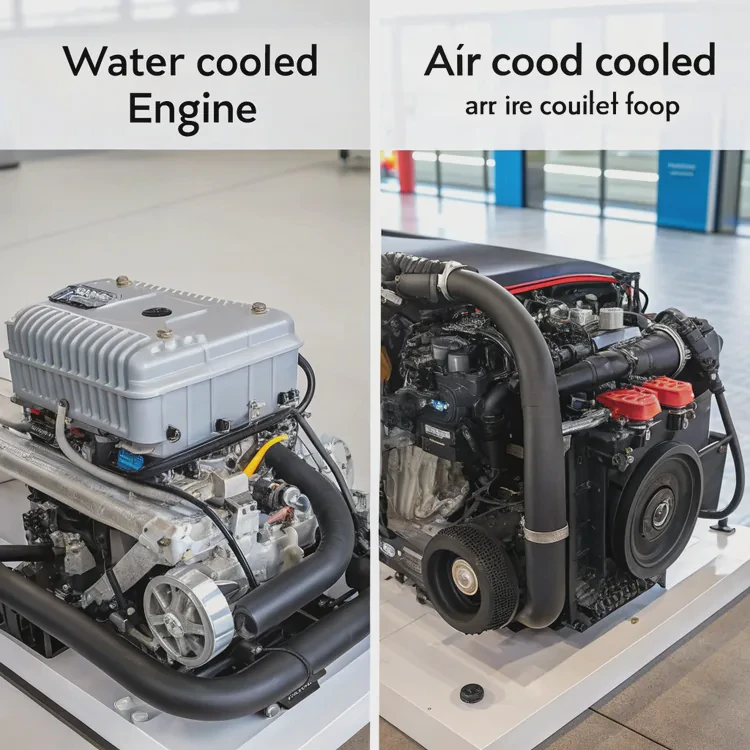
Let’s break down these benefits one by one.
1. Superior Temperature Regulation
Liquid-cooled systems maintain the engine temperature in a narrow range — usually between 85°C and 105°C. This consistency prevents overheating under high load and avoids overcooling in cold weather.
Stable temperature means stable performance, regardless of ambient conditions or driving style.
2. Better Engine Efficiency
Engines perform best at specific temperatures. Liquid cooling allows for precise thermal control, improving fuel combustion and reducing emissions. Modern cars rely on this balance to meet efficiency and environmental regulations.
3. Quieter Operation
Liquid acts as a sound dampener. The coolant jacket surrounding the engine absorbs mechanical vibrations and combustion noise, making liquid-cooled engines significantly quieter than air-cooled ones.
4. Enhanced Durability
Heat stress is a major cause of engine wear. Consistent cooling reduces metal expansion and contraction, minimizing the risk of warping, cracking, or piston seizure. As a result, engine components last longer.
5. Compatibility with High Performance
Liquid cooling supports turbocharged and high-compression engines by maintaining stable heat management under extreme pressure. It enables the use of advanced materials, tighter tolerances, and higher power density.
6. Improved Cabin Comfort
In automotive applications, liquid-cooled engines also provide heating for the passenger compartment through the coolant loop. Air-cooled engines lack this advantage.
Comparison: Cooling Performance Metrics
| Parameter | Air-Cooled | Liquid-Cooled |
|---|---|---|
| Temperature Consistency | ±25°C | ±5°C |
| Typical Operating Range | 90–160°C | 85–105°C |
| Noise Level | 70–80 dB | 60–70 dB |
| Fuel Efficiency Impact | Variable | Stable |
| Durability (Engine Life) | Shorter | Longer |
The Verdict
Liquid cooling’s precision and versatility make it the better choice for modern internal combustion engines — especially where emissions, noise, and reliability matter.
However, this advantage comes with added cost, weight, and maintenance complexity, which leads to the next important topic.
How to maintain each type of engine cooling system?
No matter which cooling system an engine uses, proper maintenance is key to reliability.
Air-cooled systems require cleaning and airflow checks, while liquid-cooled systems demand regular coolant replacement and leak inspection.
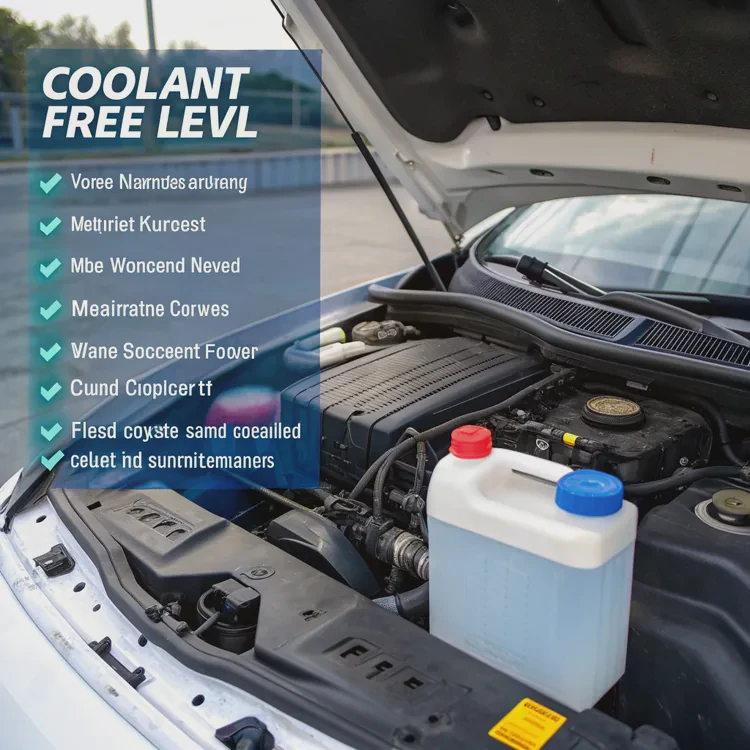
Let’s look at each type separately.
Maintenance for Air-Cooled Engines
Air-cooled engines are simple, but they rely on clean, unobstructed airflow.
Key Maintenance Steps
Keep Cooling Fins Clean
Dust, mud, or oil buildup reduces heat dissipation. Clean fins with compressed air or soft brushes regularly.Check Air Ducts and Fans
Ensure fans and shrouds are not blocked or damaged. Verify fan belts (if used) for correct tension.Inspect Spark Plug Seals
Loose plugs can cause localized overheating due to escaping combustion gases.Monitor Oil Temperature
Many air-cooled engines depend on oil for supplementary cooling. Maintain proper oil levels and change regularly.Avoid Prolonged Idling
Without moving air, the cooling efficiency drops sharply. Avoid idling in hot weather or at low speeds for long periods.
Maintenance Frequency
| Task | Interval |
|---|---|
| Clean fins and ducts | Every 100 hours / 3 months |
| Inspect fan and shroud | Every 200 hours / 6 months |
| Change oil | Every 3,000–5,000 km (or as specified) |
Maintenance for Liquid-Cooled Engines
Liquid-cooled systems have more components, so maintenance focuses on coolant health, leaks, and mechanical integrity.
Key Maintenance Steps
Check Coolant Level Regularly
Keep coolant between minimum and maximum marks. Never top off with plain water — use the correct antifreeze mixture.Flush and Replace Coolant
Over time, coolant loses its corrosion inhibitors. Replace every 2–3 years or per manufacturer’s schedule.Inspect for Leaks
Look for dried residue or dripping under hoses, water pump, or radiator connections.Examine Hoses and Clamps
Check for cracks, soft spots, or corrosion at joints. Tighten clamps if necessary.Verify Thermostat and Fan Operation
A faulty thermostat can cause overheating or poor fuel economy. Fans should start automatically at the right temperature.Clean Radiator Fins
Debris can reduce airflow through the radiator. Use gentle water pressure to clean, avoiding fin damage.
Maintenance Frequency
| Task | Interval |
|---|---|
| Check coolant level | Weekly |
| Flush and replace coolant | Every 2–3 years |
| Inspect hoses and clamps | Every 6 months |
| Clean radiator | Annually |
Common Mistakes to Avoid
- Mixing incompatible coolants (e.g., silicate-based and organic acid-based).
- Using tap water instead of distilled or deionized water.
- Ignoring small leaks, which can lead to corrosion and pump failure.
Proper maintenance ensures both systems run at peak performance and avoid costly repairs.
What innovations are emerging in engine cooling?
As engine efficiency and power density increase, traditional cooling systems are being reinvented.
Emerging trends in engine cooling include smart thermostats, electric water pumps, phase-change cooling, and advanced nanofluid coolants.
1. Smart Cooling Systems
Modern vehicles now use electronic thermostats and variable-speed pumps controlled by the engine control unit (ECU). These systems dynamically adjust coolant flow based on engine load and ambient temperature, improving efficiency and reducing emissions.
2. Electric Water Pumps
Replacing mechanical pumps with electric ones reduces parasitic power loss. Electric pumps can operate independently of engine speed, maintaining optimal temperature even after engine shutdown — useful for turbocharged engines that need post-cooling.
3. Nanofluid Coolants
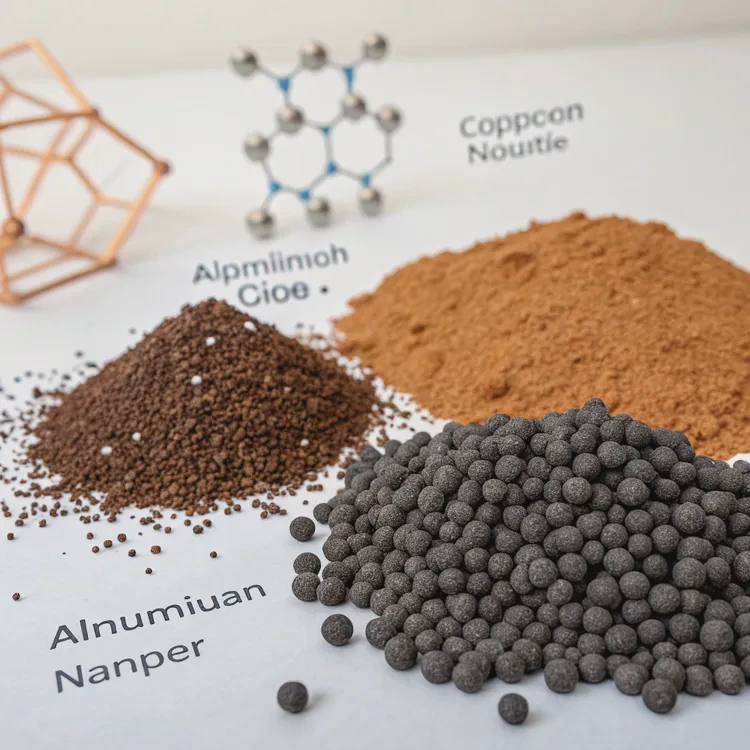
Nanofluids are advanced mixtures containing nanoparticles of aluminum oxide, copper, or carbon nanotubes. These particles enhance thermal conductivity, improving heat transfer by up to 20–30% compared to standard coolants.
4. Phase-Change Cooling
Research is ongoing into phase-change materials (PCM) that absorb and release heat by changing state (solid-liquid). These materials can store excess heat during high loads and release it gradually, stabilizing temperature peaks.
5. Integrated Thermal Management
Future vehicles, especially electric and hybrid ones, integrate battery, motor, and engine cooling into unified thermal systems. This reduces components and improves overall energy efficiency.
6. Advanced Heat Exchanger Designs
Compact radiators with micro-channel technology improve heat transfer surface area while reducing coolant volume. Aluminum brazing and diffusion bonding techniques enable lighter and more efficient heat exchangers.
7. Predictive Maintenance with Sensors
IoT-based temperature and pressure sensors are being integrated into modern cooling systems. They collect real-time data to predict failures and optimize performance, reducing downtime and maintenance costs.
Example: Evolution of Engine Cooling Technology
| Era | Cooling Type | Key Innovation | Impact |
|---|---|---|---|
| 1950s | Air Cooling | Finned Aluminum Cylinders | Lightweight engines |
| 1980s | Liquid Cooling | Thermostat Control | Better efficiency |
| 2000s | Hybrid Systems | Oil + Coolant Integration | Improved power density |
| 2020s | Smart Cooling | Electric pumps & sensors | Efficiency and emissions control |
| Future | Nanofluid / PCM Cooling | Advanced materials | Peak thermal performance |
The Future of Engine Cooling
In the coming decade, cooling systems will become intelligent, adaptive, and integrated, managing everything from engine blocks to batteries. Whether internal combustion or electric, precise thermal control will remain central to performance, safety, and sustainability.
Conclusion
Liquid-cooled engines generally outperform air-cooled ones in stability, noise, and lifespan, while air-cooled designs offer simplicity and lightweight efficiency. Proper maintenance is essential for both systems. Emerging innovations — from electric pumps to nanofluid coolants — are pushing engine cooling into a smarter, more sustainable future where precision and efficiency define the next generation of thermal management.
TAGS
Latest Articles

Volume discount levels for heat sink orders?
Buyers often ask when heat sink prices start to drop with volume. Many worry they’re overpaying for small orders. This guide explains how B2B volume pricing works for thermal components. Heat sink
21 Dec,2025
Heat sink long-term supply contract options?
Many buyers want stable pricing and reliable delivery for heat sinks. But without a clear contract, risks grow over time. This article explores how to secure better long-term supply deals. Long-term
21 Dec,2025
Tooling cost for new heat sink profiles?
Many engineers struggle to understand why tooling for custom heat sinks costs so much. They worry about budgeting and production timelines. This article breaks down the cost drivers behind tooling.
21 Dec,2025
Heat sink custom sample process steps?
Sometimes, starting a custom heat sink project feels overwhelming—too many steps, too many unknowns, and too many risks. You want a sample, but not endless delays. The process for requesting and
20 Dec,2025
Standard B2B terms for heat sink payments?
When buyers and sellers in B2B heat sink markets talk about payment, many don’t fully understand what’s standard. This can lead to delayed orders, miscommunication, and even lost business
20 Dec,2025
Heat sink pricing factors for large orders?
Heat sinks are vital for many systems. When prices rise, projects stall and budgets break. This problem can hit teams hard without warning. Large order heat sink pricing depends on many factors. You
20 Dec,2025Related Articles
- Does a 4090 need liquid cooling?
- Can full test reports and certifications be delivered with orders?
- Do we have green certifications for our production processes?
- What export regulations apply to heat sinks for the US market?
- Can we provide MSDS or material certificates for heat sinks?
- Do our anodizing processes meet MIL-A-8625 standards?
- How does liquid cooling work in PCs?
- What is a liquid cooling system?
- How to make a liquid cooling system?
- How to check if liquid cooling is working?
- Is a liquid cooling system worth it?
- What is liquid cooling made of?
Author
Dr. Emily Chen
Chief AI Researcher
Leading expert in thermal dynamics and AI optimization with over 15 years of experience in data center efficiency research.
Categories
Latest Products






Recommend Categories
- Liquid cooling plate Manufacturer
- Industrial Heat Sink Manufacturer
- Standard Heat Sink Manufacturer
- Aluminum Heat Sink Manufacturer
- Copper Heat Sink Manufacturer
- Anodized Heatsink Manufacturer
- Stamping heat sink Manufacturer
- Die Casting Heatsink Manufacturer
- Soldering heat sink Manufacturer
- CNC Parts Manufacturer
Latest Products
- Wholesale Aluminum Radiator
- Water Cooling Plate Kit
- Water Cooling Heat Sink
- Water Cooling Heat Sink Kit
- Stainless Steel Water Distributor
- Server Water Cooling Plate Kit
- Server Liquid Cooling System
- Server Aluminum Cooling Kit
- S19 Full Cover Cooling Plate
- S19 Cooling Plate Kit
- S19 Aluminum Cooling Plate
Contact Expert
Have questions about this article? Reach out to our experts directly.