Does the i9-9900K need liquid cooling?
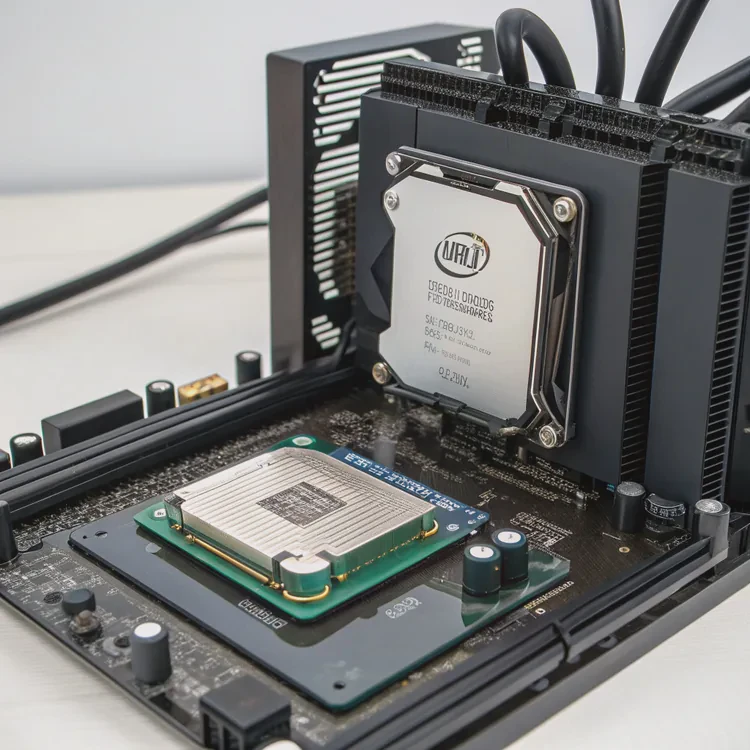
The Intel Core i9-9900K is known for its strong performance and high power draw. But with great power comes great heat. Many PC builders ask the same question — does this CPU need liquid cooling?
While the i9-9900K does not require liquid cooling, it benefits greatly from it, especially if you plan to overclock or use it under heavy workloads.
Air cooling can handle the chip at stock speeds, but liquid cooling keeps it cooler, quieter, and more stable during gaming, rendering, or editing. Let’s break down its temperature behavior, cooling preferences, and what to expect from future Intel chips.
What are the temperature limits of the i9-9900K?
Before deciding on cooling, it’s important to understand how hot the i9-9900K can get under load. This CPU is powerful but also runs warm due to its architecture and high core count.
The safe operating temperature for the i9-9900K is up to 100°C, but it’s best to keep it under 85°C during heavy use for long-term reliability.
Typical Temperature Ranges
| Usage Type | Air Cooled (°C) | Liquid Cooled (°C) | Optimal Range |
|---|---|---|---|
| Idle | 35–45 | 30–40 | <50 |
| Gaming | 75–85 | 60–70 | <80 |
| Heavy Load (Rendering/OC) | 90–100 | 70–80 | <85 |
The 9900K uses Intel’s “Coffee Lake Refresh” architecture, built on a 14nm process. It runs eight cores and sixteen threads at a base clock of 3.6GHz, boosting up to 5.0GHz. At those speeds, thermal output (TDP) can exceed 200W when overclocked.
While Intel rates it at 95W TDP, that number reflects stock behavior — in reality, it draws more power during turbo modes. Without proper cooling, thermal throttling can kick in, reducing performance to prevent overheating.
Why do users prefer liquid cooling for the i9-9900K?
Many builders and gamers prefer liquid cooling for this chip, even though air cooling technically works. The reason lies in heat control and noise levels.
Users choose liquid cooling for the i9-9900K because it keeps temperatures lower, allows stable overclocking, reduces noise, and enhances long-term system reliability.
Key Benefits of Liquid Cooling
Better Thermal Headroom
Liquid coolers spread heat efficiently across radiators, allowing the CPU to maintain higher boost clocks longer.Stable Overclocking
Liquid systems can handle voltage increases without hitting critical temperatures quickly, keeping performance consistent.Lower Noise Levels
Radiator fans run slower than small air-cooler fans, resulting in quieter operation even under load.Aesthetics and Space Management
AIO (All-in-One) liquid coolers create a cleaner setup with less bulk around the CPU socket area.Longer Component Life
Stable, low temperatures reduce the risk of premature component wear or solder cracking.
For example, when overclocked to 5.0GHz, a 240mm or 280mm AIO cooler can keep the i9-9900K around 75°C under stress, compared to 90°C with most air coolers.
How to pick the best cooler for the i9-9900K?
The “best” cooler depends on your use case — gaming, editing, or professional workloads — and your case’s available space. The goal is to maintain efficiency without excessive noise or complexity.
Choose a high-quality 240mm or larger AIO cooler for overclocking, or a large dual-tower air cooler if you prefer a simpler, maintenance-free setup.
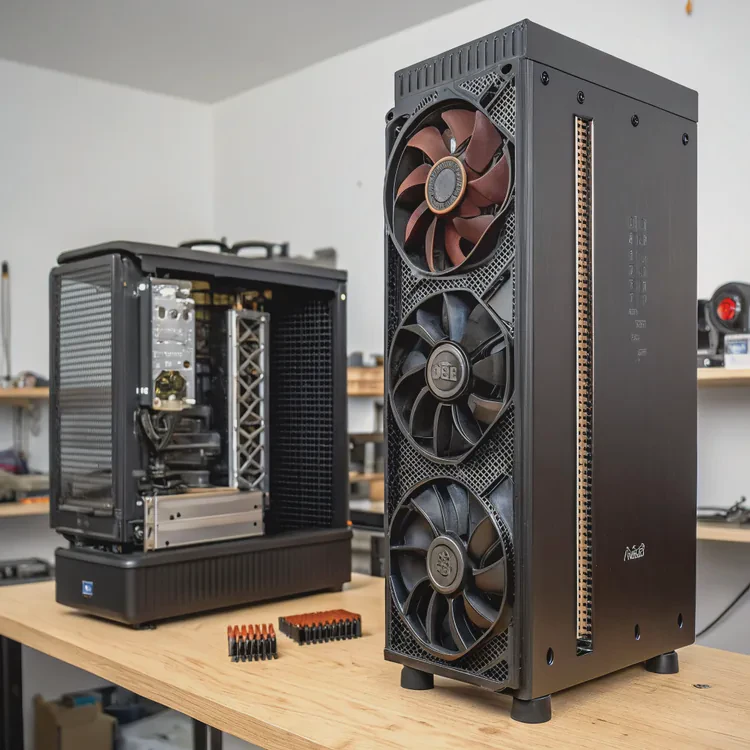
Recommended Cooling Options
| Cooling Type | Example Models | Pros | Cons |
|---|---|---|---|
| 240mm AIO | NZXT Kraken X63, Corsair H100i RGB | Great for overclocking, low noise | Higher cost, periodic maintenance |
| 280mm/360mm AIO | Arctic Liquid Freezer II, Cooler Master PL360 | Top-tier cooling for extreme loads | Requires large case |
| Dual-Tower Air Cooler | Noctua NH-D15, DeepCool Assassin IV | Reliable, quiet, no leaks | Bulky, may block RAM slots |
| Budget Air Cooler | be quiet! Pure Rock 2, Cooler Master 212 | Good for stock use | Not ideal for overclocking |
Installation Tips
- Apply high-quality thermal paste evenly.
- Ensure your case supports radiator placement (top or front mount).
- Maintain proper airflow — at least one intake and one exhaust fan.
- Keep dust filters clean for consistent cooling efficiency.
If you plan to run the i9-9900K for gaming only, a premium air cooler will suffice. But for sustained workloads like 3D rendering or video production, liquid cooling will ensure lower temps and quieter operation.
Will cooling requirements rise for newer Intel chips?
Every new generation of CPUs pushes performance boundaries, but also demands better thermal management.
Yes, newer Intel chips tend to produce more heat due to higher core counts and boost frequencies, increasing the need for advanced or hybrid cooling solutions.
The Evolution of CPU Cooling Needs
Intel’s move to architectures like Alder Lake and Raptor Lake introduced more cores, higher power draw, and dynamic boosting features. Even though process nodes shrink, the thermal density (heat per mm²) increases.
- Higher Turbo Power: Modern CPUs can spike beyond 250W during performance bursts.
- Smaller Die Sizes: Concentrate heat in smaller areas, requiring faster heat dissipation.
- Hybrid Architectures: Mix of performance and efficiency cores changes thermal distribution.
Future Cooling Trends
- Liquid Metal Interfaces: Improves heat transfer between the chip and cooler base.
- Vapor Chamber Heat Spreaders: More efficient than standard copper bases.
- AI-Controlled Fans and Pumps: Adaptive cooling based on workload prediction.
- Maintenance-Free AIOs: Using sealed nanofluid systems for long-term reliability.
As CPUs continue to evolve, efficient cooling will remain key to maintaining performance. The i9-9900K set the standard for high thermal output, but future chips will push those limits even further — making modern liquid or hybrid cooling nearly essential.
Conclusion
The i9-9900K doesn’t strictly need liquid cooling, but it thrives with it. Air cooling works for stock performance, while liquid cooling unlocks the chip’s full potential through better temperature control, quieter operation, and greater overclocking stability.
TAGS
Latest Articles

Volume discount levels for heat sink orders?
Buyers often ask when heat sink prices start to drop with volume. Many worry they’re overpaying for small orders. This guide explains how B2B volume pricing works for thermal components. Heat sink
21 Dec,2025
Heat sink long-term supply contract options?
Many buyers want stable pricing and reliable delivery for heat sinks. But without a clear contract, risks grow over time. This article explores how to secure better long-term supply deals. Long-term
21 Dec,2025
Tooling cost for new heat sink profiles?
Many engineers struggle to understand why tooling for custom heat sinks costs so much. They worry about budgeting and production timelines. This article breaks down the cost drivers behind tooling.
21 Dec,2025
Heat sink custom sample process steps?
Sometimes, starting a custom heat sink project feels overwhelming—too many steps, too many unknowns, and too many risks. You want a sample, but not endless delays. The process for requesting and
20 Dec,2025
Standard B2B terms for heat sink payments?
When buyers and sellers in B2B heat sink markets talk about payment, many don’t fully understand what’s standard. This can lead to delayed orders, miscommunication, and even lost business
20 Dec,2025
Heat sink pricing factors for large orders?
Heat sinks are vital for many systems. When prices rise, projects stall and budgets break. This problem can hit teams hard without warning. Large order heat sink pricing depends on many factors. You
20 Dec,2025Related Articles
- How to change liquid in an AIO cooler?
- Which is better, liquid cooled or air cooled?
- Does liquid cooling improve performance?
- Is Interceptor 650 liquid cooled?
- Does the i7-13700K need liquid cooling?
- Is liquid cooling more efficient?
- Why does evaporation cool a liquid?
- Does the Ryzen 5 5600X need liquid cooling?
- Heat Sink Manufacturers in the USA
- Heat Sink Manufacturer in China
- Heat Sink Manufacturer in Germany
- Heat Sink Manufacturer in Japan
Author
Dr. Emily Chen
Chief AI Researcher
Leading expert in thermal dynamics and AI optimization with over 15 years of experience in data center efficiency research.
Categories
Latest Products






Recommend Categories
- Liquid cooling plate Manufacturer
- Industrial Heat Sink Manufacturer
- Standard Heat Sink Manufacturer
- Aluminum Heat Sink Manufacturer
- Copper Heat Sink Manufacturer
- Anodized Heatsink Manufacturer
- Stamping heat sink Manufacturer
- Die Casting Heatsink Manufacturer
- Soldering heat sink Manufacturer
- CNC Parts Manufacturer
Latest Products
- Wholesale Aluminum Radiator
- Water Cooling Plate Kit
- Water Cooling Heat Sink
- Water Cooling Heat Sink Kit
- Stainless Steel Water Distributor
- Server Water Cooling Plate Kit
- Server Liquid Cooling System
- Server Aluminum Cooling Kit
- S19 Full Cover Cooling Plate
- S19 Cooling Plate Kit
- S19 Aluminum Cooling Plate
Contact Expert
Have questions about this article? Reach out to our experts directly.