Which is better, liquid cooled or air cooled?
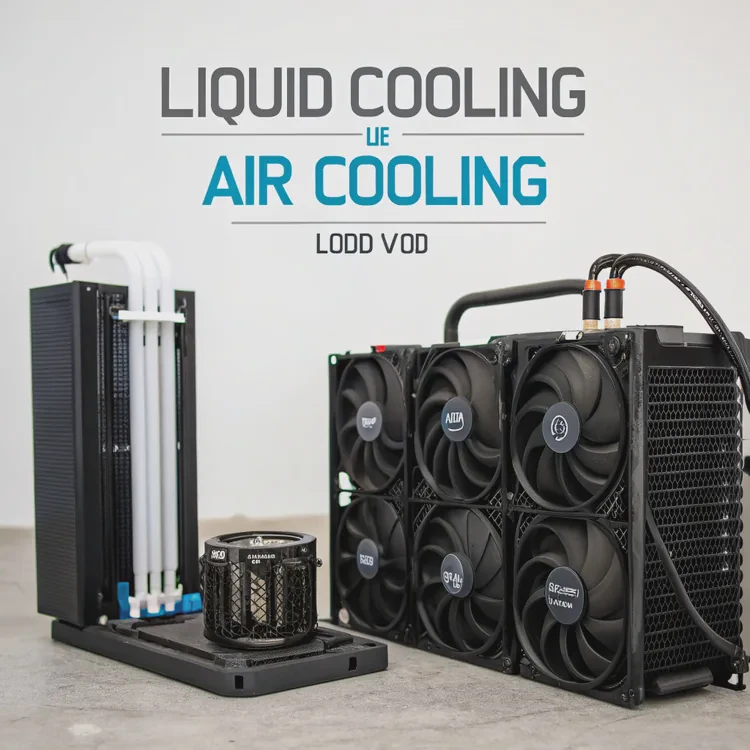
The debate between liquid cooling and air cooling has been going on for years. Each has its loyal fans and specific applications. But when it comes to performance, efficiency, and reliability, which one is truly better?
Neither is universally better — liquid cooling offers higher efficiency and quieter performance, while air cooling provides simplicity, lower cost, and easier maintenance.
Choosing the right system depends on your needs, budget, and how much performance you demand. Let’s compare how each works, what benefits they bring, and where cooling technology is heading next.
How do liquid and air cooling systems differ?
Cooling systems serve the same purpose — to remove heat. But they do it in very different ways, using different materials and principles.
Liquid cooling transfers heat using coolant fluid through a closed loop, while air cooling relies on fans and heat sinks to move hot air away from components.
Core Differences in Design
Let’s break down their structure and operation:
| Feature | Air Cooling | Liquid Cooling |
|---|---|---|
| Heat Transfer Medium | Air | Liquid (Coolant) |
| Main Components | Heat sink, fan | Water block, pump, radiator, coolant |
| Efficiency | Moderate | High |
| Noise | Louder | Quieter |
| Maintenance | Minimal | Regular upkeep |
| Cost | Lower | Higher |
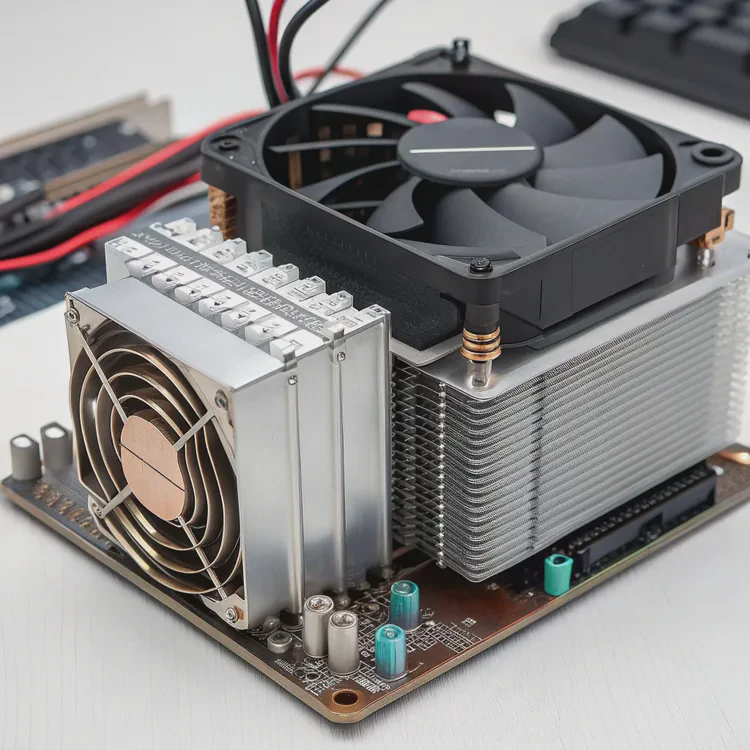
Air cooling uses a metal heat sink that draws heat away from the CPU or GPU and disperses it through fans. It’s a direct and simple method — the fan speed increases as the temperature rises.
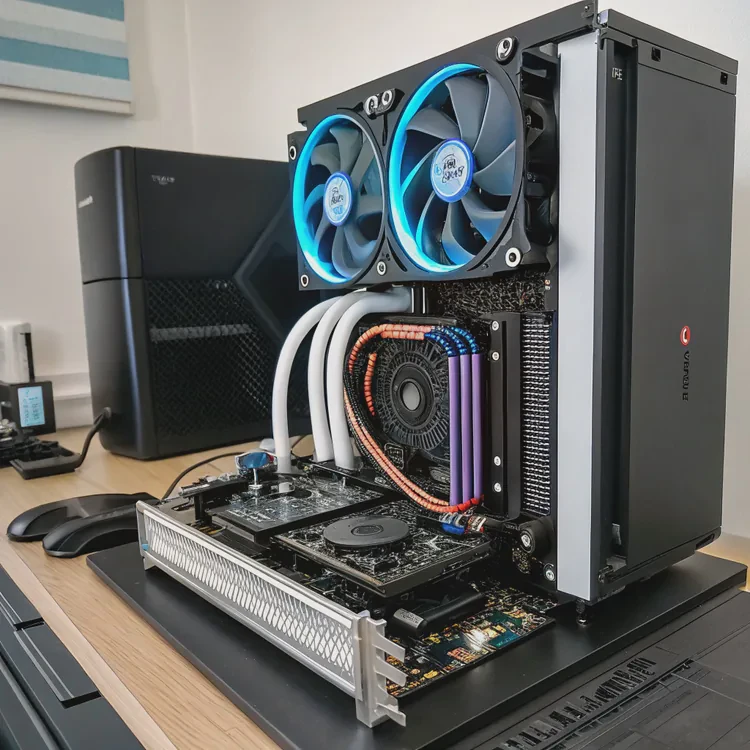
Liquid cooling uses water blocks attached to components. A pump circulates coolant through tubes to a radiator, where fans then cool the liquid before it cycles back. Because liquid transfers heat more efficiently than air, it maintains lower and more stable temperatures.
Efficiency and Complexity
Liquid systems require more parts and setup but deliver better results for high-performance machines. Air systems are easy to install and maintain, making them ideal for casual users or systems with limited space.
What are the advantages of each cooling method?
Every cooling method has its strengths. Understanding them helps you choose wisely.
Air cooling is cost-effective and simple, while liquid cooling offers superior temperature control and lower noise levels under load.
Advantages of Air Cooling
- Affordability – Air coolers are cheaper and widely available.
- Simplicity – Easy installation with no risk of leaks.
- Low Maintenance – Requires only occasional dust cleaning.
- Reliability – Fewer parts mean fewer things can fail.
Advantages of Liquid Cooling
- Superior Heat Dissipation – Ideal for high-performance CPUs and GPUs.
- Stable Temperature – Keeps temperatures consistent during heavy use.
- Quiet Operation – Fans can spin slower since coolant carries more heat.
- Better Aesthetics – Many systems come with clean, customizable designs.
Here’s a side-by-side performance overview:
| Feature | Air Cooling | Liquid Cooling |
|---|---|---|
| Cooling Efficiency | Moderate | Excellent |
| Noise Level | Medium to High | Low |
| Maintenance Needs | Low | Medium to High |
| Overclocking Support | Limited | Strong |
| Durability | High | High (if maintained) |
| Installation Difficulty | Easy | Moderate to Complex |
Each method performs best in specific environments. Air cooling fits compact or budget systems, while liquid cooling suits heavy-duty setups that run for long hours or under heavy loads.
How to decide between liquid and air cooling?
Choosing the right cooling system is not only about performance — it’s also about practicality and comfort.
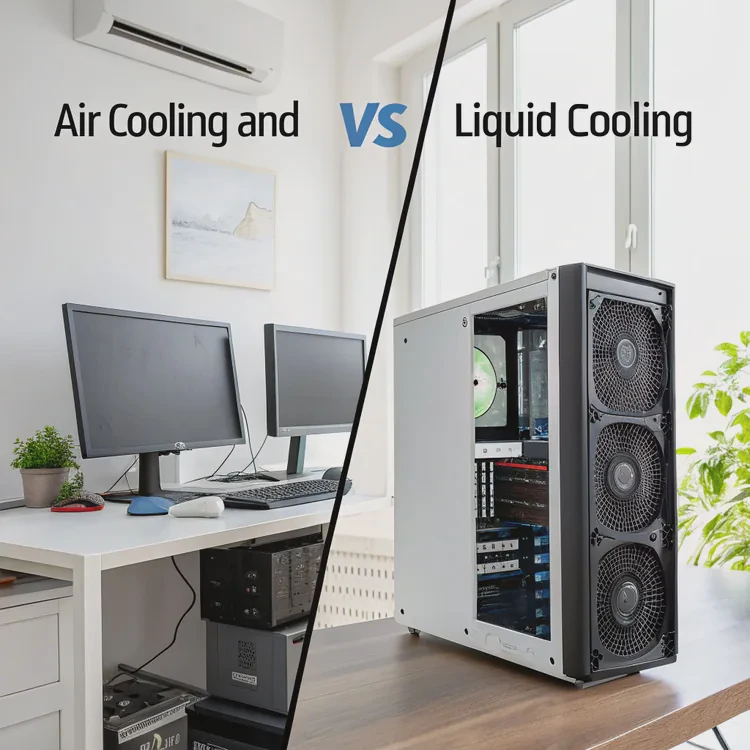
Choose air cooling for cost-effective simplicity, and liquid cooling if you need maximum performance, overclocking, or low noise under high load.
Key Factors to Consider
Your Use Case
- For gaming, video editing, or simulation work, liquid cooling offers better temperature stability.
- For everyday office work or browsing, air cooling is more than enough.
- For gaming, video editing, or simulation work, liquid cooling offers better temperature stability.
Budget
- Air coolers start cheap and last long.
- Liquid coolers cost more upfront and may require periodic fluid changes.
- Air coolers start cheap and last long.
Space and Aesthetics
- Smaller cases work better with air coolers.
- Larger cases can accommodate radiators and liquid loops.
- Smaller cases work better with air coolers.
Maintenance Preference
- Air coolers are almost maintenance-free.
- Liquid systems require monitoring for leaks and coolant condition.
- Air coolers are almost maintenance-free.
Noise Tolerance
- Air systems can get loud under load.
- Liquid cooling keeps noise levels low thanks to efficient heat transfer.
- Air systems can get loud under load.
If you’re building a high-end workstation or gaming PC, liquid cooling will unlock more consistent power and quieter operation. But if simplicity and reliability are your top priorities, air cooling is the way to go.
How are hybrid cooling systems evolving?
Technology rarely stays still — and cooling systems are no exception. The future is hybrid.
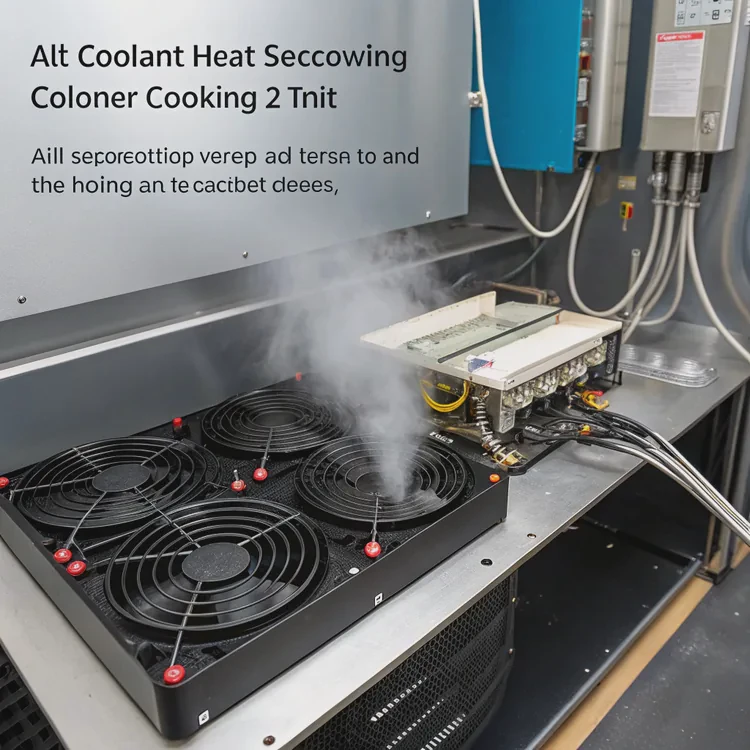
Hybrid cooling combines the efficiency of liquid systems with the simplicity of air systems, using smart fans, vapor chambers, and thermal sensors for adaptive cooling.
The Rise of Hybrid Cooling
Manufacturers now experiment with systems that blend the best of both worlds. For instance, vapor chamber cooling spreads heat evenly across a plate before fans or coolant remove it. All-in-one (AIO) units integrate pumps and radiators in compact packages, bringing liquid cooling convenience to mainstream users.
Key Innovations Driving Hybrid Cooling
- Vapor Chamber Heat Spreaders – Used in gaming laptops and consoles for compact yet powerful cooling.
- Smart Thermal Management – Sensors automatically adjust fan and pump speeds based on workload.
- Phase-Change Cooling – Fluids that evaporate and condense to manage extreme heat without active pumps.
- AI-Controlled Systems – Predicts thermal loads and balances cooling dynamically.
- Modular AIO Solutions – Easier to install, requiring no custom loop maintenance.
Why Hybrid Cooling Matters
Hybrid systems solve the biggest pain points — complexity, cost, and noise — while delivering efficient performance. They are the bridge between traditional air and advanced liquid systems. In the coming years, we’ll see them become standard not just in PCs, but also in electric vehicles, industrial machinery, and even aerospace systems.
Conclusion
Liquid cooling excels in performance and quiet operation, while air cooling shines in simplicity and value. Hybrid cooling is shaping the future, blending both worlds into systems that are smarter, cooler, and easier to maintain than ever before.
TAGS
Latest Articles

Volume discount levels for heat sink orders?
Buyers often ask when heat sink prices start to drop with volume. Many worry they’re overpaying for small orders. This guide explains how B2B volume pricing works for thermal components. Heat sink
21 Dec,2025
Heat sink long-term supply contract options?
Many buyers want stable pricing and reliable delivery for heat sinks. But without a clear contract, risks grow over time. This article explores how to secure better long-term supply deals. Long-term
21 Dec,2025
Tooling cost for new heat sink profiles?
Many engineers struggle to understand why tooling for custom heat sinks costs so much. They worry about budgeting and production timelines. This article breaks down the cost drivers behind tooling.
21 Dec,2025
Heat sink custom sample process steps?
Sometimes, starting a custom heat sink project feels overwhelming—too many steps, too many unknowns, and too many risks. You want a sample, but not endless delays. The process for requesting and
20 Dec,2025
Standard B2B terms for heat sink payments?
When buyers and sellers in B2B heat sink markets talk about payment, many don’t fully understand what’s standard. This can lead to delayed orders, miscommunication, and even lost business
20 Dec,2025
Heat sink pricing factors for large orders?
Heat sinks are vital for many systems. When prices rise, projects stall and budgets break. This problem can hit teams hard without warning. Large order heat sink pricing depends on many factors. You
20 Dec,2025Related Articles
- Does liquid cooling improve performance?
- Is Interceptor 650 liquid cooled?
- Does the i7-13700K need liquid cooling?
- Is liquid cooling more efficient?
- Is Custom Liquid Cooling Worth It?
- How to make a custom loop liquid cooler?
- How to change liquid in an AIO cooler?
- Does the i9-9900K need liquid cooling?
- Why does evaporation cool a liquid?
- Does the Ryzen 5 5600X need liquid cooling?
- Heat Sink Manufacturers in the USA
- Heat Sink Manufacturer in China
Author
Dr. Emily Chen
Chief AI Researcher
Leading expert in thermal dynamics and AI optimization with over 15 years of experience in data center efficiency research.
Categories
Latest Products






Recommend Categories
- Liquid cooling plate Manufacturer
- Industrial Heat Sink Manufacturer
- Standard Heat Sink Manufacturer
- Aluminum Heat Sink Manufacturer
- Copper Heat Sink Manufacturer
- Anodized Heatsink Manufacturer
- Stamping heat sink Manufacturer
- Die Casting Heatsink Manufacturer
- Soldering heat sink Manufacturer
- CNC Parts Manufacturer
Latest Products
- Wholesale Aluminum Radiator
- Water Cooling Plate Kit
- Water Cooling Heat Sink
- Water Cooling Heat Sink Kit
- Stainless Steel Water Distributor
- Server Water Cooling Plate Kit
- Server Liquid Cooling System
- Server Aluminum Cooling Kit
- S19 Full Cover Cooling Plate
- S19 Cooling Plate Kit
- S19 Aluminum Cooling Plate
Contact Expert
Have questions about this article? Reach out to our experts directly.