Is liquid cooling more efficient?
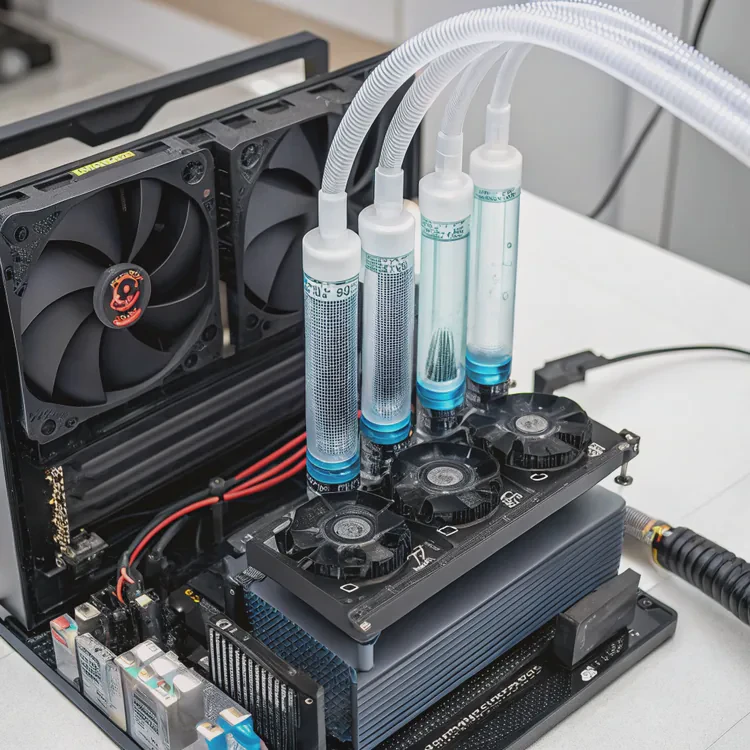
When systems get hotter, air alone can’t handle the heat anymore. That’s when liquid cooling becomes the smarter choice for keeping components safe and efficient.
Yes, liquid cooling is more efficient than air cooling because liquids transfer heat much faster, allowing better temperature control and lower energy use.
Liquid cooling systems can reduce noise, extend equipment life, and improve stability. But to understand why it works so well, we need to look at how it actually functions.
How does liquid cooling work?
Hot electronic parts need fast and steady cooling. Air cooling can only move so much heat. Liquid, on the other hand, absorbs and carries away heat much faster, making it ideal for high-performance systems.
Liquid cooling works by circulating coolant through heat sources, absorbing heat, and releasing it through a radiator or cold plate, keeping components at stable temperatures.
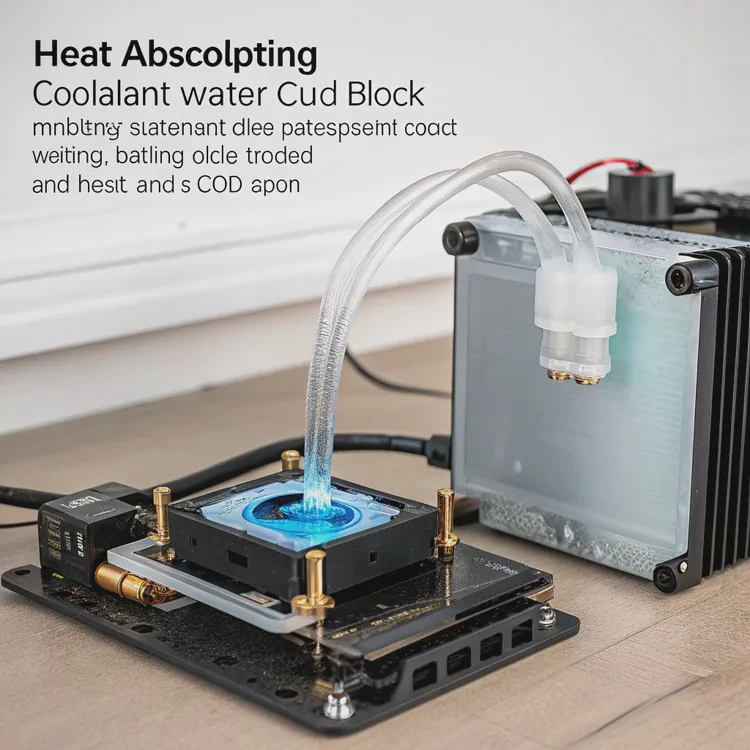
A basic liquid cooling system has several key parts:
| Component | Function |
|---|---|
| Coolant | Transfers heat away from components |
| Pump | Moves coolant through the loop |
| Cold Plate / Water Block | Absorbs heat from the source |
| Radiator | Releases heat to the air |
| Fan | Increases airflow over the radiator |
The process step-by-step
- Heat absorption: The coolant flows through a water block attached to the heat source (CPU, GPU, or power module).
- Heat transfer: As coolant passes through, it absorbs heat energy.
- Heat release: The warm coolant moves to a radiator, where fans help cool it down.
- Recirculation: The cooled liquid is pumped back to repeat the process.
Because of the higher thermal capacity of liquids, heat moves faster and more evenly. This keeps temperature spikes low and performance stable. In industries like data centers, EVs, and aerospace electronics, this efficiency is critical.
What are the benefits of liquid cooling?
Hot equipment loses efficiency, wastes energy, and wears out faster. Traditional air cooling struggles when heat density gets too high. That’s why more companies switch to liquid cooling.
Liquid cooling offers better thermal control, lower noise, smaller space requirements, and longer component life than air cooling.
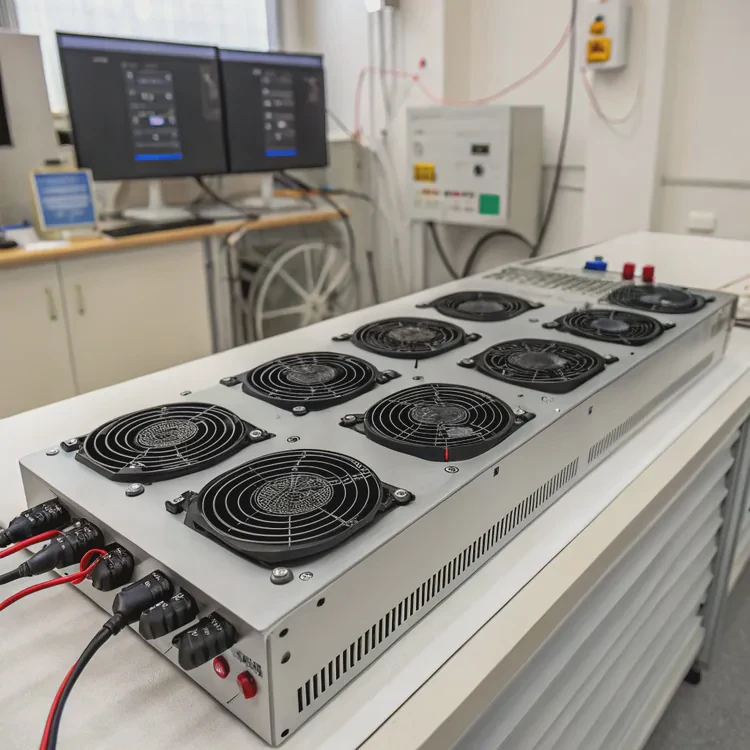
Key advantages of liquid cooling
| Benefit | Description |
|---|---|
| High efficiency | Liquids transfer heat up to 4,000 times faster than air |
| Quiet operation | Requires fewer and slower fans |
| Compact design | Allows denser layouts without overheating |
| Energy saving | Reduces power used for cooling fans |
| Reliability | Keeps system temperatures consistent |
Real-world impact
When I worked on a high-density power module project, we replaced multiple fan-cooled units with a single liquid cooling circuit. The temperature dropped by 20°C, and energy use fell by 15%. It also made the entire system quieter and more stable.
Why it matters
Better cooling leads to fewer thermal shutdowns and lower maintenance costs. For industries like data centers, this translates into millions saved yearly. Liquid cooling also supports higher computing loads, especially for AI and 5G infrastructure.
How to install or maintain a liquid cooling system?
Liquid cooling may sound complex, but with the right plan, it’s simple to manage. Poor installation or maintenance, though, can cause leaks or blockages.
To install and maintain a liquid cooling system, follow correct assembly steps, ensure leak-proof sealing, and regularly clean and replace coolant to prevent corrosion or clogs.
Basic installation steps
- Plan the layout — Determine where to place the radiator, pump, and blocks.
- Mount cold plates — Secure them firmly to heat sources using thermal paste.
- Connect tubing — Use high-quality, leak-proof connectors.
- Fill the system — Add coolant slowly and bleed out air bubbles.
- Test for leaks — Run the pump for several hours before powering other parts.
Maintenance routine
- Check coolant levels every 3–6 months.
- Replace coolant once a year to maintain performance.
- Inspect seals and fittings to prevent leaks.
- Clean the radiator from dust or residue buildup.
A well-maintained system can last for years. In my workshop, I’ve seen liquid cooling systems run for more than five years with little degradation when maintained correctly.
Common mistakes to avoid
- Mixing different coolant types
- Over-tightening fittings
- Skipping air bleed process
- Ignoring early leak signs
With simple care, liquid cooling remains reliable, efficient, and clean.
What are the latest trends in liquid cooling technology?
Technology evolves fast, and so does liquid cooling. The rise of AI, EVs, and data-intensive applications pushes engineers to design even more compact and powerful systems.
The latest trends in liquid cooling include two-phase systems, immersion cooling, and advanced materials that boost heat transfer and system reliability.
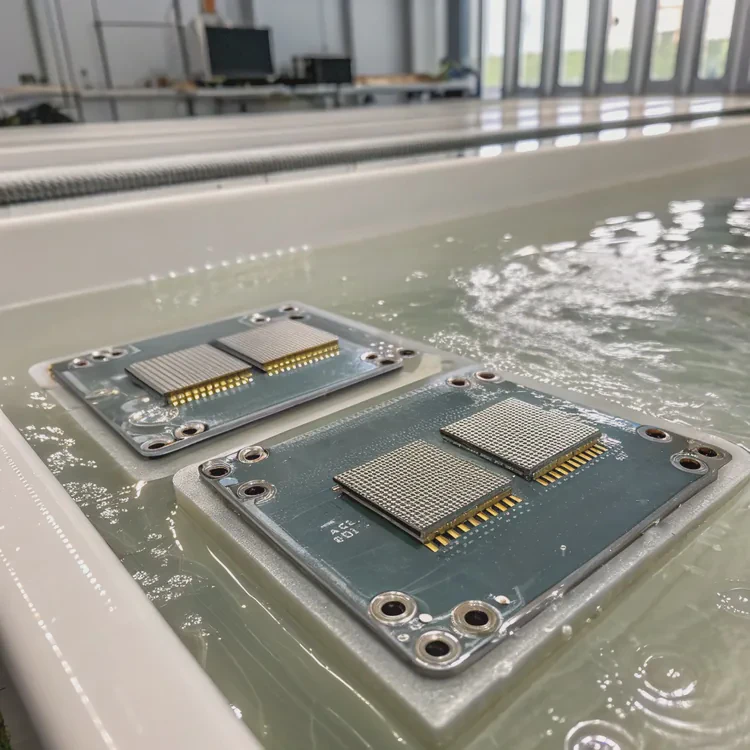
Top emerging technologies
- Two-phase cooling: Uses the phase change of liquid to vapor for faster heat removal.
- Immersion cooling: Entire devices are submerged in dielectric fluid for full-surface cooling.
- Microchannel cold plates: Channels smaller than 1mm increase surface contact area.
- Smart monitoring systems: Sensors track temperature, pressure, and flow in real-time.
- Eco-friendly coolants: Non-toxic, biodegradable fluids replace glycol-based solutions.
Material innovation
Aluminum and copper remain common, but advanced alloys and graphene composites are growing popular. These materials offer better thermal conductivity, corrosion resistance, and lightweight advantages.
Application shift
In the past, liquid cooling was mainly used for gaming PCs. Now it’s essential for:
- Data centers: Lower energy use and higher density racks.
- Electric vehicles: Battery and inverter thermal control.
- 5G stations: Compact, high-heat electronics.
- Medical and industrial lasers: Precision thermal management.
The combination of smart sensors, AI control, and modular design will redefine cooling systems over the next decade. The future trend is clear: smaller, smarter, and greener.
Conclusion
Liquid cooling is transforming how we manage heat in modern systems. It delivers higher efficiency, quieter operation, and longer life for critical electronics. With proper design and maintenance, it’s the best path toward sustainable, high-performance thermal control.
TAGS
Latest Articles

Volume discount levels for heat sink orders?
Buyers often ask when heat sink prices start to drop with volume. Many worry they’re overpaying for small orders. This guide explains how B2B volume pricing works for thermal components. Heat sink
21 Dec,2025
Heat sink long-term supply contract options?
Many buyers want stable pricing and reliable delivery for heat sinks. But without a clear contract, risks grow over time. This article explores how to secure better long-term supply deals. Long-term
21 Dec,2025
Tooling cost for new heat sink profiles?
Many engineers struggle to understand why tooling for custom heat sinks costs so much. They worry about budgeting and production timelines. This article breaks down the cost drivers behind tooling.
21 Dec,2025
Heat sink custom sample process steps?
Sometimes, starting a custom heat sink project feels overwhelming—too many steps, too many unknowns, and too many risks. You want a sample, but not endless delays. The process for requesting and
20 Dec,2025
Standard B2B terms for heat sink payments?
When buyers and sellers in B2B heat sink markets talk about payment, many don’t fully understand what’s standard. This can lead to delayed orders, miscommunication, and even lost business
20 Dec,2025
Heat sink pricing factors for large orders?
Heat sinks are vital for many systems. When prices rise, projects stall and budgets break. This problem can hit teams hard without warning. Large order heat sink pricing depends on many factors. You
20 Dec,2025Related Articles
- Is Custom Liquid Cooling Worth It?
- How to make a custom loop liquid cooler?
- How to make a custom liquid cooling system?
- How to do custom liquid cooling?
- How much does custom liquid cooling cost?
- What does a heat sink do for an SSD?
- Does the i7-13700K need liquid cooling?
- Is Interceptor 650 liquid cooled?
- Does liquid cooling improve performance?
- Which is better, liquid cooled or air cooled?
- How to change liquid in an AIO cooler?
- Does the i9-9900K need liquid cooling?
Author
Dr. Emily Chen
Chief AI Researcher
Leading expert in thermal dynamics and AI optimization with over 15 years of experience in data center efficiency research.
Categories
Latest Products






Recommend Categories
- Liquid cooling plate Manufacturer
- Industrial Heat Sink Manufacturer
- Standard Heat Sink Manufacturer
- Aluminum Heat Sink Manufacturer
- Copper Heat Sink Manufacturer
- Anodized Heatsink Manufacturer
- Stamping heat sink Manufacturer
- Die Casting Heatsink Manufacturer
- Soldering heat sink Manufacturer
- CNC Parts Manufacturer
Latest Products
- Wholesale Aluminum Radiator
- Water Cooling Plate Kit
- Water Cooling Heat Sink
- Water Cooling Heat Sink Kit
- Stainless Steel Water Distributor
- Server Water Cooling Plate Kit
- Server Liquid Cooling System
- Server Aluminum Cooling Kit
- S19 Full Cover Cooling Plate
- S19 Cooling Plate Kit
- S19 Aluminum Cooling Plate
Contact Expert
Have questions about this article? Reach out to our experts directly.