what should heatsinks be made of?
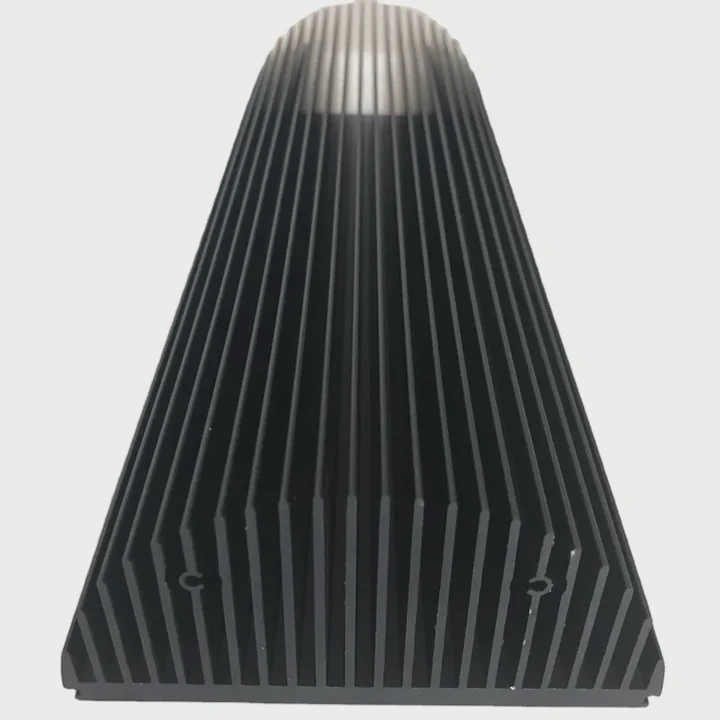
Many people want to know what materials make the best heatsinks. When devices heat up fast, the choice of metal changes temperature, stability, and cost.
The best heatsinks are usually made of copper, aluminum, or lightweight alloys because these materials conduct heat well, spread it quickly, and offer strong mechanical stability for cooling tasks.
Some users think all heatsinks work the same. But small differences in material change cooling performance a lot.
Why copper conducts heat best?
Copper is famous for its cooling ability. Many high-performance heatsinks use copper bases or full copper blocks because they move heat away from the source very fast.
Copper conducts heat best because it has high thermal conductivity, strong heat spreading ability, and low resistance to heat flow. It pulls heat away from the source more effectively than most common materials.
Copper’s thermal conductivity advantage
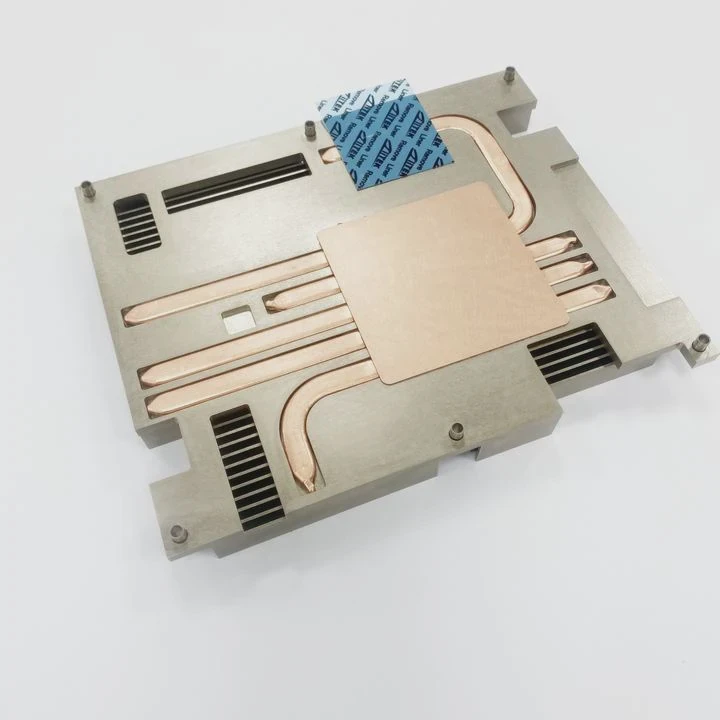
Copper has one of the highest thermal conductivities of all common engineering metals. This means heat travels through it quickly. When heat leaves the chip and enters the copper surface, the metal spreads it across the fins without delay.
Why copper spreads heat so evenly
The internal structure of copper allows energy to move fast between atoms. This helps the heatsink avoid hot spots. In devices like CPUs or GPUs, avoiding hot spots keeps the chip stable under high loads.
Copper stays stable under high heat
Copper can tolerate high temperatures without losing strength. This makes it a safe choice for extreme workloads or overclocking systems, where heat spikes happen quickly.
Common uses of copper in heatsinks
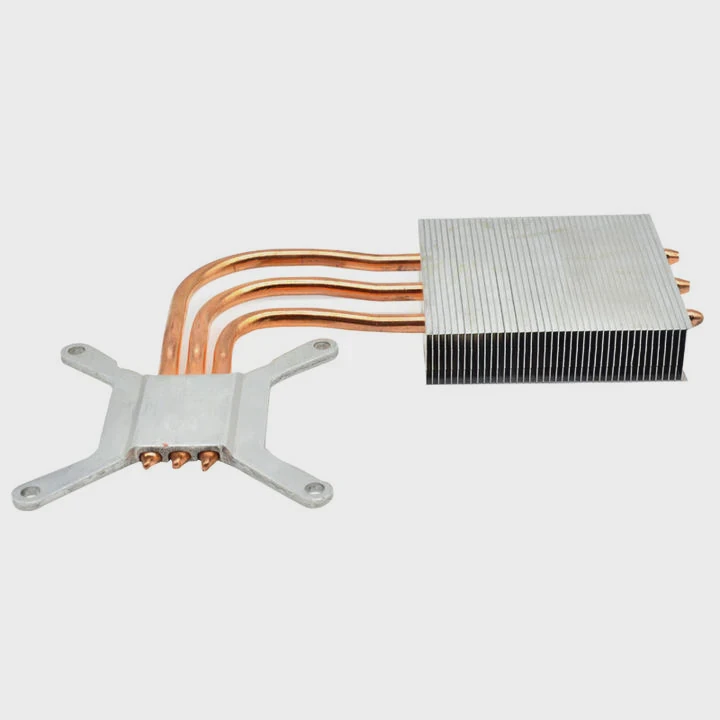
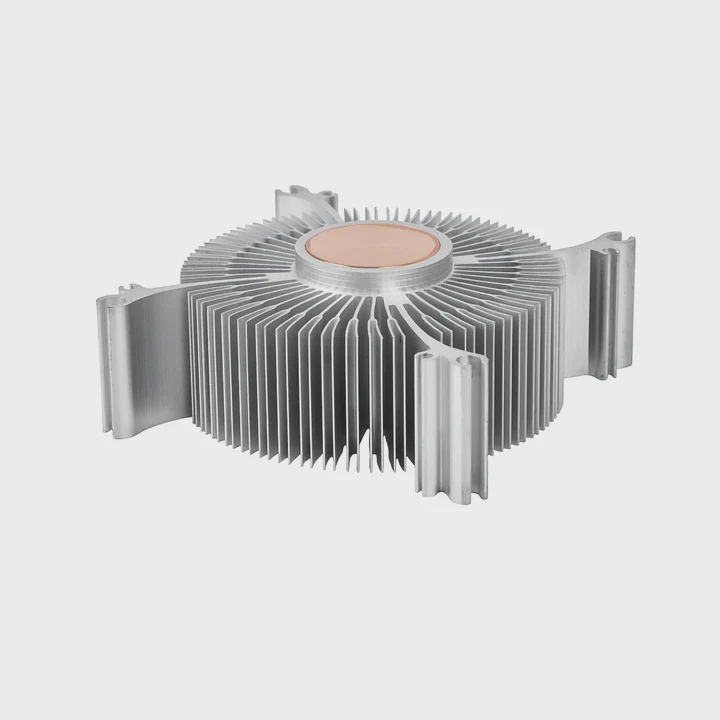
Some designs use full copper blocks. Others combine copper bases with aluminum fins. The copper base pulls heat rapidly, while aluminum reduces weight.
Table: Why copper is preferred for high-end cooling
| Reason | Benefit | Effect on performance |
|---|---|---|
| High thermal conductivity | Moves heat quickly | Better temperature control |
| Even heat spreading | Fewer hot spots | More stable operation |
| High heat tolerance | No softening or warping | Reliable under heavy loads |
| Good contact surface | Strong base interface | Better thermal paste contact |
Copper performs best, but its cost and weight lead many designers to mix materials.
Which alloys balance weight?
Some devices cannot use pure copper because it is heavy. This is especially true in portable products or systems that need lightweight components. Alloys help solve this.
Certain aluminum-based and copper-mixed alloys balance weight and performance by lowering density while keeping good heat conduction. These alloys are common in laptops, handheld devices, and edge computing systems.
Why pure copper is sometimes too heavy
Copper weighs more than aluminum. Large copper heatsinks add stress to mounting points and may shift during travel. Designers use alloys when weight matters more than peak cooling.
Aluminum-magnesium and aluminum-silicon blends
These blends keep aluminum’s low weight but improve strength and stability. They resist deformation and work well in thin fins. The added elements increase durability without hurting thermal behavior much.
Copper alloys for stronger bases
Some copper alloys keep high conductivity but add mechanical strength. This helps in applications where the heatsink must support extra components. These alloys still conduct heat fast, though not as fast as pure copper.
Where alloys work best
Alloys are good for mobile electronics, high-vibration machinery, drones, industrial controllers, and networking equipment. They reduce weight but still cool effectively.
### Why alloys matter in engineering
- Lower weight reduces mechanical stress
- Slightly lower conductivity can still meet cooling needs
- Improved durability supports long-term reliability
- Better strength allows thinner fins
Table: Alloy comparison
| Alloy Type | Strength | Conductivity | Best Application |
|---|---|---|---|
| Aluminum-magnesium | High | Medium-high | Lightweight fins and cases |
| Aluminum-silicon | Medium | Medium | Electronics housings |
| Copper alloy (Cu-Cr, Cu-Zr) | Very high | High | Heavy-duty bases |
| Mixed metal composites | Medium | Medium | Balanced, low-cost systems |
Alloys are a strong choice when engineers need a balance between weight and heat performance.
Can aluminum improve cost efficiency?
Aluminum is the most popular material for heatsinks worldwide. It offers a strong mix of low cost, low weight, and good thermal performance.
Aluminum improves cost efficiency because it is cheap, easy to manufacture, lightweight, and still conductive enough for most cooling tasks. This makes it ideal for mass-produced heatsinks.
Aluminum is easy to shape
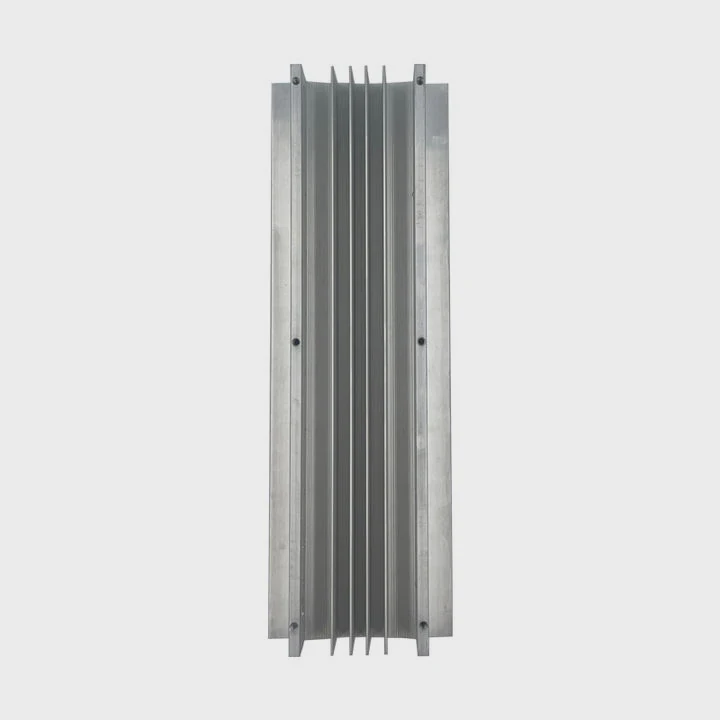
Aluminum works well with extrusion, stamping, and milling. It forms complex fin shapes easily. Because of this, manufacturers can produce large batches of heatsinks quickly.
Aluminum weighs less
The low density of aluminum makes it useful in systems where weight affects performance. Laptops, drones, compact PCs, and routers often use aluminum heatsinks because they reduce load on the structure.
Good enough heat conduction for most tasks
While copper conducts heat better, aluminum still performs well. For many CPUs, VRMs, SSDs, and power electronics, aluminum keeps heat within safe limits at a much lower cost.
Fin design amplifies aluminum’s strength
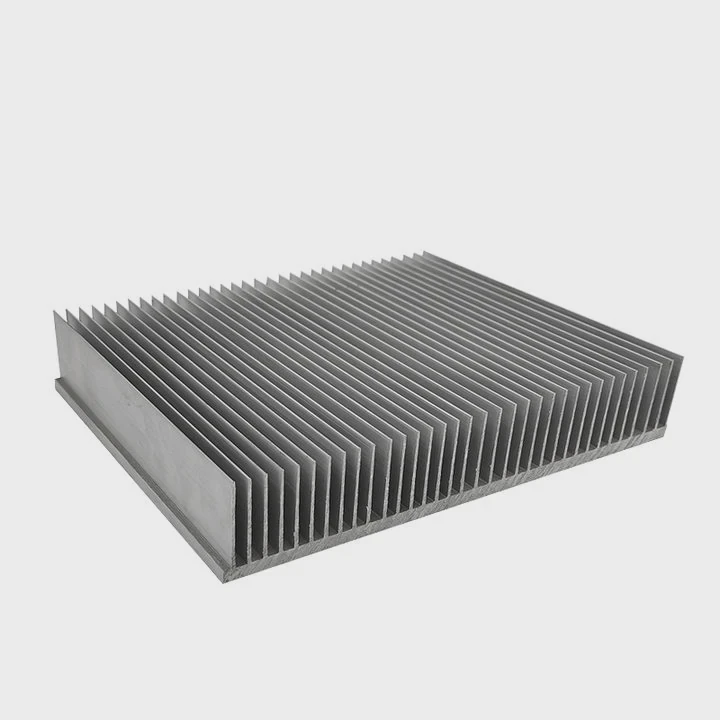
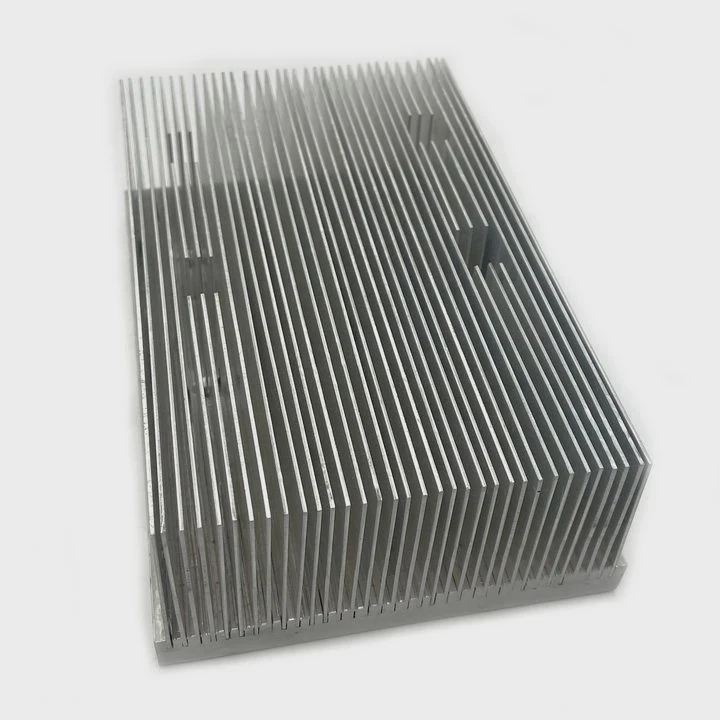
Designers use thin, dense fin arrays to improve surface area. Aluminum’s low weight allows many fins without adding bulk. This increases cooling efficiency dramatically.
### Why manufacturers choose aluminum
- Costs less than copper
- Easy to produce in complex shapes
- Works well in large-scale production
- Light enough for portable systems
- Conductive enough for most devices
Industrial examples of aluminum heatsinks
Routers, power modules, LED lamps, embedded systems, and consumer electronics often use aluminum heatsinks because they provide stable cooling at a low price.
Do coatings affect performance?
Coatings change how heatsinks interact with air, heat, and the environment. Some coatings improve cooling, while others protect the metal from corrosion.
Coatings affect heatsink performance by changing emissivity, reducing oxidation, increasing durability, or preventing electrical contact. Good coatings enhance heat radiation, while poor coatings trap heat.
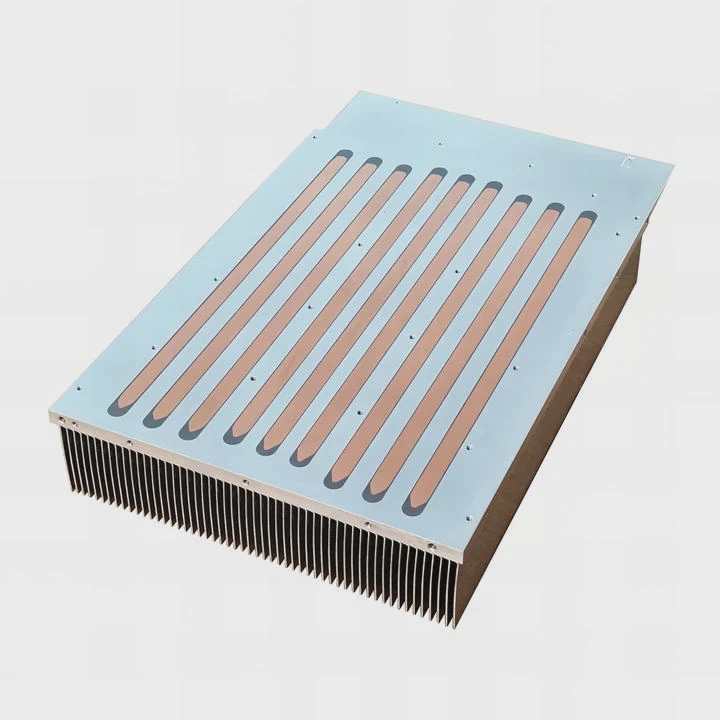
Anodizing improves surface behavior
Anodized aluminum increases surface emissivity. This helps radiate heat more effectively. It also protects the metal from scratches and oxidation. Many black heatsinks use anodizing.
Black coatings radiate heat better
Black surfaces radiate heat more efficiently than bare metal. A good black coating improves cooling in passive heatsinks. This helps fans work less and reduces noise.
Conductive coatings vs insulating coatings
Some coatings conduct heat well. Others insulate. Insulating coatings must be thin, or they will block heat transfer. Good conductive coatings improve performance, but poor insulating paint can harm cooling.
Anti-corrosion coatings
Copper oxidizes and turns dark over time. Coatings protect it. Even though oxidation does not ruin performance, coatings keep the surface clean and prevent long-term degradation.
### What to avoid in coatings
- Thick paint layers
- Non-conductive powder coatings
- Poor-quality polymer films
- Rough, uneven surface finishing
### Examples of effective coatings
- Black anodizing
- Micro-thin ceramic coatings
- Nickel plating to protect copper
- Chemical oxidation-resistant layers
Table: Coating types and effect on performance
| Coating Type | Effect on Heat | Best Use |
|---|---|---|
| Black anodizing | Better radiation | Aluminum fins |
| Nickel plating | Surface protection | Copper bases |
| Thin ceramic layer | Medium improvement | High wear zones |
| Thick paint | Poor | Should be avoided |
A good coating enhances heat transfer and protects the heatsink. A poor one traps heat and lowers performance.
Conclusion
The best heatsink materials include copper, aluminum, and lightweight alloys. Copper cools fastest, aluminum balances cost and weight, and alloys offer strength and flexibility. Coatings modify heat transfer and protection. With the right material and surface treatment, any device can stay cool and stable.
TAGS
Latest Articles

Volume discount levels for heat sink orders?
Buyers often ask when heat sink prices start to drop with volume. Many worry they’re overpaying for small orders. This guide explains how B2B volume pricing works for thermal components. Heat sink
21 Dec,2025
Heat sink long-term supply contract options?
Many buyers want stable pricing and reliable delivery for heat sinks. But without a clear contract, risks grow over time. This article explores how to secure better long-term supply deals. Long-term
21 Dec,2025
Tooling cost for new heat sink profiles?
Many engineers struggle to understand why tooling for custom heat sinks costs so much. They worry about budgeting and production timelines. This article breaks down the cost drivers behind tooling.
21 Dec,2025
Heat sink custom sample process steps?
Sometimes, starting a custom heat sink project feels overwhelming—too many steps, too many unknowns, and too many risks. You want a sample, but not endless delays. The process for requesting and
20 Dec,2025
Standard B2B terms for heat sink payments?
When buyers and sellers in B2B heat sink markets talk about payment, many don’t fully understand what’s standard. This can lead to delayed orders, miscommunication, and even lost business
20 Dec,2025
Heat sink pricing factors for large orders?
Heat sinks are vital for many systems. When prices rise, projects stall and budgets break. This problem can hit teams hard without warning. Large order heat sink pricing depends on many factors. You
20 Dec,2025Related Articles
- how to fire heatsinks in elite dangerous?
- where to get legendary sandevistan heatsink?
- how to install an amd 3700x heatsink?
- how to install raspberry pi 4 heatsink?
- can a cpu run without a heatsink?
- do you need a heatsink for m 2?
- do you need a heatsink for m.2 ssd for pc?
- how to make a water cooling heatsink?
- how to stick heatsink to chip?
- is heatsink necessary for m.2?
- can't find sandevistan heatsink?
- what is a gpu heatsink?
Author
Dr. Emily Chen
Chief AI Researcher
Leading expert in thermal dynamics and AI optimization with over 15 years of experience in data center efficiency research.
Categories
Latest Products
M.2 Heatpipe Heatsink With Dual Fans For Pc Case
19 Mar,2026
Heavy-Duty Aluminum Heat Sink Custom
19 Mar,2026
Oem Skived Fin Heatsink Aluminum Radiator For Plants
19 Mar,2026
Water Cooled Cnc Aluminum Heat Sink For Medical
19 Mar,2026
High Density 6000 Series Aluminum Heat Sink Profile
19 Mar,2026
High-Density Extruded Aluminum & Bonded-Fin Heat Sink Profile
19 Mar,2026
Recommend Categories
- Liquid cooling plate Manufacturer
- Industrial Heat Sink Manufacturer
- Standard Heat Sink Manufacturer
- Aluminum Heat Sink Manufacturer
- Copper Heat Sink Manufacturer
- Anodized Heatsink Manufacturer
- Stamping heat sink Manufacturer
- Die Casting Heatsink Manufacturer
- Soldering heat sink Manufacturer
- CNC Parts Manufacturer
Latest Products
- M.2 Heatpipe Heatsink With Dual Fans For Pc Case
- Heavy-Duty Aluminum Heat Sink Custom
- Oem Skived Fin Heatsink Aluminum Radiator For Plants
- Water Cooled Cnc Aluminum Heat Sink For Medical
- High Density 6000 Series Aluminum Heat Sink Profile
- High-Density Extruded Aluminum & Bonded-Fin Heat Sink Profile
- Dongguan Cnc Aluminum Heat Sink For Led & Brass Parts
- Wholesale Cnc Aluminum Heat Sink - Custom Extruded
- Led Cnc Round Heat Sink With Screw Holes
- Copper Pin-Fin Heat-Sink Large-Area For Photoled Cooling
- Telecom Heatsink Zipper Fin Wcopper Tubes Oem
Contact Expert
Have questions about this article? Reach out to our experts directly.