how to make a water cooling heatsink?
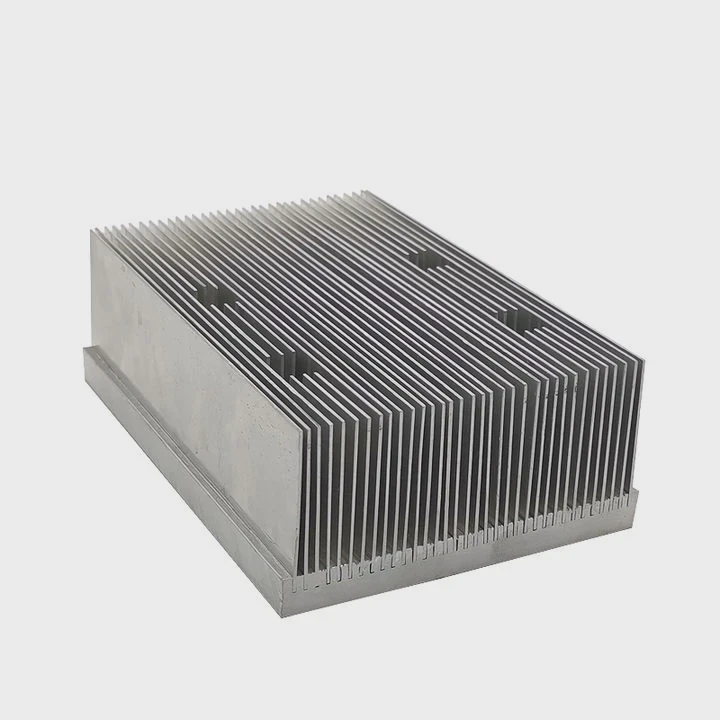
Many people want to build a custom water-cooling heatsink because liquid systems manage heat better than air coolers and allow more flexible designs.
To make a water-cooling heatsink, you must design internal channels, choose proper metals, machine the water block with high precision, and seal the assembly to prevent leaks during long operation.
Some beginners think water blocks are simple metal plates, but real performance comes from careful design and accurate machining. The guide below explains each part clearly.
Why channels improve liquid flow?
Water blocks need smart internal structures. A plain hollow chamber is not enough. Real cooling comes from directing liquid through narrow, structured channels.
Internal channels improve liquid flow because they increase surface contact, force the coolant through more paths, and remove heat evenly across the metal block. More channels mean more heat transfer and faster cooling.
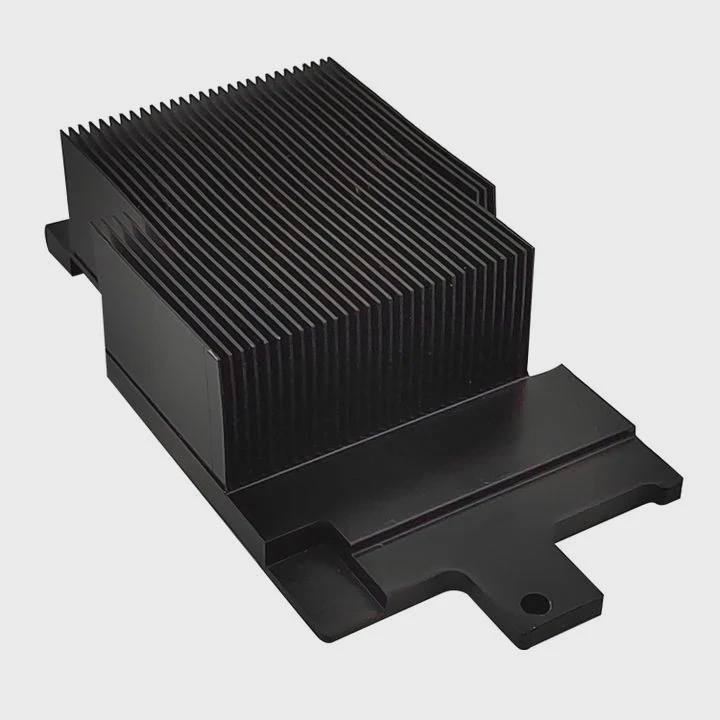
How channels spread heat across the block
Channels guide water through every part of the heatsink. Instead of water sitting still or taking one short path, channels make the coolant touch more metal surfaces. The more metal the water touches, the more heat it removes from the device.
Why narrow channels help performance
Narrow channels increase turbulence. Turbulent flow breaks the warm water layer that forms near the metal and replaces it with cooler water. This improves heat extraction. Wide channels move water smoothly but transfer less heat.
Fin structures add more surface area
Inside advanced water blocks, engineers add microfins. These are very thin metal walls that multiply surface area without increasing size. More surface area means more heat transfer in the same space.
When simple channels are enough
Simple channels work for low-power systems like small electronics. But CPUs, GPUs, or high-power LEDs need more advanced channel structures to keep temperatures low.
### Main benefits of channel design
- More surface area touches water
- Water moves evenly across the block
- Turbulence removes heat faster
- Hot spots reduce dramatically
Table: Channel design types
| Channel Type | Flow Style | Cooling Effectiveness |
|---|---|---|
| Straight channels | Smooth flow | Medium |
| Zig-zag channels | Increased turbulence | High |
| Microfin array | Very high turbulence | Very high |
| Spiral channels | Balanced flow | Medium–high |
Channels are the heart of a good water-cooling heatsink, so the design must match the heat load.
Which materials suit water blocks?
Not all metals work well for water-cooling heatsinks. Some corrode easily, some conduct heat poorly, and some are too expensive for large projects.
The best materials for water blocks are copper, aluminum, and nickel-plated composites because they conduct heat well and resist corrosion when sealed correctly.
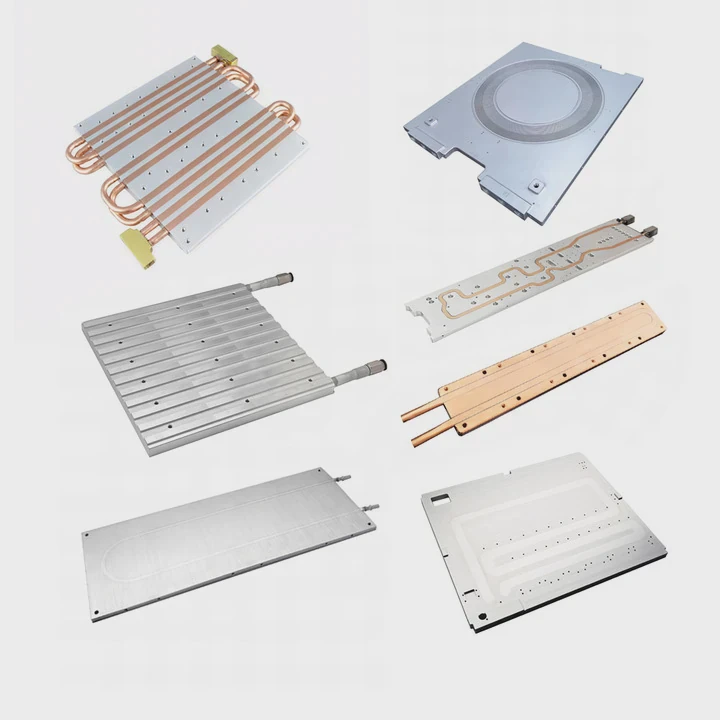
Copper offers the best heat transfer
Copper conducts heat extremely fast. This makes it a strong choice for CPU or GPU blocks. Many premium water blocks use full-copper bases because they spread heat evenly. But copper is heavier and more expensive than other options.
Aluminum works for lightweight builds
Aluminum weighs less and costs less. It is easy to machine and shape. Many DIY hobbyists use aluminum for prototyping. But aluminum corrodes faster in mixed-metal loops, so it must be used with care.
Nickel plating improves durability
Some blocks use copper with nickel plating. The nickel protects the copper from oxidation and gives a smooth finish that reduces buildup. It also improves the block’s long-term stability.
Why mixed metals can cause issues
If you mix copper and aluminum inside the same cooling loop, galvanic corrosion may appear. This can damage parts over time. Using similar metals avoids such problems.
### Key qualities of ideal block materials
- High heat conductivity
- Strong corrosion resistance
- Easy machinability
- Stable performance under pressure
- Good compatibility with coolant additives
Table: Material comparison for water blocks
| Material | Conductivity | Weight | Corrosion Resistance | Notes |
|---|---|---|---|---|
| Copper | Very high | Heavy | Medium | Best performance |
| Aluminum | Medium | Light | Low | Needs coating |
| Nickel-plated copper | High | Heavy | High | Durable and stable |
| Brass | Medium | Medium | High | Often used for fittings |
Choosing the right metal ensures the water block maintains its cooling efficiency over long periods.
Can CNC machining enhance precision?
Building a water-cooling heatsink requires accuracy. The internal channels, fins, and sealing surfaces must match perfectly. CNC machining gives the precision needed to create tight tolerances.
CNC machining enhances precision by shaping channels, cutting microfins, forming smooth sealing surfaces, and ensuring the entire block fits together without leaks or alignment issues.
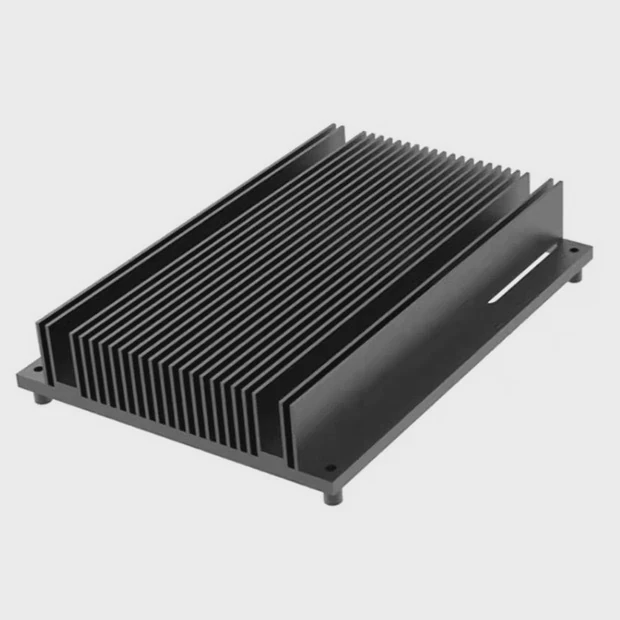
Why CNC is ideal for water-cooling designs
CNC allows you to cut complex shapes with high accuracy. Channels can be carved with consistent width. Fins can be made extremely thin. All these details improve heat transfer and water flow.
Protecting tolerances during machining
Water blocks need clean surfaces and tight dimensional accuracy. CNC can produce flat mating surfaces that seal well when compressed with O-rings. Without this precision, coolant may leak.
Microfin arrays require precise cutting
Microfins are often under 0.5 mm thick. Such thin fins fatigue easily if machined poorly. CNC routers or milling machines handle these tasks far better than manual tools.
Why DIY builders use CNC services
Some users send their CAD models to machining shops that specialize in small metal components. This produces high-quality results without buying heavy machinery.
### CNC advantages for water block fabrication
- Consistent fin spacing
- Accurate channel depth
- Smooth sealing edges
- Reliable alignment for top and base plates
- Repeatable production for multiple units
CNC machining turns complex designs into stable, reliable cooling hardware.
Do seals prevent leakage?
Water cooling is only safe when sealed correctly. Even a tiny leak can damage electronics. Good sealing methods keep the loop stable under pressure and prevent coolant loss.
Seals prevent leakage by creating airtight, watertight barriers between the block surfaces. O-rings, gaskets, and precision-cut grooves ensure the coolant stays inside even under pump pressure.
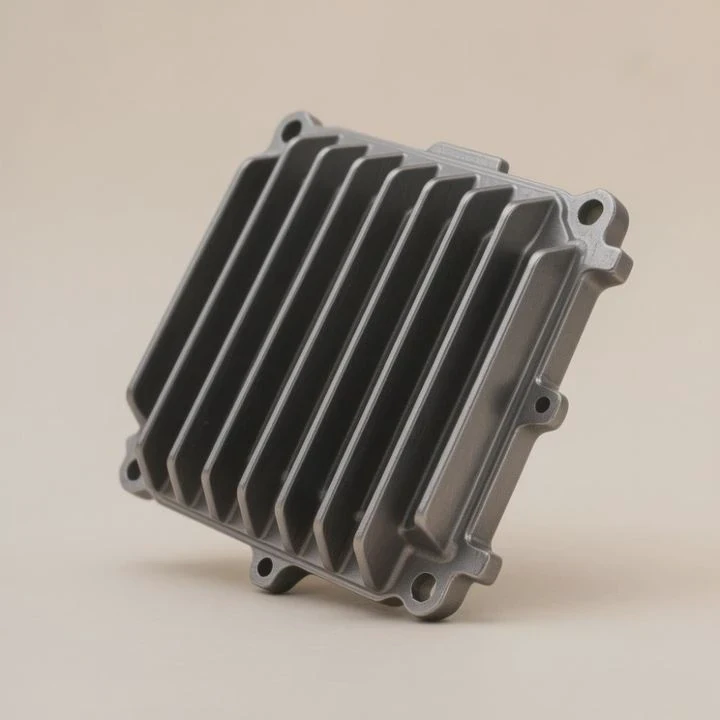
Why O-rings are the most common seal
O-rings fit into grooves around the channel area. When the top plate presses down, the O-ring compresses and forms a tight seal. They handle vibration well and last a long time.
Rubber materials for sealing
Most O-rings use silicone, nitrile, or EPDM rubber. These materials resist coolant additives and handle heat from the CPU or GPU. They maintain flexibility over time.
Importance of clean surfaces
A seal only works when the metal surfaces are flat and clean. CNC machined edges help ensure smooth contact. Any scratches or particles can interrupt the seal.
Threaded fittings also need sealing
Water blocks connect to tubing using threaded joints. These fittings use O-rings or PTFE tape to prevent leaks. Tightening them evenly ensures proper sealing without damaging threads.
### What causes leaks in poor builds
- Over-tightening screws
- Misaligned sealing surfaces
- Old or cracked O-rings
- Using incompatible coolants
- Loose fittings or low-quality adapters
Strong sealing is essential when building a water-cooling heatsink for long-term reliability.
Conclusion
Making a water-cooling heatsink requires smart channel design, good materials, precise CNC machining, and strong sealing. Channels improve flow, suitable metals ensure heat transfer, machining enhances accuracy, and seals prevent leaks. With careful design and solid construction, a water block can keep high-power electronics cool and stable for years.
TAGS
Latest Articles

Volume discount levels for heat sink orders?
Buyers often ask when heat sink prices start to drop with volume. Many worry they’re overpaying for small orders. This guide explains how B2B volume pricing works for thermal components. Heat sink
21 Dec,2025
Heat sink long-term supply contract options?
Many buyers want stable pricing and reliable delivery for heat sinks. But without a clear contract, risks grow over time. This article explores how to secure better long-term supply deals. Long-term
21 Dec,2025
Tooling cost for new heat sink profiles?
Many engineers struggle to understand why tooling for custom heat sinks costs so much. They worry about budgeting and production timelines. This article breaks down the cost drivers behind tooling.
21 Dec,2025
Heat sink custom sample process steps?
Sometimes, starting a custom heat sink project feels overwhelming—too many steps, too many unknowns, and too many risks. You want a sample, but not endless delays. The process for requesting and
20 Dec,2025
Standard B2B terms for heat sink payments?
When buyers and sellers in B2B heat sink markets talk about payment, many don’t fully understand what’s standard. This can lead to delayed orders, miscommunication, and even lost business
20 Dec,2025
Heat sink pricing factors for large orders?
Heat sinks are vital for many systems. When prices rise, projects stall and budgets break. This problem can hit teams hard without warning. Large order heat sink pricing depends on many factors. You
20 Dec,2025Related Articles
- do you need a heatsink for m.2 ssd for pc?
- what should heatsinks be made of?
- how to fire heatsinks in elite dangerous?
- where to get legendary sandevistan heatsink?
- how to install an amd 3700x heatsink?
- how to install raspberry pi 4 heatsink?
- how to stick heatsink to chip?
- is heatsink necessary for m.2?
- can't find sandevistan heatsink?
- what is a gpu heatsink?
- can you upgrade a laptop cpu heatsink?
- what heatsink fit amd epyc 7601?
Author
Dr. Emily Chen
Chief AI Researcher
Leading expert in thermal dynamics and AI optimization with over 15 years of experience in data center efficiency research.
Categories
Latest Products
M.2 Heatpipe Heatsink With Dual Fans For Pc Case
19 Mar,2026
Heavy-Duty Aluminum Heat Sink Custom
19 Mar,2026
Oem Skived Fin Heatsink Aluminum Radiator For Plants
19 Mar,2026
Water Cooled Cnc Aluminum Heat Sink For Medical
19 Mar,2026
High Density 6000 Series Aluminum Heat Sink Profile
19 Mar,2026
High-Density Extruded Aluminum & Bonded-Fin Heat Sink Profile
19 Mar,2026
Recommend Categories
- Liquid cooling plate Manufacturer
- Industrial Heat Sink Manufacturer
- Standard Heat Sink Manufacturer
- Aluminum Heat Sink Manufacturer
- Copper Heat Sink Manufacturer
- Anodized Heatsink Manufacturer
- Stamping heat sink Manufacturer
- Die Casting Heatsink Manufacturer
- Soldering heat sink Manufacturer
- CNC Parts Manufacturer
Latest Products
- M.2 Heatpipe Heatsink With Dual Fans For Pc Case
- Heavy-Duty Aluminum Heat Sink Custom
- Oem Skived Fin Heatsink Aluminum Radiator For Plants
- Water Cooled Cnc Aluminum Heat Sink For Medical
- High Density 6000 Series Aluminum Heat Sink Profile
- High-Density Extruded Aluminum & Bonded-Fin Heat Sink Profile
- Dongguan Cnc Aluminum Heat Sink For Led & Brass Parts
- Wholesale Cnc Aluminum Heat Sink - Custom Extruded
- Led Cnc Round Heat Sink With Screw Holes
- Copper Pin-Fin Heat-Sink Large-Area For Photoled Cooling
- Telecom Heatsink Zipper Fin Wcopper Tubes Oem
Contact Expert
Have questions about this article? Reach out to our experts directly.