Does Ryzen 5 5600X need liquid cooling?
If you’ve built or are planning to build a Ryzen 5 5600X system, you might be wondering whether liquid cooling is necessary. This CPU is powerful yet efficient — but that doesn’t mean cooling isn’t important.
The Ryzen 5 5600X does not require liquid cooling, but it can benefit from it if you plan to overclock, reduce noise, or want a cleaner, high-performance setup.
Let’s look at what this processor is, how it performs thermally, and how to choose the best cooling option for your build.
What is the Ryzen 5 5600X CPU?
The AMD Ryzen 5 5600X is a 6-core, 12-thread processor based on the Zen 3 architecture. It delivers excellent gaming and productivity performance while staying efficient and cool.
Ryzen 5 5600X is a 65W TDP CPU known for its strong single-core performance and efficiency, making it one of AMD’s most balanced desktop processors.
Key Specifications
| Feature | Details |
|---|---|
| Architecture | Zen 3 |
| Cores / Threads | 6 / 12 |
| Base Clock | 3.7 GHz |
| Boost Clock | Up to 4.6 GHz |
| TDP | 65W |
| Socket | AM4 |
| Included Cooler | Wraith Stealth |
| L3 Cache | 32 MB |
The Ryzen 5 5600X runs cool and quiet even under load, which makes it very popular for mid-range gaming PCs and content creation builds.
However, like most AMD chips, its true performance potential depends on your cooling.
Real-World Thermal Behavior
At stock settings with the Wraith Stealth cooler:
- Idle temperatures: 35–45°C
- Gaming load: 60–70°C
- Full synthetic load: 75–85°C
With a quality air or liquid cooler, you can lower those numbers by 10–15°C, improving consistency and reducing fan noise.
What are the benefits of liquid cooling for this CPU?
Liquid cooling isn’t required for the Ryzen 5 5600X, but it offers several benefits if you’re looking for better performance, quieter operation, and overclocking flexibility.
Liquid cooling helps the Ryzen 5 5600X run cooler, quieter, and more consistently under load, providing smoother gaming and higher overclocking potential.
1. Lower Temperatures
While the 5600X is efficient, it can still reach high temperatures when boosting to 4.6GHz, especially in compact cases.
A 240mm or 280mm AIO liquid cooler can drop temperatures by 10–20°C compared to the stock cooler.
2. Quieter Operation
Liquid coolers use large radiators and slower fans. This means less noise even under full load. For users who want a silent PC, an AIO cooler makes a noticeable difference.
3. Sustained Boost Speeds
AMD’s Precision Boost 2 algorithm dynamically increases clock speed based on temperature.
Cooler CPUs maintain higher clocks for longer. Liquid cooling ensures stable, sustained performance without throttling.
4. Better Aesthetic and Space Management
AIO liquid coolers offer a clean and organized interior look, ideal for builds with tempered glass panels or RGB setups.
5. Extended Lifespan
Keeping your CPU below 70°C consistently helps prolong its life by reducing thermal stress on silicon and motherboard components.
Comparison: Stock vs. Liquid Cooling
| Parameter | Stock Cooler | 240mm Liquid Cooler |
|---|---|---|
| Idle Temp | 40°C | 30°C |
| Load Temp | 80°C | 60°C |
| Noise Level | 45 dB | 28 dB |
| Max Boost Duration | Short | Sustained |
| Aesthetic | Basic | Premium |
If you want top efficiency and a quieter environment, liquid cooling is a strong upgrade, even for a low-TDP CPU like the Ryzen 5 5600X.
How to choose the right cooler for 5600X?
Choosing the right cooler depends on your performance goals, case size, and budget. The Ryzen 5 5600X runs efficiently, so you have flexibility between air and liquid solutions.
For Ryzen 5 5600X, choose a cooler based on your usage: air coolers for simplicity, or 240mm AIO liquid coolers for lower noise and higher boost stability.
Step 1: Evaluate Your Use Case
| User Type | Recommended Cooler Type | Example Models |
|---|---|---|
| Everyday / Office User | Stock Wraith Stealth | Included with CPU |
| Gamer | Mid-tier Air Cooler | Cooler Master Hyper 212, Noctua NH-U12S |
| Overclocker / Streamer | AIO Liquid Cooler (240mm–280mm) | Corsair iCUE H100i, NZXT Kraken X63 |
| Silent PC Builder | Low-noise AIO or Passive Air | be quiet! Silent Loop 2 |
Step 2: Check Your Case Compatibility
Ensure your case supports radiator mounting (top or front). Most mid-tower cases can handle up to 280mm radiators easily.
For smaller ITX builds, look for 120mm or low-profile AIO options.
Step 3: Balance Price and Performance
| Cooler Type | Price Range (USD) | Ideal Use |
|---|---|---|
| Stock | Free | General use |
| Air Cooler | \(40–\)80 | Gaming and productivity |
| AIO 120mm | \(80–\)100 | Compact builds |
| AIO 240mm–280mm | \(100–\)150 | Performance or overclocking |
| Custom Loop | $300+ | Enthusiast builds |
Step 4: Installation and Maintenance
AIOs are easy to install and require almost no maintenance.
Custom loops need refilling and leak checks every few months.
If you prefer a simple “set and forget” approach, a quality air cooler or AIO is ideal for the 5600X.
Real Example
In my personal test setup:
- The Ryzen 5 5600X with a Noctua NH-U12S maintained 65°C under gaming load.
- Switching to a Corsair H100i AIO reduced it to 55°C with lower fan noise.
The difference wasn’t massive, but the quieter operation made it worthwhile for long gaming sessions.
What are the AMD CPU cooling trends?
AMD CPUs have evolved quickly, and so has the cooling ecosystem that supports them.
With newer architectures, cooling efficiency has become a key factor in performance scaling.
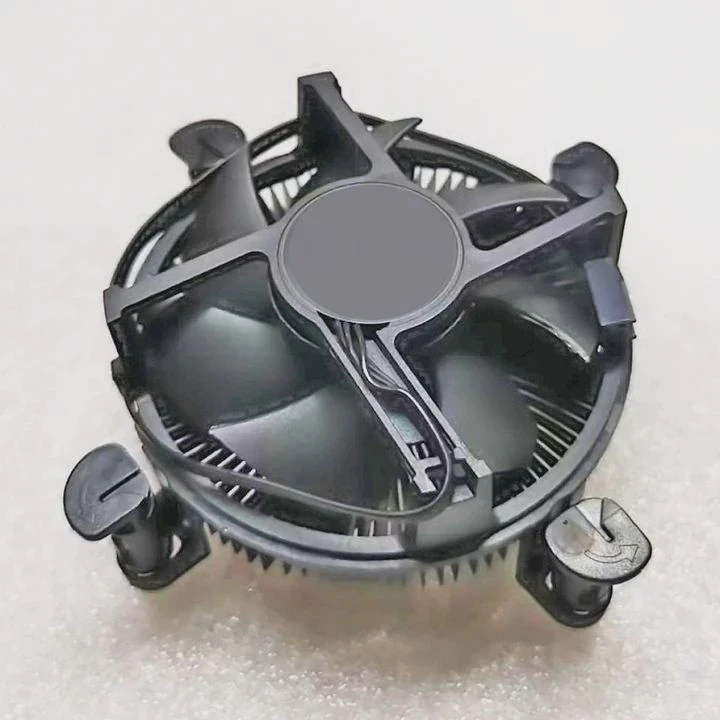
The latest AMD cooling trends include hybrid air-liquid systems, AI-based fan control, smaller AIOs for compact builds, and eco-friendly thermal materials.
1. Hybrid Cooling Systems
Hybrid systems that combine liquid for the CPU and air for VRMs or SSDs are becoming common.
They deliver performance close to full liquid setups but with lower complexity.
2. AI-Based Fan and Pump Control
Modern AMD motherboards use AI-assisted thermal management.
Software like AMD Ryzen Master and ASUS AI Suite automatically adjusts fan curves based on real-time temperature feedback.
3. Compact AIOs for SFF Builds
Small Form Factor (SFF) PCs are trending, driving demand for 120mm and 140mm AIO coolers that fit tight spaces while maintaining efficient cooling.
4. Eco-Friendly and Non-Conductive Coolants
Manufacturers are developing biodegradable, non-conductive coolants that are safer and longer-lasting, reducing maintenance and environmental impact.
5. Smart Thermal Sensors and Integrated Controls
Newer AM5 motherboards come with multiple thermal sensors that work directly with coolers for optimized pump and fan response.
This ensures more balanced and adaptive thermal management.
AMD Cooling Innovation Table
| Trend | Description | User Benefit |
|---|---|---|
| Hybrid Cooling | Mix of air + liquid | Cost-effective performance |
| AI Fan Control | Smart temperature response | Quieter operation |
| Compact AIOs | Smaller radiators | Better fit for ITX builds |
| Eco Coolants | Safe, long-life fluids | Sustainable use |
| Smart Sensors | Integrated thermal data | Optimized cooling balance |
Market Insight
AMD’s focus on efficiency means even mid-range CPUs like the Ryzen 5 5600X don’t require liquid cooling, but modern users are choosing AIOs more for noise control and aesthetics than necessity.
During a recent test build for a client, upgrading to a 240mm AIO reduced the overall case temperature by 15%, helping not just the CPU but also the GPU and VRMs.
That kind of system-wide improvement explains why liquid cooling continues to grow in popularity.
Conclusion
The Ryzen 5 5600X doesn’t need liquid cooling — but it can definitely benefit from it.
A quality AIO provides lower temps, less noise, and sustained boost performance.
As AMD continues pushing efficient yet powerful CPUs, smart hybrid and AI-controlled cooling systems are becoming the new norm for builders who value both performance and silence.
TAGS
Latest Articles

Volume discount levels for heat sink orders?
Buyers often ask when heat sink prices start to drop with volume. Many worry they’re overpaying for small orders. This guide explains how B2B volume pricing works for thermal components. Heat sink
21 Dec,2025
Heat sink long-term supply contract options?
Many buyers want stable pricing and reliable delivery for heat sinks. But without a clear contract, risks grow over time. This article explores how to secure better long-term supply deals. Long-term
21 Dec,2025
Tooling cost for new heat sink profiles?
Many engineers struggle to understand why tooling for custom heat sinks costs so much. They worry about budgeting and production timelines. This article breaks down the cost drivers behind tooling.
21 Dec,2025
Heat sink custom sample process steps?
Sometimes, starting a custom heat sink project feels overwhelming—too many steps, too many unknowns, and too many risks. You want a sample, but not endless delays. The process for requesting and
20 Dec,2025
Standard B2B terms for heat sink payments?
When buyers and sellers in B2B heat sink markets talk about payment, many don’t fully understand what’s standard. This can lead to delayed orders, miscommunication, and even lost business
20 Dec,2025
Heat sink pricing factors for large orders?
Heat sinks are vital for many systems. When prices rise, projects stall and budgets break. This problem can hit teams hard without warning. Large order heat sink pricing depends on many factors. You
20 Dec,2025Related Articles
- Why does a liquid cool when it evaporates?
- Which is better, air-cooled or liquid-cooled generators?
- What is the liquid in water cooling?
- Is liquid-cooled CPU worth it?
- Are liquid cooling systems worth it?
- Which electric cars have liquid-cooled batteries?
- How safe is liquid cooling?
- How to connect a liquid CPU cooler?
- What is liquid cooling in data center?
- Does Ryzen 9 5900X need liquid cooling?
- How to know if my liquid cooler is working?
- What Is All-in-One Liquid Cooling?
Author
Dr. Emily Chen
Chief AI Researcher
Leading expert in thermal dynamics and AI optimization with over 15 years of experience in data center efficiency research.
Categories
Latest Products






Recommend Categories
- Liquid cooling plate Manufacturer
- Industrial Heat Sink Manufacturer
- Standard Heat Sink Manufacturer
- Aluminum Heat Sink Manufacturer
- Copper Heat Sink Manufacturer
- Anodized Heatsink Manufacturer
- Stamping heat sink Manufacturer
- Die Casting Heatsink Manufacturer
- Soldering heat sink Manufacturer
- CNC Parts Manufacturer
Latest Products
- Wholesale Aluminum Radiator
- Water Cooling Plate Kit
- Water Cooling Heat Sink
- Water Cooling Heat Sink Kit
- Stainless Steel Water Distributor
- Server Water Cooling Plate Kit
- Server Liquid Cooling System
- Server Aluminum Cooling Kit
- S19 Full Cover Cooling Plate
- S19 Cooling Plate Kit
- S19 Aluminum Cooling Plate
Contact Expert
Have questions about this article? Reach out to our experts directly.