Vapor Chamber design service available?
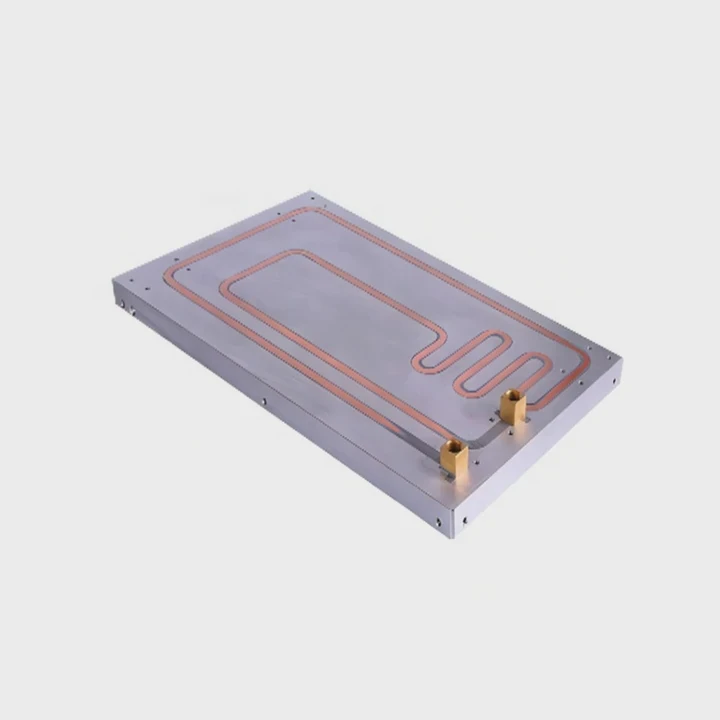
When you’re building high‑performance thermal systems and the standard parts don’t hit the mark, it’s time to talk custom design.
Custom vapor‑chamber design services let you tailor dimensions, materials, internal wick/fluid structure and integration to match your exact thermal and mechanical requirements—from concept to production.
Let’s walk through what’s involved.
What design services are offered for custom Vapor Chambers?
When a supplier offers custom design for a vapor chamber, several services usually come together.
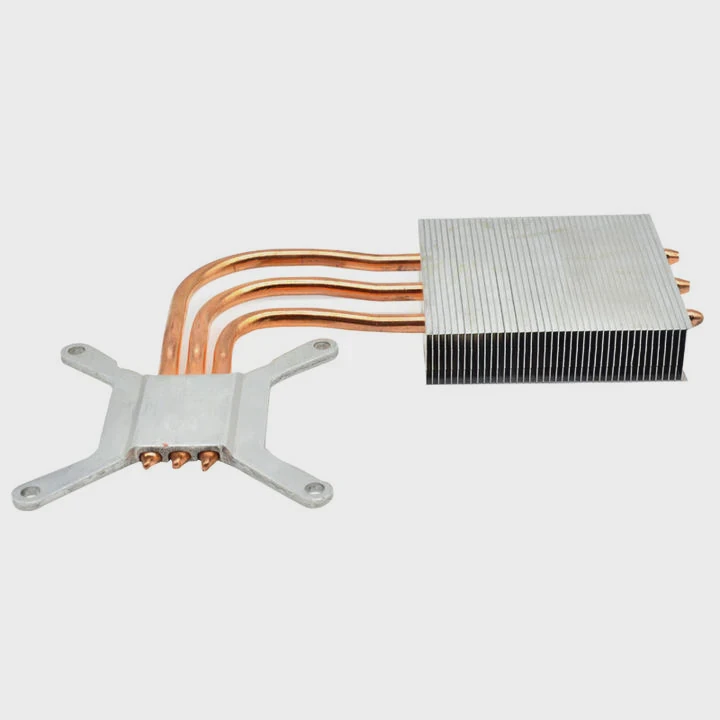
Design services typically include thermal requirement review, mechanical packaging layout, material and wick selection, fluid/vacuum specification, prototype build and testing, and full documentation for production.
Dive deeper
When I’ve worked with clients who needed custom vapor chambers (for example in telecom equipment, power electronics or semiconductor cooling), here’s how the process often unfolds:
Key stages of service
- Requirement capture
- Heat load (W) and flux (W/cm²)
- Heat source geometry, location, and contact interface
- Available envelope, height/thickness, footprint, mounting constraints
- Target temperature rise, ambient conditions, environment (vibration, orientation)
- Lifetime, reliability, certifications (e.g., aerospace, rail)
- Heat load (W) and flux (W/cm²)
- Concept design
- Select material (copper vs aluminium vs hybrid)
- Choose wick structure (mesh, sintered powder, grooved)
- Define fluid charge and vacuum / internal pressure
- Sketch chamber geometry, ports, mounting features
- Select material (copper vs aluminium vs hybrid)
- Mechanical & thermal layout
- CAD model of chamber outline + mounting details
- Thermal simulation (see next section) to verify required spreading performance
- Mechanical stress, fatigue and reliability checks (especially for high‑vibration or transport applications)
- CAD model of chamber outline + mounting details
- Prototype build & test
- Manufacture samples (often 1–3 pieces)
- Leak‑test, bake‑out, fill, vacuum cycle
- Thermal performance test: measure thermal resistance, temperature uniformity, hot‑spot mitigation
- Mechanical tests: drop, vibration, shock if required
- Manufacture samples (often 1–3 pieces)
- Production design & documentation
- Final drawings, tolerances, material specs, finish (nickel plating, anodise, etc)
- Manufacturing process instructions (welding/brazing, evacuation, filling)
- Quality control procedures, test plans
- Packaging and shipping instructions
- Final drawings, tolerances, material specs, finish (nickel plating, anodise, etc)
Why this full service matters
- You avoid the “one size fits all” risk where a standard vapour chamber won’t meet your unique heat spreader footprint or height limitation.
- You integrate the chamber into your system’s mechanical structure (e.g., part of a housing or frame) rather than treating it as an add‑on.
- You align the thermal module to your certification needs (rail, aerospace, 5G telecom, etc).
- You ensure manufacturability, repeatability and cost efficiency from the prototype into mass production.
- Because your product (high‑performance heat management modules) demands top reliability, you can’t rely on “off the shelf” solutions that may show variation batch‑to‑batch.
For a company like yours (Sinothermic), such services align perfectly: you have the R&D, manufacturing base and global customer base, so partnering with a design‑supplier who offers full custom service gives you speed, control and quality.
Do suppliers provide thermal simulation with design service?
Absolutely — most good custom vapour chamber suppliers include thermal simulation as part of the design service.
Yes — thermal simulation (CFD or finite‑element based) is a standard component of quality vapour chamber design, used to predict heat spread, track hotspots, verify thermal resistance, and integrate the chamber into system‑level thermal models.
Dive deeper
Here’s what to look for and ask about when simulation is part of the offering:
What simulation covers
- Heat source to chamber interface: contact resistance, TIM/adhesive layer, mounting pressure.
- Internal vapour/condensation behaviour: although the detailed two‑phase flow inside the chamber is complex, suppliers use effective thermal conductivity and validated models to approximate performance.
- Chamber spreading: how the heat flux spreads across the surface, how the shape/thickness of chamber affects uniformity.
- System‑level thermal path: chamber → heat sink/fins → ambient; how your enclosure or airflow helps or limits performance.
- Reliability and worst‑case: elevated ambient temperature, high power density, multiple heat cycles.
- Mechanical stress insofar as it affects contact or thermal contact (e.g., mounting deformation).
Why simulation is critical
- It helps avoid over‑design (i.e., using too large or unnecessarily thick chamber) which costs more and takes space.
- It ensures you hit thermal targets (temperature rise, uniformity) before tooling or production starts, thus reducing risk.
- It lets you compare material options (copper vs aluminium) and different internal designs (wick types, port sizes).
- It allows trade‑offs: thickness vs spreading vs space vs cost.
- It supports documentation for your customer’s technical file, especially in high‑reliability sectors.
Questions to ask your supplier
- What simulation tool do you use? (Ansys, FloTHERM, COMSOL, etc)
- Do you provide simulation results in a report (temperature maps, isotherms, graphs)?
- Have you validated simulation results with prototype testing (i.e., correlation between predicted and measured performance)?
- What assumptions are made (contact resistance, ambient, boundary conditions)?
- Will you supply the simulation models or just results? (Sometimes you may want them for internal verification).
- Is there an extra charge for simulation or is it included in the design service?
In summary: yes — for custom vapour chambers, thermal simulation is not optional, it’s expected. Ensuring your supplier includes and supports simulation gives your project higher chances of success.
How to request a Vapor Chamber design proposal?
When you’re ready to engage a design supplier for a custom vapour chamber, you’ll need to provide a clear set of inputs and know what to ask for.
To request a vapour chamber design proposal, provide your heat/thermal specs, mechanical envelope, duty cycle, environment and production volume; then request a proposal including concept design, simulation summary, prototype cost/time, production cost, lead‑time and tooling plan.
Dive deeper
Here’s a step‑by‑step guide to making a strong request and making sure you get the right information:
Information you should supply
- Heat load (total watts, peak watts, steady‑state watts).
- Heat source area (mm²) and location(s): single point or multiple sources.
- Max allowable temperature rise or max temperature of the device/component.
- Mechanical envelope: footprint (L×W×H), thickness limit, mounting holes/features, weight constraint.
- Environmental conditions: ambient temperature range, airflow (or liquid cooling), orientation, vibration & shock.
- Material preferences or restrictions: e.g., must be aluminium vs copper; plating or finish required.
- Certification/industry requirements: aerospace, rail, medical, etc.
- Required volume: prototype quantity, initial production quantity, annual forecast.
- Budget/target cost expectations.
- Timescale: when you need first samples, when production must start.
- Additional system context: is the chamber part of a larger assembly (heat sink, liquid cold plate, chassis)?
What to ask the supplier to include in the proposal
- Concept design drawings (2–3 options) or CAD sketches.
- Thermal simulation results: predicted thermal resistance, temperature maps, assumptions.
- Mechanical specification: materials, thickness, finish, mounting.
- Prototype cost and lead‑time (including sample delivery).
- Production cost per unit at defined volume, tooling cost if applicable.
- Production lead‑time and ramp‑up plan.
- Quality and reliability plan: test methods (e.g., leak test, thermal cycling), traceability.
- Documentation deliverables: drawings, BOM, process sheet, test reports.
- Terms and conditions: MOQ, warranty, support, confidentiality.
- Next steps: design review meetings, sample approval, qualification plan.
Example timeline
| Phase | Approximate Time |
|---|---|
| Request & review | 1–2 weeks |
| Concept & simulation | 2–4 weeks |
| Prototype build | 4–8 weeks |
| Prototype testing | 1–2 weeks |
| Production tooling | 4–12 weeks (if required) |
| Production launch | Immediately after samples validated |
Using this structured request will help you compare multiple suppliers under the same criteria. It also gives your procurement and engineering teams a clear basis for decision‑making.
Are quick‑turn Vapor Chamber design services available?
Yes — some suppliers offer accelerated or “quick‑turn” design and prototyping packages for vapour chambers.
Quick‑turn design services (often 24‑to‑72 hour initial response, 1–2 week prototypes) are offered by suppliers with established design libraries, rapid tooling, and streamlined processes. These services support fast‑moving projects or volume builds with compressed schedules.
Dive deeper
Here’s how “quick‑turn” services differ and what to consider:
How suppliers deliver quick‑turn
- They use existing design libraries or modular platforms for layouts, reducing the time from concept to CAD.
- They prioritise simulation and rapid thermal modelling rather than lengthy iteration cycles.
- They maintain prototype production capacity (small batch) and expedited manufacturing processes.
- They often offer “fast‑track” quoting and sample schedule as standard for customers with urgent needs.
- They may charge expedited service fees or require higher minimum quantities for quick-turn runs.
When you need quick‑turn
- Your product launch schedule is aggressive (e.g., a new telecom module, EV power electronics, 5 G rollout).
- You have design freeze approaching and need validated parts quickly.
- You want to test concept early and move into production quickly without long lead‑times.
- You operate in a market with short lifecycle products (consumer electronics, LED modules) and need fast iteration.
Risks and mitigations
- Risk: Over‑rushed design may compromise optimization (eg. thickness, cost, reliability).
- Mitigation: Set critical parameters clearly, ask for “good enough” design that meets minimum specs with future iteration capability.
- Mitigation: Set critical parameters clearly, ask for “good enough” design that meets minimum specs with future iteration capability.
- Risk: Prototype quality may differ from full production performance or durability.
- Mitigation: Ensure supplier clearly states prototype vs production difference and plans for qualification.
- Mitigation: Ensure supplier clearly states prototype vs production difference and plans for qualification.
- Risk: Cost may be higher for expedited service.
- Mitigation: Negotiate volume pricing and clarify expected cost ramp‑down once in standard mode.
Practical advice for your business
Given your background (Sinothermic: 15 + years, custom R&D/production, high‑reliability markets), you might build a relationship with a design‑supplier who offers both standard custom service and quick‑turn options. This way you are covered for both long‑lead innovation builds and fast‑to‑market product extensions.
When requesting a quick‑turn service, clarify:
The exact lead‑time for initial prototype.
The number of iterations included in the timeline.
The trade‑offs (cost, performance, tooling) compared to standard custom service.
The transition plan from quick‑turn prototype to full production (if volume is required).
Conclusion
Custom vapour‑chamber design services open up possibilities far beyond off‑the‑shelf parts. For high‑performance systems you’ll need a supplier who offers full scope: thermal & mechanical design, simulation, prototyping, and production readiness. Thermal simulation is now a standard part of that service, not optional. A well‑structured design proposal request will help you engage suppliers efficiently and compare offers. And yes, for urgent projects many suppliers now offer quick‑turn design tracks—just ensure you understand the trade‑offs.
TAGS
Latest Articles

Volume discount levels for heat sink orders?
Buyers often ask when heat sink prices start to drop with volume. Many worry they’re overpaying for small orders. This guide explains how B2B volume pricing works for thermal components. Heat sink
21 Dec,2025
Heat sink long-term supply contract options?
Many buyers want stable pricing and reliable delivery for heat sinks. But without a clear contract, risks grow over time. This article explores how to secure better long-term supply deals. Long-term
21 Dec,2025
Tooling cost for new heat sink profiles?
Many engineers struggle to understand why tooling for custom heat sinks costs so much. They worry about budgeting and production timelines. This article breaks down the cost drivers behind tooling.
21 Dec,2025
Heat sink custom sample process steps?
Sometimes, starting a custom heat sink project feels overwhelming—too many steps, too many unknowns, and too many risks. You want a sample, but not endless delays. The process for requesting and
20 Dec,2025
Standard B2B terms for heat sink payments?
When buyers and sellers in B2B heat sink markets talk about payment, many don’t fully understand what’s standard. This can lead to delayed orders, miscommunication, and even lost business
20 Dec,2025
Heat sink pricing factors for large orders?
Heat sinks are vital for many systems. When prices rise, projects stall and budgets break. This problem can hit teams hard without warning. Large order heat sink pricing depends on many factors. You
20 Dec,2025Related Articles
- Can Vapor Chamber improve CPU cooling performance?
- High efficiency Vapor Chamber alternative materials?
- Future demand for Vapor Chamber in EV sector?
- Cost comparison of Vapor Chamber and heat pipe?
- Green manufacturing for Vapor Chamber?
- Vapor Chamber role in energy saving systems?
- Custom Vapor Chamber for High Power Devices?
- How to choose Vapor Chamber supplier?
- Standard thickness of Vapor Chamber copper plate?
- Should Vapor Chamber use pure copper?
- Vapor Chamber lifetime expectation?
- Common defects in Vapor Chamber manufacturing?
Author
Dr. Emily Chen
Chief AI Researcher
Leading expert in thermal dynamics and AI optimization with over 15 years of experience in data center efficiency research.
Categories
Latest Products






Recommend Categories
- Liquid cooling plate Manufacturer
- Industrial Heat Sink Manufacturer
- Standard Heat Sink Manufacturer
- Aluminum Heat Sink Manufacturer
- Copper Heat Sink Manufacturer
- Anodized Heatsink Manufacturer
- Stamping heat sink Manufacturer
- Die Casting Heatsink Manufacturer
- Soldering heat sink Manufacturer
- CNC Parts Manufacturer
Latest Products
- Wholesale Aluminum Radiator
- Water Cooling Plate Kit
- Water Cooling Heat Sink
- Water Cooling Heat Sink Kit
- Stainless Steel Water Distributor
- Server Water Cooling Plate Kit
- Server Liquid Cooling System
- Server Aluminum Cooling Kit
- S19 Full Cover Cooling Plate
- S19 Cooling Plate Kit
- S19 Aluminum Cooling Plate
Contact Expert
Have questions about this article? Reach out to our experts directly.