Vapor Chamber real heat transfer limits?
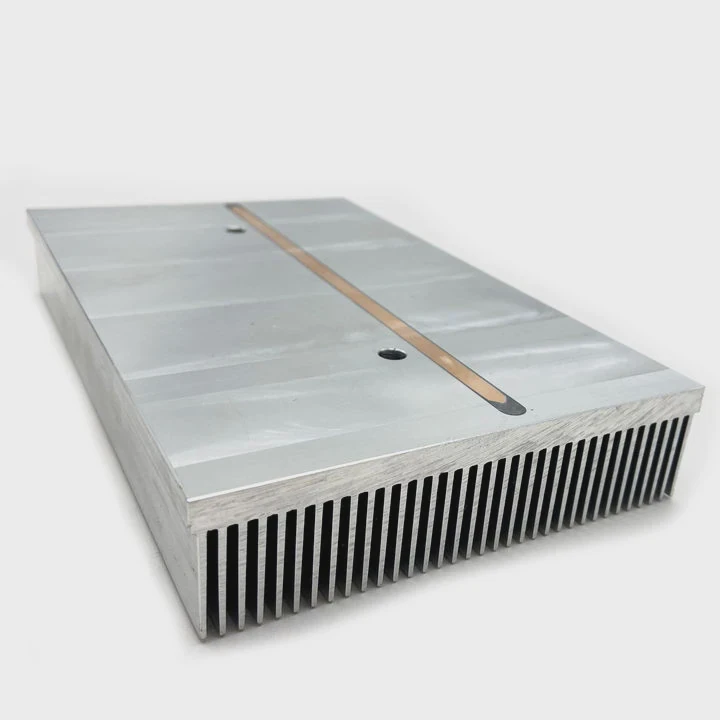
Vapor chambers can spread and move heat fast — but they are not unlimited. If pushed too hard, they hit real physical and design limits.
A vapor chamber’s heat‑transfer limit depends heavily on wick design, chamber size/thickness and internal fluid dynamics. Exceeding these limits causes dry‑out, boiling instability, or structural failure.
Below I dig into real limits, how size and design matter, what studies show, and what failure modes appear when pushed beyond safe operating range.
What are the actual heat transfer limits for a Vapor Chamber?
Vapor chambers perform very well — but their maximum heat flux or power is bounded by internal fluid return capability, wick capillary limits, vapor/liquid flow balance and temperature constraints.
Real-world tests and models show many vapor chambers handle heat fluxes of tens of W/cm² (e.g. ~25–50 W/cm²) — sometimes higher — but pushing beyond that risks dry‑out or instability.
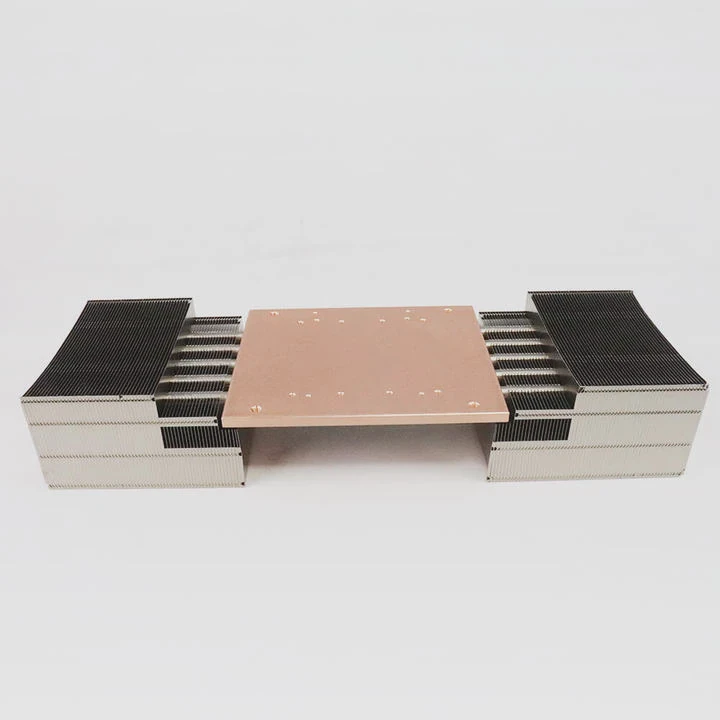
In practical applications, vapor chambers are often used at heat-flux levels around 25 W/cm² and with thermal resistance under ~0.20 °C/W. Some advanced designs can handle even more, depending on internal wick and chamber design.
Limits occur when the wick can no longer bring fluid back to the hot zone fast enough, or vapor builds up faster than it can condense. Both lead to failure in thermal performance. A good design considers worst-case heat load and includes margin.
How does the maximum heat flux depend on chamber size and thickness?
Geometry — both the footprint and thickness of the chamber — matters quite a bit for performance limits.
Larger footprint and optimized thickness/wick geometry generally improve heat‑spreading and support higher total heat loads; but thin “flat” chambers trade fluid volume and wick capacity for compactness, which lowers maximum flux capacity.
If a vapor chamber is too thin, there’s limited space for vapor flow and wick return. That raises the risk of dry-out. On the other hand, a thick chamber increases volume, but also adds weight and cost. Engineers must balance the thermal needs with mechanical and space constraints.
Also, the surface area helps spread out high heat flux into manageable levels. A small heat source on a small chamber creates local overload. But on a wider chamber, heat spreads out, reducing flux density and risk.
Here’s a quick guideline:
| Chamber Characteristic | Effect on Heat Transfer Limit |
|---|---|
| Large footprint | Supports higher total power |
| Thicker profile | More vapor space, better flow |
| Thin (<1.5 mm) | Lower capacity, compact size |
| Dense wick | Handles higher flux per area |
Are there empirical data on performance limits of Vapor Chambers?
Yes — both lab tests and real applications show how vapor chambers behave near their thermal limits.
Recent studies confirm vapor chambers can manage total heat loads from 50 to 100+ watts depending on wick design, thickness, and footprint — but local hotspots and dry-out still occur under high flux.
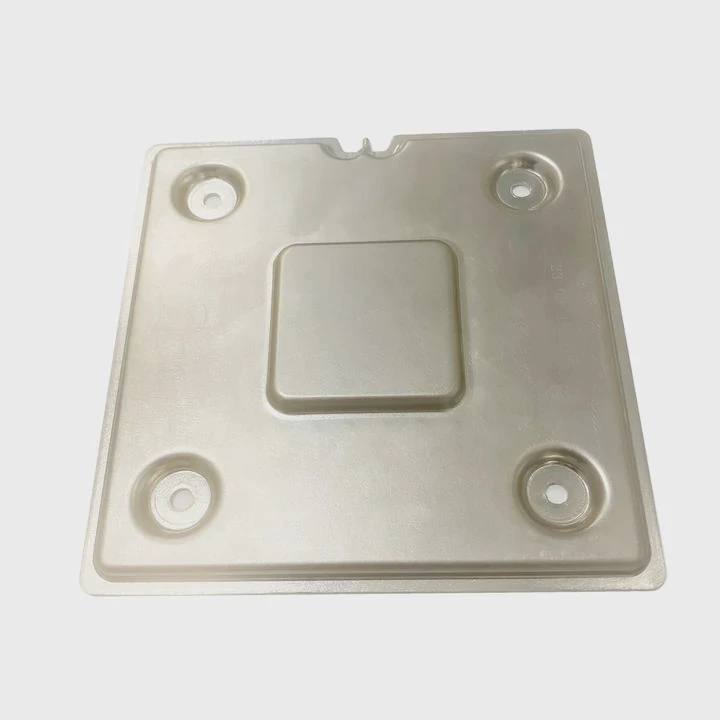
Researchers tested vapor chambers under multiple load conditions. With optimized sintered wicks, some thin chambers sustained up to 50 W across moderate areas without instability. Larger ones managed even more.
But when concentrated loads (high W/cm²) are applied to small contact areas, performance drops. Thermal resistance increases, and the center temperature rises faster. That’s when vapor flow chokes or wick dries out.
Empirical charts often show “knee points” — regions where temperature rises slowly up to a certain wattage, then climbs fast. That’s the performance limit, and it varies by design.
Even in high-end systems, engineers design for ~70% of the max rating to avoid hitting that knee point under real-world fluctuations.
What failure modes occur at the limits of Vapor Chamber heat transfer?
Exceeding a vapor chamber’s thermal capacity results in clear failure signs — some temporary, some permanent.
Failure modes include wick dry-out, local vapor block, boiling instability, rising thermal resistance, or chamber fatigue from overheating.
The most common failure is wick dry-out. When too much vapor forms and not enough liquid returns, the hot zone empties. Heat can’t be absorbed, and temperature spikes. This is called the capillary limit.
Another issue is vapor blockage. Too much vapor pressure may prevent liquid from reaching the hot zone. That disrupts the cycle and causes thermal fluctuations.
Repeated operation near limits causes long-term wear: thermal fatigue, weld weakening, or micro leaks. If chamber sealing breaks, vacuum is lost and function ends.
Summary of key failure modes:
| Failure Mode | Cause | Result |
|---|---|---|
| Wick dry-out | Capillary return too slow | Temperature spikes, loss of cooling |
| Vapor choke | Excessive evaporation | Reduced condensation, rising heat |
| Boiling instability | Unstable vapor flow | Fluctuating thermal response |
| Seal fatigue | Long-term thermal cycling | Loss of vacuum, chamber failure |
Avoiding these failures means designing below the theoretical max heat load — usually by 20
TAGS
Latest Articles

Volume discount levels for heat sink orders?
Buyers often ask when heat sink prices start to drop with volume. Many worry they’re overpaying for small orders. This guide explains how B2B volume pricing works for thermal components. Heat sink
21 Dec,2025
Heat sink long-term supply contract options?
Many buyers want stable pricing and reliable delivery for heat sinks. But without a clear contract, risks grow over time. This article explores how to secure better long-term supply deals. Long-term
21 Dec,2025
Tooling cost for new heat sink profiles?
Many engineers struggle to understand why tooling for custom heat sinks costs so much. They worry about budgeting and production timelines. This article breaks down the cost drivers behind tooling.
21 Dec,2025
Heat sink custom sample process steps?
Sometimes, starting a custom heat sink project feels overwhelming—too many steps, too many unknowns, and too many risks. You want a sample, but not endless delays. The process for requesting and
20 Dec,2025
Standard B2B terms for heat sink payments?
When buyers and sellers in B2B heat sink markets talk about payment, many don’t fully understand what’s standard. This can lead to delayed orders, miscommunication, and even lost business
20 Dec,2025
Heat sink pricing factors for large orders?
Heat sinks are vital for many systems. When prices rise, projects stall and budgets break. This problem can hit teams hard without warning. Large order heat sink pricing depends on many factors. You
20 Dec,2025Related Articles
- Can Vapor Chamber sustain impact loads?
- Vapor Chamber usage in industrial transformers?
- Does Vapor Chamber need EMI shielding?
- Can Vapor Chamber be used vertically?
- How to detect Vapor Chamber micro leaks?
- Vapor Chamber drying method after cleaning?
- Continuous production capability for Vapor Chamber?
- Surface flatness importance for Vapor Chamber
- How to measure Vapor Chamber thermal resistance?
- Vapor Chamber for underwater equipment?
- Does Vapor Chamber support mass customization?
- Vapor Chamber industry upcoming regulations?
Author
Dr. Emily Chen
Chief AI Researcher
Leading expert in thermal dynamics and AI optimization with over 15 years of experience in data center efficiency research.
Categories
Latest Products






Recommend Categories
- Liquid cooling plate Manufacturer
- Industrial Heat Sink Manufacturer
- Standard Heat Sink Manufacturer
- Aluminum Heat Sink Manufacturer
- Copper Heat Sink Manufacturer
- Anodized Heatsink Manufacturer
- Stamping heat sink Manufacturer
- Die Casting Heatsink Manufacturer
- Soldering heat sink Manufacturer
- CNC Parts Manufacturer
Latest Products
- Wholesale Aluminum Radiator
- Water Cooling Plate Kit
- Water Cooling Heat Sink
- Water Cooling Heat Sink Kit
- Stainless Steel Water Distributor
- Server Water Cooling Plate Kit
- Server Liquid Cooling System
- Server Aluminum Cooling Kit
- S19 Full Cover Cooling Plate
- S19 Cooling Plate Kit
- S19 Aluminum Cooling Plate
Contact Expert
Have questions about this article? Reach out to our experts directly.