What is Liquid Cooling in Data Centers?
Data centers are the backbone of modern technology, housing servers that run critical applications and store vast amounts of data. As the demand for computing power increases, managing heat becomes more challenging. This is where liquid cooling comes in. But how does it work, and why is it becoming more popular?
Liquid cooling in data centers refers to the use of liquid to dissipate heat generated by servers and other equipment, offering a more efficient cooling solution compared to traditional air cooling methods.
In this article, we’ll explore how liquid cooling works in data centers, the benefits it has over air cooling, and the trends driving sustainable data center practices.
How Does Liquid Cooling Work in Data Centers?
What exactly is the mechanism behind liquid cooling in data centers, and why is it becoming more widely used? Let’s dive into how it operates.
Liquid cooling works by using a coolant fluid, typically water or a specially designed coolant, to absorb heat from the servers and transfer it to a cooling unit, such as a heat exchanger or a chiller, to dissipate the heat.
In a typical air cooling system, large fans blow air across hot servers to carry away heat. However, as servers become more powerful and generate more heat, air cooling alone is becoming inefficient. This is where liquid cooling offers a more effective solution.
Key Steps in Liquid Cooling:
Heat Absorption: Liquid coolant is pumped through pipes or cooling plates that are in direct contact with the hot components inside the servers, such as processors or memory units. The liquid absorbs the heat from these components.
Heat Transfer: Once the coolant absorbs the heat, it flows to a heat exchanger or chiller unit. Here, the heat is transferred from the liquid coolant to another medium (usually air or another cooling fluid).
Cooling: In the heat exchanger, the coolant is cooled down, either by air or other cooling fluids. The cooled liquid is then pumped back to the servers to absorb more heat, creating a continuous loop.
Efficiency Control: Liquid cooling systems are highly efficient because liquid has a much higher heat capacity compared to air, allowing it to carry more heat away with less energy. This leads to faster and more effective cooling.
Types of Liquid Cooling Systems in Data Centers:
- Direct-to-Chip Cooling: Coolant is applied directly to the components like CPUs or GPUs, making it one of the most efficient methods for high-performance servers.
- Immersion Cooling: Servers are submerged in a specially designed non-conductive liquid that directly absorbs the heat from the entire system.
- Rear Door Heat Exchangers: These units are mounted at the back of server racks to cool the air coming out of the server and remove the heat more effectively.
Liquid cooling systems can also be used in combination with traditional air-cooling methods in hybrid systems, providing a more flexible and efficient cooling solution for modern data centers.
What Are the Benefits Over Air Cooling?
Why is liquid cooling a better option than traditional air cooling in data centers? Let’s compare the two methods to understand the advantages.
Liquid cooling systems offer improved efficiency, lower energy consumption, and better heat dissipation capabilities compared to air cooling systems.
Key Benefits of Liquid Cooling:
More Efficient Heat Dissipation: Liquid is far more effective at transferring heat than air. It can absorb and carry more heat away from the components in a shorter amount of time. This makes liquid cooling much more efficient, especially in high-density environments like modern data centers.
Reduced Energy Consumption: Air cooling systems require large fans that consume significant amounts of energy. Liquid cooling reduces the need for high-power fans, leading to lower energy consumption and overall cooling costs.
Higher Cooling Density: Liquid cooling can achieve higher cooling densities, allowing data centers to pack more servers into smaller spaces without overheating. This is crucial as modern data centers continue to increase in size and power consumption.
Smaller Cooling Footprint: Since liquid cooling is more efficient, it allows data centers to use smaller cooling equipment, such as chillers and heat exchangers, compared to the massive air conditioning units required for traditional cooling.
Better Control of Temperature: With liquid cooling, the temperature of individual components, such as processors, can be more tightly controlled. This ensures that servers run at optimal temperatures, reducing the risk of overheating and damage.
Lower Noise Levels: Liquid cooling systems are generally quieter than air cooling systems because they don’t require large fans to move air across the servers. This results in a more comfortable environment for the staff working in data centers.
Air Cooling vs Liquid Cooling: A Comparison
| Feature | Air Cooling | Liquid Cooling |
|---|---|---|
| Heat Dissipation | Lower, less effective at handling high heat | Higher, absorbs and transfers more heat |
| Energy Consumption | High, relies on large fans and AC units | Lower, uses less power for cooling operations |
| Cooling Density | Lower, limited by space and air movement | Higher, allows more servers in a smaller space |
| Noise Levels | Higher, due to fans and air conditioning | Lower, quieter operation |
| Space Requirements | Larger, requires big air conditioning units | Smaller, more compact cooling units |
| Maintenance | Higher, due to large fans and complex ducts | Lower, but requires maintenance of liquid pumps and heat exchangers |
Liquid cooling is especially beneficial in environments where space, energy, and performance efficiency are top priorities. Data centers are increasingly opting for liquid cooling to meet the demands of modern computing.
How to Deploy Liquid Cooling Efficiently?
What does it take to deploy a liquid cooling system in a data center? Let’s look at the key steps involved in implementing an efficient liquid cooling system.
Deploying liquid cooling requires careful planning, proper system design, and monitoring to ensure that the system operates efficiently and effectively.
Steps to Deploy Liquid Cooling:
Assess Cooling Needs: The first step in deploying liquid cooling is to assess the cooling requirements of the data center. This involves understanding the power consumption of the servers, the density of the equipment, and the heat load produced by the systems.
Choose the Right Liquid Cooling Method: Based on the data center’s needs, you will need to decide between direct-to-chip cooling, immersion cooling, or rear-door heat exchangers. For example, immersion cooling may be the best choice for high-density environments, while direct-to-chip cooling could work better for smaller, specialized systems.
Install Cooling Infrastructure: Once the method is chosen, the necessary infrastructure must be put in place. This includes installing pipes, pumps, heat exchangers, and reservoirs for the liquid coolant. It may also involve setting up specialized cooling tanks for immersion cooling systems.
Ensure Proper Integration: Liquid cooling systems need to be integrated with the existing data center infrastructure, including power systems, air conditioning units, and other cooling mechanisms. Hybrid systems, which combine air and liquid cooling, often provide the best balance for most data centers.
Monitor and Maintain the System: Monitoring the liquid cooling system is essential to ensure that the coolant levels remain optimal, temperatures are controlled, and there are no leaks or failures. Routine maintenance, such as checking pumps, coolant levels, and filters, is important for long-term performance.
Training and Expertise: Ensure that your data center staff is properly trained in managing and maintaining liquid cooling systems. Proper expertise is crucial to avoid issues such as coolant leaks or system inefficiency.
With the right setup, liquid cooling can provide long-term benefits by reducing energy costs and maintaining optimal server performance.
What Are the Trends in Sustainable Data Centers?
As the demand for cloud services, data storage, and high-performance computing increases, the need for sustainable data centers is becoming more urgent. Let’s explore the latest trends in this area.
Sustainable data centers are focused on reducing energy consumption, minimizing carbon emissions, and utilizing eco-friendly cooling technologies like liquid cooling to improve efficiency.
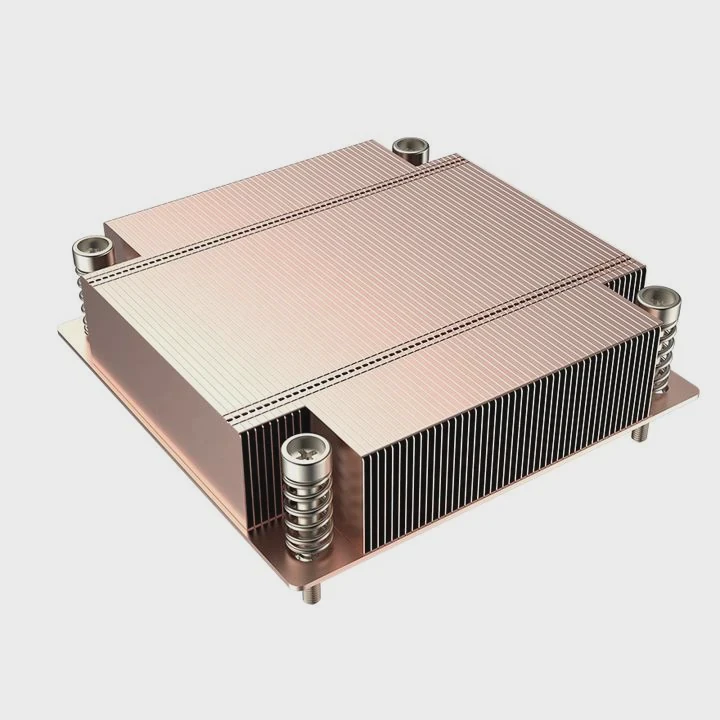
Trends in Sustainable Data Centers:
Use of Renewable Energy: Many data centers are shifting to renewable energy sources, such as solar, wind, and hydropower, to reduce their carbon footprint. Liquid cooling systems can complement this shift by reducing overall energy consumption and making it easier to meet sustainability goals.
Cooling Efficiency Improvements: Liquid cooling technology is seen as one of the most efficient ways to cool data centers. By using liquid to absorb heat more effectively than air, data centers can reduce the energy required for cooling, which can make them more sustainable in the long run.
Recycling Heat: Some data centers are now using waste heat generated by their servers for other purposes, such as heating nearby buildings or water. This helps reduce overall energy use by reusing the heat that would otherwise be wasted.
Edge Computing: The trend toward edge computing, where data processing is done closer to the source of data rather than in centralized data centers, helps reduce the carbon footprint. Edge data centers tend to be smaller and more energy-efficient, and liquid cooling systems can be ideal for these compact spaces.
Modular Data Centers: Modular data centers are designed to be scalable and energy-efficient. These smaller, pre-built units can be deployed as needed and often feature liquid cooling for more effective temperature management in tight spaces.
Circular Economy Models: Data centers are increasingly adopting circular economy principles, which involve reusing and recycling components, such as servers, cooling systems, and power supplies, to reduce waste and environmental impact.
Carbon Neutral Data Centers: Leading technology companies are aiming to build carbon-neutral data centers by balancing their energy consumption with renewable energy credits and offsets. Liquid cooling is an important part of this, as it reduces overall energy usage and increases operational efficiency.
Future of Sustainable Data Centers
| Trend | Description |
|---|---|
| Renewable Energy Adoption | More data centers are transitioning to solar, wind, and hydroelectric power. |
| Liquid Cooling Integration | Liquid cooling helps reduce energy consumption, aiding sustainability efforts. |
| Heat Recycling | Using excess heat from servers to provide heating for nearby buildings or systems. |
| Edge Computing Growth | Smaller, energy-efficient data centers using liquid cooling for high-density setups. |
| Circular Economy Practices | Reusing and recycling materials to reduce waste and carbon emissions. |
| Carbon Neutrality | Data centers are moving towards carbon-neutral operations using renewable energy. |
These trends reflect the growing importance of sustainability in data centers, where liquid cooling plays a critical role in reducing energy usage and supporting environmentally friendly practices.
Conclusion
Liquid cooling is revolutionizing the way data centers manage heat, offering a more energy-efficient and effective solution compared to traditional air cooling methods. By improving cooling efficiency, reducing energy consumption, and supporting sustainable practices, liquid cooling is becoming essential for modern, eco-friendly data centers.
TAGS
Latest Articles

Volume discount levels for heat sink orders?
Buyers often ask when heat sink prices start to drop with volume. Many worry they’re overpaying for small orders. This guide explains how B2B volume pricing works for thermal components. Heat sink
21 Dec,2025
Heat sink long-term supply contract options?
Many buyers want stable pricing and reliable delivery for heat sinks. But without a clear contract, risks grow over time. This article explores how to secure better long-term supply deals. Long-term
21 Dec,2025
Tooling cost for new heat sink profiles?
Many engineers struggle to understand why tooling for custom heat sinks costs so much. They worry about budgeting and production timelines. This article breaks down the cost drivers behind tooling.
21 Dec,2025
Heat sink custom sample process steps?
Sometimes, starting a custom heat sink project feels overwhelming—too many steps, too many unknowns, and too many risks. You want a sample, but not endless delays. The process for requesting and
20 Dec,2025
Standard B2B terms for heat sink payments?
When buyers and sellers in B2B heat sink markets talk about payment, many don’t fully understand what’s standard. This can lead to delayed orders, miscommunication, and even lost business
20 Dec,2025
Heat sink pricing factors for large orders?
Heat sinks are vital for many systems. When prices rise, projects stall and budgets break. This problem can hit teams hard without warning. Large order heat sink pricing depends on many factors. You
20 Dec,2025Related Articles
- How to Connect Liquid Cooling to a Motherboard?
- How Does Liquid Cooling Work in Bikes?
- Does RTX 3080 Need Liquid Cooling?
- How Tight to Tighten Liquid Cooler on CPU?
- Does Liquid Cooling Evaporate?
- What is Liquid Cooled?
- How Does Liquid Cooling Work in Phones?
- Do You Need to Add Water to Liquid Cooling?
- What is Liquid Cooling for CPU?
- Heat Sink Manufacturer in Hungary
- Heat Sink Manufacturer in Morocco
- Heat Sink Manufacturer in Ecuador
Author
Dr. Emily Chen
Chief AI Researcher
Leading expert in thermal dynamics and AI optimization with over 15 years of experience in data center efficiency research.
Categories
Latest Products






Recommend Categories
- Liquid cooling plate Manufacturer
- Industrial Heat Sink Manufacturer
- Standard Heat Sink Manufacturer
- Aluminum Heat Sink Manufacturer
- Copper Heat Sink Manufacturer
- Anodized Heatsink Manufacturer
- Stamping heat sink Manufacturer
- Die Casting Heatsink Manufacturer
- Soldering heat sink Manufacturer
- CNC Parts Manufacturer
Latest Products
- Wholesale Aluminum Radiator
- Water Cooling Plate Kit
- Water Cooling Heat Sink
- Water Cooling Heat Sink Kit
- Stainless Steel Water Distributor
- Server Water Cooling Plate Kit
- Server Liquid Cooling System
- Server Aluminum Cooling Kit
- S19 Full Cover Cooling Plate
- S19 Cooling Plate Kit
- S19 Aluminum Cooling Plate
Contact Expert
Have questions about this article? Reach out to our experts directly.