Are stock GPU heatsinks suitable?
Picture this: you install a new graphics card and assume its factory cooler will be fine—only to hear fan whine or see high temps. There is a gap between what “stock cooling” can handle and what you expect.
In many cases the stock cooler on a graphics card is acceptable for standard use, but for higher‑power GPUs, overclocking, or cramped case airflows it may not provide optimal thermal headroom—so “suitable” depends on context.
Let’s dig into why factory coolers vary so much, which GPUs tend to run hotter, how airflow can make a difference, and when heavy loads call for an upgrade.
Why factory coolers vary?
Have you noticed some GPUs come with massive triple‑fan coolers while others just one small blower? There’s a reason.
The design and capacity of a stock cooler depend on the GPU’s expected power draw, thermal budget, cost constraints and the manufacturer’s target market—so you’ll see big variation in cooling solutions even for similar model numbers.
What drives variation in stock GPU coolers
Manufacturers design stock cooling solutions according to several key factors:
- Thermal Design Power (TDP) of the GPU chip. Higher TDP requires more robust cooling.
- Target segment and price point. A budget GPU may have a simple single‑fan cooler, while a flagship GPU gets dual or triple fans + large heatsink + vapor chamber.
- Form‑factor constraints. Some cards need to fit in compact cases (ITX, SFF) so the cooler might be smaller or blower‑style to exhaust heat out of the case.
- Brand differentiation and aesthetics. Premium models often include upgraded cooling (better fans, heatpipes, back‑plates) as a selling point.
- Cost and manufacturing tradeoffs. A cooler that is over‑engineered adds cost, weight, size—so manufacturers balance performance vs cost.
Examples of manufacturer statements
Some enthusiast forums observe that when enthusiasts upgrade cooling (aftermarket or liquid cooling), they can reduce temps significantly. As one post on the forum states:
“The stock cooler on the 1080 isn’t that bad either (triple fan) … but if you start getting above 75‑80 … you need a different cooler.”
Implications for you
Because stock coolers vary so much:
- Two cards of “same GPU chip” but different vendor/variant may have very different cooling performance.
- If you build a PC in a case with poor airflow, even a “good” stock cooler might struggle.
- If you plan to overclock, or run sustained heavy loads (mining, compute, 4K gaming), the stock cooler may become the weak link.
Which GPUs run hotter?
Not all graphics cards generate the same heat. Some chips run cool, others run hot—knowing which helps assess whether the stock cooler is adequate.
Higher‑end GPUs with large die size, high transistor count and heavy boost clocks typically run hotter and demand more from the stock cooler—so these are the models where stock cooling may be less “comfortable”.
What makes some GPUs run hotter
Here are key factors that increase heat output:
- Chip complexity & process node. Larger die size, more cores, higher frequencies often lead to more leakage and heat.
- Boost power draw. Modern GPUs under boost clocks may draw significantly more power than their base TDP, causing more heat.
- Overclocking and factory “OC” variants. Many cards ship with higher clocks than reference, increasing power and heat.
- Sustained workload vs short bursts. Real‑world gaming, compute or rendering may keep the GPU at high load for long periods, causing more heat generation.
- Ambient and case environment. If ambient temperature is higher, or case airflow is poor, the GPU will run hotter even with same cooler.
Which GPU tiers are more likely to suffer
- Entry‑to‑mid range (e.g., GTX/RTX lower tiers) often have moderate heat output; stock cooler typically fine.
- High‑end (e.g., top‑tier RTX/AMD Radeon, “Ti” or “Super” versions) with high boost clocks and power draw push stock cooling harder.
- Cards used in mining or compute (constant full‐load for hours) will stress cooling more than casual gaming.
Signs that stock cooling may be nearing its limit
| Symptom | What It Means |
|---|---|
| GPU temps hit 80–90 °C | Cooling is close to maximum capacity |
| Loud fan noise | Fans running at high speed to compensate |
| Thermal throttling | GPU slows down to manage temperature |
| Artifacts/shutdowns | System may be unstable due to heat |
What you should check before trusting a stock cooler
- Look up reviews of that specific card variant (vendor cooler, PCB layout) — not just the GPU chip.
- Monitor temps under load (use tools such as GPU‑Z, MSI Afterburner).
- Check your case airflow and ambient temperature.
- If you plan heavy loads (e.g., long sessions, high ambient temp) assume less margin.
Can airflow boost cooling?
Cooling isn’t only about the heatsink and fan on the GPU—the case and airflow around it matter a lot too. Good airflow can make a big difference.
Ensuring strong case airflow and clear paths for cool air in and hot air out helps the GPU stock cooler operate more effectively, lowering temps, noise and improving longevity.
Why case airflow matters
A GPU cooler does its job by transferring heat from the GPU die to heatsink/fan and then into the case environment. If the case has poor airflow, the heat stays trapped, raising ambient inside the case and reducing cooling efficiency.
What you can do to boost airflow
- Use at least one intake and one exhaust fan in your case.
- Ensure cables are tidy and don’t block airflow to the GPU area.
- Avoid placing restrictive panels (or filters) that reduce intake/exhaust efficiency.
- Keep ambient room temperature moderate—cooler room = cooler PC.
- Monitor GPU and case interior temperatures: if GPU runs hot but other components are cooler, maybe airflow is insufficient.
Impact on stock cooler performance
| Airflow Quality | GPU Temp | Fan Speed | Result |
|---|---|---|---|
| Poor airflow | 85+ °C | High | Loud, throttling risk |
| Moderate airflow | 75–80 °C | Medium | Acceptable for short loads |
| Good airflow | <70 °C | Low–med | Quiet and stable |
Do heavy loads require upgrades?
If you push the GPU hard—like long gaming sessions, 4K/ultra settings, streaming + gaming, or compute workloads—the question is: can the stock cooler keep up?
For sustained heavy load, significant overclocking or running in hot ambient conditions, upgrading to a stronger cooler (better heatsink/fans or even liquid cooling) often gives extra thermal headroom, quieter operation and longer lifespan.
What “heavy loads” entail
Heavy loads for a GPU include:
- Gaming at high resolution/refresh rate (e.g., 1440p/4K at 144Hz) which keeps the GPU near 100% usage for extended periods.
- GPU compute or rendering tasks that hold the GPU at high utilization for hours.
- Running multiple monitors, VR, or streaming + gaming simultaneously.
- Overclocking the GPU or increasing voltage, boosting heat output further.
Why stock cooler may struggle under heavy loads
- Stock coolers are often designed to handle the “reference spec” load, not extreme or abnormal loads.
- Sustained high load means continuous high temps; if the cooler runs near its thermal limit, fans spin up and noise increases, or the GPU may throttle to stay safe.
- If you have ambient room temp high (e.g., in summer, small room) or case is poorly ventilated, the stock cooler’s margin shrinks.
- Over time, higher temps shorten component lifespan or degrade performance.
Types of upgrade
- Better air cooler variant: bigger heatsink, more heatpipes, dual/triple fans.
- Aftermarket cooler kit: some companies sell replacement GPU coolers/heatsinks if your card allows it.
- AIO liquid cooling / hybrid cooler: for highest thermal performance and lowest noise—though more expensive and more complex.
- Improving case airflow (less complex) often goes hand in hand with cooler upgrade.
Cost/benefit considerations
| Upgrade Type | Cost | Benefit |
|---|---|---|
| Better air variant | $$ | Lower noise, cooler temps |
| Aftermarket cooler | $$$ | May void warranty, best performance |
| Liquid cooling | $$$$ | Quietest, lowest temps |
| Improved airflow | $ | Helps across all components |
Conclusion
To wrap up: Stock GPU heatsinks can be suitable for many typical users and moderate loads, but “suitable” is conditional. You must consider the specific GPU model, stock cooler design, case airflow and how hard you’ll push the card. For heavy loads, high ambient temperatures or overclocking, investing in better cooling (or ensuring optimal airflow) is a smart move.
TAGS
Latest Articles

Volume discount levels for heat sink orders?
Buyers often ask when heat sink prices start to drop with volume. Many worry they’re overpaying for small orders. This guide explains how B2B volume pricing works for thermal components. Heat sink
21 Dec,2025
Heat sink long-term supply contract options?
Many buyers want stable pricing and reliable delivery for heat sinks. But without a clear contract, risks grow over time. This article explores how to secure better long-term supply deals. Long-term
21 Dec,2025
Tooling cost for new heat sink profiles?
Many engineers struggle to understand why tooling for custom heat sinks costs so much. They worry about budgeting and production timelines. This article breaks down the cost drivers behind tooling.
21 Dec,2025
Heat sink custom sample process steps?
Sometimes, starting a custom heat sink project feels overwhelming—too many steps, too many unknowns, and too many risks. You want a sample, but not endless delays. The process for requesting and
20 Dec,2025
Standard B2B terms for heat sink payments?
When buyers and sellers in B2B heat sink markets talk about payment, many don’t fully understand what’s standard. This can lead to delayed orders, miscommunication, and even lost business
20 Dec,2025
Heat sink pricing factors for large orders?
Heat sinks are vital for many systems. When prices rise, projects stall and budgets break. This problem can hit teams hard without warning. Large order heat sink pricing depends on many factors. You
20 Dec,2025Related Articles
- Does air blow through heatsink?
- Can you run a computer without a heatsink CPU fan?
- do you have to reapply thermal paste after removing heatsink?
- Are gigabyte m.2 heatsinks good?
- How to get legendary heatsinks?
- Is it hard to install a heatsink to a CPU?
- how to install heatsink on xbox 360 hana ana chips?
- Is the stock i7 heatsink good?
- What is the best heatsink compound available?
- What is a CPU fan and heatsink?
- What is heatsink pad?
- Are all GTX 1080 heatsinks the same?
Author
Dr. Emily Chen
Chief AI Researcher
Leading expert in thermal dynamics and AI optimization with over 15 years of experience in data center efficiency research.
Categories
Latest Products
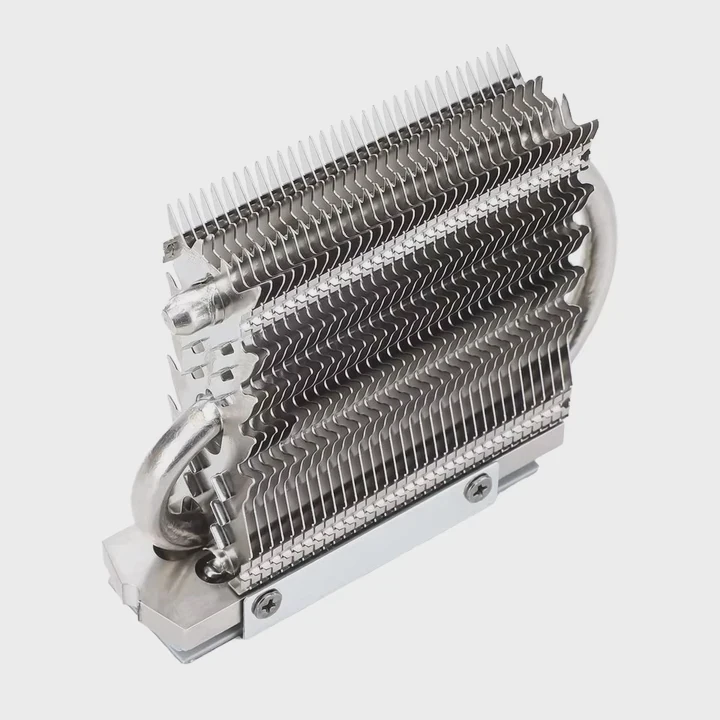
M.2 Heatpipe Heatsink With Dual Fans For Pc Case
19 Mar,2026
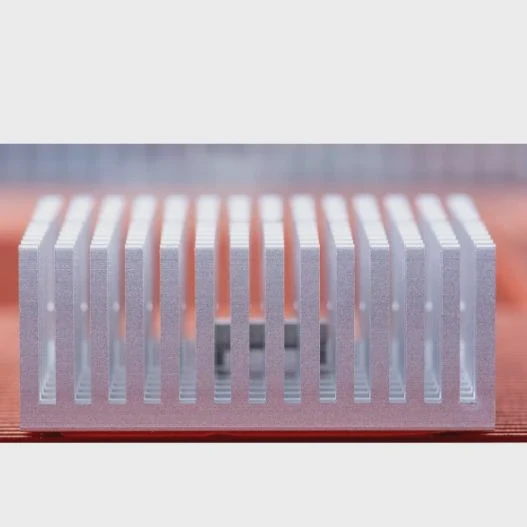
Heavy-Duty Aluminum Heat Sink Custom
19 Mar,2026
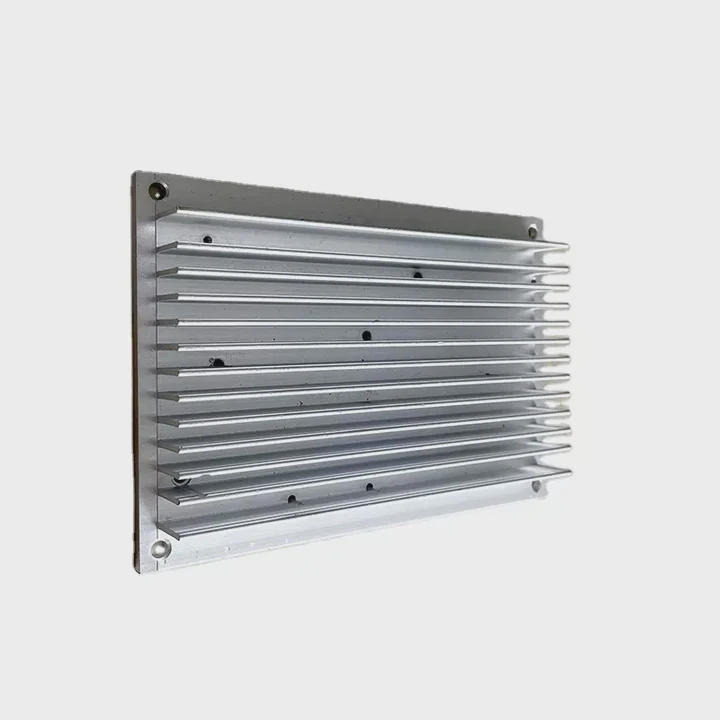
Oem Skived Fin Heatsink Aluminum Radiator For Plants
19 Mar,2026
Water Cooled Cnc Aluminum Heat Sink For Medical
19 Mar,2026
High Density 6000 Series Aluminum Heat Sink Profile
19 Mar,2026
High-Density Extruded Aluminum & Bonded-Fin Heat Sink Profile
19 Mar,2026
Recommend Categories
- Liquid cooling plate Manufacturer
- Industrial Heat Sink Manufacturer
- Standard Heat Sink Manufacturer
- Aluminum Heat Sink Manufacturer
- Copper Heat Sink Manufacturer
- Anodized Heatsink Manufacturer
- Stamping heat sink Manufacturer
- Die Casting Heatsink Manufacturer
- Soldering heat sink Manufacturer
- CNC Parts Manufacturer
Latest Products
- M.2 Heatpipe Heatsink With Dual Fans For Pc Case
- Heavy-Duty Aluminum Heat Sink Custom
- Oem Skived Fin Heatsink Aluminum Radiator For Plants
- Water Cooled Cnc Aluminum Heat Sink For Medical
- High Density 6000 Series Aluminum Heat Sink Profile
- High-Density Extruded Aluminum & Bonded-Fin Heat Sink Profile
- Dongguan Cnc Aluminum Heat Sink For Led & Brass Parts
- Wholesale Cnc Aluminum Heat Sink - Custom Extruded
- Led Cnc Round Heat Sink With Screw Holes
- Copper Pin-Fin Heat-Sink Large-Area For Photoled Cooling
- Telecom Heatsink Zipper Fin Wcopper Tubes Oem
Contact Expert
Have questions about this article? Reach out to our experts directly.