Is the stock i7 heatsink good?
Many people assume the stock Intel cooler is “enough,” but after a few weeks of high temps or thermal throttling, the doubt begins to creep in.
The stock Intel i7 heatsink can handle basic workloads, but it’s often not sufficient for sustained high performance or modern i7 models with high power draw.
If your i7 CPU constantly runs hot or throttles during gaming, rendering, or multitasking, it might be time to look beyond the included cooler. Let’s see why.
Why TDP impacts cooler choice?
TDP isn’t just a number on a spec sheet. It’s the baseline for designing a thermal solution.
TDP, or Thermal Design Power, tells how much heat a CPU typically produces, and it directly determines the size and capability of the cooler needed.
What is TDP exactly?
TDP refers to the average power (in watts) a CPU will use under standard workloads. It’s not the maximum possible power draw, but it gives a baseline for heat output.
Intel stock coolers are usually built to match the TDP rating of the chip. But real-world usage often pushes the CPU beyond this TDP, especially during turbo boost or multi-threaded loads.
Stock vs. Aftermarket Cooling Comparison
| CPU TDP (W) | Stock Cooler Fit | Aftermarket Cooler Needed? |
|---|---|---|
| 65W | Yes | Only if overclocking |
| 95W | Barely | Recommended |
| 125W+ | No | Strongly recommended |
Why stock coolers fall short
Most stock coolers have:
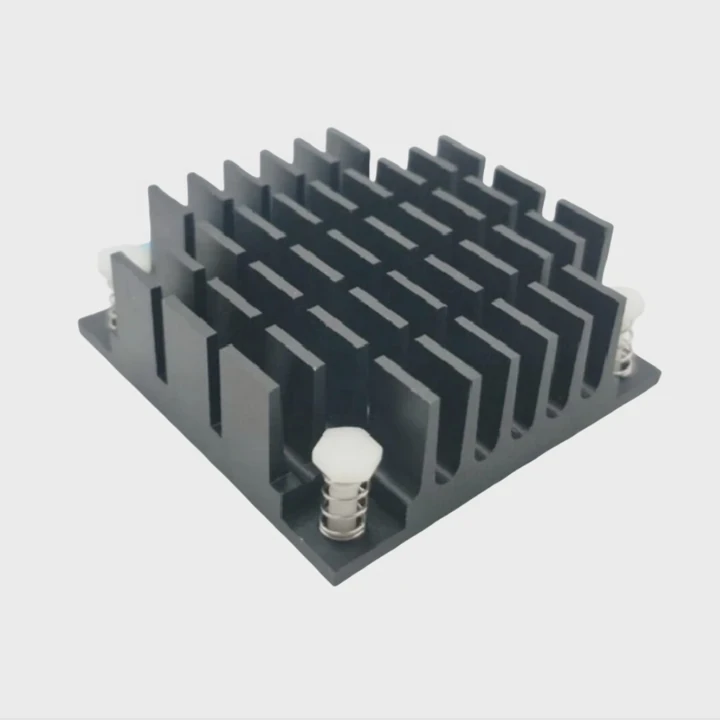
- Small aluminum fin stacks
- Basic thermal paste
- No heatpipes
- Lower airflow fans
These are fine for idle tasks, light browsing, or office work. But under gaming or video editing, the CPU draws much more power than the TDP suggests. In that case, heat builds up fast.
Which i7 models run hot?
Not all i7 chips are the same. Some run cooler than others — it depends on the generation, architecture, and power limits.
Recent unlocked i7 CPUs like the 11700K or 13700K generate a lot of heat, especially under load, and stock coolers are not suitable for them.
Generational differences in heat
Intel’s 11th, 12th, and 13th Gen Core i7 CPUs tend to run hotter due to more cores and higher boost clocks. Unlike older generations, these chips can draw over 200W under full load, far exceeding their rated TDP.
Examples of hot-running i7s
| Model | Base TDP | Max Power Draw (PL2) | Stock Cooler Included? |
|---|---|---|---|
| i7-9700 | 65W | ~100W | Yes |
| i7-11700K | 125W | ~225W | No |
| i7-12700 | 65W | ~180W | Yes |
| i7-13700K | 125W | ~250W | No |
Why this matters
If your chip has a “K” in the name, it’s unlocked and designed for higher speeds. That means it will heat up fast and stay hot during heavy tasks. For these CPUs, stock coolers are not even included — because Intel knows they wouldn’t be enough.
Can fan curves help temps?
Many users try to tweak their BIOS fan settings to improve temperatures. It can help, but only to a point.
Yes, customizing fan curves can lower CPU temperatures slightly, but they won’t fix the core problem if the heatsink itself is undersized.
What is a fan curve?
A fan curve sets how fast the CPU fan spins at different temperatures. For example, you might set the fan to spin at:
- 40% speed at 40°C
- 70% at 70°C
- 100% at 85°C
Benefits of tuning the curve
- Faster cooling response during load spikes
- Reduced thermal throttling
- Slightly lower average temps
But fan curves only control fan speed — they don’t change the heatsink’s thermal capacity. If the heatsink can’t dissipate heat fast enough, the CPU will stay hot, no matter how fast the fan spins.
When fan curves help most
| Scenario | Fan Curve Impact |
|---|---|
| Mild overheating | Medium |
| Undersized heatsink | Low |
| Proper cooler + tweak | High |
| Heavy sustained load | Very Low |
To truly lower peak temps, you need a cooler with better thermal contact, more surface area, and ideally, heatpipes or a vapor chamber.
Do cases limit cooling?
Even with a good cooler, poor airflow can bottleneck your thermal performance. Case design matters.
Yes, your PC case can limit cooling. Bad airflow, tight layouts, and poor fan placement can trap hot air around the CPU, making any heatsink less effective.
Why case airflow is critical
Heat doesn’t just vanish. It must be moved away from hot parts and out of the case. A heatsink relies on airflow to remove that heat. If the air inside the case is already hot, cooling becomes much harder.
Signs of poor case airflow
- CPU and GPU both run hot
- Temps drop when case side panel is removed
- Fans are spinning fast, but temps stay high
Case airflow tips
| Tip | Benefit |
|---|---|
| Use at least 1 intake + 1 exhaust | Keeps air moving |
| Keep cables managed | Improves internal flow |
| Avoid blocking front intake | Allows fresh air in |
| Add top/rear exhaust fans | Removes heat buildup |
| Choose mesh or vented front panel | Enhances passive airflow |
Cooler vs Case Balance
Even a powerful cooler won’t work well if the hot air has nowhere to go. Your case and cooler must work together. Upgrading both often delivers the biggest thermal improvement.
Conclusion
The stock i7 heatsink works for light use, but for gaming, multitasking, or modern high-power i7 chips, it quickly falls short. Better coolers and case airflow are key to stable performance.
TAGS
Latest Articles

Volume discount levels for heat sink orders?
Buyers often ask when heat sink prices start to drop with volume. Many worry they’re overpaying for small orders. This guide explains how B2B volume pricing works for thermal components. Heat sink
21 Dec,2025
Heat sink long-term supply contract options?
Many buyers want stable pricing and reliable delivery for heat sinks. But without a clear contract, risks grow over time. This article explores how to secure better long-term supply deals. Long-term
21 Dec,2025
Tooling cost for new heat sink profiles?
Many engineers struggle to understand why tooling for custom heat sinks costs so much. They worry about budgeting and production timelines. This article breaks down the cost drivers behind tooling.
21 Dec,2025
Heat sink custom sample process steps?
Sometimes, starting a custom heat sink project feels overwhelming—too many steps, too many unknowns, and too many risks. You want a sample, but not endless delays. The process for requesting and
20 Dec,2025
Standard B2B terms for heat sink payments?
When buyers and sellers in B2B heat sink markets talk about payment, many don’t fully understand what’s standard. This can lead to delayed orders, miscommunication, and even lost business
20 Dec,2025
Heat sink pricing factors for large orders?
Heat sinks are vital for many systems. When prices rise, projects stall and budgets break. This problem can hit teams hard without warning. Large order heat sink pricing depends on many factors. You
20 Dec,2025Related Articles
- how to install heatsink on xbox 360 hana ana chips?
- Are stock GPU heatsinks suitable?
- Does air blow through heatsink?
- Can you run a computer without a heatsink CPU fan?
- do you have to reapply thermal paste after removing heatsink?
- Are gigabyte m.2 heatsinks good?
- What is the best heatsink compound available?
- What is a CPU fan and heatsink?
- What is heatsink pad?
- Are all GTX 1080 heatsinks the same?
- How to polish heatsink?
- How to mount LED to heatsink?
Author
Dr. Emily Chen
Chief AI Researcher
Leading expert in thermal dynamics and AI optimization with over 15 years of experience in data center efficiency research.
Categories
Latest Products
M.2 Heatpipe Heatsink With Dual Fans For Pc Case
19 Mar,2026
Heavy-Duty Aluminum Heat Sink Custom
19 Mar,2026
Oem Skived Fin Heatsink Aluminum Radiator For Plants
19 Mar,2026
Water Cooled Cnc Aluminum Heat Sink For Medical
19 Mar,2026
High Density 6000 Series Aluminum Heat Sink Profile
19 Mar,2026
High-Density Extruded Aluminum & Bonded-Fin Heat Sink Profile
19 Mar,2026
Recommend Categories
- Liquid cooling plate Manufacturer
- Industrial Heat Sink Manufacturer
- Standard Heat Sink Manufacturer
- Aluminum Heat Sink Manufacturer
- Copper Heat Sink Manufacturer
- Anodized Heatsink Manufacturer
- Stamping heat sink Manufacturer
- Die Casting Heatsink Manufacturer
- Soldering heat sink Manufacturer
- CNC Parts Manufacturer
Latest Products
- M.2 Heatpipe Heatsink With Dual Fans For Pc Case
- Heavy-Duty Aluminum Heat Sink Custom
- Oem Skived Fin Heatsink Aluminum Radiator For Plants
- Water Cooled Cnc Aluminum Heat Sink For Medical
- High Density 6000 Series Aluminum Heat Sink Profile
- High-Density Extruded Aluminum & Bonded-Fin Heat Sink Profile
- Dongguan Cnc Aluminum Heat Sink For Led & Brass Parts
- Wholesale Cnc Aluminum Heat Sink - Custom Extruded
- Led Cnc Round Heat Sink With Screw Holes
- Copper Pin-Fin Heat-Sink Large-Area For Photoled Cooling
- Telecom Heatsink Zipper Fin Wcopper Tubes Oem
Contact Expert
Have questions about this article? Reach out to our experts directly.