Best CAD format for Vapor Chamber drawings?
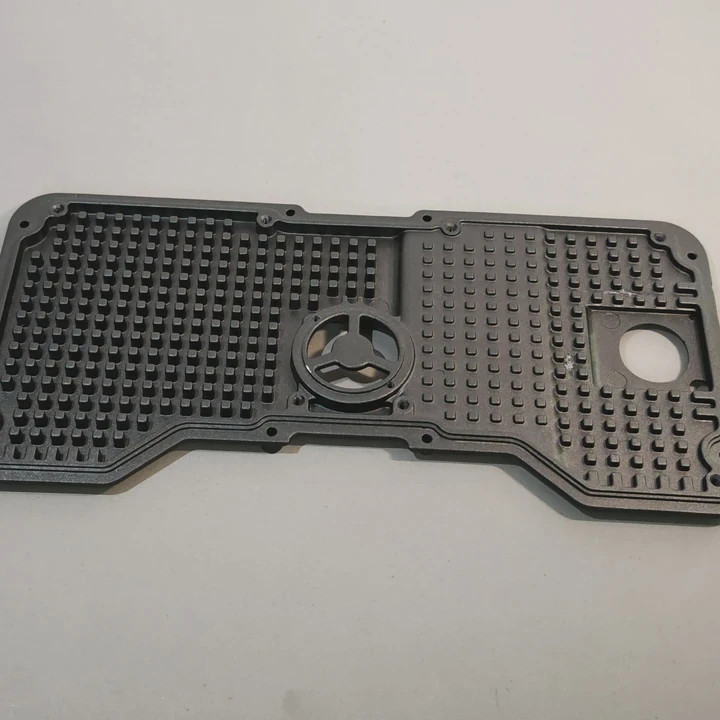
Choosing the right CAD format can make or break vapor‑chamber design collaboration across borders. A poor format wastes time and risks mistakes.
STEP or IGES are generally best for transferring vapor‑chamber geometry; clear tolerance annotation and optional native files allow precision and interoperability across CAD and simulation tools.
Let’s explore which formats suit vapor chambers, what info the drawings must carry, and why simulation‑ready CAD matters if you aim for high fidelity design and manufacturing.
Which CAD file formats are best for Vapor Chamber drawings?
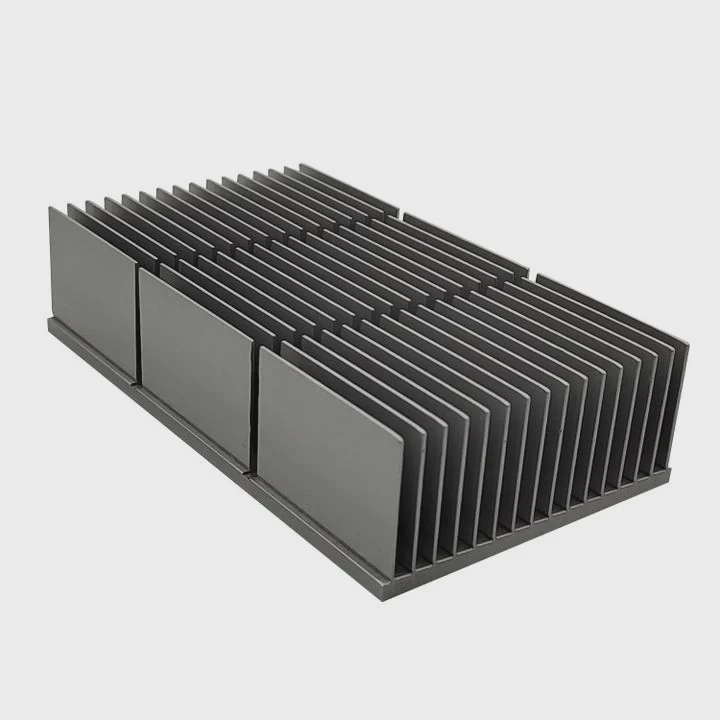
STEP and IGES are the two most widely accepted neutral CAD formats. They ensure compatibility across different systems without needing proprietary software. STEP (.stp, .step) supports 3D solids, assemblies, units, metadata, and is generally more robust than IGES (.igs, .iges), which is older and more surface-oriented.
Native formats (SolidWorks, Creo, NX, etc.) are ideal within a shared ecosystem but problematic across platforms due to versioning issues and limited interoperability. Suppliers using different CAD systems might not open native files correctly or lose parametric data.
The best practice is to provide both a STEP file and a 2D technical drawing with annotations. Optionally, include native files if the customer or integrator requests them. Always specify units, coordinate system orientation, and part revision history in the metadata.
| Format | Recommended Use |
|---|---|
| STEP (.stp) | Primary format for sharing with suppliers |
| IGES (.igs) | Backup if STEP not accepted |
| Native (.sldprt, .prt) | Optional for same-software users |
Do suppliers prefer STEP, IGES or native formats for Vapor Chambers?
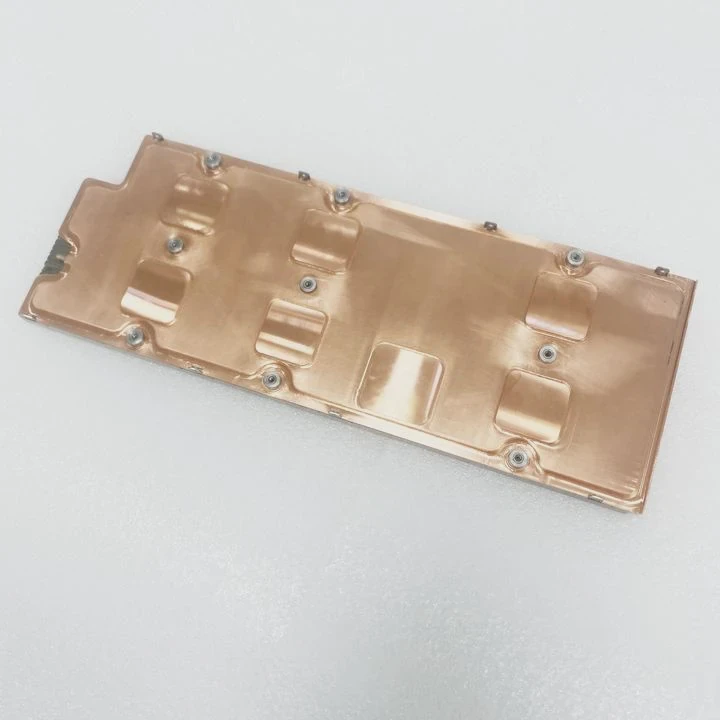
Suppliers prefer STEP files because they can open them regardless of what CAD system they use. STEP ensures better compatibility, preserves 3D solid geometry, and includes necessary metadata like units and part names.
IGES files are still accepted, especially for 2D profiles or legacy systems, but they may produce geometry translation issues during import. Native files, while rich in detail, are less practical unless supplier and designer use the same CAD version.
Providing STEP files avoids errors, minimizes revision confusion, and speeds up CAM path generation and fixture design. IGES can serve as a secondary option, and native formats can be included only when mutually agreed.
| File Type | Supplier Preference | Notes |
|---|---|---|
| STEP | High | Reliable, universal, metadata support |
| IGES | Medium | Acceptable, but less reliable geometry |
| Native CAD | Low | Risk of version mismatch, not portable |
How should geometry and tolerances be represented in CAD drawings?
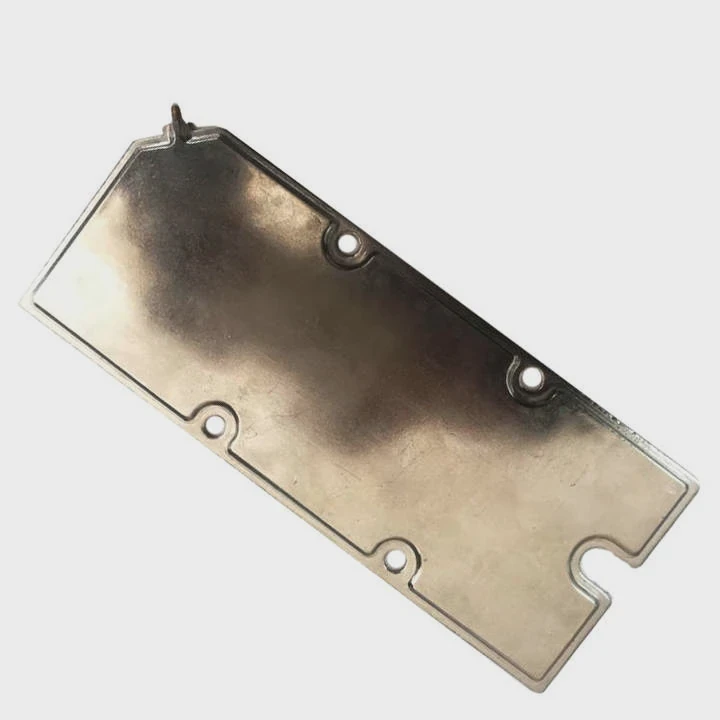
A complete CAD package includes both a 3D model and a 2D drawing. The 3D model defines shape and fit, while the 2D drawing communicates manufacturing-critical information like tolerances, flatness, and surface finish.
Tolerances should be added to key features: outer dimensions, thickness, flatness of contact surfaces, port or mounting hole locations, and weld seam zones. For vapor chambers, flatness is especially critical — it affects thermal contact quality. Typical flatness tolerances are within ±0.05 mm.
Callouts should identify flange zones, internal cavity outlines, and no-cut areas around sealing welds. The drawing should also reference required processes such as vacuum sealing, leak testing, or surface treatments.
| Feature | Recommended Tolerance / Note |
|---|---|
| Overall length/width | ±0.10 mm |
| Plate thickness | ±0.05 mm |
| Surface flatness | ≤0.05 mm across entire contact area |
| Hole position | ±0.20 mm |
| Weld clearance zone | Define as no-machining area |
These details ensure that suppliers can meet performance requirements, especially for systems relying on tight thermal coupling or assembly precision.
Are simulation-ready CAD formats required for Vapor Chamber designs?
Simulation-ready CAD helps engineers run CFD or structural FEA on vapor chambers. This is especially useful in high-power or space-constrained applications where thermal or mechanical failure is unacceptable.
To support simulation, CAD models must be watertight, free of open edges or self-intersecting faces. Solid geometry should be simplified for meshing — avoid overly complex fillets or unnecessary internal details unless required by simulation.
STEP and Parasolid formats are commonly used for simulation import. Mesh exports like STL can also be used, but they lose parametric data. For multiphysics studies, engineers may assign different materials (e.g., copper plate, wick layer, working fluid zone) based on CAD layers or part naming.
Material properties — conductivity, density, and specific heat — should be defined in a datasheet or added to the CAD assembly as metadata. Simulation zones like wick areas or vapor cavities should be labeled clearly if not modeled explicitly.
| Simulation Input Format | Use Case |
|---|---|
| STEP (.stp) | Most common for FEA/CFD |
| Parasolid (.x_t) | Used in Siemens-based tools |
| STL | Mesh-only, no metadata |
| Native CAD | If supported by simulation tool |
Simulation helps validate chamber thickness, port placement, wick layout, and system-level heat dissipation before manufacturing, reducing redesign cycles.
Conclusion
Using STEP as the main CAD format ensures smooth collaboration across engineering and supply teams. Add clear 2D drawings with tolerances, include optional native files if needed, and ensure simulation readiness with clean geometry and material data. These practices help reduce miscommunication, enable better design validation, and lead to higher quality vapor-chamber production.
TAGS
Latest Articles

Volume discount levels for heat sink orders?
Buyers often ask when heat sink prices start to drop with volume. Many worry they’re overpaying for small orders. This guide explains how B2B volume pricing works for thermal components. Heat sink
21 Dec,2025
Heat sink long-term supply contract options?
Many buyers want stable pricing and reliable delivery for heat sinks. But without a clear contract, risks grow over time. This article explores how to secure better long-term supply deals. Long-term
21 Dec,2025
Tooling cost for new heat sink profiles?
Many engineers struggle to understand why tooling for custom heat sinks costs so much. They worry about budgeting and production timelines. This article breaks down the cost drivers behind tooling.
21 Dec,2025
Heat sink custom sample process steps?
Sometimes, starting a custom heat sink project feels overwhelming—too many steps, too many unknowns, and too many risks. You want a sample, but not endless delays. The process for requesting and
20 Dec,2025
Standard B2B terms for heat sink payments?
When buyers and sellers in B2B heat sink markets talk about payment, many don’t fully understand what’s standard. This can lead to delayed orders, miscommunication, and even lost business
20 Dec,2025
Heat sink pricing factors for large orders?
Heat sinks are vital for many systems. When prices rise, projects stall and budgets break. This problem can hit teams hard without warning. Large order heat sink pricing depends on many factors. You
20 Dec,2025Related Articles
- Can Vapor Chamber integration in electric motors?
- Vapor Chamber for robotics cooling modules?
- Risk control for Vapor Chamber sourcing
- Vapor Chamber industry upcoming regulations?
- Does Vapor Chamber support mass customization?
- Vapor Chamber for underwater equipment?
- Does Vapor Chamber require REACH testing?
- Vapor Chamber road transport limitations
- Vapor Chamber freight forwarder requirements
- Vapor Chamber carton palletizing guide
- Vapor Chamber packaging moisture tests?
- Import duty for Vapor Chamber in Germany?
Author
Dr. Emily Chen
Chief AI Researcher
Leading expert in thermal dynamics and AI optimization with over 15 years of experience in data center efficiency research.
Categories
Latest Products






Recommend Categories
- Liquid cooling plate Manufacturer
- Industrial Heat Sink Manufacturer
- Standard Heat Sink Manufacturer
- Aluminum Heat Sink Manufacturer
- Copper Heat Sink Manufacturer
- Anodized Heatsink Manufacturer
- Stamping heat sink Manufacturer
- Die Casting Heatsink Manufacturer
- Soldering heat sink Manufacturer
- CNC Parts Manufacturer
Latest Products
- Wholesale Aluminum Radiator
- Water Cooling Plate Kit
- Water Cooling Heat Sink
- Water Cooling Heat Sink Kit
- Stainless Steel Water Distributor
- Server Water Cooling Plate Kit
- Server Liquid Cooling System
- Server Aluminum Cooling Kit
- S19 Full Cover Cooling Plate
- S19 Cooling Plate Kit
- S19 Aluminum Cooling Plate
Contact Expert
Have questions about this article? Reach out to our experts directly.