Can Vapor Chamber be made from stainless steel?
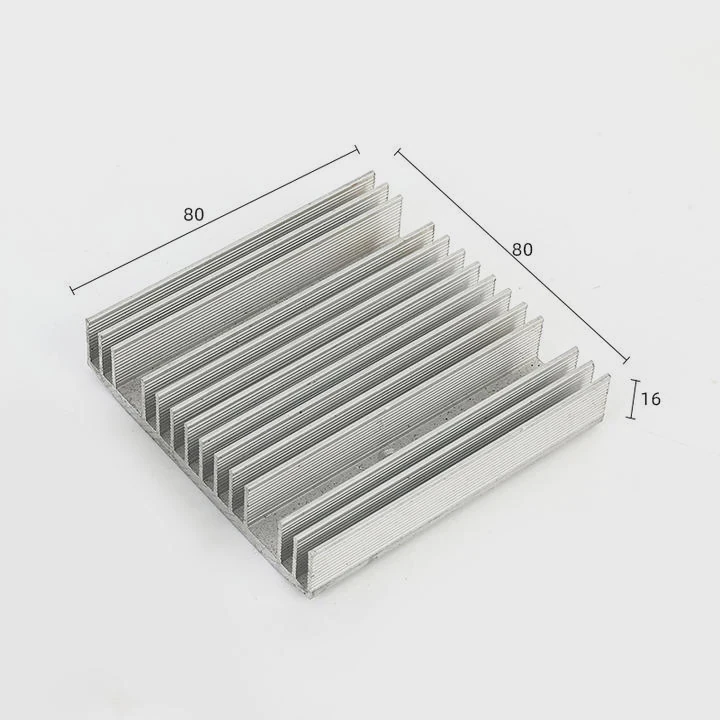
Copper dominates vapor chamber design. But some engineers wonder — can we use stainless steel instead? It’s stronger, corrosion-resistant, and matches some system enclosures. But thermal performance is a big concern.
Yes — stainless steel can be used to make vapor chambers, but it sacrifices thermal conductivity. It is only preferred in specific use-cases where strength, corrosion resistance, or environmental sealing outweigh heat transfer efficiency.
Below, I explore whether stainless steel vapor chambers make sense — when, why, and what trade-offs you must consider.
Can stainless steel be used to manufacture Vapor Chambers?
Copper is the go-to material for most vapor chambers. But some applications have different needs — such as harsh environments or strong chemical exposure. This raises the question: can stainless steel work instead?
Yes — vapor chambers can be made from stainless steel, and they have been used in aerospace, medical, and special industrial applications where durability or corrosion resistance is critical.
Stainless steel offers several properties that attract engineers:
- High structural strength
- Excellent corrosion resistance
- High temperature tolerance
- Compatibility with stainless enclosures
However, stainless steel’s low thermal conductivity is a major drawback. This limits its heat spreading ability compared to copper.
The key is how the chamber is built:
- Stainless steel shell: Often used for outer wall and casing
- Copper or composite wick inside: Used to compensate for low shell conductivity
- Sintered wick or grooved plate: Bonded or brazed to stainless body
- High-efficiency working fluid: To ensure good two-phase heat transfer
Stainless steel is more difficult to machine and weld, but modern laser welding, diffusion bonding, and high-temperature brazing allow it to be used in precision thermal assemblies.
These chambers are less common in consumer electronics, but more likely in aerospace, military, and medical devices where environmental resistance matters more than raw thermal power.
What thermal conductivity sacrifices exist with stainless steel?
Designing a vapor chamber from stainless steel introduces one big issue: heat doesn’t move well through the shell. Compared to copper, the difference is huge. This changes how well the chamber performs.
Stainless steel has about 30 times lower thermal conductivity than copper. This reduces lateral heat spreading and increases thermal resistance across the shell.
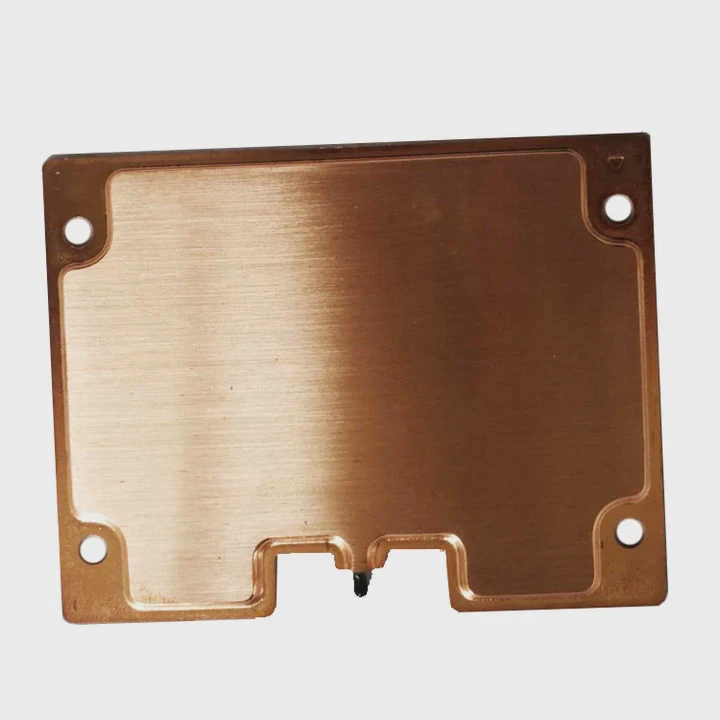
Thermal Conductivity Comparison
| Material | Thermal Conductivity (W/m·K) |
|---|---|
| Pure Copper | 390–400 |
| Aluminum | 200–220 |
| Stainless Steel 304 | 14–16 |
| Titanium | 20–25 |
The main issue is heat spreading from the heat source to the condenser zone. A copper shell spreads this heat quickly. A stainless steel shell slows it down, adding thermal resistance.
Engineers sometimes compensate in these ways:
- Use internal copper wick to help spread heat
- Increase chamber thickness for structural support
- Optimize wick layout to improve capillary flow
- Use highly conductive fluids (e.g. ammonia, methanol) for low-temperature boiling
- Apply composite designs (e.g. copper base + stainless cover)
This means the total thermal performance of a stainless vapor chamber might be 30–60% lower than an equivalent copper chamber, unless specially optimized.
So stainless vapor chambers should not be used in high-power consumer applications (CPUs, GPUs, batteries) where every degree matters. But in environments where reliability, chemical resistance, or radiation protection is more important, they work well.
Are there use-cases where stainless steel is preferred?
If stainless steel weakens thermal performance, why use it at all? The answer lies in unique application environments. Not all devices prioritize conductivity. Some need strength, safety, and longevity.
Yes — stainless steel vapor chambers are preferred in environments with corrosive gases, vacuum exposure, radiation, or extreme temperatures where copper would fail or degrade.
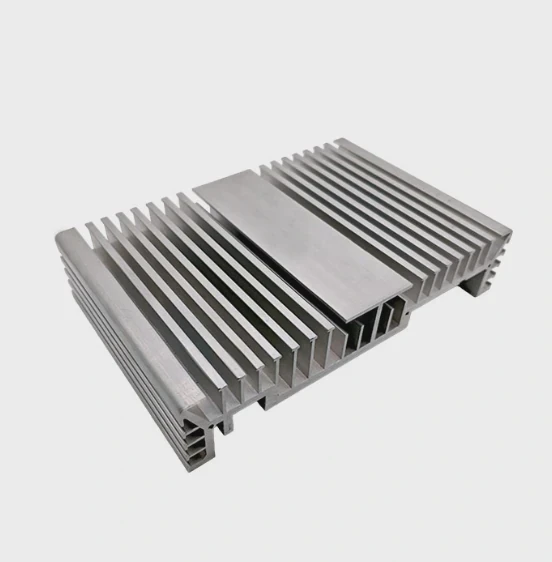
Ideal Applications for Stainless Steel Vapor Chambers
| Industry/Application | Reason for Preference |
|---|---|
| Aerospace/Defense | Radiation shielding, structural integrity |
| Medical Equipment | Compatibility with sterilization/autoclaves |
| Oil & Gas Sensors | Corrosion resistance, explosion-proof builds |
| Vacuum Equipment | Low outgassing, vacuum-seal compatibility |
| Military Hardware | Salt fog, chemical exposure, rugged handling |
| Space Payloads | Non-reactive in vacuum, high structural yield |
In these settings, copper is often a liability:
- It corrodes easily in salt spray or acidic environments
- It reacts chemically in high-purity vacuum systems
- It may release ions that interfere with sensitive electronics
- It softens under high heat and mechanical stress
Stainless solves these problems. It maintains shape, resists corrosion, and offers better mechanical stability — even under vibration, impact, or vacuum bake-outs.
This is why stainless steel is used for space-rated heat pipes, nuclear thermal systems, and sterilized electronics. Even with lower thermal performance, its environmental reliability makes it the better choice.
Does stainless steel manufacturing increase cost or complexity?
Switching from copper to stainless is not just a material change. It affects every step — from forming, welding, to testing. The cost and complexity jump quickly if you’re not prepared.
Yes — manufacturing vapor chambers from stainless steel adds cost due to tougher machining, higher welding energy, slower forming, and longer qualification time.
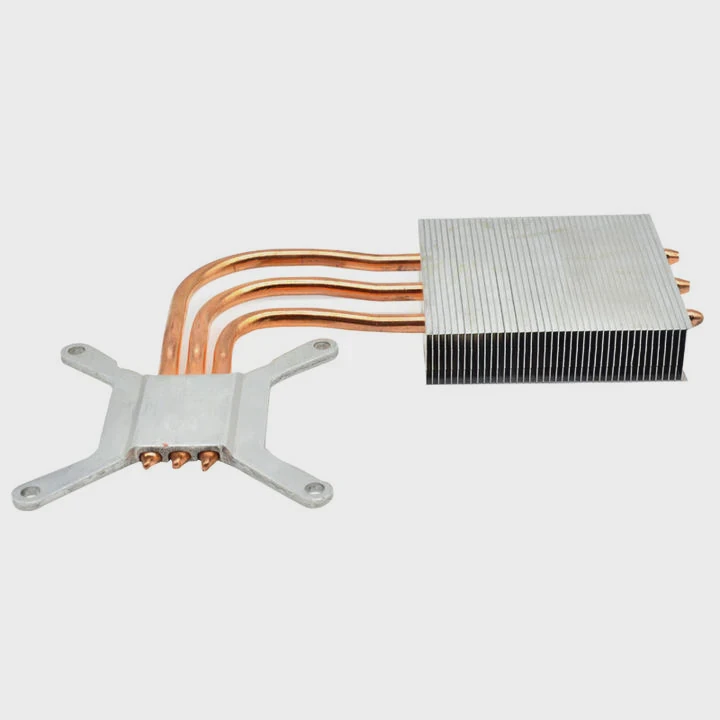
Why Stainless Is Harder to Manufacture
| Factor | Effect When Using Stainless Steel |
|---|---|
| Formability | Harder to stamp or bend without cracking |
| Welding difficulty | Requires higher laser/braze energy |
| Heat expansion mismatch | Higher risk of distortion under thermal load |
| Machining wear | Shorter tool life, slower cutting speeds |
| Assembly time | More fixturing, precise alignment needed |
| Inspection time | Tighter leak testing due to micro-void risk |
Welding stainless steel to itself (or to copper) is especially complex. You may need:
- Laser welding with pulse control
- Diffusion bonding with ultra-clean surfaces
- Brazing with advanced fluxes or interlayers
Leak testing also becomes stricter. Stainless steel holds pressure well — but that also means small leaks are harder to find. Mass spectrometry or helium detection is mandatory.
These factors increase cost per unit by 30–80%, depending on volume and chamber size.
How to Reduce Cost Impact
- Use hybrid designs: copper base + stainless cap
- Limit size/complexity: reduce seam length, number of bends
- Standardize wick format for reuse across models
- Use suppliers experienced in stainless steel heat pipe production
Despite higher costs, stainless chambers are worth it when failure is unacceptable — like in space, inside reactors, or during surgical procedures.
Conclusion
Stainless steel can be used to build vapor chambers, but only in special cases. It offers great strength and corrosion resistance but loses thermal conductivity. Design teams must weigh reliability vs thermal needs. When performance can be sacrificed for environment durability, stainless steel is the right call.
TAGS
Latest Articles

Volume discount levels for heat sink orders?
Buyers often ask when heat sink prices start to drop with volume. Many worry they’re overpaying for small orders. This guide explains how B2B volume pricing works for thermal components. Heat sink
21 Dec,2025
Heat sink long-term supply contract options?
Many buyers want stable pricing and reliable delivery for heat sinks. But without a clear contract, risks grow over time. This article explores how to secure better long-term supply deals. Long-term
21 Dec,2025
Tooling cost for new heat sink profiles?
Many engineers struggle to understand why tooling for custom heat sinks costs so much. They worry about budgeting and production timelines. This article breaks down the cost drivers behind tooling.
21 Dec,2025
Heat sink custom sample process steps?
Sometimes, starting a custom heat sink project feels overwhelming—too many steps, too many unknowns, and too many risks. You want a sample, but not endless delays. The process for requesting and
20 Dec,2025
Standard B2B terms for heat sink payments?
When buyers and sellers in B2B heat sink markets talk about payment, many don’t fully understand what’s standard. This can lead to delayed orders, miscommunication, and even lost business
20 Dec,2025
Heat sink pricing factors for large orders?
Heat sinks are vital for many systems. When prices rise, projects stall and budgets break. This problem can hit teams hard without warning. Large order heat sink pricing depends on many factors. You
20 Dec,2025Related Articles
- Does Vapor Chamber require cleanroom assembly?
- Vapor Chamber quality requirements for export?
- How to source high precision Vapor Chamber?
- Vapor Chamber machining lubrication options?
- Recommended inspection tools for Vapor Chamber?
- Vapor Chamber material selection guidelines
- Vapor Chamber lifecycle management guide
- Does Vapor Chamber need RoHS reports?
- Vapor Chamber drying method after cleaning?
- How to detect Vapor Chamber micro leaks?
- Can Vapor Chamber be used vertically?
- Does Vapor Chamber need EMI shielding?
Author
Dr. Emily Chen
Chief AI Researcher
Leading expert in thermal dynamics and AI optimization with over 15 years of experience in data center efficiency research.
Categories
Latest Products






Recommend Categories
- Liquid cooling plate Manufacturer
- Industrial Heat Sink Manufacturer
- Standard Heat Sink Manufacturer
- Aluminum Heat Sink Manufacturer
- Copper Heat Sink Manufacturer
- Anodized Heatsink Manufacturer
- Stamping heat sink Manufacturer
- Die Casting Heatsink Manufacturer
- Soldering heat sink Manufacturer
- CNC Parts Manufacturer
Latest Products
- Wholesale Aluminum Radiator
- Water Cooling Plate Kit
- Water Cooling Heat Sink
- Water Cooling Heat Sink Kit
- Stainless Steel Water Distributor
- Server Water Cooling Plate Kit
- Server Liquid Cooling System
- Server Aluminum Cooling Kit
- S19 Full Cover Cooling Plate
- S19 Cooling Plate Kit
- S19 Aluminum Cooling Plate
Contact Expert
Have questions about this article? Reach out to our experts directly.