How does liquid cooling work in data centers?
When data centers handle massive workloads, they produce enormous heat. Air alone can’t manage it anymore — that’s where liquid cooling steps in, quietly transforming how servers stay cool.
Liquid cooling in data centers uses a fluid medium to absorb and remove heat directly from electronic components, maintaining efficient operation at lower energy costs.
I’ve seen how this method reshapes thermal management. From server racks to whole facilities, liquid cooling isn’t just a technical improvement — it’s becoming essential for the next generation of computing.
What is data center liquid cooling?
As processors grow more powerful, traditional air cooling struggles to keep up. Fans work hard, but they waste energy and limit density.
Data center liquid cooling is a system that circulates coolant—such as water, dielectric fluid, or refrigerant—through components or cold plates to extract heat more effectively than air.
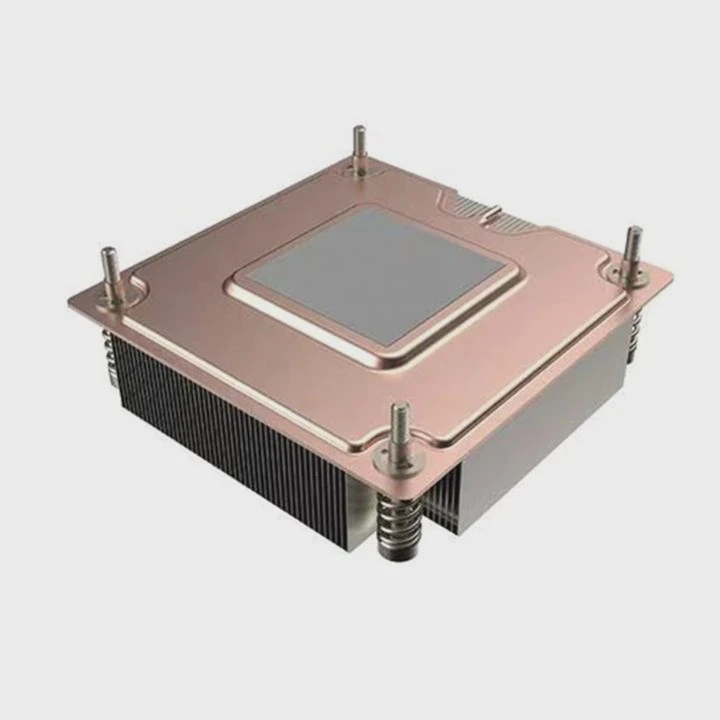
Liquid cooling directly targets the source of heat. It can use cold plates, immersion tanks, or microchannel systems that bring coolant close to CPUs and GPUs. Since liquids conduct heat up to 1,000 times better than air, they remove energy faster and more evenly.
Main types of liquid cooling
| Type | Description | Typical Use |
|---|---|---|
| Direct-to-Chip (D2C) | Coolant flows through cold plates attached to processors | High-density servers |
| Immersion Cooling | Entire hardware is submerged in dielectric fluid | AI and blockchain systems |
| Rear-Door Heat Exchanger | Liquid-cooled door absorbs heat from rack exhaust air | Retrofit data centers |
These systems can work standalone or hybrid, depending on facility design. For instance, some data centers combine liquid cold plates with air-assisted loops, optimizing balance between cooling and cost.
By integrating liquid circuits, engineers can control heat more precisely, cut down noise, and improve space efficiency. It’s a quiet revolution hidden behind steel doors and glowing server lights.
What are its benefits for large-scale systems?
Keeping thousands of servers cool isn’t just about performance — it’s about economics, sustainability, and reliability.
Liquid cooling offers major benefits for large-scale systems, including higher thermal efficiency, reduced power use, increased server density, and better sustainability.
When air-cooling systems reach their limits, liquid cooling opens new possibilities. I’ve witnessed facilities that cut energy costs by 30% simply by switching to a liquid-based design. The difference is remarkable, not only in temperature but in the calm sound of reduced fan noise.
Key benefits of data center liquid cooling
- Higher Cooling Efficiency – Removes heat directly from chips, lowering CPU and GPU temperatures.
- Reduced Power Consumption – Less fan power and air movement required.
- Higher Density – Allows more computing power in smaller spaces.
- Longer Component Life – Stable temperatures prevent thermal cycling damage.
- Environmental Benefits – Supports heat reuse and lower carbon footprint.
| Benefit Category | Description | Example |
|---|---|---|
| Performance | Better cooling precision | AI servers with D2C plates |
| Energy Efficiency | Lower PUE (Power Usage Effectiveness) | Hyperscale data centers |
| Sustainability | Heat recovery and reuse | Smart cities heating networks |
| Space Optimization | More racks per room | Modular data halls |
When I design or consult on cooling modules, I always emphasize how thermal stability means reliability. A stable system runs longer, consumes less power, and supports growing digital demand without constant infrastructure expansion.
How to implement it efficiently?
Installing a liquid cooling system isn’t as simple as swapping fans for tubes. It requires planning, coordination, and careful integration with facility infrastructure.
To implement liquid cooling efficiently, you must optimize thermal pathways, choose the right fluid type, integrate control systems, and ensure compatibility with existing server and facility layouts.
The process begins with a thermal analysis to identify heat hotspots. Then, designers create a liquid loop — including pumps, pipes, manifolds, and heat exchangers — that directs coolant through key components and back to a chiller or dry cooler.
Implementation steps
- Assess Load and Density – Estimate power usage and heat output.
- Select Cooling Type – D2C, immersion, or hybrid depending on system needs.
- Design Coolant Loop – Map fluid path, flow rate, and redundancy.
- Integrate Monitoring Systems – Add sensors for temperature and flow.
- Plan Maintenance – Include leak prevention and easy fluid replacement.
Common challenges
| Challenge | Description | Solution |
|---|---|---|
| Compatibility | Existing servers may not support liquid modules | Retrofit kits and adapters |
| Cost | Initial setup can be expensive | ROI from energy savings |
| Maintenance | Fluid monitoring and cleaning required | Automated control systems |
In one project, we optimized coolant routing by adjusting pipe diameters and flow distribution. The result? Lower pressure drop, more uniform temperature, and higher overall reliability.
Efficiency doesn’t just come from technology — it comes from precision in design and execution.
What are the innovations in data center cooling?
Data center cooling is advancing fast. As computing grows, cooling systems must adapt intelligently and sustainably.
The latest innovations in data center cooling include immersion technology, two-phase cooling, AI-driven thermal optimization, and waste-heat recovery integration.
1. Immersion Cooling
Servers are fully submerged in non-conductive fluid. This method eliminates air resistance and achieves near-silent, ultra-efficient cooling.
2. Two-Phase Cooling
The coolant absorbs heat and evaporates, then condenses back into liquid — repeating the cycle naturally. It’s widely used in high-performance environments where temperature control is critical.
3. AI-Powered Control Systems
Machine learning algorithms analyze real-time data and adjust flow rates, valve positions, and fan speeds automatically. This helps achieve dynamic energy balance while avoiding human error.
4. Heat Reuse Systems
Many facilities now capture waste heat and reuse it for district heating or industrial processes. This improves sustainability and offsets operational costs.
| Innovation | Description | Benefit |
|---|---|---|
| Immersion Cooling | Submerge servers in dielectric liquid | Superior heat transfer |
| Two-Phase Cooling | Uses phase change for natural circulation | Lower power consumption |
| AI Optimization | Data-driven thermal management | Real-time energy savings |
| Heat Recovery | Reuses heat for nearby systems | Sustainable operation |
As we move toward AI-heavy computing, quantum systems, and edge data centers, these innovations will define how the industry stays efficient and environmentally responsible.
I’ve seen this transition firsthand: once you shift from air to liquid, cooling becomes an engineering art — balancing physics, design, and sustainability.
Conclusion
Liquid cooling is transforming data centers into quieter, cooler, and greener facilities. By managing heat more effectively, it supports higher computing power, lower costs, and a sustainable digital future where performance and efficiency go hand in hand.
TAGS
Latest Articles

Volume discount levels for heat sink orders?
Buyers often ask when heat sink prices start to drop with volume. Many worry they’re overpaying for small orders. This guide explains how B2B volume pricing works for thermal components. Heat sink
21 Dec,2025
Heat sink long-term supply contract options?
Many buyers want stable pricing and reliable delivery for heat sinks. But without a clear contract, risks grow over time. This article explores how to secure better long-term supply deals. Long-term
21 Dec,2025
Tooling cost for new heat sink profiles?
Many engineers struggle to understand why tooling for custom heat sinks costs so much. They worry about budgeting and production timelines. This article breaks down the cost drivers behind tooling.
21 Dec,2025
Heat sink custom sample process steps?
Sometimes, starting a custom heat sink project feels overwhelming—too many steps, too many unknowns, and too many risks. You want a sample, but not endless delays. The process for requesting and
20 Dec,2025
Standard B2B terms for heat sink payments?
When buyers and sellers in B2B heat sink markets talk about payment, many don’t fully understand what’s standard. This can lead to delayed orders, miscommunication, and even lost business
20 Dec,2025
Heat sink pricing factors for large orders?
Heat sinks are vital for many systems. When prices rise, projects stall and budgets break. This problem can hit teams hard without warning. Large order heat sink pricing depends on many factors. You
20 Dec,2025Related Articles
- What happens when a liquid is cooled?
- Which is better, liquid cooling or fan?
- Does Xbox Series X have liquid cooling?
- What is the best liquid for water cooling?
- Is liquid cooling CPU worth it?
- Who makes liquid-cooled servers?
- Is glass a super-cooled liquid?
- Why has the liquid cooling system replaced the air types?
- How to cool liquid quickly?
- Why is liquid cooling better?
- Which CPU liquid cooler is best?
- What liquid is in liquid cooling?
Author
Dr. Emily Chen
Chief AI Researcher
Leading expert in thermal dynamics and AI optimization with over 15 years of experience in data center efficiency research.
Categories
Latest Products






Recommend Categories
- Liquid cooling plate Manufacturer
- Industrial Heat Sink Manufacturer
- Standard Heat Sink Manufacturer
- Aluminum Heat Sink Manufacturer
- Copper Heat Sink Manufacturer
- Anodized Heatsink Manufacturer
- Stamping heat sink Manufacturer
- Die Casting Heatsink Manufacturer
- Soldering heat sink Manufacturer
- CNC Parts Manufacturer
Latest Products
- Wholesale Aluminum Radiator
- Water Cooling Plate Kit
- Water Cooling Heat Sink
- Water Cooling Heat Sink Kit
- Stainless Steel Water Distributor
- Server Water Cooling Plate Kit
- Server Liquid Cooling System
- Server Aluminum Cooling Kit
- S19 Full Cover Cooling Plate
- S19 Cooling Plate Kit
- S19 Aluminum Cooling Plate
Contact Expert
Have questions about this article? Reach out to our experts directly.