Who makes liquid-cooled servers?
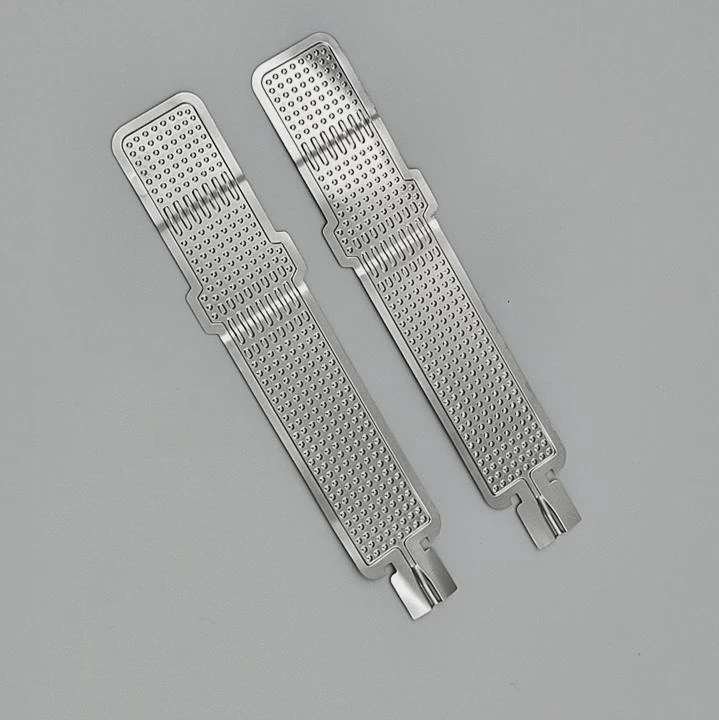
When I first visited a hyperscale data center using liquid cooling, I could hear an unusual silence. Gone was the roar of fans—the servers were cooled by quiet, efficient liquid loops. This experience changed how I saw modern server design.
Liquid-cooled servers are manufactured by companies such as Dell Technologies, HPE, Lenovo, Supermicro, Inspur, and specialized cooling partners like Vertiv, Schneider Electric, CoolIT Systems, and LiquidStack.
They are designed to handle high-power workloads—especially AI and HPC—where traditional air cooling is no longer enough.
What is a liquid-cooled server?
At its core, a liquid-cooled server is not very different from a regular one. What sets it apart is how it manages heat.
A liquid-cooled server uses a circulating coolant—usually water or dielectric fluid—to absorb heat from CPUs, GPUs, or memory modules through cold plates or immersion baths, then transfers that heat to a radiator or heat exchanger for dissipation.
How it works
Heat Absorption:
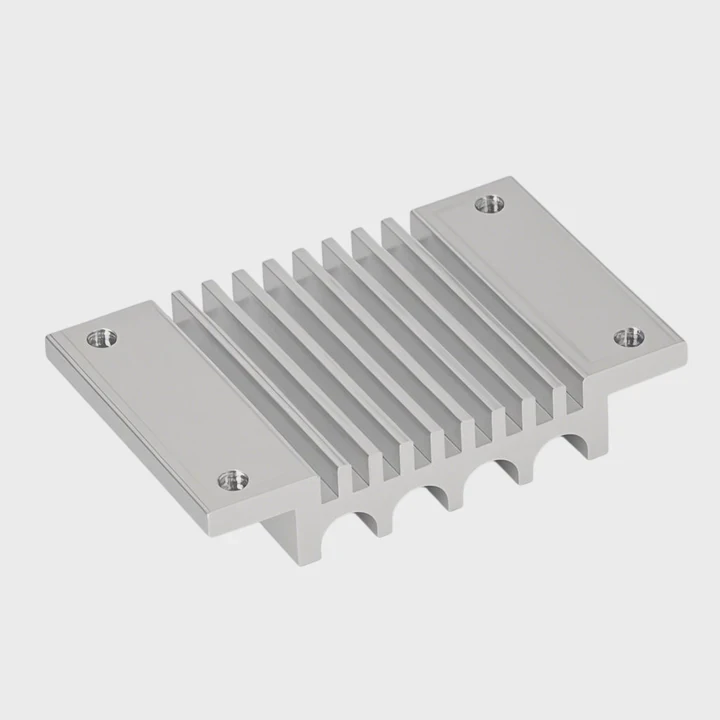
A cold plate attached to a processor transfers heat to the coolant through direct contact.Fluid Circulation:
A pump moves the warm fluid through a closed loop, delivering it to a heat exchanger or cooling distribution unit (CDU).Heat Rejection:
The fluid releases heat through radiators or facility water lines, then returns cooled to repeat the cycle.
| Cooling Method | Description | Typical Use |
|---|---|---|
| Direct-to-Chip (D2C) | Coolant flows through cold plates mounted on CPUs/GPUs | Data centers, HPC |
| Immersion Cooling | Servers submerged in dielectric fluid | AI training clusters |
| Rear-Door Heat Exchanger | Air-cooled servers with liquid-cooled doors | Retrofits and hybrid centers |
Modern data centers use hybrid approaches—combining liquid and air—to handle variable workloads while reducing energy usage.
What benefits does it offer to data centers?
In my experience working with data center engineers, the shift to liquid cooling is driven by both necessity and efficiency. Air simply cannot keep up with the heat loads of today’s AI systems.
Liquid-cooled servers deliver superior thermal efficiency, reduced energy use, higher density per rack, quieter operation, and improved sustainability for data centers.
1. Higher cooling efficiency
Liquid can absorb heat up to 3,000 times faster than air, which means it can cool higher TDP processors without overheating. This is critical for AI, rendering, or machine learning workloads.
2. Higher rack density
Traditional air-cooled racks handle about 5–10 kW. Liquid-cooled racks easily support 30–80 kW or more. This allows more computing power in the same space.
| Feature | Air Cooling | Liquid Cooling |
|---|---|---|
| Max Rack Density | 10 kW | 80 kW+ |
| Cooling Efficiency | Moderate | High |
| Energy Cost | Higher | Lower |
| Noise Level | Loud | Low |
| Space Efficiency | Low | High |
3. Lower energy consumption
Because liquid removes heat more efficiently, chillers and fans consume less power. Many data centers report up to 20–30% total energy savings after switching.
4. Better reliability and performance
Stable operating temperatures reduce CPU/GPU throttling, improving uptime and extending hardware lifespan.
5. Sustainability
Liquid cooling enables heat reuse—the waste heat can warm nearby buildings or feed district heating networks. It also reduces water use compared to large-scale air chillers.
6. Quieter and smaller footprint
Fewer high-speed fans mean quieter operations, and compact liquid loops make more efficient use of data hall space.
How to choose a server cooling provider?
Selecting a reliable liquid cooling partner is crucial. Over the years, I’ve seen data centers succeed or fail based on whether they matched the right technology to their facility.
To choose a server cooling provider, evaluate your thermal load, verify vendor experience, confirm compatibility with your infrastructure, and review energy savings, service plans, and safety features.
Step 1: Assess your workload
Determine whether your servers run CPU-intensive, GPU-heavy, or mixed loads. This affects whether you need direct-to-chip cooling, immersion cooling, or a hybrid system.
Step 2: Check technology compatibility
Ask providers how their systems integrate with your racks, PDUs, and existing HVAC. Compatibility ensures easy retrofitting and minimal downtime.
Step 3: Evaluate vendor credibility
Leading manufacturers include:
- Dell Technologies – PowerEdge XE9640 with direct-to-chip liquid cooling
- Lenovo Neptune™ – A long-running liquid cooling platform
- HPE – Offers direct liquid cooling with Cray and Apollo systems
- Supermicro – Customizable servers supporting liquid-ready nodes
- Inspur & Huawei – Large-scale AI and hyperscale liquid-cooled racks
- Vertiv, Schneider Electric, CoolIT Systems, LiquidStack – Infrastructure providers supplying CDUs, manifolds, and immersion tanks
| Vendor Type | Examples | Focus |
|---|---|---|
| Server OEMs | Dell, HPE, Lenovo, Supermicro | Integrated liquid-ready systems |
| Cooling Specialists | Vertiv, Schneider Electric, CoolIT Systems | Facility infrastructure |
| Immersion Innovators | LiquidStack, Submer, GRC | Full immersion and edge setups |
Step 4: Review efficiency and cost
Request energy models showing potential PUE (Power Usage Effectiveness) improvement. A well-designed liquid system can cut your PUE by 0.05–0.1 points.
Step 5: Verify safety and maintenance
Ensure your provider offers:
- Leak detection systems
- Flow and pressure sensors
- Maintenance contracts for coolant replacement
- Operator training and 24⁄7 service
Step 6: Consider scalability and roadmap
Choose a vendor whose roadmap supports future processors and increased rack density. You don’t want to redesign your system every time a new chip generation launches.
What are the trends in enterprise cooling tech?
Liquid cooling is changing faster than ever. The rise of AI, HPC, and sustainability initiatives is driving a wave of innovation in how data centers manage thermal energy.
Current trends in enterprise cooling focus on direct-to-chip architectures, full immersion systems, AI-based control, modular CDUs, eco-friendly coolants, and hybrid liquid-air integration.
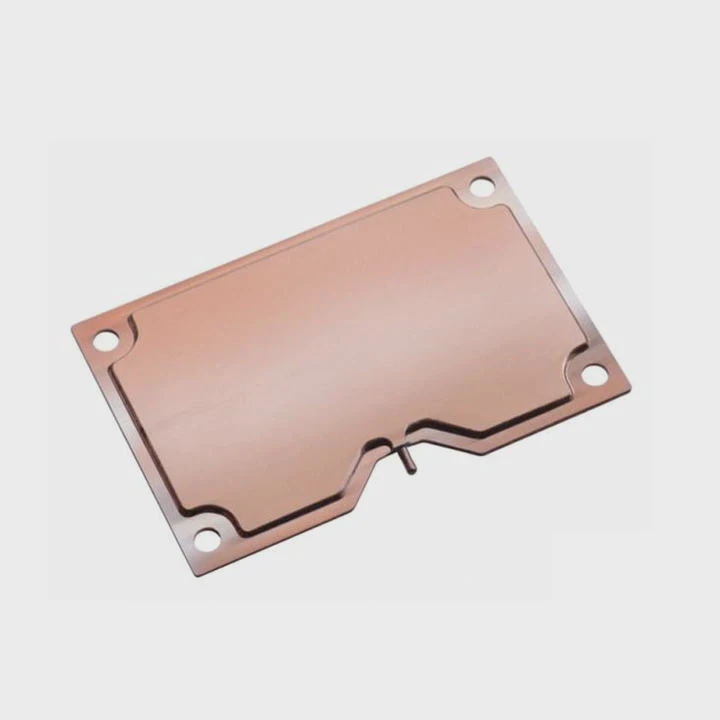
1. Direct-to-chip cooling
This approach routes coolant directly to processors using microchannel cold plates. It’s now used in most AI-optimized servers, allowing up to 80 kW per rack.
2. Immersion cooling
Servers are fully submerged in dielectric fluids. This technique removes nearly all air-based cooling needs, improving energy efficiency and reducing maintenance.
3. Hybrid air-liquid cooling
Many facilities are transitioning gradually. They combine rear-door heat exchangers with liquid loops, creating a hybrid system that cools high-density nodes while retaining existing air systems.
4. AI-driven thermal control
Artificial intelligence is now managing data center temperatures in real time. Sensors feed data to AI algorithms that optimize flow rate, fan speed, and pump pressure dynamically.
5. Modular and scalable CDUs
Compact coolant distribution units now handle hot-swappable connections and smart monitoring. Modular CDUs make it easier to expand capacity rack by rack.
6. Eco-friendly and long-life coolants
Next-generation fluids are non-toxic, biodegradable, and have low electrical conductivity. They last longer and reduce environmental impact while improving safety.
| Trend | Description | Key Advantage |
|---|---|---|
| Direct-to-Chip Cooling | Liquid loops target CPUs and GPUs directly | High density efficiency |
| Immersion Cooling | Servers submerged in dielectric fluids | Simplified thermal control |
| AI Optimization | Smart pump and fan regulation | Real-time efficiency gains |
| Modular CDUs | Scalable liquid infrastructure | Easy expansion |
| Eco Coolants | Sustainable, non-toxic fluids | Environmental compliance |
7. Waste heat recovery
Liquid cooling allows heat recapture at higher outlet temperatures (40–60°C). Some European data centers now use this energy to heat offices or residential zones.
8. Edge and micro data centers
Compact edge data centers use liquid cooling to fit powerful compute clusters in small footprints. These systems reduce latency for AI inference or 5G applications.
9. Standardization and collaboration
Industry groups like the Open Compute Project (OCP) are establishing open standards for liquid interfaces and manifolds, making cross-vendor deployment easier.
10. The future: autonomous cooling ecosystems
The next generation of enterprise cooling will feature self-regulating liquid systems. They’ll automatically balance flow, refill coolant, detect leaks, and adjust performance through AI monitoring—all with minimal human input.
Conclusion
Liquid-cooled servers are transforming how data centers handle modern workloads. Built by leading brands like Dell, Lenovo, HPE, and Supermicro—alongside infrastructure experts like Vertiv and Schneider—they deliver high density, energy savings, and sustainability. Choosing the right provider means evaluating compatibility, safety, and scalability. With AI-driven control, modular CDUs, and eco-friendly fluids leading the way, liquid cooling is fast becoming the new standard for enterprise computing.
TAGS
Latest Articles

Volume discount levels for heat sink orders?
Buyers often ask when heat sink prices start to drop with volume. Many worry they’re overpaying for small orders. This guide explains how B2B volume pricing works for thermal components. Heat sink
21 Dec,2025
Heat sink long-term supply contract options?
Many buyers want stable pricing and reliable delivery for heat sinks. But without a clear contract, risks grow over time. This article explores how to secure better long-term supply deals. Long-term
21 Dec,2025
Tooling cost for new heat sink profiles?
Many engineers struggle to understand why tooling for custom heat sinks costs so much. They worry about budgeting and production timelines. This article breaks down the cost drivers behind tooling.
21 Dec,2025
Heat sink custom sample process steps?
Sometimes, starting a custom heat sink project feels overwhelming—too many steps, too many unknowns, and too many risks. You want a sample, but not endless delays. The process for requesting and
20 Dec,2025
Standard B2B terms for heat sink payments?
When buyers and sellers in B2B heat sink markets talk about payment, many don’t fully understand what’s standard. This can lead to delayed orders, miscommunication, and even lost business
20 Dec,2025
Heat sink pricing factors for large orders?
Heat sinks are vital for many systems. When prices rise, projects stall and budgets break. This problem can hit teams hard without warning. Large order heat sink pricing depends on many factors. You
20 Dec,2025Related Articles
- How to refill a liquid cooler?
- Where to plug in a liquid cooling pump?
- How to install a CPU liquid cooler?
- How to liquid cool your computer?
- How does liquid nitrogen cooling work?
- What is the best CPU liquid cooler?
- Is liquid cooling CPU worth it?
- What is the best liquid for water cooling?
- Does Xbox Series X have liquid cooling?
- Which is better, liquid cooling or fan?
- What happens when a liquid is cooled?
- How does liquid cooling work in data centers?
Author
Dr. Emily Chen
Chief AI Researcher
Leading expert in thermal dynamics and AI optimization with over 15 years of experience in data center efficiency research.
Categories
Latest Products






Recommend Categories
- Liquid cooling plate Manufacturer
- Industrial Heat Sink Manufacturer
- Standard Heat Sink Manufacturer
- Aluminum Heat Sink Manufacturer
- Copper Heat Sink Manufacturer
- Anodized Heatsink Manufacturer
- Stamping heat sink Manufacturer
- Die Casting Heatsink Manufacturer
- Soldering heat sink Manufacturer
- CNC Parts Manufacturer
Latest Products
- Wholesale Aluminum Radiator
- Water Cooling Plate Kit
- Water Cooling Heat Sink
- Water Cooling Heat Sink Kit
- Stainless Steel Water Distributor
- Server Water Cooling Plate Kit
- Server Liquid Cooling System
- Server Aluminum Cooling Kit
- S19 Full Cover Cooling Plate
- S19 Cooling Plate Kit
- S19 Aluminum Cooling Plate
Contact Expert
Have questions about this article? Reach out to our experts directly.