Why is liquid cooling better?
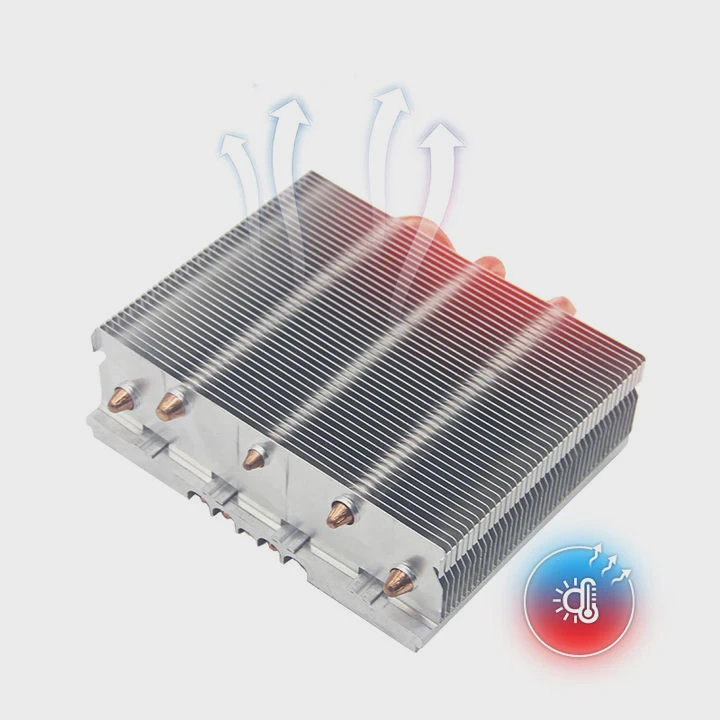
I still remember when I replaced a stack of noisy server fans with a single liquid loop. The temperature dropped instantly, the hum disappeared, and the performance stabilized. That was the moment I realized why liquid cooling keeps gaining ground—it’s not just a trend, it’s a leap in efficiency.
Liquid cooling is better because it transfers heat more effectively than air, enabling higher performance, lower noise, and greater energy efficiency in compact, high-power systems.
Let’s look at what liquid cooling really is, how it beats air cooling, how to apply it well, and what new trends are shaping the future of high-performance thermal systems.
What is liquid cooling?
Every electronic or mechanical system generates heat. Managing that heat determines how long and how well it runs. As power density rises, air becomes insufficient, so engineers turn to liquids for faster heat removal.
Liquid cooling is a thermal management method that uses a circulating fluid—such as water, glycol, or dielectric coolant—to absorb heat from components and transfer it to a radiator or heat exchanger for dissipation.
How it works
The process is simple:
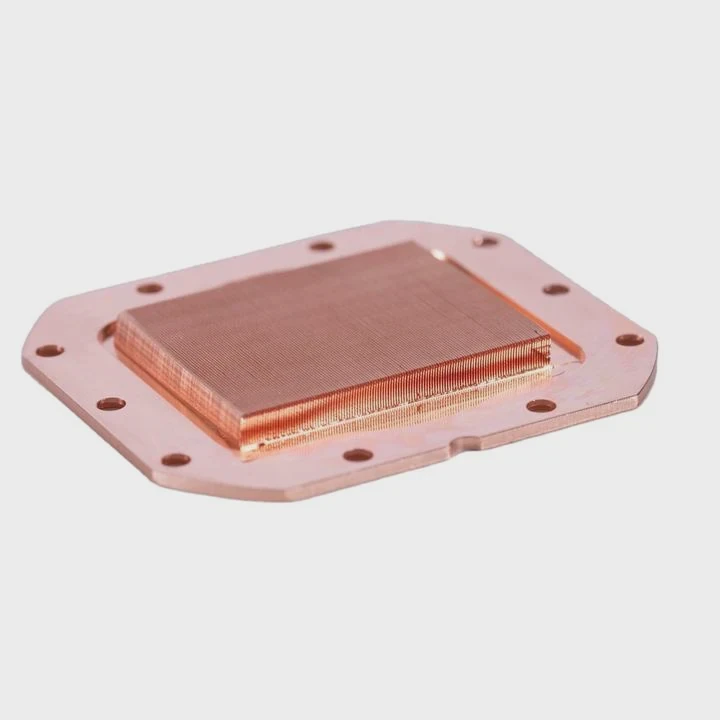
- Absorption: Heat moves from the component into a cold plate or water block.
- Transport: A pump circulates coolant through tubing to a radiator or heat exchanger.
- Dissipation: The radiator releases heat to the surrounding air or secondary loop.
- Recirculation: The cooled liquid returns to the source to repeat the cycle.
This closed-loop system ensures stable temperatures even under heavy loads.
Typical components
| Component | Function | Key Material |
|---|---|---|
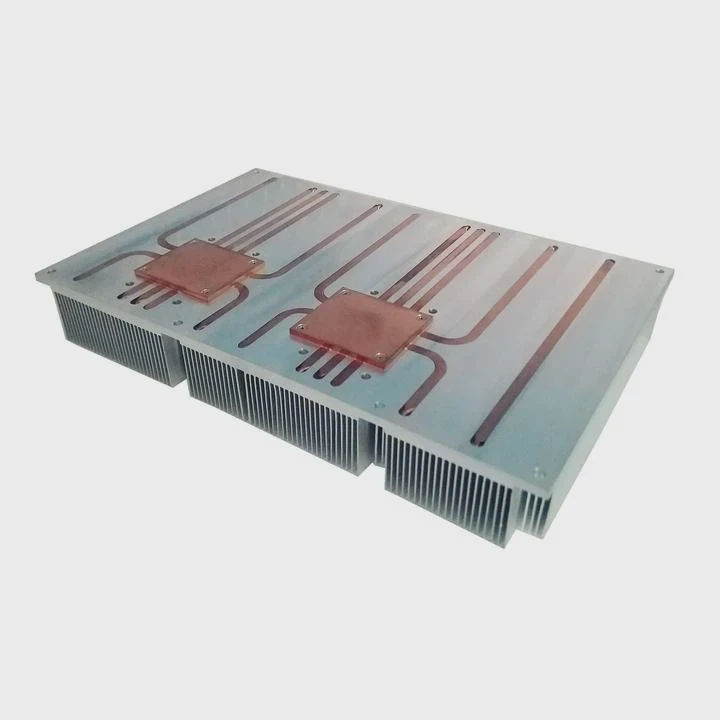
| Cold plate | Absorbs heat from component | Copper or aluminum |
| Pump | Circulates coolant | Ceramic bearing motor |
| Radiator | Releases heat to air or secondary loop | Aluminum fins or brazed core |
| Coolant | Transfers heat | Water, glycol, or dielectric fluid |
| Reservoir | Maintains volume and removes air | Plastic or metal tank |
| Tubing | Connects system | Silicone or EPDM rubber |
This combination provides superior cooling performance with manageable complexity.
What are its advantages over air cooling?
When I first moved from air to liquid cooling, the difference was clear. Fans could no longer handle the concentrated heat of compact processors and power electronics. Liquids solved that problem elegantly.
Compared to air cooling, liquid cooling offers higher heat transfer efficiency, quieter operation, smaller size, and better temperature control under heavy or uneven loads.
1. Higher heat transfer
Water conducts heat roughly 25 times better than air. This allows faster heat movement from the source to the environment, enabling higher power density.
2. Quieter operation
Because the liquid loop handles most of the heat, fewer or slower fans are needed, reducing noise—a key benefit for offices, labs, and home systems.
3. Compact design
Liquid systems can cool multiple components in tight spaces without bulky heatsinks. This allows slimmer form factors for industrial and computing systems.
4. More consistent temperatures
Airflow can leave hot spots. Liquids circulate evenly, maintaining uniform thermal conditions across surfaces. This consistency prevents thermal stress and improves component reliability.
5. Greater overclocking and load handling
In computing or EV applications, liquid cooling allows processors and batteries to operate safely at higher outputs, unlocking better performance.
| Feature | Air Cooling | Liquid Cooling |
|---|---|---|
| Thermal conductivity | 0.024 W/m·K | 0.6–5.0 W/m·K |
| Cooling medium | Air | Water or coolant |
| Noise level | High (multiple fans) | Low |
| Space usage | Large heatsinks | Compact loops |
| Temperature uniformity | Uneven | Balanced |
| Maintenance frequency | Low | Moderate |
| Max power handling | <150 W | >1000 W |
Liquid cooling wins whenever heat density and performance demand exceed what air can handle.
How to apply liquid cooling effectively?
The secret to good liquid cooling isn’t just the fluid—it’s system design. In my projects, I’ve learned that planning flow, materials, and maintenance determines success more than expensive hardware.
To apply liquid cooling effectively, design a well-sealed closed loop, choose compatible materials, maintain coolant quality, and optimize flow for balanced temperature and pressure.
Step 1: Choose the right coolant
- Water-glycol mixture for general-purpose industrial systems.
- Dielectric fluids for electronics that need electrical insulation.
- Special coolants for cryogenic or extreme environments.
Add corrosion inhibitors and biocides to extend coolant life.
Step 2: Design efficient flow paths
Keep tubing short and direct. Use smooth bends instead of sharp corners. Ensure the pump has enough head pressure for your circuit length and restriction level.
Step 3: Ensure good material compatibility
Avoid mixing metals like copper and aluminum to prevent galvanic corrosion. Use nickel plating or dielectric barriers if mixing is unavoidable.
Step 4: Prevent leaks and contamination
Use reliable fittings and clamps. Test the loop under pressure before operation. Replace coolant every 2–3 years to maintain performance.
Step 5: Control and monitor performance
Install sensors for temperature, flow, and pressure. Modern systems can automatically adjust pump speed or fan RPM based on load and temperature data.
| Step | Action | Key Benefit |
|---|---|---|
| 1 | Select proper coolant | Prevent corrosion and freezing |
| 2 | Optimize flow layout | Lower resistance and hotspots |
| 3 | Use compatible materials | Avoid galvanic damage |
| 4 | Maintain cleanliness | Improve efficiency and longevity |
| 5 | Add smart monitoring | Real-time safety and control |
Once properly configured, a liquid cooling system can run quietly and reliably for years.
What are the latest trends in performance cooling?
Every year, I see cooling technology move closer to intelligent, modular, and sustainable systems. What used to be manual tinkering is becoming automated optimization.
Recent trends in performance cooling include direct liquid immersion, two-phase cooling, AI-based thermal control, modular microchannels, and sustainable low-impact coolants.
1. Direct liquid immersion
Entire circuit boards are now submerged in dielectric fluids that absorb and dissipate heat efficiently. This method cuts power use by up to 40% in data centers.
2. Two-phase cooling
Boiling and condensation inside sealed chambers absorb large amounts of heat through latent heat transfer. Systems using this method handle extreme loads with minimal fluid use.
3. AI and smart control systems
Sensors feed real-time data to algorithms that predict thermal loads and adjust cooling dynamically. AI reduces energy consumption and avoids overheating before it happens.
4. Microchannel and 3D-printed cold plates
New manufacturing methods create ultra-fine channels that enhance surface area and turbulence, boosting cooling power without increasing size.
5. Eco-friendly coolants
Green chemistry is replacing traditional glycol and refrigerants with biodegradable, non-toxic alternatives that reduce environmental impact.
6. Hybrid systems
Many systems combine liquid and air cooling—liquid removes primary heat, while air assists secondary components, balancing cost and performance.
7. Modular and serviceable design
Manufacturers are building modular cooling blocks that can be replaced or expanded easily, improving maintainability and reducing waste.
Industry outlook
By 2030, cooling systems will be self-optimizing and carbon-neutral. The future lies in hybrid designs that adapt automatically to power demand while using smart, sustainable materials.
Conclusion
Liquid cooling is better because it merges physics and practicality—superior heat transfer, silent operation, and design flexibility. When applied effectively and paired with new smart technologies, it turns heat from a problem into an advantage, enabling faster, greener, and longer-lasting performance.
TAGS
Latest Articles

Volume discount levels for heat sink orders?
Buyers often ask when heat sink prices start to drop with volume. Many worry they’re overpaying for small orders. This guide explains how B2B volume pricing works for thermal components. Heat sink
21 Dec,2025
Heat sink long-term supply contract options?
Many buyers want stable pricing and reliable delivery for heat sinks. But without a clear contract, risks grow over time. This article explores how to secure better long-term supply deals. Long-term
21 Dec,2025
Tooling cost for new heat sink profiles?
Many engineers struggle to understand why tooling for custom heat sinks costs so much. They worry about budgeting and production timelines. This article breaks down the cost drivers behind tooling.
21 Dec,2025
Heat sink custom sample process steps?
Sometimes, starting a custom heat sink project feels overwhelming—too many steps, too many unknowns, and too many risks. You want a sample, but not endless delays. The process for requesting and
20 Dec,2025
Standard B2B terms for heat sink payments?
When buyers and sellers in B2B heat sink markets talk about payment, many don’t fully understand what’s standard. This can lead to delayed orders, miscommunication, and even lost business
20 Dec,2025
Heat sink pricing factors for large orders?
Heat sinks are vital for many systems. When prices rise, projects stall and budgets break. This problem can hit teams hard without warning. Large order heat sink pricing depends on many factors. You
20 Dec,2025Related Articles
- How to cool liquid quickly?
- Why has the liquid cooling system replaced the air types?
- Is glass a super-cooled liquid?
- How does liquid cooling work in data centers?
- What happens when a liquid is cooled?
- Which is better, liquid cooling or fan?
- Which CPU liquid cooler is best?
- What liquid is in liquid cooling?
- Is liquid cooling hard to maintain?
- How Do Liquid Cooling Systems Work?
- What Does Liquid Cooling Do in a Computer?
- How to convert air-cooled engine to liquid-cooled engine?
Author
Dr. Emily Chen
Chief AI Researcher
Leading expert in thermal dynamics and AI optimization with over 15 years of experience in data center efficiency research.
Categories
Latest Products






Recommend Categories
- Liquid cooling plate Manufacturer
- Industrial Heat Sink Manufacturer
- Standard Heat Sink Manufacturer
- Aluminum Heat Sink Manufacturer
- Copper Heat Sink Manufacturer
- Anodized Heatsink Manufacturer
- Stamping heat sink Manufacturer
- Die Casting Heatsink Manufacturer
- Soldering heat sink Manufacturer
- CNC Parts Manufacturer
Latest Products
- Wholesale Aluminum Radiator
- Water Cooling Plate Kit
- Water Cooling Heat Sink
- Water Cooling Heat Sink Kit
- Stainless Steel Water Distributor
- Server Water Cooling Plate Kit
- Server Liquid Cooling System
- Server Aluminum Cooling Kit
- S19 Full Cover Cooling Plate
- S19 Cooling Plate Kit
- S19 Aluminum Cooling Plate
Contact Expert
Have questions about this article? Reach out to our experts directly.