Why has the liquid cooling system replaced the air types?
I still remember the first time I opened a server rack and saw coolant tubes instead of fans. The technician smiled and said, “Air is no longer enough.” That line captures a quiet revolution in thermal management.
Liquid cooling has replaced air cooling in many fields because it transfers heat far more efficiently, supports higher power density, and enables quieter, more compact systems.
This change is not sudden. It reflects decades of rising heat flux, tighter packaging, and smarter fluid systems. Let’s explore how these two methods differ, what makes liquid cooling better, how to upgrade, and what’s next in cooling technology.
What are liquid and air cooling systems?
When I began designing compact electronic modules, I first worked with air-cooled heat sinks. They were simple, low-cost, and easy to maintain. But as chips got smaller and more powerful, the old designs started to fail.
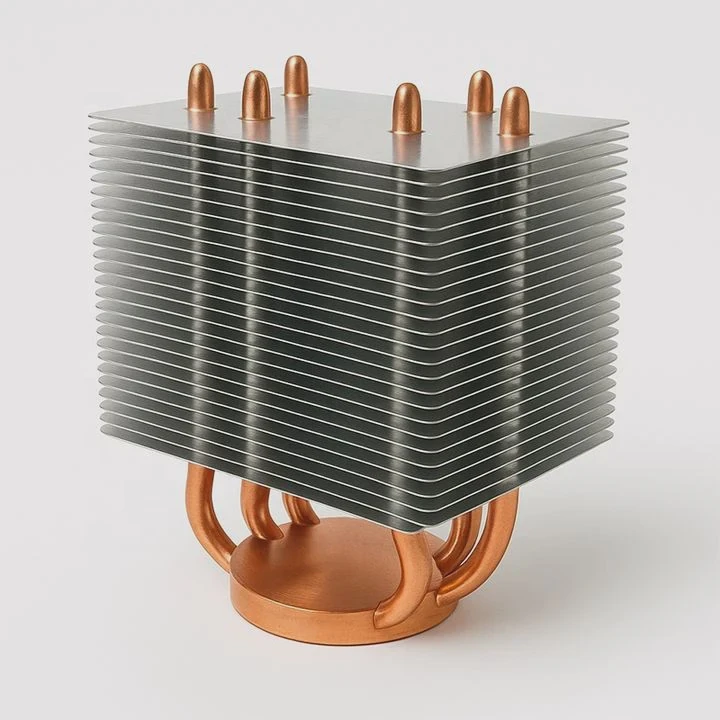
Air cooling uses fins and fans to move heat into surrounding air; liquid cooling uses a circulating fluid to absorb and transfer heat through pipes, cold plates, or heat exchangers.
Understanding air cooling
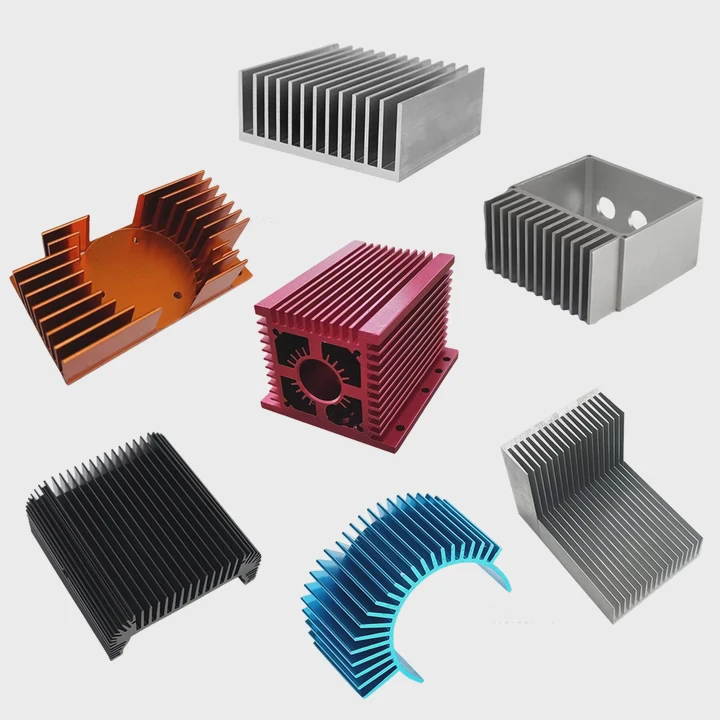
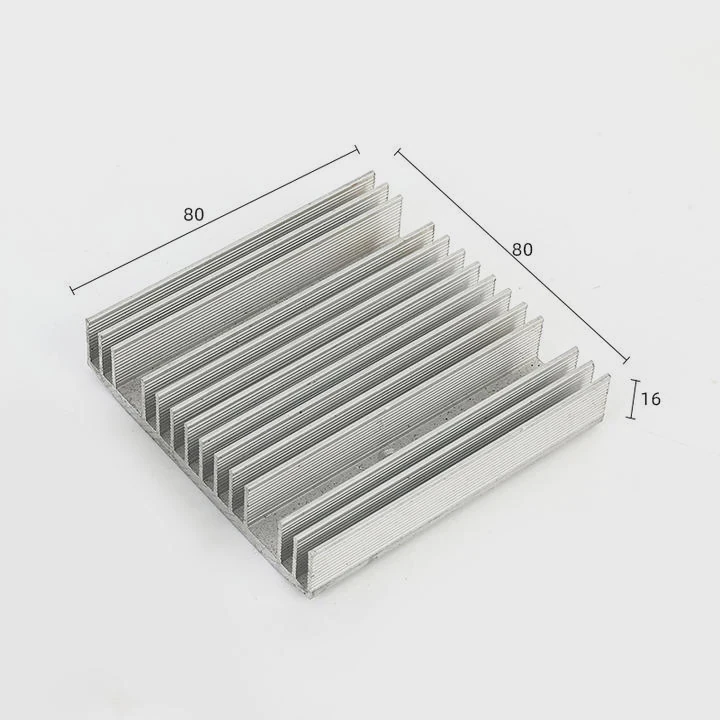
Air cooling relies on forced convection. A fan pushes air over a finned heat sink attached to the hot component. Aluminum or copper fins increase the surface area for heat dissipation. The system is simple, lightweight, and affordable.
However, air has a low thermal conductivity (about 0.024 W/m·K). This limits its ability to move heat from dense or high-power devices.
Understanding liquid cooling
Liquid cooling replaces air with a liquid coolant—often water, glycol mixtures, or dielectric fluids—with a much higher thermal conductivity (up to 5000 times better than air). The coolant circulates through channels or cold plates in contact with heat sources, carrying energy away to a radiator or heat exchanger.
This design manages higher heat fluxes and keeps component temperatures stable, even under peak loads.
Comparing the two
| Feature | Air Cooling | Liquid Cooling |
|---|---|---|
| Heat transfer medium | Air | Coolant (water/glycol/dielectric) |
| Typical conductivity | 0.024 W/m·K | 0.6–5.0 W/m·K |
| Cooling performance | Moderate | Very high |
| Noise | High (fans) | Low |
| Space requirement | Large | Compact |
| Maintenance | Easy | Requires monitoring |
| Cost | Low | Higher upfront cost |
Air cooling is still fine for light-duty applications, but for high-power electronics, data centers, and EV batteries, liquid cooling is now the standard.
What advantages does liquid cooling offer?
I often get asked: “Is liquid cooling worth the extra effort?” My answer is yes—if you care about performance, reliability, and system density.
Liquid cooling offers higher thermal efficiency, lower noise, better temperature uniformity, and enables compact and high-power system designs that air cooling cannot handle.
1. Superior heat transfer
Water and other coolants carry heat much better than air. This allows designers to move energy away from hotspots faster, preventing thermal throttling or component failure. In EVs, liquid-cooled battery packs stay within a tight thermal window, extending life and safety.
2. Compact system design
Liquid systems remove heat directly at the source, reducing the need for bulky fans and fin stacks. This saves valuable space, especially in data centers or compact power modules. When we converted one control unit from fin cooling to a microchannel cold plate, the total volume dropped by 35%.
3. Noise reduction
Liquid cooling requires smaller or fewer fans since heat is efficiently transported to a remote radiator. This leads to quieter operation, a key benefit for workstations, labs, and hospitals.
4. Temperature uniformity
Air cooling can leave hot spots where airflow is poor. Liquids flow through sealed channels, ensuring even cooling across components. This uniformity improves device reliability and prevents warping or uneven aging.
5. Long-term reliability
Lower and more stable operating temperatures reduce material stress, oxidation, and fatigue. Many industrial liquid-cooling loops run for years with minimal maintenance.
Below is a summary of the key advantages:
| Advantage | Description | Impact |
|---|---|---|
| Higher efficiency | Better heat removal | Prevents overheating |
| Smaller size | Compact thermal modules | Increases power density |
| Quieter operation | Fewer or smaller fans | Improves user experience |
| Uniform cooling | Balanced temperature field | Extends component life |
| Enhanced reliability | Less thermal cycling | Reduces failure rate |
When you need to move kilowatts of heat instead of tens of watts, liquid cooling is no longer a luxury—it is a necessity.
How to upgrade from air to liquid cooling?
Switching from air to liquid cooling sounds complex, but with a clear plan, it becomes manageable. I have helped clients make this change in both industrial equipment and server systems.
To upgrade, identify high-heat components, choose the right liquid loop design, integrate cold plates, add a pump and heat exchanger, and validate system safety and maintenance.
Step-by-step upgrade plan
Step 1: Evaluate heat load
Start by measuring or estimating the total thermal load (in watts) and identifying where heat is generated. High-density zones are the main targets for liquid cooling.
Step 2: Select coolant and materials
Choose a coolant compatible with your materials.
- Water–glycol mix for general use.
- Dielectric fluids for direct-contact cooling.
- Special fluorinated liquids for sensitive electronics.
Ensure the materials (aluminum, copper, stainless steel) resist corrosion with the chosen fluid.
Step 3: Design the liquid loop
A typical loop includes:
- Cold plates or jackets on hot parts
- Pump to circulate coolant
- Radiator or heat exchanger to reject heat
- Reservoir for volume and air removal
Use computational fluid dynamics (CFD) to optimize flow and pressure drop.
Step 4: Integrate with existing system
Check mechanical fit and routing space. Replace or modify brackets and mounting points. Ensure electrical isolation where needed.
Step 5: Add sensors and controls
Include temperature, flow, and pressure sensors to monitor real-time performance. A controller can adjust pump speed and fan load dynamically.
Step 6: Validate and test
Run leak, pressure, and thermal performance tests before full operation. Record steady-state and transient behavior.
Typical issues to check
- Air bubbles trapped in the system
- Pump cavitation or noise
- Coolant contamination
- Corrosion or galvanic effects
- Thermal cycling under variable load
A well-designed liquid system pays off with stable operation, lower energy costs, and longer component life.
What are the trends in cooling technology replacement?
In the past decade, thermal management has transformed from mechanical add-on to design core. The trends now point toward smarter, integrated, and more sustainable systems.
Cooling technology is shifting toward direct liquid immersion, two-phase systems, microchannel heat sinks, and hybrid smart control solutions driven by AI and sustainability.
1. Direct liquid immersion cooling
In data centers, entire servers are submerged in dielectric fluids that boil or circulate to remove heat. This method eliminates air handling and cuts power use for cooling by more than 40%.
2. Two-phase cooling
Boiling and condensation transfer massive amounts of heat through latent heat effects. Cold plates with embedded vapor chambers or heat pipes combine this with precise control.
3. Microchannel and jet impingement systems
Microfabricated channels and jets increase surface area and turbulence, achieving ultra-high heat transfer. These appear in EV inverters, laser systems, and power electronics.
4. Hybrid cooling with smart control
Modern systems blend air and liquid cooling, adjusting each based on real-time thermal demand. AI-driven algorithms predict load and manage coolant flow for efficiency.
5. Sustainability and circular design
Coolants with low environmental impact and recyclable materials are gaining traction. Systems are now designed for easy disassembly, coolant reuse, and reduced maintenance waste.
6. Integration with thermal storage
Thermal energy storage modules using phase-change materials (PCMs) absorb peak heat loads and release them later. This stabilizes temperature and reduces pump power.
Industry outlook
As processors, batteries, and power modules reach new density levels, thermal performance becomes the key bottleneck. By 2030, most high-density systems will rely on hybrid or direct liquid cooling.
Engineers who embrace this shift early will enjoy better energy efficiency, reliability, and quieter systems.
Conclusion
Liquid cooling is not just an upgrade; it is the new foundation for high-performance, sustainable systems. By understanding its principles, advantages, and trends, we can design the next generation of cooler, quieter, and more efficient machines.
TAGS
Latest Articles

Volume discount levels for heat sink orders?
Buyers often ask when heat sink prices start to drop with volume. Many worry they’re overpaying for small orders. This guide explains how B2B volume pricing works for thermal components. Heat sink
21 Dec,2025
Heat sink long-term supply contract options?
Many buyers want stable pricing and reliable delivery for heat sinks. But without a clear contract, risks grow over time. This article explores how to secure better long-term supply deals. Long-term
21 Dec,2025
Tooling cost for new heat sink profiles?
Many engineers struggle to understand why tooling for custom heat sinks costs so much. They worry about budgeting and production timelines. This article breaks down the cost drivers behind tooling.
21 Dec,2025
Heat sink custom sample process steps?
Sometimes, starting a custom heat sink project feels overwhelming—too many steps, too many unknowns, and too many risks. You want a sample, but not endless delays. The process for requesting and
20 Dec,2025
Standard B2B terms for heat sink payments?
When buyers and sellers in B2B heat sink markets talk about payment, many don’t fully understand what’s standard. This can lead to delayed orders, miscommunication, and even lost business
20 Dec,2025
Heat sink pricing factors for large orders?
Heat sinks are vital for many systems. When prices rise, projects stall and budgets break. This problem can hit teams hard without warning. Large order heat sink pricing depends on many factors. You
20 Dec,2025Related Articles
- Is glass a super-cooled liquid?
- How does liquid cooling work in data centers?
- What happens when a liquid is cooled?
- Which is better, liquid cooling or fan?
- Does Xbox Series X have liquid cooling?
- What is the best liquid for water cooling?
- How to cool liquid quickly?
- Why is liquid cooling better?
- Which CPU liquid cooler is best?
- What liquid is in liquid cooling?
- Is liquid cooling hard to maintain?
- How Do Liquid Cooling Systems Work?
Author
Dr. Emily Chen
Chief AI Researcher
Leading expert in thermal dynamics and AI optimization with over 15 years of experience in data center efficiency research.
Categories
Latest Products






Recommend Categories
- Liquid cooling plate Manufacturer
- Industrial Heat Sink Manufacturer
- Standard Heat Sink Manufacturer
- Aluminum Heat Sink Manufacturer
- Copper Heat Sink Manufacturer
- Anodized Heatsink Manufacturer
- Stamping heat sink Manufacturer
- Die Casting Heatsink Manufacturer
- Soldering heat sink Manufacturer
- CNC Parts Manufacturer
Latest Products
- Wholesale Aluminum Radiator
- Water Cooling Plate Kit
- Water Cooling Heat Sink
- Water Cooling Heat Sink Kit
- Stainless Steel Water Distributor
- Server Water Cooling Plate Kit
- Server Liquid Cooling System
- Server Aluminum Cooling Kit
- S19 Full Cover Cooling Plate
- S19 Cooling Plate Kit
- S19 Aluminum Cooling Plate
Contact Expert
Have questions about this article? Reach out to our experts directly.