How to inspect delivered Vapor Chamber batch?
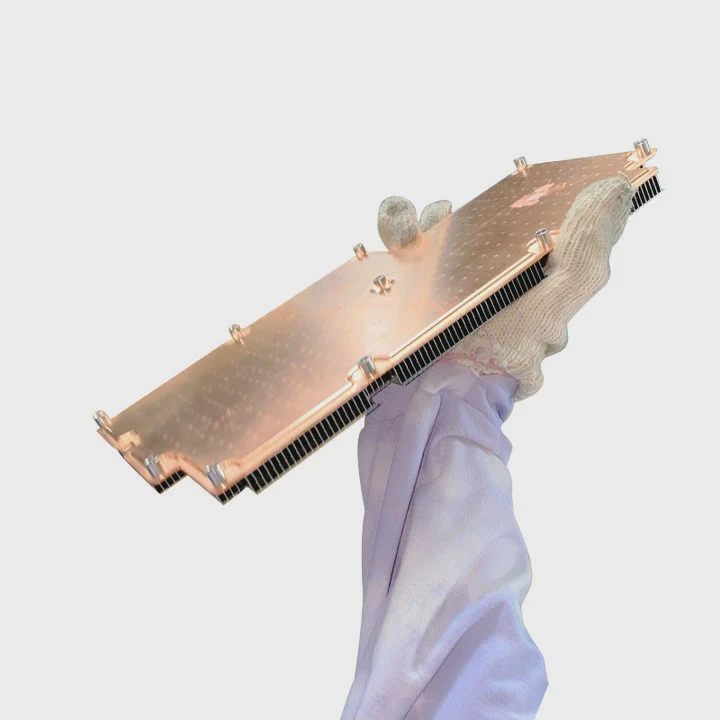
Receiving a batch of vapor chambers feels like victory — until a cracked weld or warped plate shows up. Without a methodical check, hidden defects can wreck the whole system.
A proper incoming‑inspection procedure catches shipping or production damage before installation. By combining visual, pressure, and flatness checks, you can ensure each batch meets quality standards.
In the following, I guide you through a step‑by‑step inspection process for vapor chambers, show what tools and tests matter, and provide a real QA checklist you can use on arrival.
How should incoming Vapor Chamber shipments be inspected?
Leading paragraph
Boxes arrive. Without careful unpacking, a drop or bad packaging can bend a chamber. Inspection must start before anything enters the clean room.
Featured paragraph
Every incoming shipment should go through initial unpacking inspection, damage screening, and documentation verification before acceptance. A clean first check reduces risk of installing faulty units and avoids costly rework.
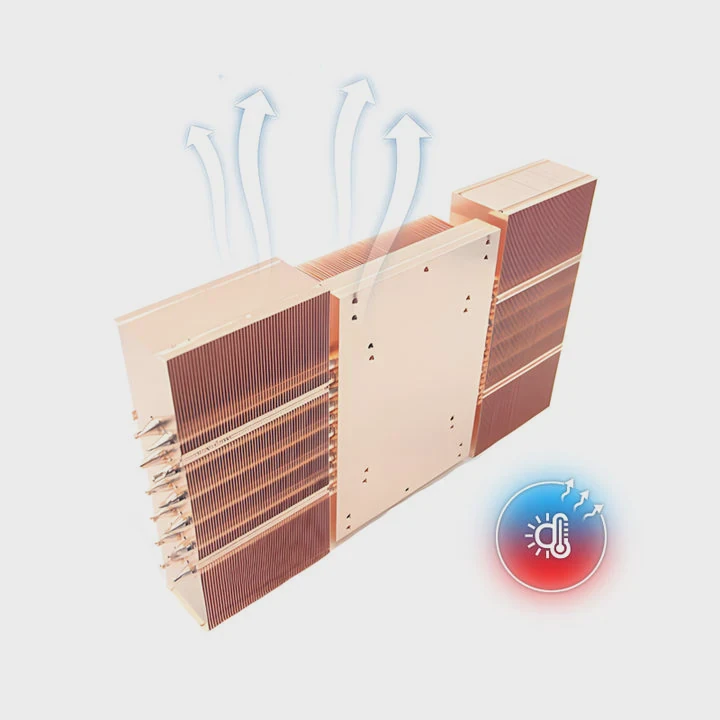
Dive deeper into steps
Initial unpacking and documentation check
First, check external cartons:
- Ensure shipping labels match your PO (part number, quantity, origin).
- Confirm gross weight and number of cartons.
- Examine for obvious damage: dents, water stains, crushed corners.
- Photograph carton condition before opening — serves as proof if you need to claim shipping damage.
After opening:
- Count units — carton count vs packing list.
- Inspect individual packaging — foam or tray should protect each chamber.
- Compare serial numbers or batch codes (if any) with packing list to catch mismatch.
If any discrepancy arises (wrong quantity, missing parts, suspicious damage) — record it and contact your supplier immediately. Accepting shipment “as is” can void future claims.
Visual and surface inspection of each chamber
Once unpacked, every vapor chamber should be inspected with:
- Clean hands or gloves (no oils or debris)
- Visible light under good illumination
- Check surfaces for: dents, scratches, bulges along weld seams, uneven coloring or oxidation.
- Edges and corners deserve special attention — these areas often take impact during shipping.
Damage at this stage may compromise vacuum seals or surface flatness, risking failure during thermal cycling.
Documentation of findings and acceptance criteria
Create a log (spreadsheet or paper) to record for each chamber:
| Field | What to check / record |
|---|---|
| Serial / Batch ID | Match against packing list |
| Visual status | Surface defects, discoloration, dents |
| Surface flatness | If flatness check done (see below) |
| Seal integrity | If bubbles or leaks suspected |
| Accept / Reject | Pass/fail summary with remarks |
This log becomes your basis for acceptance or rejection. Bulk orders often require this for traceability.
Socketing all shipments through this process means only compliant units enter production. It builds trust with your supplier and avoids surprises later.
Are random sample tests enough for batch QA?
Leading paragraph
Some suppliers claim “random sampling” is enough quality control. But with critical parts like vapor chambers, a bad unit ruins performance no matter how many good ones you have.
Featured paragraph
Random sample tests reduce QA cost — but they cannot guarantee every unit is defect-free. For high-reliability use, full-batch or stratified sampling combined with statistical analysis is safer.
Dive deeper on sampling strategies
Random sampling vs full batching: advantages and risks
Random sampling means inspecting or testing a small percentage (for example 5–10%) of units from the batch. It works if manufacturing is stable, process control is tight, and the supplier has quality history. But defects like micro‑leaks, poor welds, or incomplete fluid fill can be rare and escape random sampling. A single bad unit may cause large system failure.
Full‑batch inspection or testing ensures every unit is verified before use. It costs more in labor/time, but it minimizes risk — especially important for industrial, medical, or long-life equipment where failure is not acceptable.
| Strategy | Coverage | Pros | Cons |
|---|---|---|---|
| Random Sampling | 5–10% units | Lower cost, faster | Some defects may be missed |
| Statistical Sampling | ~20–30% units | Better defect detection rate | More time and resources |
| Full Batch Inspection | 100% units | Highest assurance | Highest cost and effort |
For critical applications (aerospace, telecom, medical equipment), full-batch inspection is often the only acceptable standard. For low‑stakes, non‑critical or disposable systems, sampling may suffice — with the caveat of accepting residual risk.
When sampling might be acceptable
Sampling may be acceptable when:
- The supplier has proven quality history over many batches.
- You have long-term volume orders — defects over time will show up and you can adjust process control.
- Cost sensitivity overrides risk — and you can handle small failure rates in field.
But even then, you must document the sampling plan, track batch IDs, and maintain traceability for failed units. Without records, claims or warranty management become difficult.
What tools are used for post-delivery inspection?
Leading paragraph
Naked eyes catch dents — but some flaws require instruments. Precision matters. Without measurement tools, you risk installing chambers with bad flatness or hidden leaks.
Featured paragraph
Post‑delivery inspection relies on flatness gauges, vacuum leak testers, thermal resistance rigs, and sometimes x‑ray scanning to ensure each chamber meets specification. These tools help detect issues invisible to visual inspection.

Dive deeper into inspection instruments and methods
Common tools and their purpose
| Tool / Device | Function / Use |
|---|---|
| Surface flatness gauge (straight edge or laser flatness meter) | Measures warping or unevenness |
| Pressure or vacuum leak tester | Detects seal integrity issues |
| Thermal resistance bench | Checks actual thermal spread and heat transfer behavior |
| Digital caliper / micrometer | Measures dimensions, thickness, mounting hole accuracy |
| Visual inspection light & magnifier | Detect scratches, surface defects, weld seam flaws |
| Optional X‑ray or ultrasonic test | Detect internal voids or poor weld bonds (for critical systems) |
Typical inspection sequence
- Flatness check — Place chamber on a flat surface; measure deviation across surface. If deviation exceeds tolerance (e.g. ±0.05 mm), reject.
- Seal/leak test — Using a vacuum or pressure tester; apply vacuum or pressure per spec, monitor for leakage over time. If pressure drifts, consider seal compromised.
- Thermal performance test (optional or sample-based) — Apply heat load, measure temperature spread; compare delta-T across chamber to expected value. Helps reveal wick‑fluid issues.
- Dimensional check — Confirm overall size, mounting holes, flange thickness — ensure compatibility with mechanical assembly.
- Final surface inspection — Check for scratches, oxidation, contamination, or dents that might affect contact quality or assembly.
These tools give objective metrics, beyond subjective visual inspection. For high‑performance or long‑lifetime systems, using them is essential.
When advanced tools are needed
For aerospace, medical equipment, or long‑life industrial systems, extra inspection may be required:
- X‑ray or ultrasonic test to find internal voids or incomplete weld/bond seams.
- Humidity or corrosion test for units stored or shipped to humid climates.
- Pressure-graduate aging test — running chamber under load or temperature cycles to verify stability.
Such tests go beyond basic QC and are often specified in procurement contracts or quality agreements.
Do customers have checklists for incoming QC?
Leading paragraph
A checklist ensures nothing is missed when a shipment arrives. Without it, even experienced engineers can skip crucial steps under pressure.
Featured paragraph
Having a formal incoming QC checklist — based on carton, unit, and test criteria — helps ensure consistency and traceability, especially for regular orders or high‑value shipments.
Dive deeper: creating and using a QC checklist
What a good checklist includes
A comprehensive QC checklist covers three levels:
- Carton level — shipping labels, carton integrity, quantity check
- Unit level — visual inspection, flatness, seal integrity, surface condition
- Batch documentation — serial numbers, packing list, origin declaration, compliance certificates
Here is a sample QC checklist template:
| Item | Check / Requirement | Result (OK / NOK) |
|---|---|---|
| Carton label matches PO | Part number, quantity, batch ID correct | |
| Carton exterior undamaged | No dents, water stains, crushed corners | |
| Number of cartons matches invoice | — | |
| Units count matches packing list | — | |
| Visual inspection – surface | No scratches, dents, weld defects | |
| Surface flatness check | ≤ specified flatness tolerance | |
| Thickness & dimension check | Within tolerance per drawing | |
| Vacuum / leak test (if applicable) | No pressure loss during test period | |
| Documentation check | Invoice, packing list, COO present | |
| Acceptance signature & date | Accepted by QA inspector |
Why checklist matters
- Ensures consistency across shipments and inspectors.
- Provides traceability in case of future problems.
- Serves as proof for warranty claims or supplier disputes.
- Helps plan sampling or full‑batch testing when necessary.
Especially for ongoing supply chains, using a checklist helps spot trends — for instance, if a certain batch repeatedly fails flatness or leaks, alert supplier to systemic issue.
Conclusion
Receiving vapor chamber shipments is not just “open and use”. It demands a structured inspection process — from unpacking to flatness and leak testing. Random sampling can help reduce workload but cannot guarantee quality for critical applications. Using precision tools and a carefully crafted QC checklist ensures every unit meets specs before installation. For serious systems where reliability matters, investing in full‑batch or statistical QA on arrival is a smart move.
TAGS
Latest Articles

Volume discount levels for heat sink orders?
Buyers often ask when heat sink prices start to drop with volume. Many worry they’re overpaying for small orders. This guide explains how B2B volume pricing works for thermal components. Heat sink
21 Dec,2025
Heat sink long-term supply contract options?
Many buyers want stable pricing and reliable delivery for heat sinks. But without a clear contract, risks grow over time. This article explores how to secure better long-term supply deals. Long-term
21 Dec,2025
Tooling cost for new heat sink profiles?
Many engineers struggle to understand why tooling for custom heat sinks costs so much. They worry about budgeting and production timelines. This article breaks down the cost drivers behind tooling.
21 Dec,2025
Heat sink custom sample process steps?
Sometimes, starting a custom heat sink project feels overwhelming—too many steps, too many unknowns, and too many risks. You want a sample, but not endless delays. The process for requesting and
20 Dec,2025
Standard B2B terms for heat sink payments?
When buyers and sellers in B2B heat sink markets talk about payment, many don’t fully understand what’s standard. This can lead to delayed orders, miscommunication, and even lost business
20 Dec,2025
Heat sink pricing factors for large orders?
Heat sinks are vital for many systems. When prices rise, projects stall and budgets break. This problem can hit teams hard without warning. Large order heat sink pricing depends on many factors. You
20 Dec,2025Related Articles
- Vapor Chamber DDP shipping availability
- Vapor Chamber customs clearance process
- Can Vapor Chamber be shipped by courier?
- Minimum lead time for Vapor Chamber prototype?
- Vapor Chamber export insurance requirements?
- Best FSC packaging for Vapor Chamber?
- Standard moisture protection for Vapor Chamber
- Installation tools needed for Vapor Chamber
- Can Vapor Chamber be disassembled?
- Maintenance tools for Vapor Chamber systems
- How long does a Vapor Chamber last?
- Warranty claim process for Vapor Chamber
Author
Dr. Emily Chen
Chief AI Researcher
Leading expert in thermal dynamics and AI optimization with over 15 years of experience in data center efficiency research.
Categories
Latest Products
Recommend Categories
- Liquid cooling plate Manufacturer
- Industrial Heat Sink Manufacturer
- Standard Heat Sink Manufacturer
- Aluminum Heat Sink Manufacturer
- Copper Heat Sink Manufacturer
- Anodized Heatsink Manufacturer
- Stamping heat sink Manufacturer
- Die Casting Heatsink Manufacturer
- Soldering heat sink Manufacturer
- CNC Parts Manufacturer
Latest Products
- Wholesale Aluminum Radiator
- Water Cooling Plate Kit
- Water Cooling Heat Sink
- Water Cooling Heat Sink Kit
- Stainless Steel Water Distributor
- Server Water Cooling Plate Kit
- Server Liquid Cooling System
- Server Aluminum Cooling Kit
- S19 Full Cover Cooling Plate
- S19 Cooling Plate Kit
- S19 Aluminum Cooling Plate
Contact Expert
Have questions about this article? Reach out to our experts directly.