Latest innovation in Vapor Chamber materials?
As thermal demands grow across devices, vapor chambers are evolving fast — and materials are at the core of that evolution. New materials are changing what vapor chambers can do, and where they can go.
Recent innovations in vapor chamber materials — including composites, graphene, and ultra-thin flexible structures — are enabling lighter, thinner, and more powerful cooling solutions.
Below we explore these advancements and their impact on performance and production.
What are the latest material innovations for Vapor Chambers?
In the past, most vapor chambers used pure copper or aluminum, with sintered copper or mesh wick structures. But newer versions push beyond those limits.
Here are key innovations:
- Ultra-thin vapor chambers (UTVCs) with thicknesses as low as 0.39 mm, using advanced composite wicks.
- Graphene-enhanced thermal layers, replacing or supplementing traditional metal plates to boost in-plane thermal conductivity.
- Flexible vapor chamber substrates, using thin copper or carbon-based films to allow bending or curved placement.
- Wick-free designs, using laser-textured surfaces instead of traditional sintered or mesh wicks — simplifying internal construction.
- Additive manufacturing techniques to print complex wick geometries or embed them within hybrid substrates.
These innovations aim to improve heat spread, reduce weight and thickness, and open up new form factors for mobile or compact electronics.
Are composite materials or graphene being used in Vapor Chambers?
Yes — both composite materials and graphene are now being used in experimental and pre-commercial vapor chambers.
Graphene-enhanced vapor chambers
Graphene’s extremely high thermal conductivity makes it a promising material for heat spreaders. Research shows that:
- Graphene-assembled films can reduce thermal resistance compared to copper of the same size.
- Some graphene-based VCs have achieved ~20% lower thermal resistance with less weight.
- Graphene layers can be combined with metal shells or used as the outer surface of flexible vapor chambers.
Composite wick structures
- Composite wicks (e.g. layered mesh, hybrid sintered + mesh) offer better capillary action in thin vapor chambers.
- These enable vapor chambers under 0.5 mm thick while maintaining good heat transfer.
- Some designs combine composite wicks with polymer or carbon-fiber reinforced backplates.
Wick-free and flexible designs
- Some ultra-thin designs use wick-free surfaces (laser-textured copper) to reduce material use and simplify assembly.
- Others use flexible copper or graphene film, enabling curved thermal solutions for foldable or wearable devices.
Together, these materials offer new thermal options that were not possible with traditional copper-only construction.
Do new materials reduce weight while maintaining performance?
Yes — and often they improve both.
Studies and test results show:
| Material Type | Thermal Resistance | Weight Saving | Notes |
|---|---|---|---|
| Graphene-enhanced | ↓ ~20–25% vs Cu | ↓ ~30–50% | Best for lightweight devices |
| Ultra-thin composite wick | ~Same as Cu | ↓ ~40% | Enables ≤0.5 mm designs |
| Flexible film + wick | Moderate | ↓ >50% | Ideal for bendable modules |
Mass-based thermal resistance — a metric that compares cooling performance per gram — often favors graphene-based and thin composite designs.
These new materials allow vapor chambers to work in:
- Ultra-thin laptops or tablets
- Smartphones or foldable phones
- Wearables or curved medical sensors
- Drones or aerospace modules where weight is critical
So in addition to thermal gains, the form-factor freedom is a big advantage.
How do these material advances affect manufacturing cost?
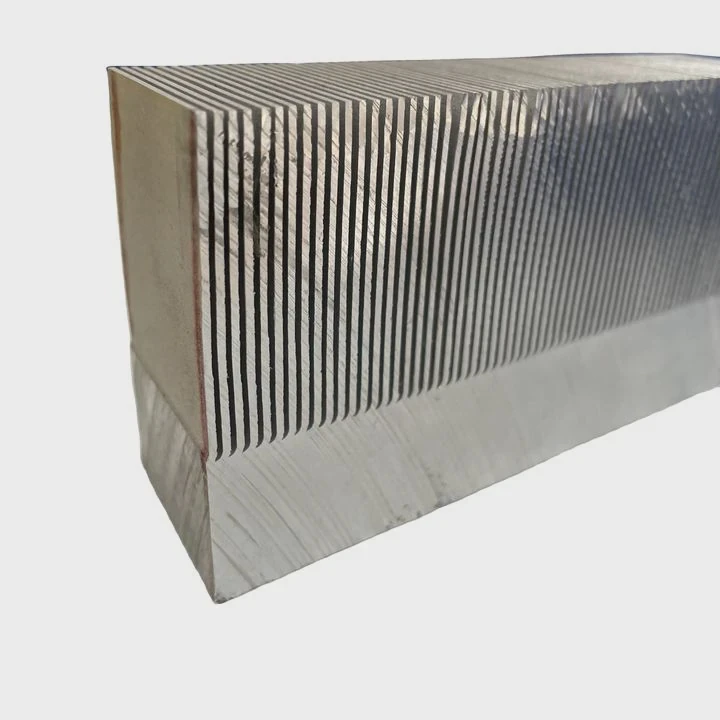
Material innovation brings benefits — but also changes how vapor chambers are made.
Factors increasing cost
- Graphene films are expensive to produce and handle. High purity is required for thermal performance.
- Flexible substrates need more careful processing (e.g. lamination, vacuum sealing on soft layers).
- Additive manufacturing or laser-texturing increases per-unit cycle time.
- Quality control is more demanding due to thin profiles and novel materials.
Factors reducing cost
- Less raw metal (especially in ultra-thin or flexible designs).
- Fewer processing steps in wick-free designs.
- Potential for batch processing or roll-to-roll production in film-based systems.
Currently, graphene and composite wick VCs cost more than traditional copper VCs — especially at low volumes. However, as production scales and tooling improves, costs are expected to fall.
These materials are most viable today in high-value applications like smartphones, high-performance laptops, or aerospace systems, where performance justifies higher cost.
Conclusion
Vapor chambers are no longer limited to copper blocks. With new materials like graphene, flexible films, composite wicks, and laser-textured surfaces, vapor chambers are becoming lighter, thinner, and smarter.
These innovations unlock new thermal solutions for compact and mobile systems — though they bring higher manufacturing costs today. As processes scale, next-gen material vapor chambers will likely become mainstream in high-end electronics and lightweight engineering systems.
TAGS
Latest Articles

Volume discount levels for heat sink orders?
Buyers often ask when heat sink prices start to drop with volume. Many worry they’re overpaying for small orders. This guide explains how B2B volume pricing works for thermal components. Heat sink
21 Dec,2025
Heat sink long-term supply contract options?
Many buyers want stable pricing and reliable delivery for heat sinks. But without a clear contract, risks grow over time. This article explores how to secure better long-term supply deals. Long-term
21 Dec,2025
Tooling cost for new heat sink profiles?
Many engineers struggle to understand why tooling for custom heat sinks costs so much. They worry about budgeting and production timelines. This article breaks down the cost drivers behind tooling.
21 Dec,2025
Heat sink custom sample process steps?
Sometimes, starting a custom heat sink project feels overwhelming—too many steps, too many unknowns, and too many risks. You want a sample, but not endless delays. The process for requesting and
20 Dec,2025
Standard B2B terms for heat sink payments?
When buyers and sellers in B2B heat sink markets talk about payment, many don’t fully understand what’s standard. This can lead to delayed orders, miscommunication, and even lost business
20 Dec,2025
Heat sink pricing factors for large orders?
Heat sinks are vital for many systems. When prices rise, projects stall and budgets break. This problem can hit teams hard without warning. Large order heat sink pricing depends on many factors. You
20 Dec,2025Related Articles
- Vapor Chamber for battery thermal runaway control?
- Vapor Chamber thermal simulation accuracy?
- Are Vapor Chamber prices decreasing?
- How to compare Vapor Chamber suppliers?
- Vapor Chamber Ergonomic Installation Guide?
- Can Vapor Chamber be exported worldwide?
- Vapor Chamber sustainability certifications?
- Vapor Chamber CNC machining accuracy requirements?
- What is the maximum size of Vapor Chamber
- Vapor Chamber compatibility with aluminum alloy 6061?
- Recommended alloy grade for Vapor Chamber
- Vapor Chamber available ISO certifications?
Author
Dr. Emily Chen
Chief AI Researcher
Leading expert in thermal dynamics and AI optimization with over 15 years of experience in data center efficiency research.
Categories
Latest Products






Recommend Categories
- Liquid cooling plate Manufacturer
- Industrial Heat Sink Manufacturer
- Standard Heat Sink Manufacturer
- Aluminum Heat Sink Manufacturer
- Copper Heat Sink Manufacturer
- Anodized Heatsink Manufacturer
- Stamping heat sink Manufacturer
- Die Casting Heatsink Manufacturer
- Soldering heat sink Manufacturer
- CNC Parts Manufacturer
Latest Products
- Wholesale Aluminum Radiator
- Water Cooling Plate Kit
- Water Cooling Heat Sink
- Water Cooling Heat Sink Kit
- Stainless Steel Water Distributor
- Server Water Cooling Plate Kit
- Server Liquid Cooling System
- Server Aluminum Cooling Kit
- S19 Full Cover Cooling Plate
- S19 Cooling Plate Kit
- S19 Aluminum Cooling Plate
Contact Expert
Have questions about this article? Reach out to our experts directly.