What is the maximum size of Vapor Chamber
High‑performance devices sometimes overheat badly. Cooling matters more when size grows. Could a vapor chamber handle very large heat sources?
A vapor chamber can be scaled fairly large, but its size is limited by manufacturing constraints, mechanical stress, and reliable liquid/vapor transport. Beyond a certain dimension, performance or reliability may suffer.
If you plan a large-area heat spreader, you should know what limits size. Next, we examine those limits and when a large-format vapor chamber makes sense.
What limits exist for the maximum size of a Vapor Chamber?
Many factors set practical size limits for a vapor chamber. Material strength, uniform vapor flow, manufacturing stress, and sealing quality all matter when size increases.
The limits come from metal strength, weld integrity, internal vapor flow distance, and yield cost. Engineers must balance heat transport and structural reliability to define a maximal useful size.
When a vapor chamber becomes large, several issues arise. First, the chamber walls must resist bending or warping. If the width or length increases, the flat metal plate must remain flat under pressure difference. Because vapor chambers often have internal vacuum or low pressure inside relative to outside, the chamber walls may deform outward under external pressure. With small chambers, metal stiffness is enough. With large dimensions, the metal may flex. Warping damages the wick structure or disturbs vapor flow.
Another limit comes from the wick or internal structure that moves liquid back from the condenser to the evaporator. If the chamber is too wide, the capillary wick or groove system may struggle to return liquid over long distances. That impairs phase‑change cycles. Designers must ensure the wick has enough capillary pressure or the internal structure divides the chamber into multiple zones. But more zones complicate manufacturing.
Sealing is more challenging on large chambers. A bigger weld seam means more chance for microscopic leaks. Over time or under thermal cycling, leaks may grow. That destroys internal vacuum or changes fill ratio, harming performance. For large format, weld quality needs to be higher and stress distribution must be carefully managed.
Manufacturing yield also drops when size increases. Large chambers need larger metal sheets, precise flatness, tight welds across long seams, and uniform evacuation and filling. Small non‑uniformities that are easy to control in small chambers become harder in large ones. That makes scrap rates higher, and cost climbs fast.
Finally, transport and handling of large vapor chambers are harder. During shipping, bending or impact may damage the thin walls. So practical limit often reflects what can survive handling and installation.
Because of those factors, many makers keep vapor chambers within certain “safe” size ranges. Beyond that, risk of failure or performance loss rises significantly.
Can Vapor Chambers be made larger than 300 mm in one dimension?
Large electronics or power modules sometimes need big heat spreaders. Is it realistic to build vapor chambers larger than 300 mm in one dimension?
Yes. In principle, vapor chambers can be made larger than 300 mm. In practice, few exceed that length because of structural, sealing, and manufacturing challenges. Large‑format chambers require special design to stay reliable.
Creating a vapor chamber larger than 300 mm along one side is technically possible. Some prototype designs and custom solutions already reach 400–500 mm in length or width. But doing so requires strong metal, stiffening ribs, or internal support frames to keep the cavity flat. Standard thin‑wall plates which work in small chambers will bend under pressure when stretched across 400 mm or more.
How design adapts for large size
To build a large vapor chamber, engineers often:
- Use thicker metal plates or stronger alloys. Thicker walls resist bending but add weight and cost.
- Add internal ribs or cross‑supports. These keep the chamber flat and help resist deformation.
- Split the chamber internally into sections. Each section has its own vapor and liquid loop but shares a common outer shell.
- Use a distributed wick structure. A single continuous wick may not draw liquid effectively over long distances. A network of smaller wick regions or channels helps.
These adaptations let large vapor chambers function. But they complicate manufacturing. The large sheet must be flat and free of defects. Welding longer seams must keep uniform pressure and avoid distortion. Evacuation and fluid fill must ensure uniform fluid distribution across entire volume.
Realistic maximums
For well‑designed and carefully built vapor chambers, sizes up to about 400–500 mm in length or width are within reach. Beyond that, the probability of warping, leaks, or uneven thermal performance increases sharply. At sizes above 600–700 mm, custom solutions with heavy structural reinforcement or composite enclosures are often needed — and they become rare because of cost, weight, and complexity.
Because of these challenges, most commercial vapor chambers stay below 300–350 mm on the longest side. That size range balances performance, reliability, and manufacturability. Only special custom projects aim larger, and these involve careful engineering.
Thus while 300 mm‑plus vapor chambers are possible, they only make sense when cooling needs justify the extra complexity and cost.
Do size constraints affect manufacturing yield and cost?
When vapor chambers grow in size, manufacturing becomes harder. That affects the yield — how many good units come out of production — and the cost per unit. How strong is that effect?
Yes. Larger vapor chambers suffer lower yield and higher cost. Scrap rates rise because small defects matter more at large size. More material, stronger components, and extra checks further push cost up.
Yield issues with large chambers
When manufacturing small vapor chambers, a tiny flaw — a small weld imperfection or a tiny surface scratch — may not cause failure. But for large chambers, those small flaws become significant. Because the pressure differential and stress distribution affect the entire large area, even a minor defect can propagate into leaks or warping. As a result, scrap and rework rates tend to increase with chamber size.
Another issue is flatness. Metal sheets used as outer walls need to be flat before welding. Large sheets are harder to keep flat. They may warp during welding or cooling. Warped plates lead to misaligned internal structures or uneven thickness. That hurts heat transport and may prevent good sealing. So more rejects happen.
Also, filling and vacuum process becomes harder. With small chambers, designers can evacuate and fill fluid quickly. With large chambers, vacuum evacuation may take longer. Fluid may pool or avoid certain zones. That leads to uneven fill or dry zones, which impair performance. That raises chance that a finished unit fails later under stress.
Because of these risks, manufacturers build only smaller chambers to maximize yield and minimize cost. Large format ones often go to custom or low‑volume production runs, where cost per part is less sensitive.
Cost breakdown
Here is rough comparison of cost factors for small vs large vapor chambers:
| Size Category | Material cost | Labor / effort | Scrap / rework cost | Testing & QC |
|---|---|---|---|---|
| Small (≤ 200 mm) | Low | Standard | Low | Standard |
| Medium (200–300 mm) | Moderate | Higher | Moderate | Extra inspection |
| Large (> 300 mm) | High | High | High | Rigorous QC, stress tests |
Because of higher scrap and rework, effective yield may drop 70–80% of input, meaning actual cost per usable unit rises sharply. Also, extra material and thicker plates cost more. Finally, extra testing (pressure tests, vibration, thermal cycling) adds to cost.
Use case considerations
For devices where only a few large vapor chambers are needed — like a prototype power module, telecom rack, or specialized industrial machine — the high cost may be acceptable. But for high-volume products such as laptops or mass‑market electronics, large vapor chambers are seldom used. The economics do not justify lower yield and high scrap.
If a project requires many identical large vapor chambers, costs scale badly. Scrap losses multiply. That often forces designers to split cooling across multiple smaller chambers or use alternative cooling solutions such as heat pipes or multiple small vapor chambers linked by metal plates.
In short, size matters a lot for manufacturing economics. Once vapor chamber size exceeds a certain threshold, the cost jump may outweigh thermal benefits.
What applications demand large-format Vapor Chambers?
Some applications produce lots of heat over wide areas. Others need uniform cooling across large surfaces. These cases may need large-format vapor chambers even if cost is higher.
Applications such as high‑power servers, industrial power electronics, electric vehicle battery packs, telecom base stations, and large LED lighting modules often benefit from large vapor chambers to spread heat evenly and efficiently.
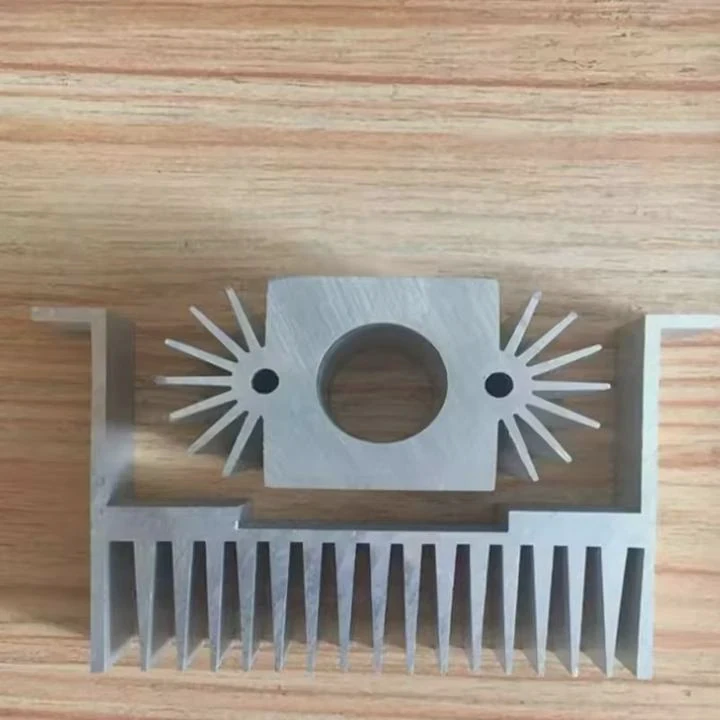
Large-format vapor chambers add value when heat sources are spread over a broad area rather than concentrated. Some of these use cases include:
High‑power servers and data‑center racks
Server CPUs, GPUs, or FPGAs generate high heat across large circuit‑board areas. A single large vapor chamber under the board can spread heat evenly. That reduces hotspots and helps maintain stable temperature across the board. It helps fans or cooling blocks work less.
Industrial power electronics and inverters
Inverters or drivers in renewable energy systems, motor drives, or industrial machines often produce significant heat over large surfaces. Large vapor chambers help move that heat away to fins or ambient, improving reliability and lifespan.
Electric vehicle (EV) battery thermal management
Battery packs produce heat across many cells. A large vapor chamber under the battery array can pull heat from many cells at once, spreading it to cooling fins or cooling plates. That helps keep all cells at safe operating temperature and improves lifespan.
Telecom or telecom‑tower base stations
Outdoor telecom units or base‑station electronics often run for many years. They may produce considerable heat and need reliable cooling. A large vapor chamber offers passive or low‑power cooling for these wide‑footprint units, reducing maintenance and energy use.
Large LED lighting modules or high‑power electronic displays
LED arrays or display back‑ends produce heat across wide boards. A large vapor chamber helps maintain uniform temperature, preventing hot spots that shorten LED life or reduce brightness.
In these applications, the cost of large vapor chamber may make sense. The savings in thermal performance, reliability, and long-term maintenance often outweigh higher production cost.
Summary: When size justifies effort
Large-format vapor chambers make sense when:
- Heat generation is high and spread over a large area.
- Device lifespan and reliability are critical.
- Production volume is low or custom.
- Thermal uniformity matters more than cost.
In those cases, even a custom vapor chamber measuring 400–500 mm can offer strong benefits. The trade‑off leans toward performance and reliability rather than economy.
Conclusion
Large vapor chambers can meet heavy cooling needs across wide areas, but size brings real challenges. Structural strength, wick design, sealing, and manufacturing yield all set limits. For most mass products, smaller chambers remain optimal. But in high‑power servers, battery packs, or industrial gear, large-format vapor chambers — when carefully designed — become a sound solution for efficient heat spread.
TAGS
Latest Articles

Volume discount levels for heat sink orders?
Buyers often ask when heat sink prices start to drop with volume. Many worry they’re overpaying for small orders. This guide explains how B2B volume pricing works for thermal components. Heat sink
21 Dec,2025
Heat sink long-term supply contract options?
Many buyers want stable pricing and reliable delivery for heat sinks. But without a clear contract, risks grow over time. This article explores how to secure better long-term supply deals. Long-term
21 Dec,2025
Tooling cost for new heat sink profiles?
Many engineers struggle to understand why tooling for custom heat sinks costs so much. They worry about budgeting and production timelines. This article breaks down the cost drivers behind tooling.
21 Dec,2025
Heat sink custom sample process steps?
Sometimes, starting a custom heat sink project feels overwhelming—too many steps, too many unknowns, and too many risks. You want a sample, but not endless delays. The process for requesting and
20 Dec,2025
Standard B2B terms for heat sink payments?
When buyers and sellers in B2B heat sink markets talk about payment, many don’t fully understand what’s standard. This can lead to delayed orders, miscommunication, and even lost business
20 Dec,2025
Heat sink pricing factors for large orders?
Heat sinks are vital for many systems. When prices rise, projects stall and budgets break. This problem can hit teams hard without warning. Large order heat sink pricing depends on many factors. You
20 Dec,2025Related Articles
- Vapor Chamber CNC machining accuracy requirements?
- Vapor Chamber sustainability certifications?
- Latest innovation in Vapor Chamber materials?
- Vapor Chamber for battery thermal runaway control?
- Vapor Chamber thermal simulation accuracy?
- Are Vapor Chamber prices decreasing?
- Vapor Chamber compatibility with aluminum alloy 6061?
- Recommended alloy grade for Vapor Chamber
- Vapor Chamber available ISO certifications?
- Vapor Chamber surface treatment standards?
- Required extrusion process for Vapor Chamber parts?
- Need CNS standard for Vapor Chamber?
Author
Dr. Emily Chen
Chief AI Researcher
Leading expert in thermal dynamics and AI optimization with over 15 years of experience in data center efficiency research.
Categories
Latest Products






Recommend Categories
- Liquid cooling plate Manufacturer
- Industrial Heat Sink Manufacturer
- Standard Heat Sink Manufacturer
- Aluminum Heat Sink Manufacturer
- Copper Heat Sink Manufacturer
- Anodized Heatsink Manufacturer
- Stamping heat sink Manufacturer
- Die Casting Heatsink Manufacturer
- Soldering heat sink Manufacturer
- CNC Parts Manufacturer
Latest Products
- Wholesale Aluminum Radiator
- Water Cooling Plate Kit
- Water Cooling Heat Sink
- Water Cooling Heat Sink Kit
- Stainless Steel Water Distributor
- Server Water Cooling Plate Kit
- Server Liquid Cooling System
- Server Aluminum Cooling Kit
- S19 Full Cover Cooling Plate
- S19 Cooling Plate Kit
- S19 Aluminum Cooling Plate
Contact Expert
Have questions about this article? Reach out to our experts directly.