Vapor Chamber CNC machining accuracy requirements?
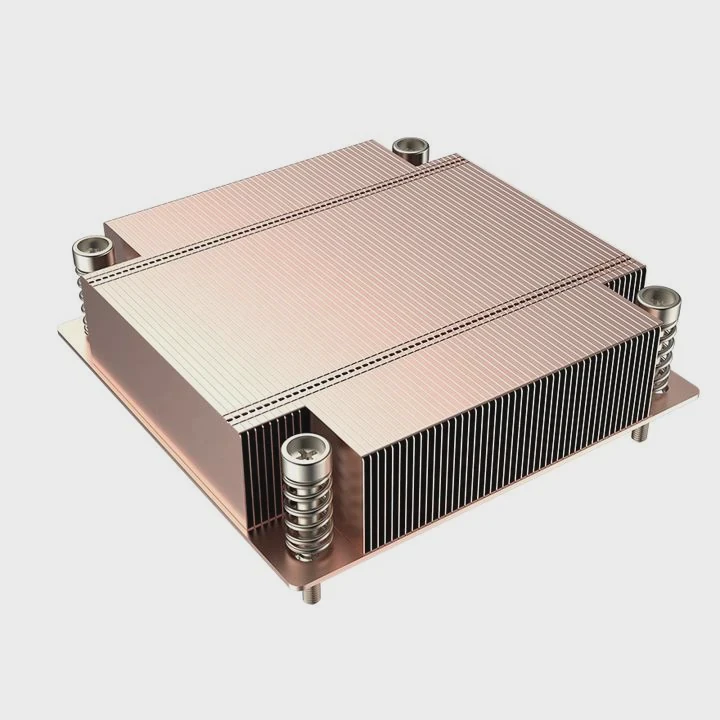
I once saw a poorly machined vapor chamber cause thermal faults. That worry led me to ask: how tight must CNC machining be for vapor chambers? Can small errors ruin performance or integrity?
Yes. CNC machining for vapor chambers must meet tight tolerances and precise geometry to ensure proper heat spread, vacuum sealing, and reliable mounting.
Now I will walk through the detailed requirements, what needs the highest precision, and how to verify the machining accuracy.
What machining tolerances are required for Vapor Chambers?
When CNCing a vapor chamber body, errors can ruin heat flow or vacuum tightness. The tolerances must be strict. Precision of ± 0.05 mm or tighter is often needed for critical features.
In short, typical vapor chamber machining needs tolerances of around ± 0.02–0.05 mm for core surfaces, and ± 0.1 mm for less critical areas.

Why tight tolerances matter
The vapor chamber works because of a sealed internal cavity with wick and working fluid. If walls are uneven, the internal gap changes. That can reduce capillary flow or create dead zones. That means reduced thermal spread or hot spots.
Also, if the chamber is too thick or too thin in spots, the external surface may warp under heating cycles. Warping degrades contact with cooling plates or heat sinks.
Typical tolerance guide
| Feature Type | Suggested Machining Tolerance | Reason / Note |
|---|---|---|
| Outer flat surfaces (main body) | ± 0.02–0.05 mm | Flatness ensures good contact with sinks or mounting surfaces. |
| Outer dimension (length, width) | ± 0.05–0.1 mm | Allows correct fit in assemblies or chassis. |
| Wall thickness (internal cavity) | ± 0.03 mm | Ensures uniform internal cavity and proper fluid behavior. |
| Small holes / via holes | ± 0.02 mm + proper spotface countersink | Precise placement avoids leak paths or stress points. |
| Secondary features (mount boss, alignment pin holes) | ± 0.1–0.2 mm | Less critical for performance if not structural load. |
The guide above reflects best practices I have seen in vapor chamber manufacturing and thermal design.
Key risk areas
- Uneven wall thickness. If one area is thinner beyond tolerance, that spot may deform when vacuum or during heat.
- Warping or bending of flat mounting surfaces. This ruins contact with heatsink or cold plate.
- Misaligned holes or features. That can make assembly difficult or introduce mechanical stress.
To prevent these problems, CNC programmers should use stable fixtures, proper tool paths, and avoid aggressive roughing/finishing cycles that introduce heat or distortion.
How precise must mounting surfaces and features be?
Mounting surfaces and features are not just cosmetic. They ensure stable mechanical integration and good thermal contact. Their precision affects contact pressure, alignment, and long-term reliability.
Mounting surfaces and features often require flatness within 0.03 mm, parallelism within 0.05 mm, and hole position accuracy within 0.05 mm for reliable assembly and thermal performance.
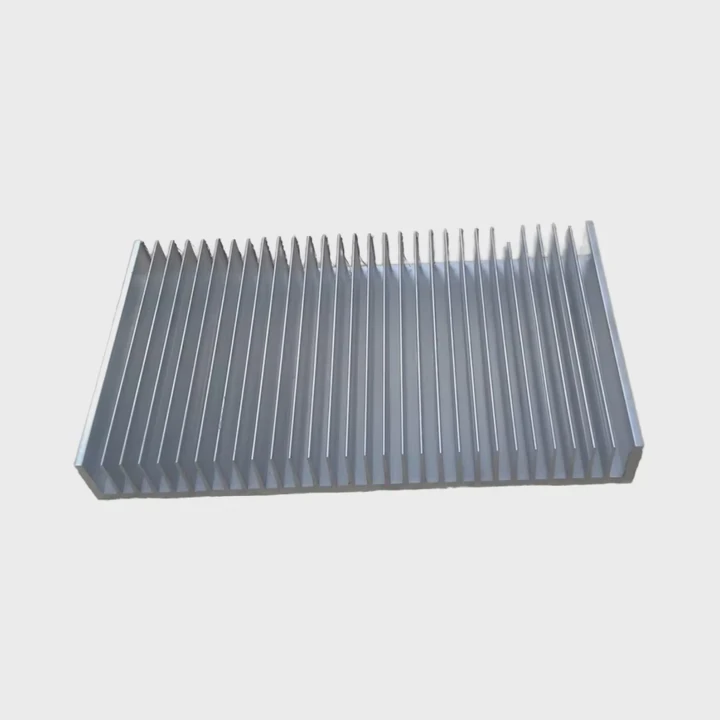
What counts as mounting surfaces and features
Mounting surfaces may include:
- The base or top surface of the vapor chamber that contacts a cold plate or heatsink.
- Side surfaces that align with chassis or frame.
- Bosses or flanges for screws, bolts, or clamps.
- Alignment pin holes or slots.
- Screw holes and threaded inserts or boss geometry for fasteners.
Why such high precision is needed
- Flatness and parallelism ensure full surface contact. If surfaces tilt or warp, contact may be only partial. Partial contact increases thermal resistance and causes uneven heat flow.
- Hole position accuracy prevents misalignment during assembly. Misaligned holes can cause stress on the chamber when bolts are tightened. Over time, stress can deform the chamber or break solder/weld joints.
- Boss and flange precision ensures that the fasteners seat properly, avoiding over-tightening or uneven pressure. Uneven pressure can crack solder joints or warp surfaces.
Practical approach for CNC machining
When machining mounting surfaces, I follow these steps:
- Use a high‑precision granite plate or flat fixture to support the part. Clamp gently but firmly to avoid distortion.
- Use a dedicated finishing pass with low material removal (e.g. 0.05 mm) to produce flat, smooth surfaces.
- Machine holes and features in a coordinated setup, starting from a single datum/reference surface. Maintain tight tolerances on hole centers and orientation.
- After machining, allow the part to stabilize (cool, relieve stress) before further processing (like welding, soldering, vacuum leak sealing).
If mounting surfaces are not precise, even a well-made internal chamber can fail thermal or mechanical requirements.
Can CNC machining impact the vacuum integrity of a Vapor Chamber?
Yes. Machining can affect vacuum integrity in several ways while creating or prepping the vapor chamber body.
CNC machining can introduce micro-cracks, burrs, or uneven surfaces that later create leak paths. Poorly finished hole edges or thin walls can lead to vacuum leaks or degraded lifespan.
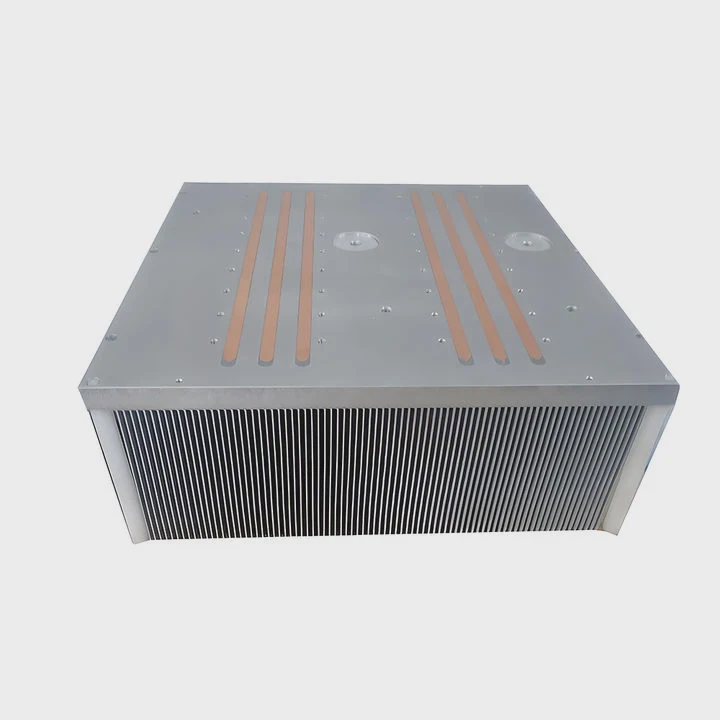
How machining affects sealing performance
- Burrs or rough edges inside holes or along weld seams can prevent proper sealing. When the chamber is welded or sealed, those imperfections create voids or micro-gaps. Those gaps can slowly leak.
- Thin or uneven walls may flex under vacuum or during thermal cycling. That flex creates stress on seals or solder joints. Over time those stresses can cause cracks.
- Tool marks or machining residual stress inside the chamber may lead to tiny fissures. Under vacuum or with thermal cycling, these fissures may open up.
Example risks in real process
Consider a chamber wall with a local thin spot due to rough roughing + finishing. That thin area warps slightly when heated. The solder joint along the seam, initially perfect, now has tensile stress. Over many thermal cycles, fatigue sets in. Finally vacuum leaks develop.
Another risk: a through‑hole used for mounting gets tapped. If tapping is done without proper countersinks or deburring, metal shavings hang at the bottom or edges. Those shavings may pierce the inner weld seam, or create micro‑channels post sealing.
How to avoid damage
- Always deburr all holes, chamfers, and edges after machining. Use proper finishing tools or abrasive methods.
- Use stress-relief procedures after machining, if material is sensitive. For example, allow part to rest, or do a light anneal if compatible.
- Inspect inner walls with dye‑penetrant or ultrasonic testing (before sealing) to detect micro‑cracks or fissures.
- Use high-quality fixtures and hold-down methods to avoid warp during machining. Avoid over-tight clamping that induces stress.
CNC machining is not just about shaping geometry. It must respect the material integrity and plan for later vacuum sealing or soldering. Otherwise machining defects can doom the chamber before use.
What inspection methods verify CNC accuracy for Vapor Chambers?
After CNC machining, before sealing and welding, it is vital to inspect the part carefully. Several methods help confirm geometry and surface quality.
Common inspection methods include coordinate measuring machines (CMM), surface flatness gauges or straightedges, optical inspection, and non‑destructive testing like dye‑penetrant or ultrasonic testing for cracks.
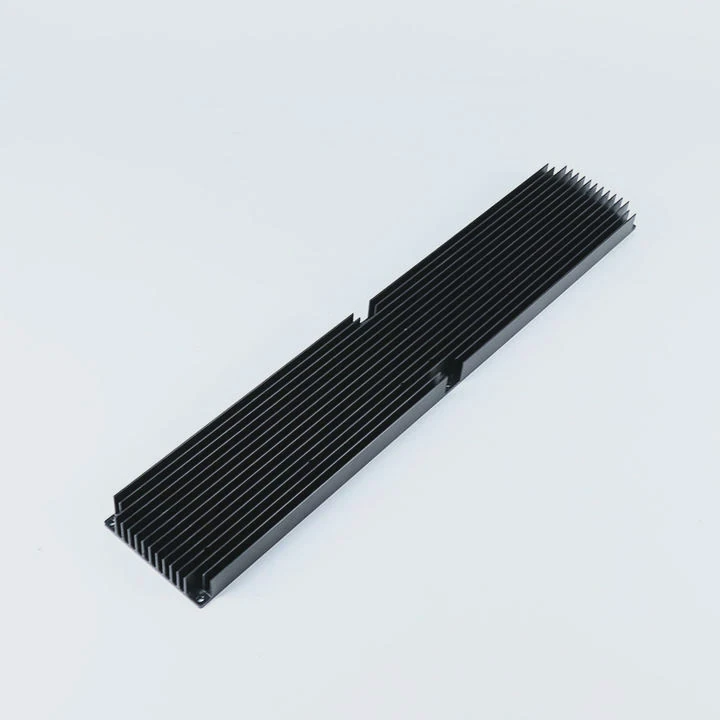
Key inspection approaches
| Method | What it checks | Typical precision or use case |
|---|---|---|
| Coordinate Measuring Machine (CMM) | Dimensions, hole positions, flatness, parallelism, alignment | ± 0.01–0.03 mm accuracy for critical dimensions |
| Surface flatness gauge or granite reference + dial gauge | Flatness and warp of surfaces | Detect warpage greater than 0.01–0.02 mm across the surface |
| Optical inspection / high‑resolution photos / microscope | Surface finish, burrs, tool marks, visual anomalies | Detect small scratches, burrs, marks invisible to naked eye |
| Dye‑penetrant testing (DPT) | Surface cracks, pores, micro‑fissures on outer or inner surfaces before sealing | Reveal even hairline cracks or tiny holes |
| Ultrasonic testing (UT) or X-ray (for thicker or critical walls) | Internal voids, wall uniformity, hidden flaws | Good for thick walls or weld seams that are critical for vacuum integrity |
Detailed inspection workflow
Dimensional inspection with CMM
- Use the machined part before any cleaning or handling.
- Probe all critical dimensions: outer body dimensions, mounting surface flatness, hole positions, wall thickness at sample points.
- Record deviations. Accept only parts within tolerance thresholds (e.g. ± 0.03 mm on flatness, ± 0.05 mm on holes).
- Use the machined part before any cleaning or handling.
Surface inspection
- Clean the part thoroughly.
- Use a bright light and magnification to look for scratches, burrs, latent chips, or tool marks.
- Particularly check interior cavities, hole edges, countersinks, and weld joints.
- Clean the part thoroughly.
Flatness / warp measurement
- Place the part on a granite reference plate.
- Use feeler gauges or dial gauge to measure gaps across the surface.
- If warp exceeds allowed tolerance (e.g. 0.02 mm), part must be reworked or rejected.
- Place the part on a granite reference plate.
Non‑destructive flaw detection
- Apply dye‑penetrant testing to outer and inner surfaces. This reveals fine cracks or porosity.
- For thick walls or critical regions, use ultrasonic testing or even X‑ray if available. This finds hidden voids or inclusions.
- Apply dye‑penetrant testing to outer and inner surfaces. This reveals fine cracks or porosity.
Pre‑seal validation
- Once the part passes machining inspection, conduct a “mock assembly” if possible. Fit the mounting hardware, align bolts, simulate compression. This checks that holes and bosses align correctly and no stress is induced.
- Once the part passes machining inspection, conduct a “mock assembly” if possible. Fit the mounting hardware, align bolts, simulate compression. This checks that holes and bosses align correctly and no stress is induced.
This workflow helps ensure the vapor chamber body is sound structurally and dimensionally before vacuum sealing or welding. That reduces risk of leaks or thermal failures down the line.
Conclusion
CNC machining for vapor chambers demands tight tolerances, careful control of surfaces and geometry, and rigorous inspection. Without precise machining, mounting problems, vacuum leaks, or thermal inefficiency can result. By enforcing strict machining standards and inspection routines, the chances for failure shrink significantly. A well‑machined chamber is the foundation for stable, long‑lasting thermal performance.
TAGS
Latest Articles

Volume discount levels for heat sink orders?
Buyers often ask when heat sink prices start to drop with volume. Many worry they’re overpaying for small orders. This guide explains how B2B volume pricing works for thermal components. Heat sink
21 Dec,2025
Heat sink long-term supply contract options?
Many buyers want stable pricing and reliable delivery for heat sinks. But without a clear contract, risks grow over time. This article explores how to secure better long-term supply deals. Long-term
21 Dec,2025
Tooling cost for new heat sink profiles?
Many engineers struggle to understand why tooling for custom heat sinks costs so much. They worry about budgeting and production timelines. This article breaks down the cost drivers behind tooling.
21 Dec,2025
Heat sink custom sample process steps?
Sometimes, starting a custom heat sink project feels overwhelming—too many steps, too many unknowns, and too many risks. You want a sample, but not endless delays. The process for requesting and
20 Dec,2025
Standard B2B terms for heat sink payments?
When buyers and sellers in B2B heat sink markets talk about payment, many don’t fully understand what’s standard. This can lead to delayed orders, miscommunication, and even lost business
20 Dec,2025
Heat sink pricing factors for large orders?
Heat sinks are vital for many systems. When prices rise, projects stall and budgets break. This problem can hit teams hard without warning. Large order heat sink pricing depends on many factors. You
20 Dec,2025Related Articles
- Vapor Chamber sustainability certifications?
- Latest innovation in Vapor Chamber materials?
- Vapor Chamber for battery thermal runaway control?
- Vapor Chamber thermal simulation accuracy?
- Are Vapor Chamber prices decreasing?
- How to compare Vapor Chamber suppliers?
- What is the maximum size of Vapor Chamber
- Vapor Chamber compatibility with aluminum alloy 6061?
- Recommended alloy grade for Vapor Chamber
- Vapor Chamber available ISO certifications?
- Vapor Chamber surface treatment standards?
- Required extrusion process for Vapor Chamber parts?
Author
Dr. Emily Chen
Chief AI Researcher
Leading expert in thermal dynamics and AI optimization with over 15 years of experience in data center efficiency research.
Categories
Latest Products






Recommend Categories
- Liquid cooling plate Manufacturer
- Industrial Heat Sink Manufacturer
- Standard Heat Sink Manufacturer
- Aluminum Heat Sink Manufacturer
- Copper Heat Sink Manufacturer
- Anodized Heatsink Manufacturer
- Stamping heat sink Manufacturer
- Die Casting Heatsink Manufacturer
- Soldering heat sink Manufacturer
- CNC Parts Manufacturer
Latest Products
- Wholesale Aluminum Radiator
- Water Cooling Plate Kit
- Water Cooling Heat Sink
- Water Cooling Heat Sink Kit
- Stainless Steel Water Distributor
- Server Water Cooling Plate Kit
- Server Liquid Cooling System
- Server Aluminum Cooling Kit
- S19 Full Cover Cooling Plate
- S19 Cooling Plate Kit
- S19 Aluminum Cooling Plate
Contact Expert
Have questions about this article? Reach out to our experts directly.