Testing equipment needed for Vapor Chamber?
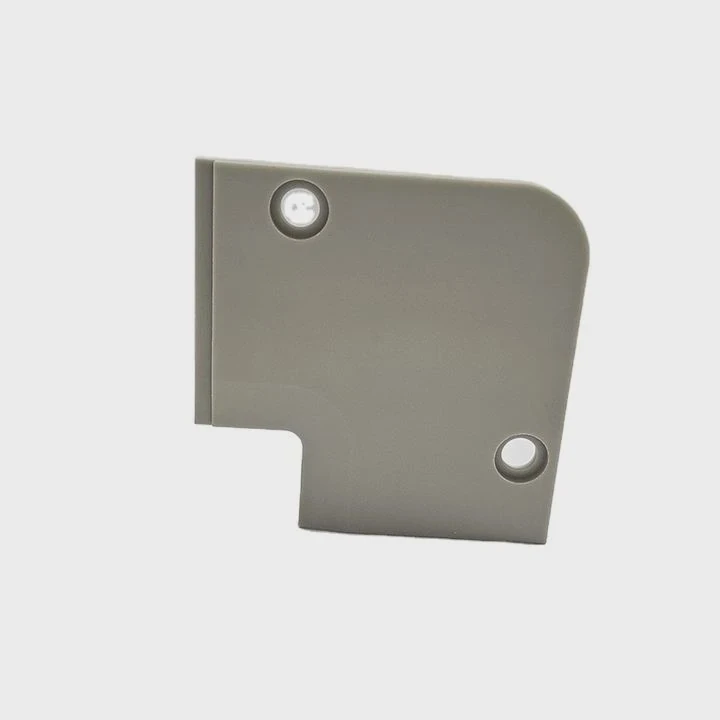
Poor testing leads to hidden defects in vapor chambers, risking thermal failure in the field.
Yes, specialized equipment is required to measure vapor chamber performance, detect leaks, and validate thermal efficiency before shipment.
Let’s break down the key tools used at each testing stage.
What tools are used to test Vapor Chamber performance?
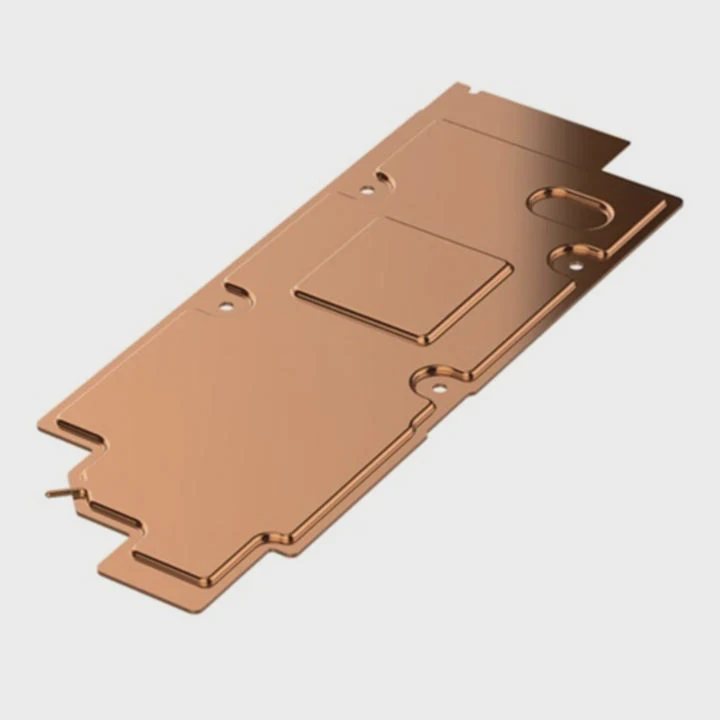
Testing a vapor chamber’s performance goes beyond a simple visual check. It involves measuring thermal resistance, checking flatness, verifying vacuum integrity, and confirming heat flow.
Core tools for vapor chamber testing include power testers, temperature sensors, flow analyzers, and vacuum integrity setups.
Essential Performance Testing Tools
| Equipment | Function |
|---|---|
| Power input platform | Applies steady heat to simulate device load |
| Temperature sensor array | Measures temp at multiple points on the chamber |
| Thermal resistance tester | Calculates Rth (°C/W) across the device |
| Heat flux meter | Tracks energy transfer across the chamber |
| Surface flatness gauge | Ensures contact surface meets tolerance |
| Vacuum pressure gauge | Checks sealed chamber vacuum level |
| High-temp oven (optional) | For accelerated aging or stress testing |
How Testing is Conducted
- The vapor chamber is placed on a controlled test plate.
- Known power is applied at the evaporator area.
- Temperatures at input and output zones are recorded.
- System calculates ΔT and heat transfer efficiency.
- Results are compared to target specs (e.g., ≤0.2°C/W).
For custom or high-end applications, thermal cycling and chamber orientation tests may also be performed to simulate usage conditions.
Are leak detectors mandatory for quality control?
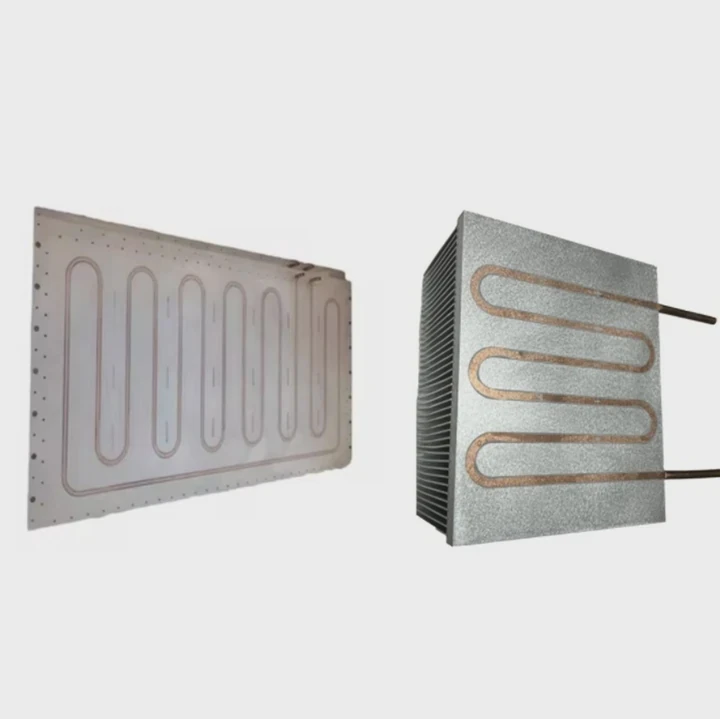
Yes, leak testing is essential. Vapor chambers operate under vacuum and contain a small amount of fluid. Any micro-leak causes performance drop or device failure.
Yes, leak detectors are mandatory to verify vacuum integrity and ensure the chamber is hermetically sealed.
Leak Detection Equipment
| Type of Detector | Working Principle | Sensitivity |
|---|---|---|
| Helium Mass Spectrometer | Detects helium escaping from leaks | ×10⁻⁹ mbar·L/s |
| Pressure decay tester | Monitors pressure loss over time | Moderate |
| Bubble test chamber | Submerges unit in water to watch bubbles | Basic visual |
| Vacuum holding tester | Measures pressure retention over time | Accurate |
Testing Process
- The chamber is either filled with helium or placed under vacuum.
- If using helium, it’s sprayed externally and any internal pickup shows a leak.
- Pressure decay setups compare readings before and after hold time.
- Failed units are quarantined for inspection or rework.
Helium testing is most accurate, but costly. Many suppliers use a mix of methods based on volume and product class.
Which equipment measures thermal conductivity?
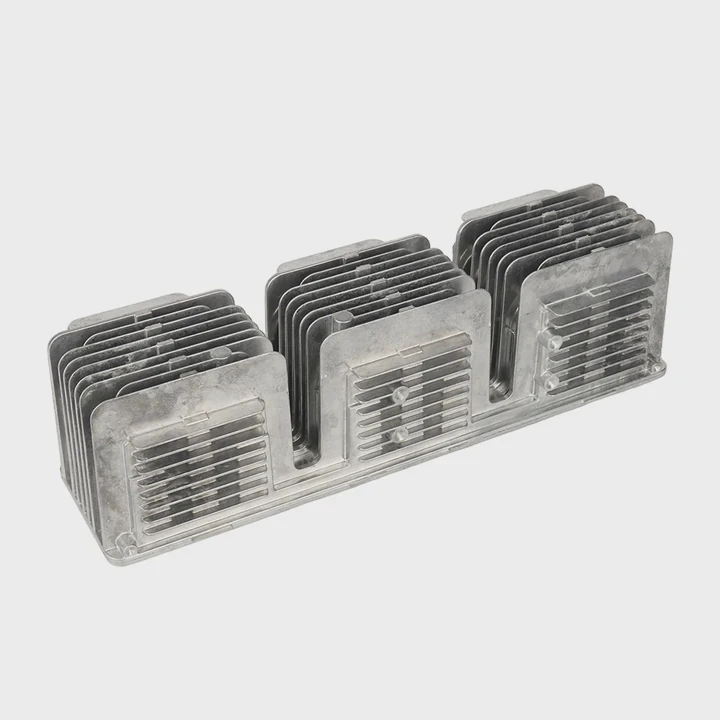
Thermal conductivity in vapor chambers is assessed indirectly through thermal resistance (Rth), since it’s a flat 2D structure with varying paths.
Thermal conductivity is measured using thermal resistance setups combined with precision temperature sensors and power-controlled heat sources.
Equipment for Thermal Conductivity Testing
| Tool | Function |
|---|---|
| Laser flash analyzer | Measures diffusivity in solid samples |
| Thermal resistance platform | Measures ΔT and power to derive Rth |
| Infrared thermography (optional) | Maps heat spread visually |
| Power supply with precision control | Controls heat input accurately |
| Clamp force fixture | Ensures contact pressure during testing |
Testing Procedure
- Known heat input (e.g., 20W) is applied at the chamber’s evaporator end.
- Sensors record inlet and outlet surface temperatures.
- The chamber’s thermal resistance (Rth = ΔT/W) is calculated.
- Equivalent conductivity (k) can be back-calculated using chamber geometry.
While laser flash is used for material-level k-value, real-world vapor chamber testing focuses on Rth as a functional metric. It reflects performance more accurately in assembled devices.
Is thermal imaging used in final inspection?
Yes, thermal imaging is a fast, non-contact way to visually inspect heat distribution across a vapor chamber. It’s especially useful for batch QC and spotting non-uniform heat spreading.
Yes, thermal cameras are used during final inspection to verify heat spreading uniformity and detect defects like dry spots or localized thermal barriers.
Benefits of Thermal Imaging
| Feature | Benefit |
|---|---|
| Non-contact inspection | No need to insert probes |
| Fast scan of full surface | Checks for uniform heat spread |
| Detects heat pipe failures | Highlights cold zones or dry regions |
| Supports batch QC | Scans multiple units efficiently |
How It’s Used
- The vapor chamber is placed on a test bench.
- Heat is applied at one end or in a localized zone.
- A thermal camera records the surface temperature map over time.
- Uniform gradient indicates proper vapor flow and wick operation.
- Any unevenness, cool zones, or hotspots signal internal defects.
Thermal imaging is often used together with physical testing to provide a complete inspection view. It’s especially important for thin-profile chambers used in laptops or mobile devices.
Conclusion
Testing vapor chambers requires more than a ruler and caliper. From leak detection to thermal resistance measurement and imaging, precise equipment ensures product reliability. Helium testers, temperature arrays, and thermal cameras all play critical roles in making sure vapor chambers meet spec before delivery.
TAGS
Latest Articles

Volume discount levels for heat sink orders?
Buyers often ask when heat sink prices start to drop with volume. Many worry they’re overpaying for small orders. This guide explains how B2B volume pricing works for thermal components. Heat sink
21 Dec,2025
Heat sink long-term supply contract options?
Many buyers want stable pricing and reliable delivery for heat sinks. But without a clear contract, risks grow over time. This article explores how to secure better long-term supply deals. Long-term
21 Dec,2025
Tooling cost for new heat sink profiles?
Many engineers struggle to understand why tooling for custom heat sinks costs so much. They worry about budgeting and production timelines. This article breaks down the cost drivers behind tooling.
21 Dec,2025
Heat sink custom sample process steps?
Sometimes, starting a custom heat sink project feels overwhelming—too many steps, too many unknowns, and too many risks. You want a sample, but not endless delays. The process for requesting and
20 Dec,2025
Standard B2B terms for heat sink payments?
When buyers and sellers in B2B heat sink markets talk about payment, many don’t fully understand what’s standard. This can lead to delayed orders, miscommunication, and even lost business
20 Dec,2025
Heat sink pricing factors for large orders?
Heat sinks are vital for many systems. When prices rise, projects stall and budgets break. This problem can hit teams hard without warning. Large order heat sink pricing depends on many factors. You
20 Dec,2025Related Articles
- Vapor Chamber design approval process?
- MOQ for Vapor Chamber with CNC machining?
- Can Vapor Chamber be fully customized?
- What affects Vapor Chamber unit price?
- Best country to source Vapor Chamber?
- Lead time for mass Vapor Chamber production?
- Does Vapor Chamber need UL certification?
- How to evaluate Vapor Chamber supplier reliability?
- Vapor Chamber Installation in HVAC Systems?
- Common Vapor Chamber application industries?
- How efficient is Vapor Chamber cooling?
- Vapor Chamber for consumer electronics?
Author
Dr. Emily Chen
Chief AI Researcher
Leading expert in thermal dynamics and AI optimization with over 15 years of experience in data center efficiency research.
Categories
Latest Products






Recommend Categories
- Liquid cooling plate Manufacturer
- Industrial Heat Sink Manufacturer
- Standard Heat Sink Manufacturer
- Aluminum Heat Sink Manufacturer
- Copper Heat Sink Manufacturer
- Anodized Heatsink Manufacturer
- Stamping heat sink Manufacturer
- Die Casting Heatsink Manufacturer
- Soldering heat sink Manufacturer
- CNC Parts Manufacturer
Latest Products
- Wholesale Aluminum Radiator
- Water Cooling Plate Kit
- Water Cooling Heat Sink
- Water Cooling Heat Sink Kit
- Stainless Steel Water Distributor
- Server Water Cooling Plate Kit
- Server Liquid Cooling System
- Server Aluminum Cooling Kit
- S19 Full Cover Cooling Plate
- S19 Cooling Plate Kit
- S19 Aluminum Cooling Plate
Contact Expert
Have questions about this article? Reach out to our experts directly.