Vapor Chamber surface treatment standards?
Surface treatment for vapor chambers is often overlooked — but a poor surface can ruin performance or vacuum integrity. The risk lies in roughness, uneven flatness, or corrosion causing leaks.
Good surface treatment standards are critical. They ensure proper contact, sealing quality, and long-term reliability for vapor chambers.
Ensuring correct surface treatment is not optional. Below I explain which standards apply, how surfaces should be finished, whether plating or passivation is needed, and how to define acceptance criteria so parts meet quality bar.
What surface treatment standards apply to Vapor Chambers?
Surface finish matters a lot for vapor chambers. Surfaces influence heat spread, sealing, and contact quality. If a manufacturer ignores surface standards, the chamber may leak or under‑perform.
Manufacturers often follow general metal‑work standards (for flatness, roughness, surface finish) plus industry‑specific guidelines. Standards like ISO for surface roughness or flatness help ensure consistent quality across batches.
Common standards and why they matter
Many vapor chamber makers don’t have a standard made just for vapor chambers. Instead they rely on well-known metal manufacturing standards and adapt them. These include:
- Surface roughness standards, such as those defined in ISO 4287 / ISO 4288 (or equivalent local ones) for Ra, Rz, etc.
- Flatness and straightness tolerances, often guided by general machining or casting standards like ISO 2768‑1/2 or company in‑house specs.
- Surface finish classes after machining, polishing or grinding — often specified in drawing notes.
- For surfaces that mate with other parts, flatness and parallelism tolerances to ensure good contact.
Below is a table with typical standards or controls applied in vapor-chamber manufacturing:
| Standard or Control | Applies To | Purpose |
|---|---|---|
| ISO 4287 / 4288 (or equivalent) | Surface roughness (Ra, Rz) of contact faces | Ensure smoothness for thermal contact and sealing |
| Flatness & parallelism spec (e.g. ≤ 0.02 mm over reference surface) | Mating surfaces, shell cover, base | Ensure uniform contact and avoid gaps or stress |
| Geometric tolerance grids (holes, slots, bosses) | Features for screws, mounting points | Ensure proper alignment and avoid mechanical stress when assembled |
| Drawing-level finish notes | Polishing, deburring, edge‑break, chamfers | Remove sharp edges, burrs, stress concentrators |
| Internal surface cleaning / degreasing instructions | Internal cavity surfaces before bonding or sealing | Remove oils or contaminants to avoid leaks or voids |
Using these standards helps ensure that each part meets a defined quality baseline. Without them, each batch may differ — risky for thermal modules with tight tolerances.
When selecting a supplier or defining internal production specs, use these standards as baseline. If manufacturer cannot state roughness values, flatness tolerance or finish class, that indicates weak quality control.
Are specifications given for surface roughness, flatness and finish?
Smoothness, flatness, and surface finish strongly affect thermal contact and vacuum integrity. If surfaces are rough, warped or have tool marks — that can cause gaps, stress points, inefficient heat flow or leaks.
Yes. Vapor‑chamber drawings or quality documents usually specify surface roughness (e.g. Ra ≤ 0.8 µm), flatness (e.g. ≤ 0.02 mm), and finish class. Those specifications help guarantee contact quality and sealing performance.
What spec metrics are typically controlled
Common metrics and targets seen in well‑managed vapor‑chamber productions:
- Surface roughness (Ra, Rz) — For contact faces, typical target might be Ra ≤ 0.8 µm or even Ra ≤ 0.4 µm, depending on application. Lower roughness improves thermal interface.
- Flatness / Parallelism — Especially for base and cover plates: often specified as “flat within 0.02 mm over full surface” or “parallel within 0.03 mm between top and bottom surfaces.”
- Edge conditions — Chamfers or edge breaks (e.g. 0.2–0.5 mm radius) to avoid stress concentration or burrs that can damage welds/seals.
- Finish after machining — For external surfaces: smoothing, polishing, possible buffing to avoid oxidation spots or stress risers. Internal surfaces often need deburring and cleaning before bonding.
Design drawings or work orders will include these in notes or tolerance blocks. Without them, manufacturing becomes uncontrolled. It is normal to reference general standards (see previous section) or custom ones defined by company.
Why accepting well-defined specs matters
- Heat transfer efficiency — Rough or uneven surfaces reduce real contact area. That increases thermal resistance at interface with heatsink or cold plate.
- Vacuum sealing — Sealing surfaces must mate well. If surface is too rough or warped, solder or brazing may not fill gaps, or stresses cause cracks under thermal cycling.
- Mechanical stability — During assembly, uneven surfaces can cause twisting, stress in welds or solder joints. That reduces reliability over time.
- Repeatability — For batch production, specs ensure that every part meets same baseline. That reduces variation in thermal performance or failure rates.
Therefore, setting explicit roughness + flatness + finish specs is a must for high‑quality vapor chamber manufacturing. Good suppliers always include these specs.
Do treatments include plating, passivation or oxidation removal?
Bare metal surfaces may oxidize, corrode, or react over time, especially under heat and humidity. This can harm vacuum integrity, thermal contact, or long-term reliability.
Yes. Many vapor chamber makers apply additional surface treatments — such as plating (nickel, tin), passivation, or oxidation removal — especially on sealing surfaces or external parts. Treatment helps corrosion protection, improves solder/bond wettability, and enhances longevity.
Common treatments and their roles
Here are common surface treatments used in vapor chamber manufacturing:
| Treatment Type | Purpose | Typical Use Case |
|---|---|---|
| Nickel plating (electroless or electrolytic) | Provide corrosion resistance, create stable solder‑friendly surface, prevent oxidation | Sealing surfaces, external metal shells, exposed copper |
| Tin plating or tin‑lead (when allowed) | Improve solderability, facilitate brazing, reduce oxide on copper | Bond seams, external shell joints |
| Passivation (for aluminium or plating) | Stabilize surface, reduce corrosion risk, prevent oxidation over time | External frames, fins, housings in humid or corrosive environments |
| Oxide removal / chemical cleaning + passivation | Remove mill scale, machining residue, oils; prepare surface for bonding or sealing | Before brazing, after machining, before vacuum sealing |
| Anodizing (for aluminium parts, not copper) | Provide surface protection and corrosion resistance on aluminium-mounted parts | External mounts or structural parts in assemblies |
Each treatment must suit the materials: copper base or cover, external housings, solder‑ready surfaces. For copper vapor chambers, nickel plating is very common because copper oxidizes quickly. Plating also helps solder wetting and bonding reliability.
In addition, after plating or cleaning, parts often undergo passivation or chemical neutralization to remove residues. That reduces contamination risk when the chamber is sealed with vacuum and fluid inside.
Treatments add cost and process complexity, but they pay back via better reliability, longer life, and easier assembly/welding.
Are acceptance criteria defined for the treated surfaces?
Just applying plating or cleaning is not enough. There must be inspection criteria to verify that treatment was done correctly. Without acceptance criteria, surface quality may vary batch to batch, risking leaks or performance drop.
Yes. Good manufacturing specs define acceptance criteria for surface treatments — e.g. plating thickness, adhesion, smoothness, absence of defects, and cleanliness before sealing. Inspectable criteria ensure consistency and reliability.
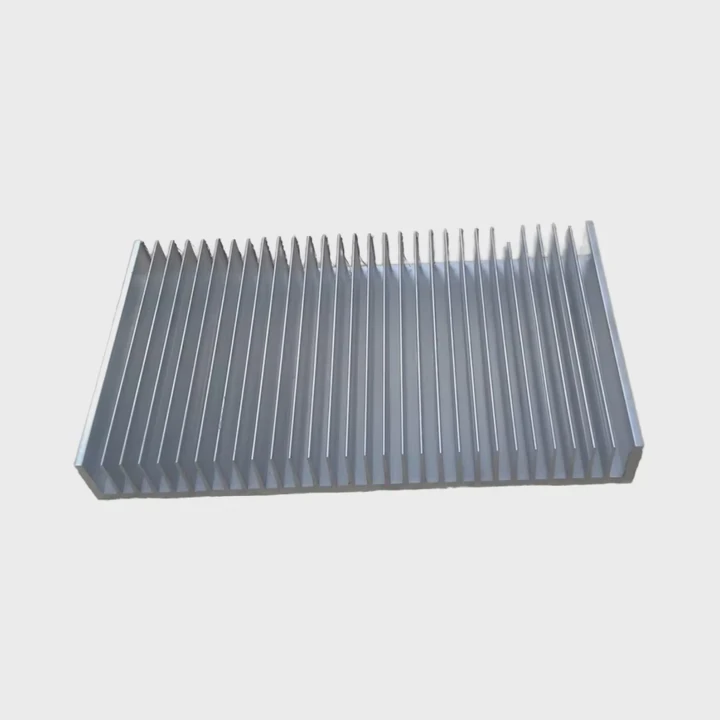
Sample acceptance criteria for surface treatments
Here is a table of typical acceptance criteria used by quality control departments when inspecting treated vapor chamber parts:
| Check Point | Acceptance Criteria | Purpose |
|---|---|---|
| Plating thickness | Nickel: 5–15 µm uniform; Tin: 8–20 µm | Ensure corrosion resistance and solderability |
| Plating adhesion | No peeling, blistering, or flaking under tape‑test or bend‑test | Confirm plating durability under stress / thermal cycling |
| Surface roughness (after finish or plating) | Ra ≤ 0.6–0.8 µm (on sealing / contact surfaces) | Guarantee good thermal contact and sealing |
| Surface cleanliness | No visible oil, dust, particles, or residues; pass wipe‑test / ultrasonic cleaning verification | Prevent contamination in vacuum or during brazing/soldering |
| Flatness / warpage after plating/processing | Flat within 0.02 mm over full contact surface | Prevent stress or uneven contact after assembly |
| No pits, cracks, voids or sharp edges | Visual / microscopic inspection, 10× magnification, no defects allowed | Avoid leak paths, stress risers, and fatigue points |
Manufacturers should record inspection results for each batch. Acceptance should only occur when all criteria are met. Parts that fail should be reworked or rejected.
Why criteria must be strict
- Vacuum integrity: Plating voids or cracks may lead to leaks when chamber is sealed under vacuum.
- Thermal performance: Uneven or rough surfaces reduce contact area, increasing thermal resistance.
- Longevity and reliability: Corrosion, peeling plating, or stress concentration cause failures under thermal or mechanical cycling.
- Repeatability: With records, buyers or audit teams can track quality over time and correlate failures to specific lots or processes.
Without acceptance criteria, there is no objective way to know if surface treatment is done correctly. That undermines consistency and reliability.
When specifying or auditing a vapor‑chamber supplier, insist on documented acceptance criteria, records, and batch traceability. That ensures you get quality you can depend on.
Conclusion
Surface treatment matters as much as internal design in vapor chambers. Applying and controlling standards for roughness, flatness, finish, plating, cleaning and inspection ensures good thermal contact, vacuum sealing, corrosion resistance, and long‑term reliability. Buyers should insist on clear specifications and acceptance criteria before approving suppliers.
TAGS
Latest Articles

Volume discount levels for heat sink orders?
Buyers often ask when heat sink prices start to drop with volume. Many worry they’re overpaying for small orders. This guide explains how B2B volume pricing works for thermal components. Heat sink
21 Dec,2025
Heat sink long-term supply contract options?
Many buyers want stable pricing and reliable delivery for heat sinks. But without a clear contract, risks grow over time. This article explores how to secure better long-term supply deals. Long-term
21 Dec,2025
Tooling cost for new heat sink profiles?
Many engineers struggle to understand why tooling for custom heat sinks costs so much. They worry about budgeting and production timelines. This article breaks down the cost drivers behind tooling.
21 Dec,2025
Heat sink custom sample process steps?
Sometimes, starting a custom heat sink project feels overwhelming—too many steps, too many unknowns, and too many risks. You want a sample, but not endless delays. The process for requesting and
20 Dec,2025
Standard B2B terms for heat sink payments?
When buyers and sellers in B2B heat sink markets talk about payment, many don’t fully understand what’s standard. This can lead to delayed orders, miscommunication, and even lost business
20 Dec,2025
Heat sink pricing factors for large orders?
Heat sinks are vital for many systems. When prices rise, projects stall and budgets break. This problem can hit teams hard without warning. Large order heat sink pricing depends on many factors. You
20 Dec,2025Related Articles
- Vapor Chamber available ISO certifications?
- Recommended alloy grade for Vapor Chamber
- Vapor Chamber compatibility with aluminum alloy 6061?
- What is the maximum size of Vapor Chamber
- Vapor Chamber CNC machining accuracy requirements?
- Vapor Chamber sustainability certifications?
- Required extrusion process for Vapor Chamber parts?
- Need CNS standard for Vapor Chamber?
- Vapor Chamber CE certificate requirements?
- Standard packaging for Vapor Chamber shipping?
- Does Vapor Chamber comply with REACH?
- Vapor Chamber vacuum testing procedure?
Author
Dr. Emily Chen
Chief AI Researcher
Leading expert in thermal dynamics and AI optimization with over 15 years of experience in data center efficiency research.
Categories
Latest Products






Recommend Categories
- Liquid cooling plate Manufacturer
- Industrial Heat Sink Manufacturer
- Standard Heat Sink Manufacturer
- Aluminum Heat Sink Manufacturer
- Copper Heat Sink Manufacturer
- Anodized Heatsink Manufacturer
- Stamping heat sink Manufacturer
- Die Casting Heatsink Manufacturer
- Soldering heat sink Manufacturer
- CNC Parts Manufacturer
Latest Products
- Wholesale Aluminum Radiator
- Water Cooling Plate Kit
- Water Cooling Heat Sink
- Water Cooling Heat Sink Kit
- Stainless Steel Water Distributor
- Server Water Cooling Plate Kit
- Server Liquid Cooling System
- Server Aluminum Cooling Kit
- S19 Full Cover Cooling Plate
- S19 Cooling Plate Kit
- S19 Aluminum Cooling Plate
Contact Expert
Have questions about this article? Reach out to our experts directly.