What is AIO liquid cooling?
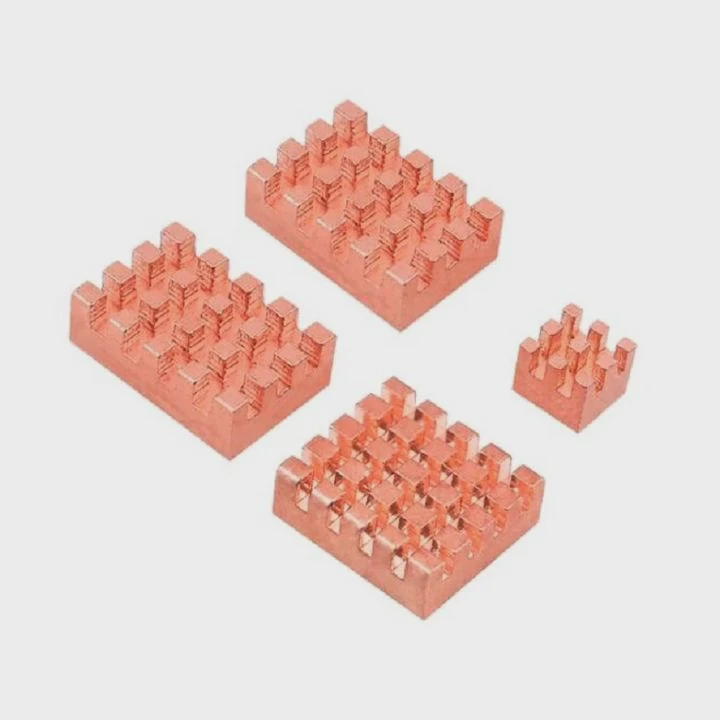
As modern CPUs and GPUs get faster, they generate more heat than ever. Air cooling often struggles to keep up, especially in compact or high-performance systems.
AIO (All-In-One) liquid cooling is a preassembled, sealed cooling system that combines a pump, radiator, tubes, and fans into one ready-to-install unit.
It’s designed to deliver efficient, quiet, and low-maintenance cooling without the complexity of a custom loop.
How does an AIO cooling system work?
AIO systems use the same thermal principles as custom liquid cooling setups but simplify them into a compact, maintenance-free package.
An AIO liquid cooler works by circulating coolant through a closed loop, transferring heat from the CPU to a radiator where it’s released into the air.
Step-by-Step Process
Heat Absorption (CPU Block)
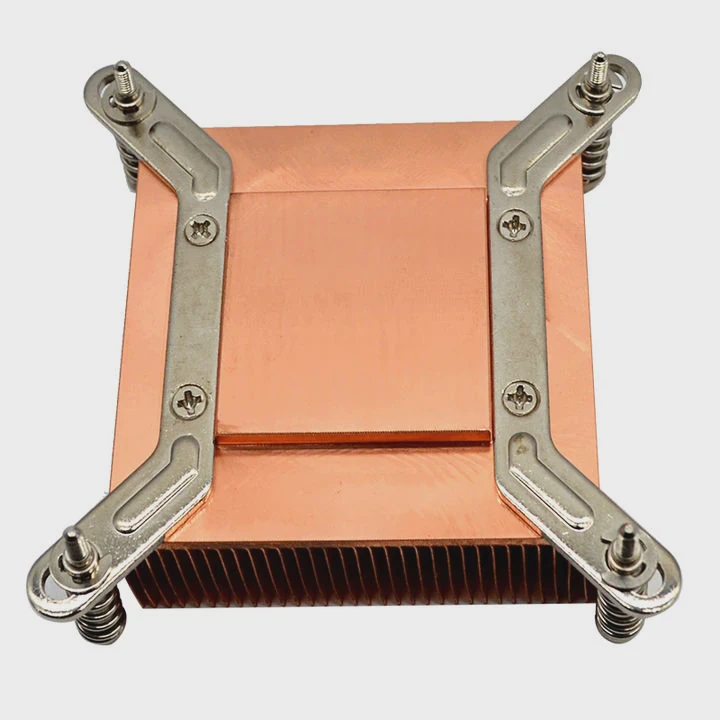
The base of the cooler, often made of copper, makes direct contact with the CPU. The coolant inside absorbs the heat.Circulation (Pump & Tubing)
A built-in pump moves the heated coolant through tubes toward the radiator.Heat Dissipation (Radiator)
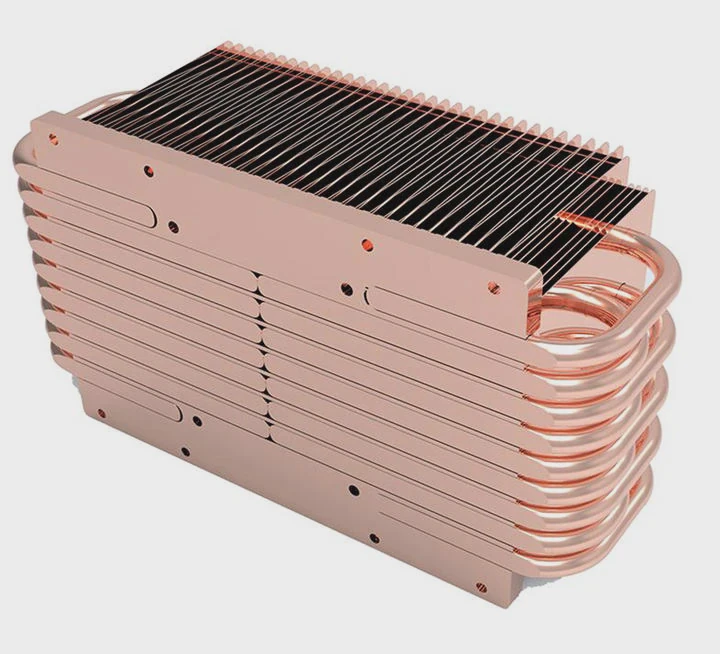
The radiator’s fins spread the heat across a large surface area. Attached fans blow cool air through these fins, releasing the heat into the environment.Cooling Cycle (Return Flow)
The cooled liquid then flows back to the CPU block to repeat the process.
Core Components of an AIO System
| Component | Function |
|---|---|
| Water Block | Absorbs heat from CPU surface |
| Pump | Circulates coolant through the loop |
| Tubing | Connects components for flow |
| Radiator | Releases heat through fins |
| Fans | Move air through the radiator for heat removal |
| Coolant | Transfers thermal energy between components |
Because the system is sealed, users don’t have to worry about leaks, refills, or contamination.
What are its advantages?
AIO cooling offers many of the benefits of custom liquid cooling while maintaining simplicity and reliability.
The advantages of AIO liquid cooling include superior heat dissipation, reduced noise, easy installation, and cleaner aesthetics compared to air cooling.
1. Efficient Cooling Performance
AIO coolers can handle high heat loads, making them ideal for overclocked CPUs and powerful workstations.
2. Low Noise Operation
Liquid transfers heat more effectively than air, allowing fans to spin slower and operate more quietly.
3. Compact and Clean Design
AIO coolers free up space around the CPU socket, improving airflow and cable management.
4. Easy Installation
Unlike custom loops, AIO coolers are prefilled and sealed. There’s no need for coolant maintenance or complex assembly.
5. Reliability and Low Maintenance
AIO systems require little to no upkeep — just keep radiators and fans clean for optimal performance.
Comparison: AIO vs. Air Cooling
| Feature | Air Cooler | AIO Liquid Cooler |
|---|---|---|
| Cooling Efficiency | Moderate | High |
| Noise Level | Higher | Lower |
| Installation | Simple | Moderate |
| Maintenance | Minimal | Minimal |
| Overclocking Potential | Limited | Excellent |
| Aesthetics | Standard | Sleek, customizable |
For most users seeking high performance without the complexity of a custom liquid system, AIO cooling provides the perfect middle ground.
How to install an AIO liquid cooler?
Installing an AIO liquid cooler is straightforward when following a step-by-step approach. Most units fit common CPU sockets and PC cases.
To install an AIO cooler, mount the radiator and fans, attach the CPU block, connect the pump header, and manage cables for optimal airflow.
Step 1: Prepare Your Case
Ensure your PC case supports the radiator size (120mm, 240mm, 360mm, etc.). Remove side panels and clean mounting areas.
Step 2: Install the Backplate
For most CPUs, attach the backplate behind the motherboard. This will support the pump block.
Step 3: Mount the Radiator and Fans
Attach the radiator inside the case — usually at the top, front, or rear. Fans should be positioned for optimal airflow (intake or exhaust depending on setup).
Step 4: Apply Thermal Paste
If not pre-applied, put a small pea-sized amount on the CPU.
Step 5: Attach the Pump Block
Align the block over the CPU and screw it down evenly using a cross pattern to ensure uniform pressure.
Step 6: Connect Power Cables
- Plug the pump cable into the AIO_PUMP or CPU_FAN header.
- Connect fan cables to the motherboard or fan hub.
- If RGB lighting is included, connect the lighting cable to the appropriate header.
Step 7: Cable Management
Organize and secure cables with zip ties to maintain a clean build and proper airflow.
Step 8: Power On and Test
Boot your system and check fan and pump operation. Monitor temperatures using software like HWInfo or CAM.
Installation Tips
- Make sure tubes are not kinked or twisted.
- Radiator tubes should ideally face downward or sideways to avoid air traps.
- Keep fans dust-free to maintain airflow efficiency.
A properly installed AIO can last several years with minimal maintenance.
What are the trends in AIO cooling solutions?
AIO coolers are evolving rapidly to match rising processor power demands and user expectations for aesthetics and automation.
The latest trends in AIO cooling include AI temperature control, modular radiators, RGB customization, and eco-friendly coolant technology.
1. AI-Controlled Cooling Systems
Modern AIOs use software algorithms to adjust fan and pump speeds in real-time, improving efficiency and reducing noise.
2. Modular and Expandable Designs
Manufacturers now offer modular AIOs with interchangeable pumps, radiators, or tubing for easy upgrades and repairs.
3. Integrated Display Screens
High-end coolers now feature LCD or OLED screens that display CPU temperatures, system stats, or even custom graphics.
4. Sustainable and Long-Life Coolants
Next-generation AIOs use biodegradable, non-toxic fluids with improved heat transfer and anti-corrosion stability.
5. Aesthetic Customization
ARGB lighting, magnetic covers, and sleek tubing enhance visual appeal for gaming and workstation builds.
6. Compact and SFF (Small Form Factor) Solutions
As small PC cases grow in popularity, manufacturers are creating thin, efficient 120mm or 240mm AIOs optimized for compact builds.
Innovation Summary
| Trend | Description | Main Benefit |
|---|---|---|
| AI Cooling | Intelligent pump and fan control | Noise and power optimization |
| Modular Design | Swappable parts and radiators | Easy customization |
| LCD Displays | On-unit system monitoring | Real-time feedback |
| Green Coolants | Sustainable liquid formulas | Environmental safety |
| Compact Radiators | Slim form factors | Better case compatibility |
These trends highlight how AIO cooling is no longer just about performance — it’s about integration, intelligence, and sustainability.
Conclusion
AIO liquid cooling offers powerful, quiet, and easy-to-manage thermal performance for modern systems. By combining simplicity with advanced control, it bridges the gap between air cooling and custom loops. As AI and eco-friendly technologies evolve, AIO systems will continue to set the standard for next-generation PC cooling.
TAGS
Latest Articles

Volume discount levels for heat sink orders?
Buyers often ask when heat sink prices start to drop with volume. Many worry they’re overpaying for small orders. This guide explains how B2B volume pricing works for thermal components. Heat sink
21 Dec,2025
Heat sink long-term supply contract options?
Many buyers want stable pricing and reliable delivery for heat sinks. But without a clear contract, risks grow over time. This article explores how to secure better long-term supply deals. Long-term
21 Dec,2025
Tooling cost for new heat sink profiles?
Many engineers struggle to understand why tooling for custom heat sinks costs so much. They worry about budgeting and production timelines. This article breaks down the cost drivers behind tooling.
21 Dec,2025
Heat sink custom sample process steps?
Sometimes, starting a custom heat sink project feels overwhelming—too many steps, too many unknowns, and too many risks. You want a sample, but not endless delays. The process for requesting and
20 Dec,2025
Standard B2B terms for heat sink payments?
When buyers and sellers in B2B heat sink markets talk about payment, many don’t fully understand what’s standard. This can lead to delayed orders, miscommunication, and even lost business
20 Dec,2025
Heat sink pricing factors for large orders?
Heat sinks are vital for many systems. When prices rise, projects stall and budgets break. This problem can hit teams hard without warning. Large order heat sink pricing depends on many factors. You
20 Dec,2025Related Articles
- What liquid is used for liquid cooling?
- Why is my liquid cooling so hot?
- How to cool hot liquid fast?
- How does liquid cooling work in computers?
- Is it hard to install liquid cooling?
- How to install liquid cooling on GPU?
- How to know if liquid cooler is working?
- How to set up a liquid CPU cooler?
- How to set up liquid cooling?
- How to cool down liquid quickly?
- How much is a liquid cooling system?
- Is the Xbox One X liquid cooled?
Author
Dr. Emily Chen
Chief AI Researcher
Leading expert in thermal dynamics and AI optimization with over 15 years of experience in data center efficiency research.
Categories
Latest Products






Recommend Categories
- Liquid cooling plate Manufacturer
- Industrial Heat Sink Manufacturer
- Standard Heat Sink Manufacturer
- Aluminum Heat Sink Manufacturer
- Copper Heat Sink Manufacturer
- Anodized Heatsink Manufacturer
- Stamping heat sink Manufacturer
- Die Casting Heatsink Manufacturer
- Soldering heat sink Manufacturer
- CNC Parts Manufacturer
Latest Products
- Wholesale Aluminum Radiator
- Water Cooling Plate Kit
- Water Cooling Heat Sink
- Water Cooling Heat Sink Kit
- Stainless Steel Water Distributor
- Server Water Cooling Plate Kit
- Server Liquid Cooling System
- Server Aluminum Cooling Kit
- S19 Full Cover Cooling Plate
- S19 Cooling Plate Kit
- S19 Aluminum Cooling Plate
Contact Expert
Have questions about this article? Reach out to our experts directly.