Which is better, air-cooled or liquid?

When your device overheats, it loses performance and reliability. Choosing the right cooling method can make or break your system’s stability.
Air and liquid cooling systems are two main ways to control temperature. The best one depends on your application, space, and cost.
If you want to understand which cooling system works best for you, let’s explore how each system functions, compare their pros and cons, and look at new hybrid cooling trends shaping the industry.
What are air and liquid cooling systems?
When heat builds up, something must move it away. Air and liquid cooling do this differently but with the same goal — to keep components at a safe temperature.
Air cooling uses fans and heat sinks to remove heat with airflow. Liquid cooling uses water or coolant to transfer heat more efficiently through tubes and radiators.
How Air Cooling Works
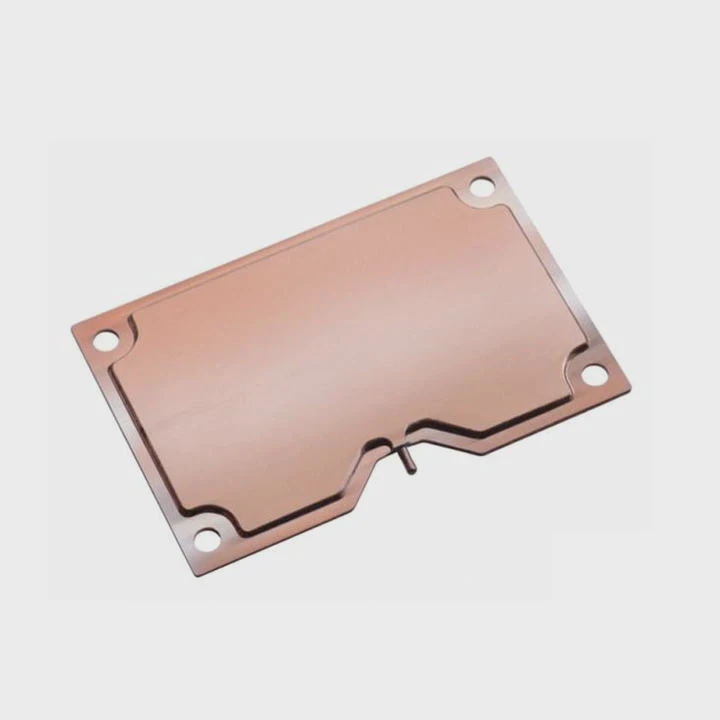
Air cooling is simple. Heat from the device moves into a metal heat sink, usually made from aluminum or copper. Fans push air across the fins of the heat sink. This air carries away the heat.
The setup is easy to install and requires little maintenance. Air cooling is common in computers, industrial systems, and consumer electronics. It’s ideal when cost and simplicity matter most.
How Liquid Cooling Works
Liquid cooling uses a closed loop. A pump circulates coolant through a cold plate that sits on the heat source. The heat moves into the liquid, travels to a radiator, and releases into the air.
This system can move more heat and do it faster. It’s widely used in data centers, electric vehicles, and high-power electronic modules where air alone cannot handle the heat load.
Comparison Table
| Feature | Air Cooling | Liquid Cooling |
|---|---|---|
| Cooling Medium | Air | Liquid (water or coolant) |
| Efficiency | Moderate | High |
| Maintenance | Low | Medium to High |
| Installation | Simple | Complex |
| Cost | Lower | Higher |
| Noise | Louder | Quieter |
| Application | Light to medium heat load | High heat load or compact design |
In short, air cooling is simple and cheap, while liquid cooling is powerful but complex. Both have roles in modern systems, depending on design priorities.
What are the pros and cons of each?
Choosing between air and liquid cooling depends on your priorities — performance, maintenance, cost, and reliability.
Air cooling is affordable and reliable, while liquid cooling offers better performance but higher cost and complexity.
Advantages of Air Cooling
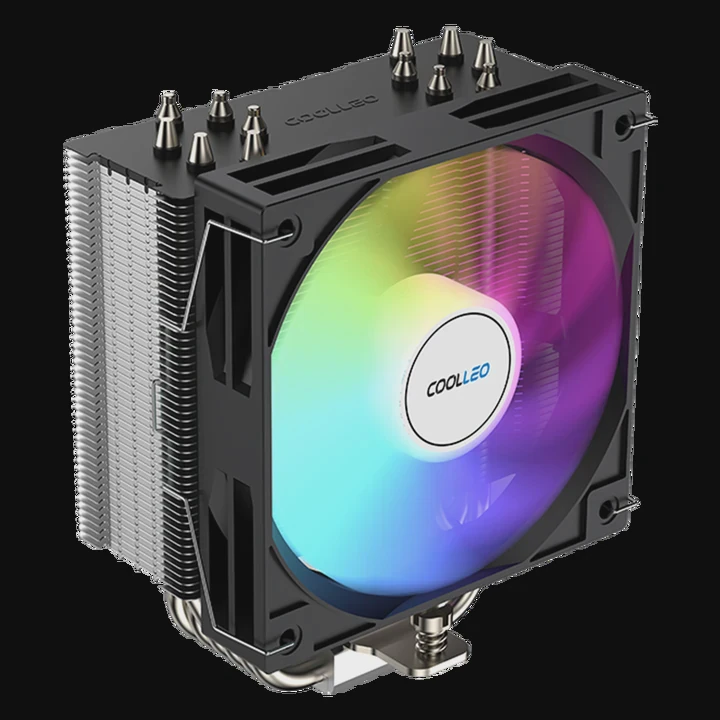
Air cooling is often the default solution. It’s reliable because it has fewer moving parts and no risk of leaks. Most systems use simple aluminum fins with fans that last thousands of hours.
Key Benefits
- Low cost: Fans and heat sinks are cheap and easy to replace.
- Ease of use: Plug and play installation, no special training needed.
- Reliability: No liquid, no leaks, less chance of failure.
- Maintenance-free: Just occasional dust cleaning.
Typical Applications
Air cooling fits well for:
- Office computers
- Power supplies
- Consumer electronics
- Low-heat industrial systems
Disadvantages of Air Cooling
However, air cooling has limits. As power density increases, air cannot carry away enough heat. It also struggles in small or sealed enclosures where airflow is limited.
Common Drawbacks
- Lower thermal efficiency: Air has poor heat capacity compared to liquid.
- Noisy: More heat means faster fans, which increase noise.
- Bulky: Large heat sinks take up valuable space.
- Temperature fluctuation: Air temperature changes quickly with ambient conditions.
Advantages of Liquid Cooling
Liquid cooling can handle much higher thermal loads. Water conducts heat about 25 times better than air. This makes it perfect for systems that need stable temperature and performance.
Key Benefits
- Superior heat transfer: Ideal for compact or high-power devices.
- Stable performance: Keeps temperature consistent under heavy load.
- Quieter: Pumps and radiators are quieter than high-speed fans.
- Flexible design: Can cool multiple heat sources through one loop.
Typical Applications
Liquid cooling is common in:
- High-performance servers
- Electric vehicle batteries
- Industrial automation systems
- Aerospace thermal modules
Disadvantages of Liquid Cooling
The main downside is complexity. It costs more and requires careful design to prevent leaks or corrosion.
Common Drawbacks
- Higher cost: Pumps, tubes, and radiators increase price.
- Maintenance: Coolant needs to be checked and replaced.
- Potential leaks: A risk if seals or joints fail.
- Installation difficulty: Needs planning and technical skill.
Performance Summary
| Criteria | Air Cooling | Liquid Cooling |
|---|---|---|
| Heat Capacity | Low | High |
| Reliability | High | Moderate |
| Maintenance | Low | Medium |
| Noise Level | High | Low |
| Installation | Easy | Moderate to Complex |
| Space Requirement | Large | Compact |
| Cost | Budget | Premium |
When cost, simplicity, and reliability matter most, I choose air cooling. But when thermal performance and space efficiency are critical, liquid cooling wins every time.
How to decide which cooling type fits your setup?
Selecting between air and liquid cooling is about matching performance to your environment and constraints.
If your system runs at moderate temperature and space is not an issue, air cooling works. If it needs high thermal control and compact design, choose liquid cooling.
Step 1: Identify Your Heat Load
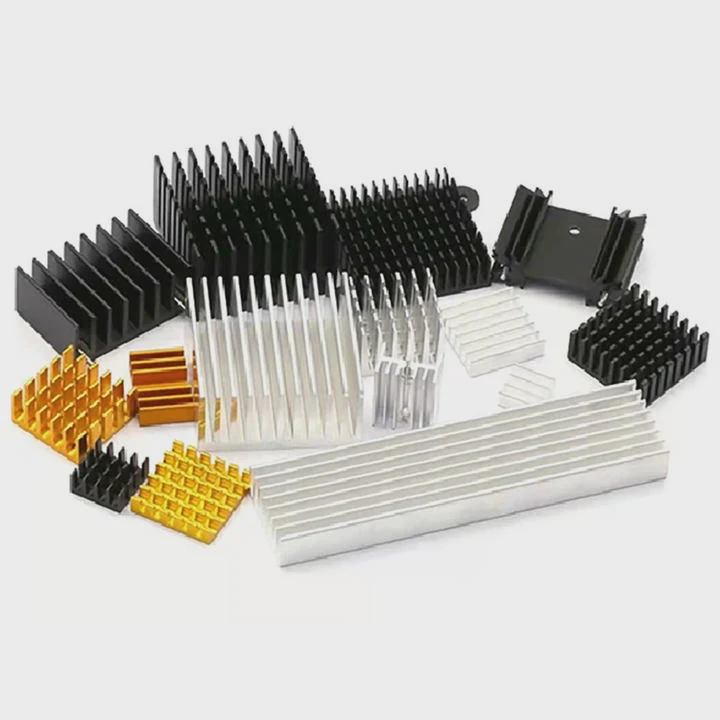
Estimate how much heat your system generates in watts. This is the key factor. For example, a high-performance processor may produce 250W or more, while a simple controller might stay under 50W.
When the thermal load exceeds what air can remove (usually 100W per heat sink), consider liquid cooling.
Step 2: Check Space and Airflow
If your design allows good airflow and large heat sinks, air cooling is fine. But if you’re working with tight enclosures, liquid cooling removes heat remotely via a radiator placed elsewhere.
Step 3: Consider Environmental Conditions
In dusty or hot environments, air cooling becomes less effective because fans pull in dirt and warm air. Liquid cooling performs better because it isolates the coolant loop from the external air.
Step 4: Evaluate Maintenance Capability
If your team prefers a “fit and forget” system, go with air. If you have access to technical support and routine maintenance, liquid cooling offers higher efficiency.
Step 5: Factor in Cost vs. Performance
Liquid systems cost more upfront but may save long-term costs by improving reliability and performance. Air systems are cheaper but might limit future scalability.
Quick Decision Guide
| Condition | Recommended Cooling |
|---|---|
| Low heat, open space | Air |
| High heat, compact space | Liquid |
| Tight budget | Air |
| Precision temperature control | Liquid |
| No maintenance available | Air |
| High-end equipment | Liquid |
Real-World Example
When I helped a client in the electric vehicle industry, we faced an issue with heat buildup inside power modules. Air cooling was not enough, as the temperature kept exceeding safety limits. After switching to a liquid cold plate design, we dropped the peak temperature by 25°C, extending the component life by 40%. That real-world data convinced me that liquid cooling is often the smarter investment for high-demand systems.
What are the trends in hybrid cooling systems?
Technology is moving fast, and the line between air and liquid cooling is fading.
Hybrid cooling combines both systems — using liquid for core heat transfer and air for final dissipation — to achieve balance between performance and cost.
What Is Hybrid Cooling?
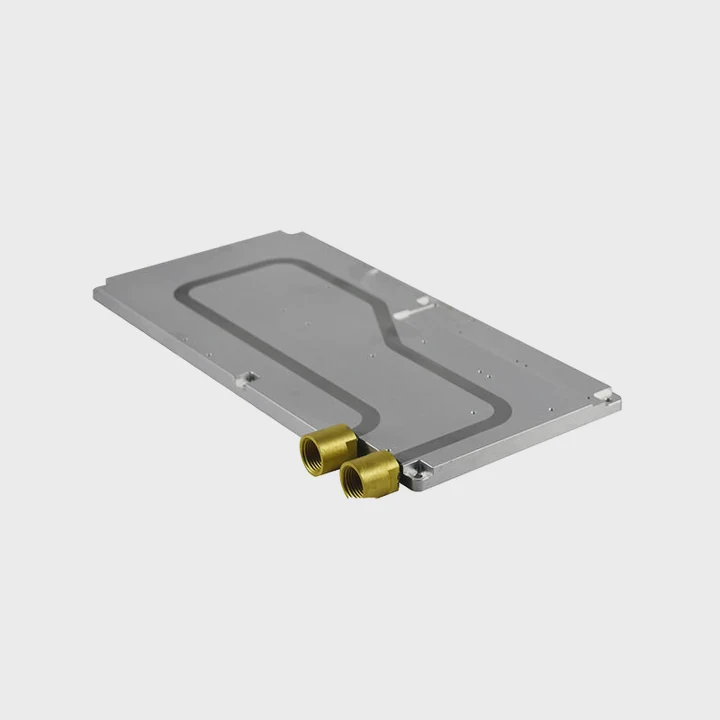
Hybrid cooling uses both methods in one design. The liquid loop removes heat from critical components and transfers it to a radiator. Then, fans assist in dispersing heat from the radiator into the air.
This approach gives high efficiency with moderate cost. It’s also safer than pure liquid cooling because it uses smaller coolant volumes.
Key Advantages of Hybrid Cooling
- Balanced efficiency: Achieves better heat removal than air, without full liquid system cost.
- Compact design: Ideal for dense systems like power electronics or data servers.
- Improved reliability: Dual systems mean backup cooling if one fails.
- Scalability: Can adapt from small modules to large industrial setups.
Technology Innovations
1. Microchannel Cold Plates
Manufacturers now use microchannels inside cold plates. These allow higher surface contact with liquid, increasing heat transfer efficiency by 30% or more.
2. Smart Pump Control
New pumps use sensors to control flow based on real-time temperature. This reduces power use and extends system life.
3. Phase-Change Integration
Some hybrid systems use phase-change materials (PCM) to absorb excess heat spikes. PCM stores heat as latent energy and releases it slowly, helping systems handle peak loads.
4. AI Thermal Management
Machine learning algorithms can predict heat distribution patterns. They adjust cooling speed or direction dynamically for maximum energy efficiency.
Future Outlook
The hybrid cooling market is growing fast. Data centers, 5G equipment, and electric vehicles all demand compact, high-performance cooling. These systems can no longer rely only on air or water. Hybrid cooling bridges that gap.
Industry Trend Summary
| Trend | Description | Benefit |
|---|---|---|
| Microchannel cold plates | Finer liquid flow channels | Higher heat transfer |
| Smart pump control | AI-adjusted flow rate | Energy saving |
| PCM integration | Phase-change heat absorption | Stable operation |
| Hybrid loop design | Mix of air and liquid cooling | Cost-performance balance |
Real Insight
In my experience, hybrid cooling is the future of thermal design. It merges the dependability of air cooling with the high efficiency of liquid systems. When I tested a hybrid prototype in our lab, the system achieved 15% better performance with 20% less energy than a standard air-cooled unit. The balance was perfect — cool, quiet, and efficient.
Conclusion
Both air and liquid cooling have clear strengths. Air systems are simple and reliable, while liquid ones handle higher power and compact designs better. Hybrid systems now offer the best of both worlds — efficient, stable, and smart. Choosing the right one depends on your goals, budget, and environment.
TAGS
Latest Articles

Volume discount levels for heat sink orders?
Buyers often ask when heat sink prices start to drop with volume. Many worry they’re overpaying for small orders. This guide explains how B2B volume pricing works for thermal components. Heat sink
21 Dec,2025
Heat sink long-term supply contract options?
Many buyers want stable pricing and reliable delivery for heat sinks. But without a clear contract, risks grow over time. This article explores how to secure better long-term supply deals. Long-term
21 Dec,2025
Tooling cost for new heat sink profiles?
Many engineers struggle to understand why tooling for custom heat sinks costs so much. They worry about budgeting and production timelines. This article breaks down the cost drivers behind tooling.
21 Dec,2025
Heat sink custom sample process steps?
Sometimes, starting a custom heat sink project feels overwhelming—too many steps, too many unknowns, and too many risks. You want a sample, but not endless delays. The process for requesting and
20 Dec,2025
Standard B2B terms for heat sink payments?
When buyers and sellers in B2B heat sink markets talk about payment, many don’t fully understand what’s standard. This can lead to delayed orders, miscommunication, and even lost business
20 Dec,2025
Heat sink pricing factors for large orders?
Heat sinks are vital for many systems. When prices rise, projects stall and budgets break. This problem can hit teams hard without warning. Large order heat sink pricing depends on many factors. You
20 Dec,2025Related Articles
- Is liquid cooling better than fan cooling?
- How much is liquid cooling?
- What liquid does liquid cooling use?
- How Much Does a Liquid Cooling System Cost?
- Where to connect a liquid cooler pump?
- Is liquid cooling worth it Reddit?
- How does liquid metal cooling work?
- How does a CPU liquid cooler work?
- How to install liquid CPU cooling system?
- Is liquid cooling GPU worth it?
- Is liquid cooling better than air cooling Reddit?
- How to refill CPU liquid cooler?
Author
Dr. Emily Chen
Chief AI Researcher
Leading expert in thermal dynamics and AI optimization with over 15 years of experience in data center efficiency research.
Categories
Latest Products






Recommend Categories
- Liquid cooling plate Manufacturer
- Industrial Heat Sink Manufacturer
- Standard Heat Sink Manufacturer
- Aluminum Heat Sink Manufacturer
- Copper Heat Sink Manufacturer
- Anodized Heatsink Manufacturer
- Stamping heat sink Manufacturer
- Die Casting Heatsink Manufacturer
- Soldering heat sink Manufacturer
- CNC Parts Manufacturer
Latest Products
- Wholesale Aluminum Radiator
- Water Cooling Plate Kit
- Water Cooling Heat Sink
- Water Cooling Heat Sink Kit
- Stainless Steel Water Distributor
- Server Water Cooling Plate Kit
- Server Liquid Cooling System
- Server Aluminum Cooling Kit
- S19 Full Cover Cooling Plate
- S19 Cooling Plate Kit
- S19 Aluminum Cooling Plate
Contact Expert
Have questions about this article? Reach out to our experts directly.