Why does a gas change to a liquid on cooling?
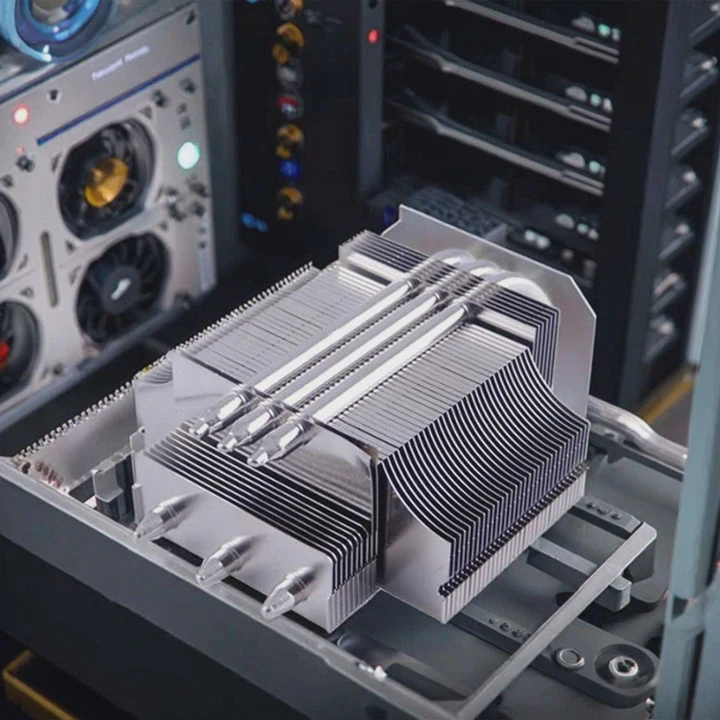
When a gas cools down, it loses energy and its particles move slower. This slower motion allows the gas molecules to come closer, forming a liquid.
A gas changes to a liquid on cooling because the molecules lose kinetic energy, move slower, and attract each other more strongly, leading to condensation.
As the temperature decreases, molecular movement weakens, and attractive forces between particles become dominant. This transformation is one of the most fascinating physical processes in thermodynamics.
What is condensation in gases?
When warm air meets a cold surface, water droplets form. This simple daily observation explains condensation. It is how water vapor in the air turns back into liquid water.
Condensation is the process where gas molecules lose energy and transition into a liquid phase upon cooling.
Condensation occurs because of molecular energy loss. In gases, molecules move quickly and remain far apart. When cooled, they slow down. The forces that attract molecules, such as van der Waals forces, become stronger. These forces pull the molecules closer, allowing them to bond loosely and form a liquid phase.
The role of energy and molecular motion
All matter is made of moving particles. The faster the particles move, the more energy they have. In gases, the kinetic energy is high, meaning the particles move freely. Cooling removes energy, slowing this movement.
When the energy becomes low enough, molecules cannot overcome their mutual attraction. They start to cluster together. This is the beginning of condensation.
| State | Molecular Motion | Energy Level | Distance Between Molecules |
|---|---|---|---|
| Gas | Very fast | High | Far apart |
| Liquid | Moderate | Medium | Close together |
The change from gas to liquid is a phase change. This process releases energy, called latent heat of condensation, into the surroundings. This is why a cold surface may feel warm during condensation.
Condensation happens all around us — on bathroom mirrors after a shower, on cold drink bottles, and in clouds forming in the sky. The same physics applies whether it’s water vapor or another gas.
What causes gas molecules to form a liquid?
When I first studied thermodynamics, I was surprised to learn how small forces could create big changes. Gas molecules move randomly, bouncing around at high speed. But when we lower the temperature, something interesting happens.
Gas molecules form a liquid when the attractive forces between them become stronger than their kinetic energy.
When gases cool, two key effects occur:
- Kinetic energy decreases.
- Intermolecular forces become significant.
Intermolecular forces at work
There are different types of forces between molecules:
- van der Waals forces (weak attractions between all molecules)
- dipole-dipole interactions (in polar molecules)
- hydrogen bonds (strong attraction between specific molecules, like in water)
When cooling occurs, these forces pull molecules closer. Eventually, they form clusters, and these clusters merge into droplets of liquid.
| Type of Force | Example Substance | Relative Strength |
|---|---|---|
| van der Waals | Argon gas | Weak |
| Dipole-dipole | Hydrogen chloride (HCl) | Medium |
| Hydrogen bonding | Water (H₂O) | Strong |
The balance of energy and attraction
The behavior of gas molecules depends on a balance between kinetic energy (KE) and potential energy (PE) from attraction.
- In gases: KE > PE → molecules stay far apart.
- In liquids: PE > KE → molecules stay close together.
Cooling reduces KE, allowing PE to dominate. When that happens, gas turns into a liquid.
This process doesn’t require a chemical reaction. The molecules remain the same; only their physical state changes. This is why condensation is classified as a physical change.
How does temperature affect this process?
The temperature of a gas directly controls its kinetic energy. You can think of temperature as a “speed dial” for molecular motion. When you lower the temperature, molecules slow down; when you raise it, they speed up.
Lowering the temperature decreases molecular motion and increases the chance for gas molecules to condense into a liquid.
At higher temperatures, molecules move too fast to stick together. The attractive forces are too weak to overcome their motion. But as we reduce temperature, these molecules lose energy and begin to stick together more easily.
The concept of saturation and dew point
There is a temperature called the dew point. It is the point at which the air becomes fully saturated with water vapor, and any further cooling causes condensation. The dew point depends on humidity — the more vapor in the air, the higher the dew point.
In industrial and environmental studies, we use the dew point to measure moisture content. Cooling a gas mixture below its dew point always leads to condensation.
The energy exchange in temperature change
When condensation happens, energy is released as heat. This is because the molecules no longer need as much energy to move freely. The energy that was once stored as molecular motion is now given off as latent heat.
In real-world systems, this energy release is essential. For example:
- In air conditioners, condensation releases heat to the outside.
- In cloud formation, condensation releases heat into the atmosphere, helping drive weather systems.
This is why temperature is such a critical control factor in all gas-liquid transformations.
What are the scientific studies on phase change?
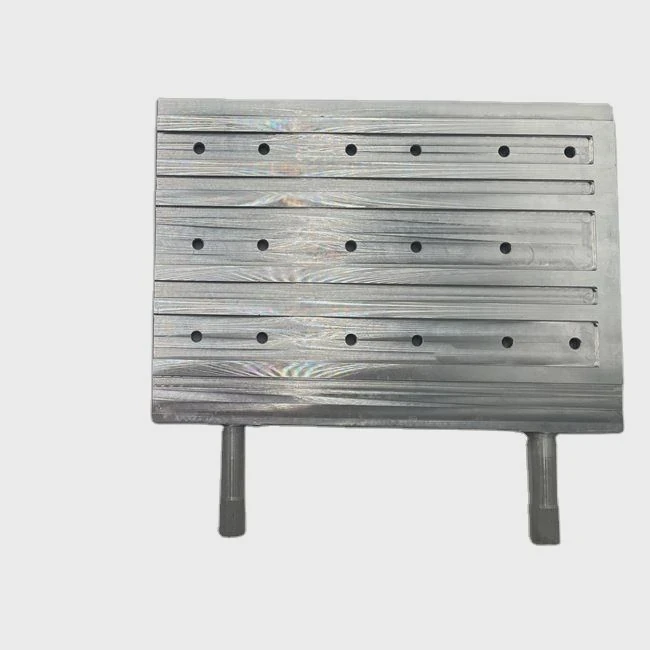
When I visited a thermal engineering lab for the first time, I saw a simple experiment — steam condensing on a copper plate. It looked simple, but the physics behind it is complex. Scientists have studied phase change for over a century, linking it to energy transfer, climate science, and material design.
Scientific studies on phase change focus on how energy, temperature, and molecular interactions govern the transformation between solid, liquid, and gas states.
Historical studies
The first systematic studies of phase change date back to the 19th century. Scientists like James Clerk Maxwell and Ludwig Boltzmann developed kinetic theory, explaining how molecular motion relates to temperature and pressure. Later, Lord Kelvin explored condensation and the concept of equilibrium vapor pressure.
These foundational studies helped explain why condensation occurs at specific conditions of temperature and pressure.
Modern research directions
Today, phase change research extends into several modern fields:
1. Thermal management and energy storage
Phase change materials (PCMs) are used to absorb or release large amounts of heat during phase transitions. They are used in electronics cooling, solar power systems, and building insulation.
2. Nanotechnology and materials science
At the nanoscale, scientists study how condensation behaves on different surfaces. The shape, roughness, and coating of a surface can change how easily condensation forms. This research helps create self-cleaning surfaces and more efficient condensers.
3. Climate and atmospheric science
Condensation plays a major role in cloud formation, precipitation, and global energy transfer. Climate models depend heavily on accurate data about how water vapor condenses in the atmosphere.
4. Cryogenics and low-temperature physics
In extremely low temperatures, gases like nitrogen and oxygen condense into liquids. Understanding these processes allows engineers to design cryogenic storage systems used in rockets, medicine, and superconducting technologies.
A closer look: experimental and theoretical approaches
Scientists use both experimental and computational methods to study condensation.
| Method | Description | Application |
|---|---|---|
| Experimental observation | Use of cameras, sensors, and temperature control chambers to observe droplet formation | Engineering design |
| Molecular dynamics simulation | Simulate how individual molecules move and interact under cooling | Theoretical physics |
| Thermodynamic modeling | Use of equations to predict phase change behavior | Process optimization |
Key scientific models
- Clausius-Clapeyron Equation: Relates pressure and temperature during phase change.
- Kelvin Equation: Explains how curvature affects vapor pressure in small droplets.
- Nucleation Theory: Describes how small clusters of molecules form the first droplets during condensation.
These studies show that phase change is not only a simple cooling effect but a complex balance of molecular energy, structure, and interaction forces.
Conclusion
Cooling a gas reduces its molecular energy, allowing attractive forces to dominate and form a liquid through condensation. This process, observed in everyday life and advanced science, lies at the heart of thermodynamics and energy transfer.
TAGS
Latest Articles

Volume discount levels for heat sink orders?
Buyers often ask when heat sink prices start to drop with volume. Many worry they’re overpaying for small orders. This guide explains how B2B volume pricing works for thermal components. Heat sink
21 Dec,2025
Heat sink long-term supply contract options?
Many buyers want stable pricing and reliable delivery for heat sinks. But without a clear contract, risks grow over time. This article explores how to secure better long-term supply deals. Long-term
21 Dec,2025
Tooling cost for new heat sink profiles?
Many engineers struggle to understand why tooling for custom heat sinks costs so much. They worry about budgeting and production timelines. This article breaks down the cost drivers behind tooling.
21 Dec,2025
Heat sink custom sample process steps?
Sometimes, starting a custom heat sink project feels overwhelming—too many steps, too many unknowns, and too many risks. You want a sample, but not endless delays. The process for requesting and
20 Dec,2025
Standard B2B terms for heat sink payments?
When buyers and sellers in B2B heat sink markets talk about payment, many don’t fully understand what’s standard. This can lead to delayed orders, miscommunication, and even lost business
20 Dec,2025
Heat sink pricing factors for large orders?
Heat sinks are vital for many systems. When prices rise, projects stall and budgets break. This problem can hit teams hard without warning. Large order heat sink pricing depends on many factors. You
20 Dec,2025Related Articles
- How to change liquid in liquid cooling?
- How to replace a liquid cooling system?
- Do I Need Liquid Cooling for 9800X3D?
- Is liquid cooler worth it?
- Heat Sink Manufacturer in Algeria
- Heat Sink Manufacturer in Ukraine
- Is liquid cooling bad?
- Does the Xbox One X have liquid cooling?
- What is liquid cooling technology?
- Which is better, liquid cooling or air?
- Is Alienware Aurora R8 Liquid Cooled?
- How to use liquid nitrogen for cooling?
Author
Dr. Emily Chen
Chief AI Researcher
Leading expert in thermal dynamics and AI optimization with over 15 years of experience in data center efficiency research.
Categories
Latest Products






Recommend Categories
- Liquid cooling plate Manufacturer
- Industrial Heat Sink Manufacturer
- Standard Heat Sink Manufacturer
- Aluminum Heat Sink Manufacturer
- Copper Heat Sink Manufacturer
- Anodized Heatsink Manufacturer
- Stamping heat sink Manufacturer
- Die Casting Heatsink Manufacturer
- Soldering heat sink Manufacturer
- CNC Parts Manufacturer
Latest Products
- Wholesale Aluminum Radiator
- Water Cooling Plate Kit
- Water Cooling Heat Sink
- Water Cooling Heat Sink Kit
- Stainless Steel Water Distributor
- Server Water Cooling Plate Kit
- Server Liquid Cooling System
- Server Aluminum Cooling Kit
- S19 Full Cover Cooling Plate
- S19 Cooling Plate Kit
- S19 Aluminum Cooling Plate
Contact Expert
Have questions about this article? Reach out to our experts directly.