How Do Liquid Cooling Systems Work?
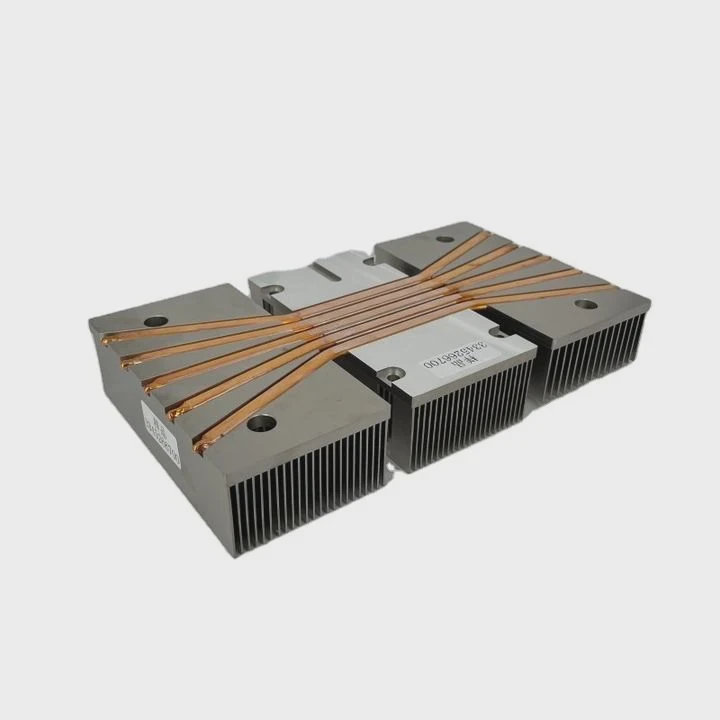
When devices generate heat, air cooling may not be enough. This is when liquid cooling steps in to handle rising thermal loads with precision.
Liquid cooling systems work by circulating a coolant to absorb and remove heat from heat-generating components. This process improves temperature stability and enhances overall performance.
Liquid cooling is becoming the new standard in high-power and high-density applications. Let’s explore how it works, its efficiency, and how to optimize it.
What Is the Working Principle of Liquid Cooling?
When heat builds up inside equipment, liquid coolant transfers it away more effectively than air. It is the same principle that keeps car engines cool during long drives.
Liquid cooling works on the principle of heat conduction and convection, where coolant absorbs heat from a component and releases it through a heat exchanger.
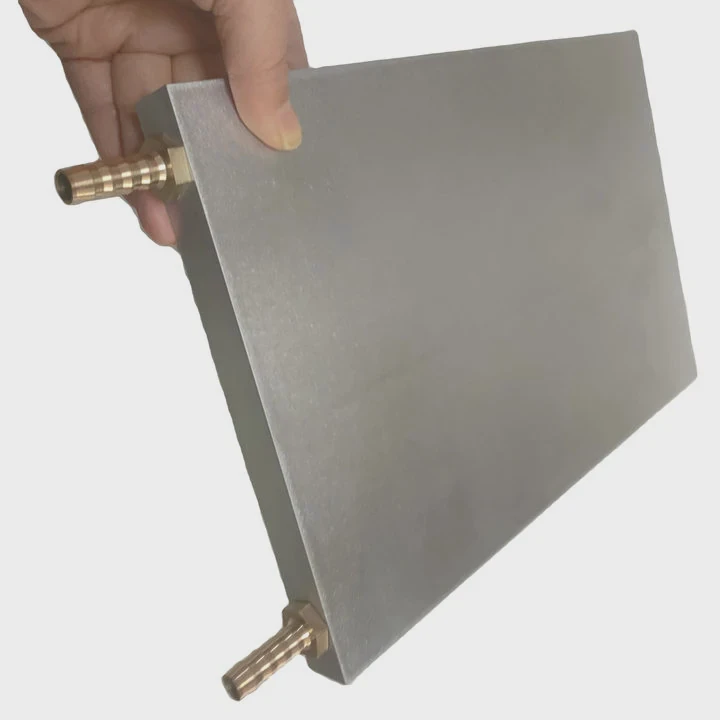
Liquid cooling uses a simple yet efficient loop:
| Component | Function |
|---|---|
| Cold Plate | Absorbs heat from the device |
| Pump | Circulates coolant through the system |
| Heat Exchanger | Transfers heat from liquid to air |
| Reservoir | Stores and regulates coolant volume |
How It Works Step by Step
- Heat Absorption: The cold plate makes direct contact with the heat source (like a CPU, inverter, or IGBT). The coolant inside absorbs the heat.
- Heat Transport: The pump moves the heated liquid to a radiator or heat exchanger.
- Heat Dissipation: The heat exchanger releases the absorbed heat into the surrounding air or another cooling medium.
- Recirculation: The cooled liquid flows back to the cold plate to repeat the process.
Why It Matters
This continuous loop ensures components stay within safe temperature limits, improving reliability and extending service life. The result is a stable and efficient cooling process even under heavy load conditions.
What Are Its Efficiency Advantages?
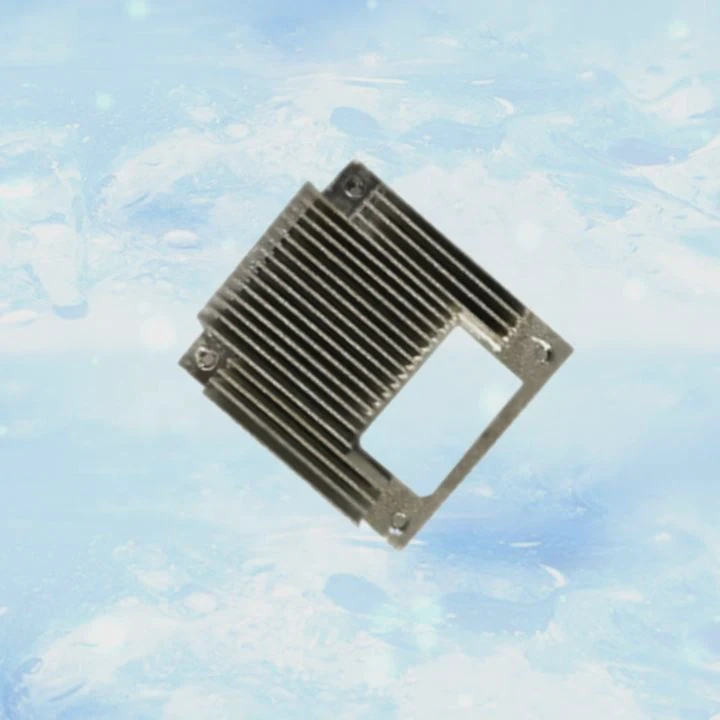
When comparing air and liquid cooling, efficiency becomes the defining factor. Liquid transfers heat about 25 times faster than air.
The efficiency advantage of liquid cooling lies in its high thermal conductivity, lower temperature gradients, and the ability to handle concentrated heat loads.
Comparison Table
| Parameter | Air Cooling | Liquid Cooling |
|---|---|---|
| Heat Transfer Medium | Air | Coolant (Water/Glycol) |
| Thermal Conductivity | Low (~0.024 W/m·K) | High (~0.6 W/m·K) |
| Space Efficiency | Large fans needed | Compact cold plates |
| Noise Level | Higher | Lower |
| Cooling Performance | Moderate | Excellent |
Real-World Advantages
Liquid cooling systems deliver several benefits:
- Better heat dissipation: Ideal for power electronics, servers, and EV batteries.
- Quiet operation: No need for high-speed fans.
- Energy efficiency: Reduces power used by cooling systems.
- Design flexibility: Works well in compact or sealed environments.
- Improved lifespan: Stable thermal control reduces material stress.
Practical Example
In industrial energy systems, liquid cooling can maintain inverter temperatures at 40°C under heavy load, while air cooling might reach 65°C. That difference can double equipment lifespan.
How to Optimize Liquid Cooling Performance?
Even the best systems need fine-tuning to reach peak performance.
To optimize liquid cooling, you must balance coolant flow rate, temperature control, and component design to achieve maximum heat transfer efficiency.
Key Optimization Factors
- Coolant Flow Rate: Too slow, and heat stays trapped; too fast, and the system wastes pump energy.
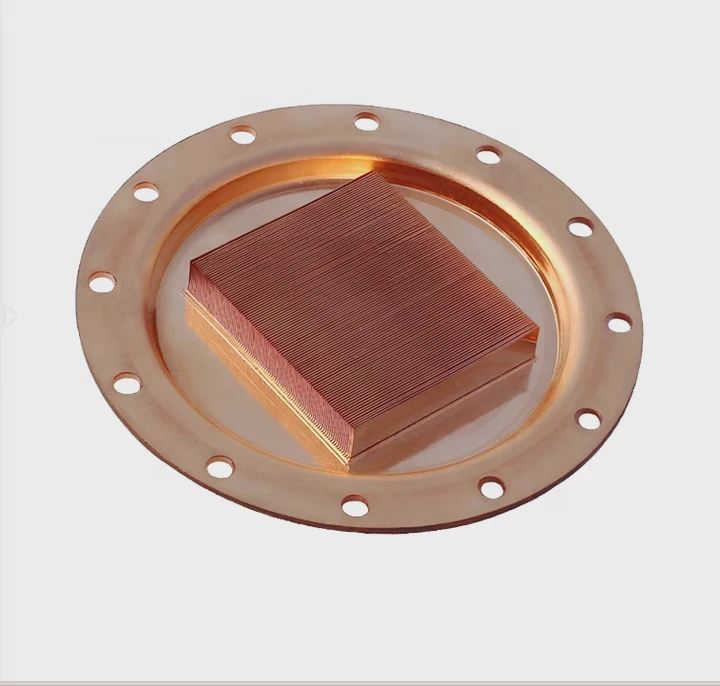
- Material Selection: Use high-conductivity materials like aluminum or copper for cold plates.
- Surface Design: Micro-channels or pin fins increase heat exchange area.
- Coolant Type: Choose the right mix (e.g., water-glycol) for anti-corrosion and thermal performance.
- System Layout: Shorter piping and smooth bends reduce flow resistance.
Practical Optimization Example
When I once worked with a high-density power module, we found that switching to a micro-channel cold plate reduced the temperature rise by 8°C. That single design change boosted system reliability by 20%.
Maintenance and Monitoring
Regular maintenance keeps the system in top condition:
- Check for leaks and coolant level.
- Replace coolant periodically to avoid degradation.
- Clean heat exchangers to prevent blockage.
By monitoring system temperature and flow data, you can predict issues before they cause failure.
What Are the Emerging Trends in System Cooling?
The cooling industry is evolving quickly as energy density and power demands rise.
Emerging trends in liquid cooling include two-phase systems, modular designs, and hybrid cooling solutions that combine liquid and air technologies.
1. Two-Phase Cooling Systems
Two-phase cooling uses the phase change of liquid to vapor for superior heat removal. It is used in aerospace, EVs, and data centers.
- Working principle: The coolant evaporates at the heat source and condenses elsewhere.
- Advantage: Higher heat flux handling with minimal temperature rise.
2. Direct-to-Chip Cooling
This method places cold plates directly on processors or power modules. It reduces thermal resistance and improves response time.
3. Immersion Cooling
Devices are submerged in dielectric fluid. The fluid absorbs heat and circulates naturally or through pumps.
- Benefits: No dust issues, uniform temperature, silent operation.
- Applications: Data centers and high-end computing clusters.
4. Smart Monitoring Systems
IoT-based sensors now track flow rate, pressure, and temperature in real time. With predictive analytics, maintenance becomes proactive.
5. Sustainable Coolants
Environmental regulations are pushing for non-toxic, biodegradable coolants. Water-based and dielectric fluids are replacing older glycol systems.
Trend Summary Table
| Trend | Description | Benefit |
|---|---|---|
| Two-Phase Cooling | Uses phase change to remove heat | Handles higher power density |
| Direct-to-Chip | Cold plate attached directly to chip | Fast heat transfer |
| Immersion Cooling | Full component immersion | Noise-free and even cooling |
| Smart Monitoring | Sensor-driven data tracking | Predictive maintenance |
| Sustainable Coolants | Eco-friendly formulations | Reduced environmental impact |
These innovations mark a shift toward greener and smarter cooling systems. They make future electronics more reliable and sustainable.
Conclusion
Liquid cooling offers unmatched efficiency for modern high-power systems. Its ability to manage heat precisely, quietly, and reliably makes it a vital technology for the next generation of devices and industries.
TAGS
Latest Articles

Volume discount levels for heat sink orders?
Buyers often ask when heat sink prices start to drop with volume. Many worry they’re overpaying for small orders. This guide explains how B2B volume pricing works for thermal components. Heat sink
21 Dec,2025
Heat sink long-term supply contract options?
Many buyers want stable pricing and reliable delivery for heat sinks. But without a clear contract, risks grow over time. This article explores how to secure better long-term supply deals. Long-term
21 Dec,2025
Tooling cost for new heat sink profiles?
Many engineers struggle to understand why tooling for custom heat sinks costs so much. They worry about budgeting and production timelines. This article breaks down the cost drivers behind tooling.
21 Dec,2025
Heat sink custom sample process steps?
Sometimes, starting a custom heat sink project feels overwhelming—too many steps, too many unknowns, and too many risks. You want a sample, but not endless delays. The process for requesting and
20 Dec,2025
Standard B2B terms for heat sink payments?
When buyers and sellers in B2B heat sink markets talk about payment, many don’t fully understand what’s standard. This can lead to delayed orders, miscommunication, and even lost business
20 Dec,2025
Heat sink pricing factors for large orders?
Heat sinks are vital for many systems. When prices rise, projects stall and budgets break. This problem can hit teams hard without warning. Large order heat sink pricing depends on many factors. You
20 Dec,2025Related Articles
- Is liquid cooling hard to maintain?
- What liquid is in liquid cooling?
- Which CPU liquid cooler is best?
- Why is liquid cooling better?
- How to cool liquid quickly?
- Why has the liquid cooling system replaced the air types?
- What Does Liquid Cooling Do in a Computer?
- How to convert air-cooled engine to liquid-cooled engine?
- What liquid is used in immersion cooling?
- How to use a liquid CPU cooler?
- How to Liquid Cool a Graphics Card?
- What does liquid cooling look like?
Author
Dr. Emily Chen
Chief AI Researcher
Leading expert in thermal dynamics and AI optimization with over 15 years of experience in data center efficiency research.
Categories
Latest Products






Recommend Categories
- Liquid cooling plate Manufacturer
- Industrial Heat Sink Manufacturer
- Standard Heat Sink Manufacturer
- Aluminum Heat Sink Manufacturer
- Copper Heat Sink Manufacturer
- Anodized Heatsink Manufacturer
- Stamping heat sink Manufacturer
- Die Casting Heatsink Manufacturer
- Soldering heat sink Manufacturer
- CNC Parts Manufacturer
Latest Products
- Wholesale Aluminum Radiator
- Water Cooling Plate Kit
- Water Cooling Heat Sink
- Water Cooling Heat Sink Kit
- Stainless Steel Water Distributor
- Server Water Cooling Plate Kit
- Server Liquid Cooling System
- Server Aluminum Cooling Kit
- S19 Full Cover Cooling Plate
- S19 Cooling Plate Kit
- S19 Aluminum Cooling Plate
Contact Expert
Have questions about this article? Reach out to our experts directly.