Dimensional inspection methods for heat sink?
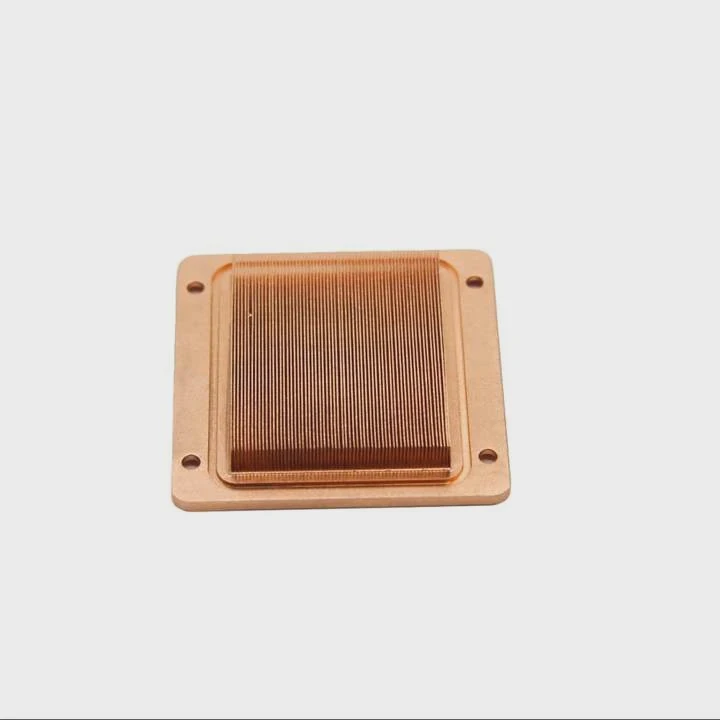
Dimensional errors in heat sinks can cause thermal and assembly problems that ruin setup performance. Customers expect parts that fit tight slots and deliver cooling as designed.
Dimensional inspection ensures you catch errors early and avoid scrap, delays, and performance loss in end products.
This article explains key methods I use or recommend for checking heat sink dimensions. I break down tools, timing, advanced scanning, and standards that guide checks.
What tools measure heat sink dimensions accurately?
If you need accurate data, choosing the right tool matters. The wrong tool yields bad results and leads to rework, waste, and lost time.
Tool choice depends on precision needed, shape complexity, and production volume. I list common tools and why you might pick each.
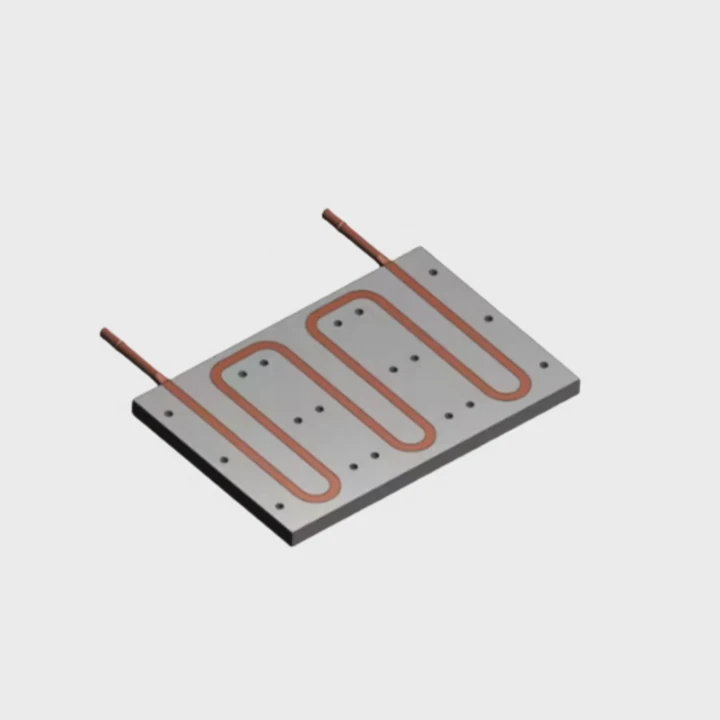
Accurate measurement is the base of quality control. Heat sinks vary by fin count, fin thickness, base size, and profile. If any of these are off, fit and thermal path suffer. Consistent measurements require the right tools and trained operators.
Hand tools for everyday checks
Hand tools are affordable, simple, and fast for first-level checks. They work well in early production and quick in-line checks.
| Tool | Typical Accuracy | Best Use |
|---|---|---|
| Vernier calipers | ±0.02 mm | Measure external and internal widths, depths |
| Micrometers | ±0.01 mm | Thickness, base height |
| Feeler gauges | ±0.05 mm | Small gap and slot checks |
| Height gauges | ±0.02 mm (with good setup) | Profile height from a surface plate |
Vernier calipers are versatile. I use them to check base length, fin height, and slot width. They are easy to hold and read. Micrometers are more precise but only measure specific surfaces.
Feeler gauges find small gaps or finish differences. They help when a slot is too tight or a surface doesn’t mate well. Height gauges give repeatable readings if the surface plate is flat and operator steady.
Optical comparators and CMMs
For higher precision or batch inspection, you need machine measurement tools. Optical comparators and coordinate measuring machines (CMMs) give repeatable and traceable data.
| Machine | Accuracy | Best Use Cases |
|---|---|---|
| Optical comparator | ±0.01 mm | Profile comparison, fin spacing checks |
| Bridge CMM | ±0.005 mm | Full 3D dimensioning with high precision |
| Portable CMM (arm) | ±0.02 mm | On-floor checks of large parts |
Optical comparators project part silhouette on a screen. You compare the outline to a template or overlay. This is great when the shape is complex but mostly 2D from one direction. It’s faster than CMM for some tasks.
Bridge CMMs are the gold standard in quality labs. They move a probe in 3D space and record exact coordinates. They need calibration and stable temperature, but results are reliable.
Portable CMM arms let you measure directly on the shop floor. They are not as accurate as a lab CMM, but they help when part size is large or hard to move.
Laser and structured light tools
Laser tools and structured light scanners offer noncontact measurement. They are faster on complex parts where touching probes is slow or risky.
- Laser micrometers: Good for small profiles, fin-to-fin spacing.
- Structured light scanners: Great for full 3D data sets in minutes.
Noncontact tools reduce wear and avoid tool mark errors. But they need careful setup to avoid noise, especially on reflective metals like aluminum heat sinks.
How often should inspections occur in production?
If you inspect too little, defects escape. If you inspect too much, you waste time and money. The right schedule balances quality and throughput.
The frequency of inspection depends on process stability, part criticality, and volume. Here I explain common plans that work in real factories.
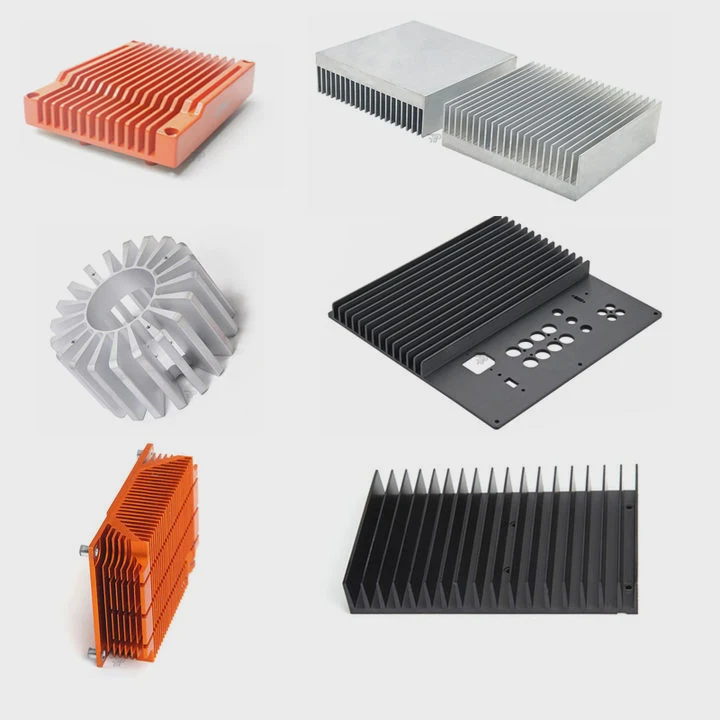
Inspection timing should align with key process stages. Early checks catch problems before products pile up. Later checks make sure corrective actions worked.
First article inspection (FAI)
FAI happens when you run a new job or a new design. It verifies that the first part meets all critical dimensions before you approve full production.
- Check all critical features.
- Use the highest accuracy tools you have.
- Document results and compare with drawings.
FAI prevents bad batches and becomes a reference for later checks.
In-process sampling
During production, inspect a sample at regular intervals. This plan catches drift in tools, fixtures, or machine condition.
Common approaches include:
- Every shift: Check key dimensions on 5–10 parts.
- Every lot: Sample 2–5 parts from each lot of 50–100.
- Attribute charts: Pass/fail counts per batch.
This keeps close control without stopping production for every piece.
100% inspection vs. sampling
100% inspection means every part is checked. This is heavy, but some conditions need it:
- Very high risk of failure.
- Parts that cannot be corrected later.
- When customer demands it.
Sampling works when process capability is proven stable. Use control charts and inspection data to decide if sampling is enough.
End-of-line and pre-shipment
Final checks catch any issues left after machining, cleaning, and packaging. Pre-shipment checks are often required by customers before goods leave the factory.
These checks include:
- Dimension checks,
- Visual finish checks,
- Fit checks with mating parts.
These steps give confidence that products meet requirements at delivery.
Can 3D scanning be used for complex sinks?
Complex heat sinks with curved or organic shapes are hard to measure with picking a few points. A 3D scan gives you a full surface map.
3D scanning is not only possible, it is very useful for complex heat sinks, reverse engineering, and CAD comparison.
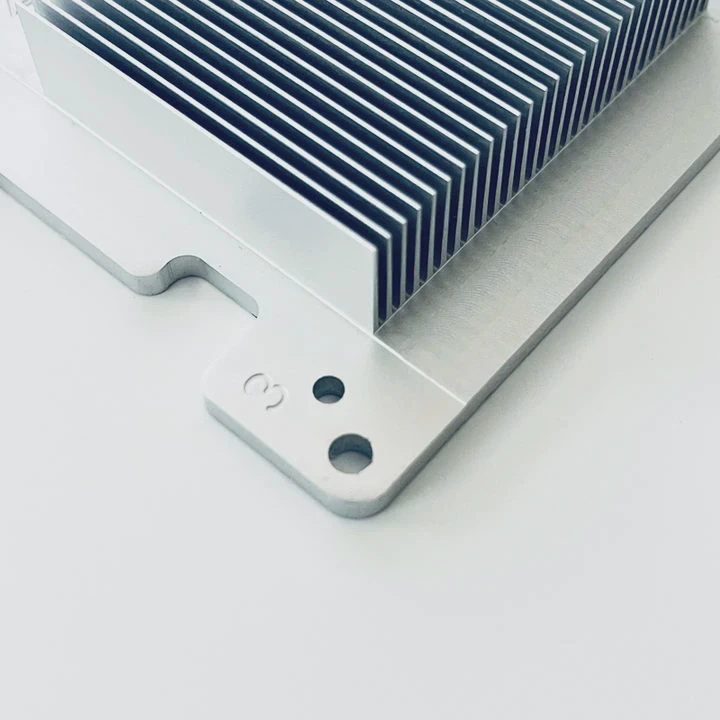
3D scanning captures the entire surface in a cloud of millions of points. This allows you to check every detail, not just select features. It speeds up inspection and gives more insight on how the part deviates from design.
How 3D scanning works
3D scanners use lasers or structured light. They reflect patterns off the part and capture them with cameras. Software builds a dense point cloud that represents the shape.
Because the output contains many points, you can:
- Compare with CAD models.
- Identify local deformations.
- Compute dimensional differences anywhere.
This is not possible with hand tools or point probes.
When to choose 3D scanning
3D scanning is best when:
- The heat sink has complex curves or fins.
- You need a full profile analysis.
- You want visual color maps of deviation.
It is also useful for:
- Reverse engineering: Create digital models of existing parts without drawings.
- Tool qualification: Check tooling wear or die deformation.
- Process feedback: Understand where machining goes out of tolerance.
Limitations to keep in mind
3D scanning is powerful, but it has limits:
- Surface finish: Highly reflective aluminum can cause noise in scans. Use spray coating or matte sprays if allowed.
- Accuracy: Scanners vary in accuracy. Some give ±0.02 mm, which is good but less than CMMs.
- Training: Operators need practice to avoid artifacts and ensure coverage.
Despite these limits, 3D scanning is a major step forward for complex shapes and provides data that traditional tools cannot.
How results are used
After scanning, you align the scan to the CAD reference. Software shows deviation maps with colors:
| Color | Meaning |
|---|---|
| Green | Within tolerance |
| Red | Above upper tolerance |
| Blue | Below lower tolerance |
These maps help you see where machining needs improvement or where tooling deflects during cutting.
What standards guide dimensional tolerance checks?
To inspect heat sinks properly, you need standards that define measurement methods and tolerances. Standards give you trusted references and help make consistent decisions.
Standards from ISO, ASME, and IPC guide how you inspect, report, and control dimensional tolerances. Below I describe key standards used in metal parts inspection.
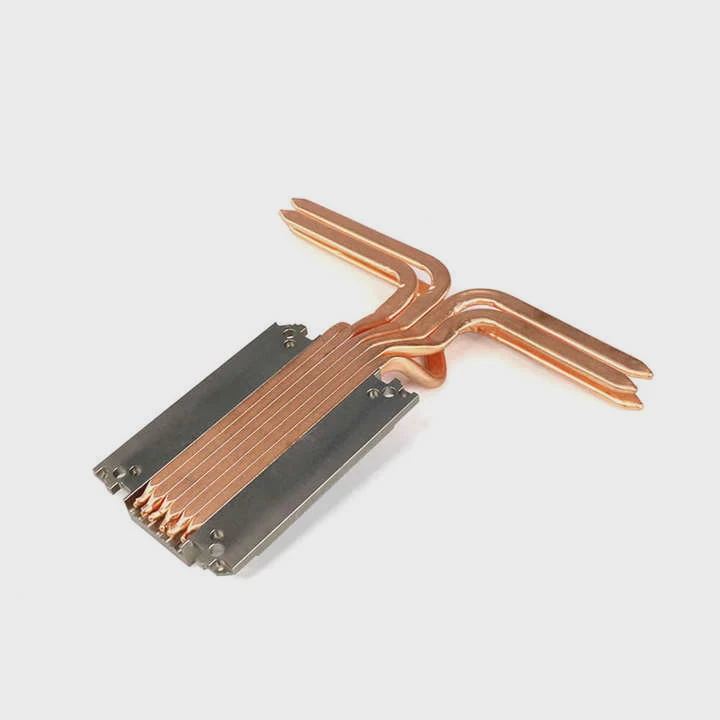
Standards make sure everyone measures the same way. They define how to interpret drawing tolerances, how to report results, and how to verify feature form.
ISO and ASME general standards
The basic standards for general dimensioning and tolerancing are:
- ISO 1101: Geometrical product specifications (GPS) – Geometric tolerancing.
- ASME Y14.5: Dimensioning and tolerancing standard for mechanical parts.
These standards define:
- Flatness
- Straightness
- Perpendicularity
- Circularity
- Profile tolerances
For heat sinks, profile tolerances on fin spacing and flatness on base surfaces are often critical.
Surface texture and finish standards
Surface finish can affect how cooling compound behaves and how heat sink contacts other parts.
Key standards include:
- ISO 1302: Specifies symbols for surface texture.
- ASME B46.1: Defines terminology and parameters for surface roughness.
When finish matters, measure roughness with contact or optical profilometers.
Inspection process standards
Standards also cover how to inspect and report results:
| Standard | Purpose |
|---|---|
| ISO 14253 | Inspection by attributes and decision rules |
| ISO 17025 | Testing and calibration lab competence |
| AS9102 | First Article Inspection requirements for aerospace |
ISO 14253 gives rules for deciding pass/fail when measured value is near tolerance limits. ISO 17025 is for labs that want accreditation for measurement competence.
AS9102 is used in aerospace and heavy industries. It requires very detailed first article reports.
Statistical and capability standards
To show your process is stable and capable, use statistical standards:
- ISO 2844: Statistical methods for quality control.
- AIAG MSA: Measurement System Analysis guide.
MSA studies how much variation comes from measurement tools and operators. It shows if your measurement system is reliable.
How standards help in heat sink checks
Standards help by:
- Defining how to call out tolerance on drawings.
- Telling inspection teams what method to use.
- Giving rules to decide if parts pass.
- Helping customers and suppliers agree on criteria.
When you follow standards, you reduce disputes and improve quality communication.
Conclusion
Dimensional inspection for heat sinks must use the right tools, a smart schedule, and clear standards. Hand tools, CMMs, and 3D scanning each have roles. Inspections should run at key steps, and industry standards ensure checks are fair and repeatable. With good inspection, you avoid defects and deliver parts that work as intended.
TAGS
Latest Articles

Volume discount levels for heat sink orders?
Buyers often ask when heat sink prices start to drop with volume. Many worry they’re overpaying for small orders. This guide explains how B2B volume pricing works for thermal components. Heat sink
21 Dec,2025
Heat sink long-term supply contract options?
Many buyers want stable pricing and reliable delivery for heat sinks. But without a clear contract, risks grow over time. This article explores how to secure better long-term supply deals. Long-term
21 Dec,2025
Tooling cost for new heat sink profiles?
Many engineers struggle to understand why tooling for custom heat sinks costs so much. They worry about budgeting and production timelines. This article breaks down the cost drivers behind tooling.
21 Dec,2025
Heat sink custom sample process steps?
Sometimes, starting a custom heat sink project feels overwhelming—too many steps, too many unknowns, and too many risks. You want a sample, but not endless delays. The process for requesting and
20 Dec,2025
Standard B2B terms for heat sink payments?
When buyers and sellers in B2B heat sink markets talk about payment, many don’t fully understand what’s standard. This can lead to delayed orders, miscommunication, and even lost business
20 Dec,2025
Heat sink pricing factors for large orders?
Heat sinks are vital for many systems. When prices rise, projects stall and budgets break. This problem can hit teams hard without warning. Large order heat sink pricing depends on many factors. You
20 Dec,2025Related Articles
- Bonding methods to improve heat sink transfer?
- Heat sink machining standards for precision parts?
- what is the best CNC plasma cutter?
- How heat sink extrusion is manufactured?
- Heat sink usable in coastal high-humidity areas?
- Heat sink usage in power distribution panels?
- Heat sink export packaging requirements?
- Requirements for custom heat sink extrusion dies?
- Heat sink coating durability testing methods?
- Mechanical strength standards for heat sink?
- Heat sink RoHS compliance details?
- REACH document needs for heat sink?
Author
Dr. Emily Chen
Chief AI Researcher
Leading expert in thermal dynamics and AI optimization with over 15 years of experience in data center efficiency research.
Categories
Latest Products






Recommend Categories
- Liquid cooling plate Manufacturer
- Industrial Heat Sink Manufacturer
- Standard Heat Sink Manufacturer
- Aluminum Heat Sink Manufacturer
- Copper Heat Sink Manufacturer
- Anodized Heatsink Manufacturer
- Stamping heat sink Manufacturer
- Die Casting Heatsink Manufacturer
- Soldering heat sink Manufacturer
- CNC Parts Manufacturer
Latest Products
- Wholesale Aluminum Radiator
- Water Cooling Plate Kit
- Water Cooling Heat Sink
- Water Cooling Heat Sink Kit
- Stainless Steel Water Distributor
- Server Water Cooling Plate Kit
- Server Liquid Cooling System
- Server Aluminum Cooling Kit
- S19 Full Cover Cooling Plate
- S19 Cooling Plate Kit
- S19 Aluminum Cooling Plate
Contact Expert
Have questions about this article? Reach out to our experts directly.