Heat sink machining standards for precision parts?
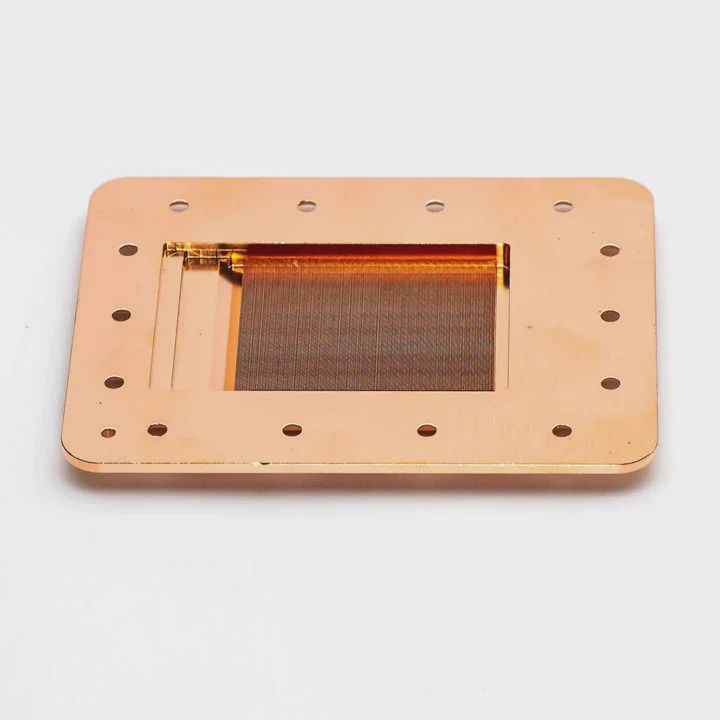
In many projects, poor heat sink machining causes failures and delays. The wrong tolerances can lead to bad assembly fits and poor thermal contact.
Precision heat sink parts must meet tight machining standards to perform well in electronics cooling. These standards cover tolerances, surface quality, material behavior, and quality documentation to guide every stage of production.
Good standards keep teams and machines aligned. Without them, parts will vary and lead to waste and cost increases. In this article, we discuss all key aspects of these standards in practical terms for engineers and machinists.
Precision heat sink parts must meet a set of clearly defined machining standards to deliver reliable performance. These include dimensional tolerances, surface roughness limits, material‑related accuracy controls, and formal documentation for quality assurance. Each topic below breaks down what you need to know.
What tolerances apply to precision heat sink parts?
Precision heat sink parts must fit with other components. These fits depend on dimensional tolerances. If the tolerances are too wide, parts will wobble or not make good thermal contact. If too tight, assembly may be hard or damage parts.
Typical tolerances for precision heat sink parts are tight. They are often in the range of ±0.01 mm to ±0.05 mm or better, depending on the application and machine capability.
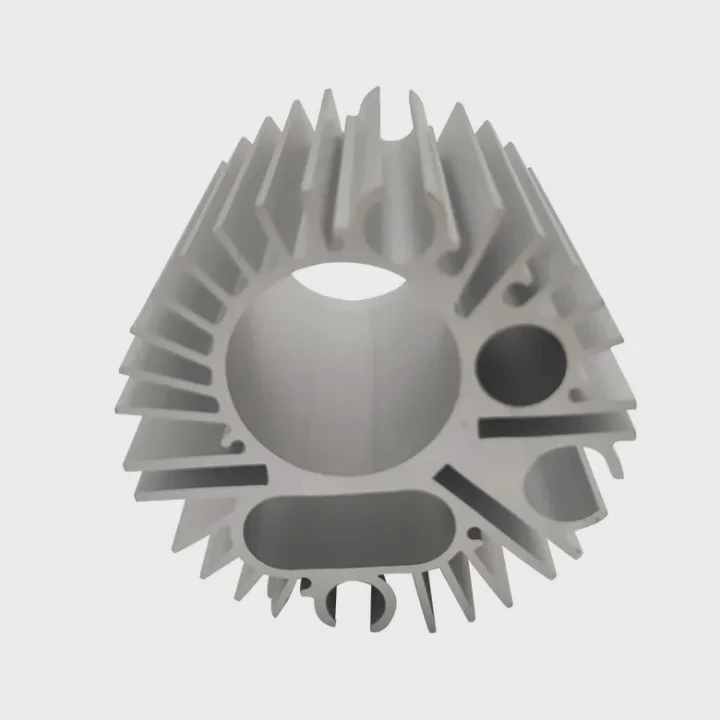
Tolerance standards state how much a dimension is allowed to vary from its nominal value. In heat sink machining, tolerance limits affect key areas like flatness, parallelism, hole positions, and groove widths.
Why tolerances matter
Heat sink parts must interface with other pieces like housing, chips, brackets, and fasteners. When two parts meet, their surfaces must align within limits. If holes are off by even 0.1 mm, screws might not fit or the heat path may be interrupted.
Tighter tolerances result in better contact and more predictable thermal performance. But tight tolerances also increase machining costs and require better machines and tools.
Common tolerance ranges
Tolerance needs vary by part function. Below is a table showing typical ranges by feature:
| Feature type | Typical tolerance | Notes |
|---|---|---|
| Flat surface | ±0.01 to ±0.03 mm | For critical mating faces |
| Hole position | ±0.02 to ±0.05 mm | Depends on bolt size and fit type |
| Groove width | ±0.02 to ±0.04 mm | Affects clips and cooling fins |
| Thickness | ±0.01 to ±0.05 mm | Depends on heat path requirement |
How to choose tolerances depends on the design. An engineer must balance performance needs with machining cost and time.
Standards and machining shops
Many machining shops use standards like ISO 2768 for general tolerances on milled parts, but heat sinks often require tighter values than ISO defaults. A custom tolerance table entered on drawings helps machinists know exactly what is needed.
In addition, GD&T (Geometric Dimensioning and Tolerancing) standards such as ASME Y14.5 or ISO 1101 help control complex shapes. These standards define how to control form, orientation, and location features in a uniform way.
Effects on assembly and performance
When tolerances are correct, parts fit quickly and reliably. When they are not, rework and scrapping increase. Poor tolerances can also weaken thermal contacts between the heat sink and components. Thermal resistance goes up if surfaces do not mate well, reducing cooling efficiency.
Measuring tolerances
Machinists and quality teams use instruments like CMMs (coordinate measuring machines), height gauges, and optical comparators to check tolerances. For truly tight limits, machines must be calibrated and operators trained.
In summary, tolerances for precision heat sink parts must be defined with clear limits. They help machines produce parts that fit well, assemble easily, and meet thermal goals.
How is surface roughness controlled in machining?
Surface roughness affects thermal contact and airflow. Rough surfaces create gaps under contact or trap air and dirt. In heat sink machining, roughness control is essential.
Surface roughness for heat sink parts is usually specified in Ra or RMS values, often targeting very smooth values like Ra 0.4 μm to 1.6 μm, depending on the surface function.
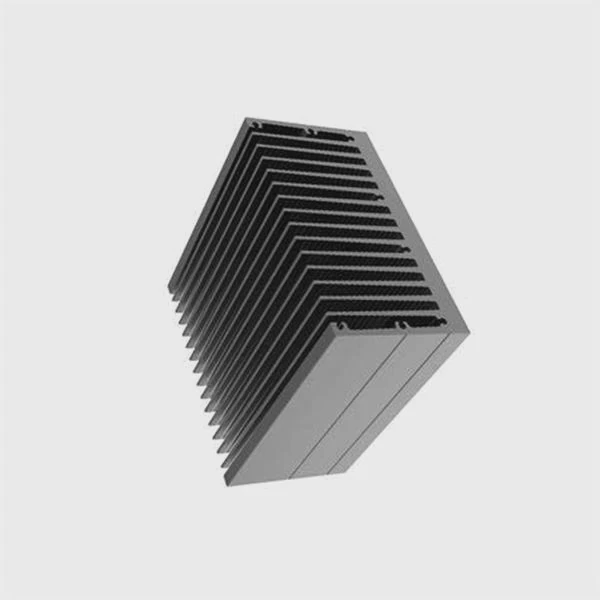
Surface roughness control starts with design requirements and extends through tool choice, machine settings, and finishing processes.
What surface roughness means
Roughness describes the small peaks and valleys on a surface. A lower Ra (average roughness) means smoother surface. Smooth surfaces reduce thermal contact resistance when parts touch. They also reduce air turbulence where airflow must be laminar. These conditions improve both conduction and convection cooling.
Roughness is measured in micrometers (μm) or microinches. Typical values for precision thermal parts are in the range of 0.4 to 1.6 μm Ra.
How machining affects roughness
Several machining factors affect surface finish:
Tool type and geometry
Sharp, well‑ground tools produce smoother surfaces. Coated tools reduce friction and wear, maintaining smoother cuts over time.
Spindle speed and feed rate
Higher spindle speeds with appropriate feed rates generally improve surface finishes. Too slow or too fast feed rates create chatter and rough cuts.
Machine rigidity
Rigid machines with minimal vibration produce better surface finishes. Vibrations during cutting cause tool marks and uneven surfaces.
Coolant and lubrication
Using the right coolant keeps the tool cool and removes chips from the cutting area. This improves surface finish by preventing tool wear and surface burns.
Finishing operations
Primary milling often leaves surface roughness above desired limits. Secondary operations help:
Grinding
Grinding uses abrasives to smooth surfaces after rough cutting. It is common for heat sink base surfaces.
Honing and polishing
For very smooth surfaces, polishing with fine abrasives reduces Ra values further. Polishing must be controlled to maintain flatness.
Lapping
Lapping uses two surfaces with abrasive slurry to produce ultra‑smooth finishes. It is used for critical thermal contact faces.
Surface roughness standards
Standards like ISO 4287, ISO 1302, or ASME B46.1 define roughness measurement methods and symbols. Designers indicate roughness on drawings using these standards.
Measuring roughness
In practice, technicians use instruments such as profilometers. A stylus profilometer drags a fine needle across the surface and measures peaks and valleys. Non‑contact optical systems are also used.
Practical roughness targets
Below is a table of surfaces and typical roughness values:
| Surface location | Typical roughness (Ra) | Reason |
|---|---|---|
| Heat sink base face | 0.4–0.8 μm | Critical thermal contact |
| Cooling fins | 1.0–1.6 μm | Airflow surfaces |
| Mounting faces | 0.8–1.2 μm | Mechanical fit |
| Bolt holes | 1.2–1.6 μm | Not critical thermal paths |
Roughness vs cost
Achieving very low surface roughness increases machining time and cost. It is important to target the right level for function. For example, base surfaces that seat against a chip require smoother finishes than simple air channel walls.
In summary, surface roughness control is a combination of design specification, machine settings, tools, finishing techniques, and measurement. Engineers and shops must work together to hit the targets efficiently.
Can CNC accuracy vary by material hardness?
Material hardness affects how a CNC machine cuts a part. Harder materials resist cutting forces more, causing tool wear and deflection. Softer materials may deform or chatter. Both conditions affect accuracy.
Yes, CNC accuracy can vary with material hardness because harder alloys cause faster tool wear and deflection, while softer metals may deform, so cutting strategies and tools must be adapted to the material.
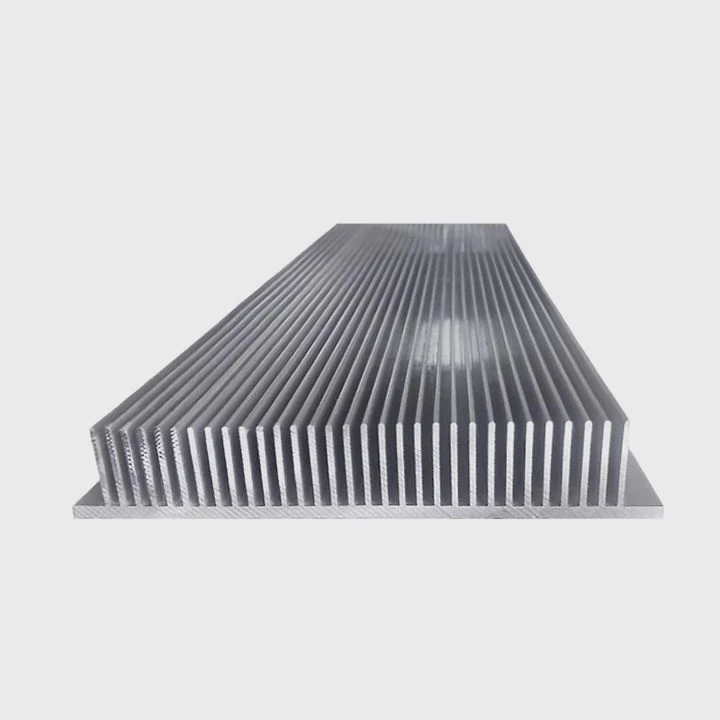
CNC machines move tools with high repeatability, but the material being cut changes how forces develop. The result is that parts machined from different materials can come out with different accuracies unless the process is tuned.
Hard materials and machining
Hard materials like some aluminum alloys, copper, or steel have high resistance to cutting. When a tool cuts these materials:
Tool wear increases
Hard materials wear tools faster. A worn tool makes less precise cuts. The tool edge becomes dull, which increases heat and expands the workpiece locally.
Machine loads rise
Cutting hard material increases forces on the machine. If the machine is not rigid or well maintained, this can cause small deflections. These deflections affect dimensions and surface finish.
Soft materials and machining
Soft materials like pure aluminum or some plastics are easy to cut, but they introduce other issues:
Material deformation
Soft metals can bend or smear under cutting forces. This affects accuracy, especially in thin walls or small features.
Chatter and vibration
Soft materials tend to chatter if feeds and speeds are not set correctly. Chatter marks affect surface finish and may change dimensions.
Adapting CNC strategies
To control accuracy across different materials, machinists adjust:
Tool selection
Tools designed for specific materials help manage wear and deformation. For hard materials, carbide tools with coatings hold up better. For soft materials, sharp tools with proper chip evacuation work best.
Feeds and speeds
Each material has an optimal feed rate and spindle speed. Setting these correctly reduces forces and heat, improving accuracy.
Coolants and lubrication
Effective coolant use helps reduce heat and chip buildup. This keeps tools from wearing too quickly and prevents surface burns.
Calibration and compensation
Modern CNC machines use compensation algorithms. These compensate for thermal expansion, tool wear, and other factors. However, compensation only works if the machine is set up with correct parameters for the material.
Examples of material effects
Here is a simple table comparing two materials and how they affect machining:
| Material | Hardness effect | Typical issues | Control measures |
|---|---|---|---|
| Hard aluminum alloy (e.g., 7075) | High wear, heat | Tool wear, deflection | Coated tools, lower feed |
| Soft aluminum (e.g., 6061) | Deformation | Chatter, smearing | Stable fixtures, higher feed |
In practice, machinists run test cuts to tune parameters. They measure the results and adjust feeds, speeds, or even tool paths to achieve desired accuracy.
Tool life and accuracy
Tool life plays a big role in accuracy. A tool that is sharp at first will cut accurately. As it dulls, accuracy drops. Shops schedule tool changes based on material and expected wear to keep parts within tolerance.
In summary, CNC accuracy varies with material hardness. Harder materials demand different setups than softer ones. Proper tooling, feeds, cooldown, and machine calibration are essential to maintain accuracy across different materials.
What documentation supports machining QA?
To ensure heat sink parts meet standards, documentation is essential. Quality assurance (QA) ensures everything that is made is measured, recorded, and verified.
Documentation that supports machining QA includes inspection reports, process control plans, machine setup sheets, measurement data, and certification records like material tests and traceability logs.

Documentation serves many purposes. It provides evidence that parts were made correctly. It helps teams troubleshoot issues. It also demonstrates compliance with contracts and standards.
Types of QA documentation
The main forms of QA documentation include:
1. Inspection reports
Inspection reports detail measured values compared to requirements. They contain readings from tools like calipers, CMMs, profilometers, and gauges.
2. Process control plans
These plans outline each step in the machining process. They list tools, machines, parameters, and checks required at each stage.
3. Machine setup sheets
Setup sheets guide operators on how to prepare the machine. They list cutting tools, tool offsets, fixtures, and workholding details.
4. Material certificates
These records show that incoming material meets specified standards. They often include alloy composition and hardness test results.
5. Traceability logs
Traceability logs link each part to its batch, machine, operator, and inspection records. This helps track issues back to their source.
Standards for QA documentation
Many companies align their QA documentation with quality systems like ISO 9001 or automotive standard IATF 16949. These systems require documented procedures and records.
Documentation must be clear, up to date, and stored properly. Many companies use digital systems to manage QA documents and make them accessible to teams.
What to include in inspection reports
Inspection reports should contain:
- Part number and drawing revision
- Date and inspector name
- Measured values and units
- Tolerance limits
- Pass/fail indication
- Notes on any deviations
Here is a sample structure for an inspection report table:
| Field | Description |
|---|---|
| Part ID | Unique identifier for the part |
| Feature | Dimension or surface measured |
| Measured value | The actual reading |
| Tolerance | Acceptable range |
| Result | Pass or fail |
| Inspector | Person who checked the part |
| Date | When inspection took place |
Good inspection reports help trace issues later if parts fail in the field.
Control plans
Control plans describe how a part will be manufactured and checked. They usually include process steps, inspection points, criteria, and responsible parties.
A typical control plan table might look like this:
| Step | Operation | Tool/Equipment | Inspection |
|---|---|---|---|
| 1 | Rough milling | CNC mill | Visual check |
| 2 | Finish milling | CNC mill | Dimensional check |
| 3 | Surface grinding | Grinder | Roughness measurement |
| 4 | Final inspection | CMM | Full report |
Each step links to documentation so the whole process is visible.
Benefits of good documentation
Good documentation reduces rework. It helps new operators learn processes. It also proves compliance to customers and auditors.
Most importantly, it gives confidence that parts were made right the first time.
Conclusion
Machining standards for precision heat sink parts cover tolerances, surface quality, material behavior, and quality documentation. Clear standards and strong QA practices help deliver parts that fit well, perform thermally, and meet customer needs. Consistent processes and records also reduce risk and improve reliability.
TAGS
Latest Articles

Volume discount levels for heat sink orders?
Buyers often ask when heat sink prices start to drop with volume. Many worry they’re overpaying for small orders. This guide explains how B2B volume pricing works for thermal components. Heat sink
21 Dec,2025
Heat sink long-term supply contract options?
Many buyers want stable pricing and reliable delivery for heat sinks. But without a clear contract, risks grow over time. This article explores how to secure better long-term supply deals. Long-term
21 Dec,2025
Tooling cost for new heat sink profiles?
Many engineers struggle to understand why tooling for custom heat sinks costs so much. They worry about budgeting and production timelines. This article breaks down the cost drivers behind tooling.
21 Dec,2025
Heat sink custom sample process steps?
Sometimes, starting a custom heat sink project feels overwhelming—too many steps, too many unknowns, and too many risks. You want a sample, but not endless delays. The process for requesting and
20 Dec,2025
Standard B2B terms for heat sink payments?
When buyers and sellers in B2B heat sink markets talk about payment, many don’t fully understand what’s standard. This can lead to delayed orders, miscommunication, and even lost business
20 Dec,2025
Heat sink pricing factors for large orders?
Heat sinks are vital for many systems. When prices rise, projects stall and budgets break. This problem can hit teams hard without warning. Large order heat sink pricing depends on many factors. You
20 Dec,2025Related Articles
- what is the best CNC plasma cutter?
- How heat sink extrusion is manufactured?
- Heat sink usable in coastal high-humidity areas?
- Heat sink usage in power distribution panels?
- Heat sink selection for aerospace electronics?
- Heat sink performance in medical equipment?
- Bonding methods to improve heat sink transfer?
- Dimensional inspection methods for heat sink?
- Heat sink export packaging requirements?
- Requirements for custom heat sink extrusion dies?
- Heat sink coating durability testing methods?
- Mechanical strength standards for heat sink?
Author
Dr. Emily Chen
Chief AI Researcher
Leading expert in thermal dynamics and AI optimization with over 15 years of experience in data center efficiency research.
Categories
Latest Products






Recommend Categories
- Liquid cooling plate Manufacturer
- Industrial Heat Sink Manufacturer
- Standard Heat Sink Manufacturer
- Aluminum Heat Sink Manufacturer
- Copper Heat Sink Manufacturer
- Anodized Heatsink Manufacturer
- Stamping heat sink Manufacturer
- Die Casting Heatsink Manufacturer
- Soldering heat sink Manufacturer
- CNC Parts Manufacturer
Latest Products
- Wholesale Aluminum Radiator
- Water Cooling Plate Kit
- Water Cooling Heat Sink
- Water Cooling Heat Sink Kit
- Stainless Steel Water Distributor
- Server Water Cooling Plate Kit
- Server Liquid Cooling System
- Server Aluminum Cooling Kit
- S19 Full Cover Cooling Plate
- S19 Cooling Plate Kit
- S19 Aluminum Cooling Plate
Contact Expert
Have questions about this article? Reach out to our experts directly.