Heat sink usage in power distribution panels?
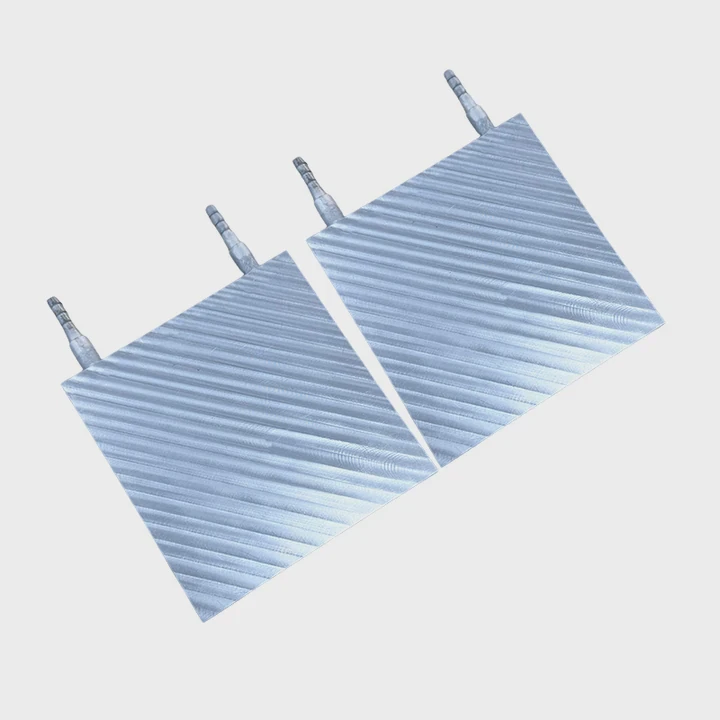
Power distribution panels often run hot under heavy load. Without proper cooling, they can overheat and fail. Poor thermal design can cause downtime or worse — fire risk.
Effective heat sink design helps avoid overheating, improves safety, and ensures stable power supply in panels. Proper sink selection balances size, airflow, and load demands.
In this article I explore key issues in panel heat sink use. I start with basic constraints on size. Then I examine how load cycles shape thermal planning. I ask whether modular heat sinks offer benefits. Finally I look at codes and regulations that guide panel cooling design. Each section helps engineers or system designers make better decisions.
What size constraints apply to panel heat sinks?
Many panels are compact. Space is tight. That means heat sinks must fit within fixed enclosure volumes. Also vents and airflow paths limit size. A too-large sink may block wires or airflow.
Heat sink size is limited by enclosure space, clearance for wiring and airflow, and need to avoid blocking maintenance access. Designers must measure carefully and plan layout early.
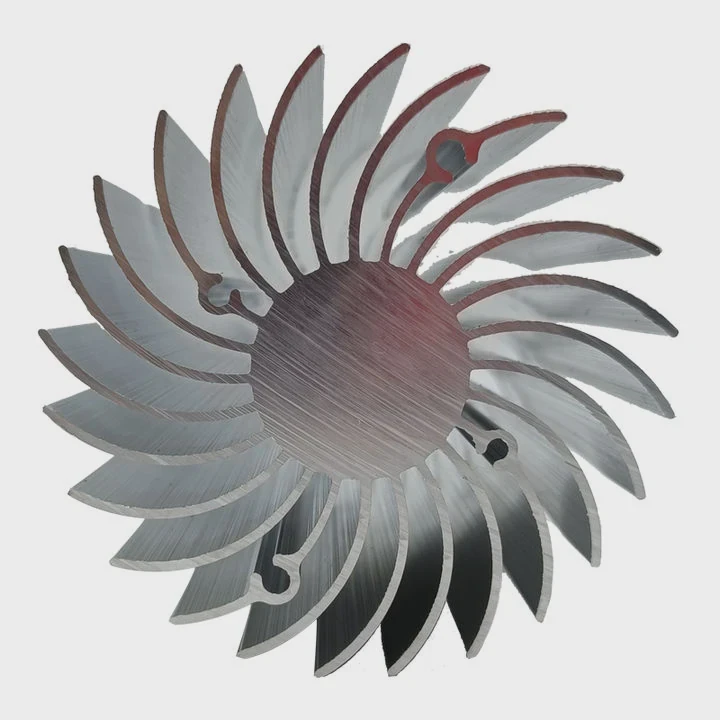
To pick the right heat sink size, one must start by measuring the internal volume of the panel enclosure. The interior includes space for cables, connectors, breakers or busbars. If a heat sink is too tall or wide, it can interfere with those components or with the door closure. If it sits too close to wiring, it can block airflow. If it sits too near panel walls, it can create hotspots or thermal resistance.
Key physical constraints
Here is a simple table of typical constraints and how they affect heat sink size:
| Constraint type | Typical limit or factor | Impact on heat sink design |
|---|---|---|
| Enclosure internal volume | Height, width, depth in mm or inches | Max sink size must fit within these dimensions |
| Clearance for wiring | 20-50 mm between sink and wires | Prevent short circuits, allow airflow |
| Access clearance | 50-100 mm for maintenance access | Limits sink protrusion |
| Airflow path and venting | Air inlet/outlet location and size | Sink fins must align with airflow direction |
If the panel is tall but narrow, designers may use vertical sinks aligned with airflow. If open space is limited, flat, low‑profile sinks may work better. In panels with many wires, a block sink might interfere with cable routing. In some cases, custom-shaped sinks are needed to avoid conflicts.
Another factor is the surrounding ambient temperature. If the outside air around the panel is warm, the sink may need to be larger to dissipate the same amount of heat. But larger size might not fit. That forces designers to balance thermal performance and space constraints.
Manufacturers should refer to panel internal drawings early. They should place all major components first, then fit heat sinks around those. They should also test with dummy loads to check thermal behavior. It is best to design the sink as part of the panel layout, not as an afterthought.
Overall, size constraints for panel heat sinks come from physical space, wiring clearance, airflow path, maintenance access and ambient conditions. Good planning early prevents clashes and ensures both safety and performance.
How do load cycles influence thermal planning?
Panels seldom carry constant load. Loads go up and down depending on power demand. Surge, peak times, and idle periods shape thermal cycles. These cycles affect heat buildup and cooldown behavior. Without planning, frequent load swings can cause repeated thermal stress.
Load cycles — regular ups and downs in power demand — require sinks to handle both steady heat and surges without overheating or fatigue.
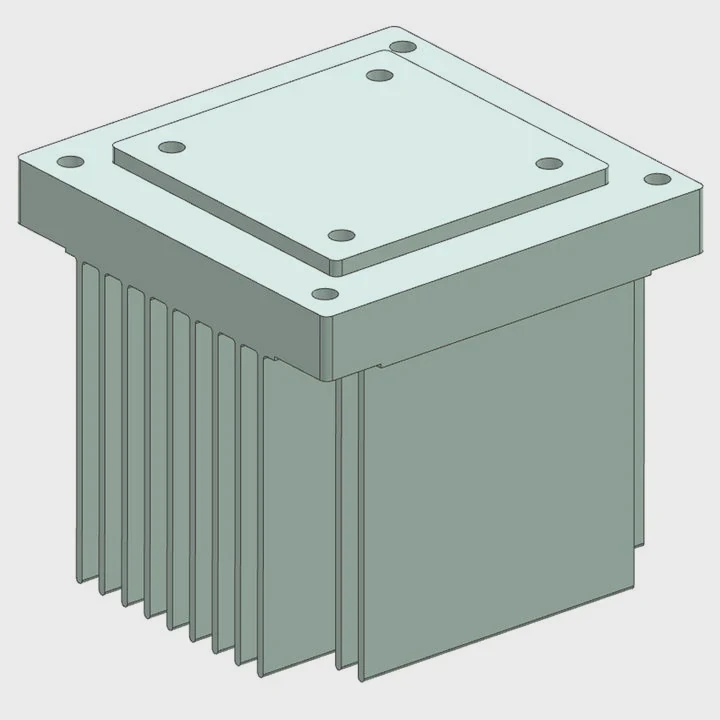
When panel load changes over time, heat generated by current flow also changes. A long period of high load will raise temperature steadily. If load drops, temperature will fall. That heating and cooling creates thermal cycles. Over many cycles, materials can fatigue. Connectors and solder joints can weaken. Also, repeated cycles can lead to hotspots if sink or layout cannot respond fast.
Why cycles matter
- Thermal inertia: A heavy sink holds heat longer. After load drops, it cools slowly. That may keep temperature high longer than needed.
- Heat accumulation during spike: Short bursts of high load may raise temperature fast. If sink and airflow are not enough, you get a temporary overheating.
- Fatigue on components: Repeated expansion/contraction can stress connectors, solder joints, and even sink mounting hardware.
Planning for cycles
To design for cycles, consider worst‑case load profile. A chart of load over 24 hours helps. For example, if load peaks at 200% of average for a few minutes, sink size and airflow must handle that. Designers may add a margin, say 25–50% above steady load capacity.
One can estimate required thermal mass. A larger sink adds thermal mass and slows temperature rise. But if it is too large, it will also slow cooldown during low load or shutdown. In panels that see frequent switches, one might choose a sink with moderate mass but effective airflow and good convective fins. That helps temperature track load more closely.
Also, using temperature sensors helps. A sensor tied to a fan or vent can adjust airflow depending on load or internal temperature. That dynamic control can save energy and reduce stress from thermal cycles.
Finally, thermal planning should consider cumulative cycles over lifetime. If a panel switches loads thousands of times per day, cumulative thermal fatigue may become a problem. In such cases, choose materials that resist fatigue, avoid brittle joints, and use proper mounting for sinks.
In short, load cycles shape how heat sinks perform not only for peak load but over time. Good thermal design accounts for both steady state and dynamic load conditions. That keeps temperature stable, improves reliability, and extends panel life.
Can modular sinks aid panel heat management?
Some heat sinks are built as modular units. That means they come as separate pieces that combine into one larger sink. Modular sinks can adapt better to panel interior layout. They can fit between wiring or around fixtures. They also may allow easier maintenance or upgrades.
Modular heat sinks can improve flexibility in complex panel layouts, simplify installation, and offer better adaptability for changing loads.
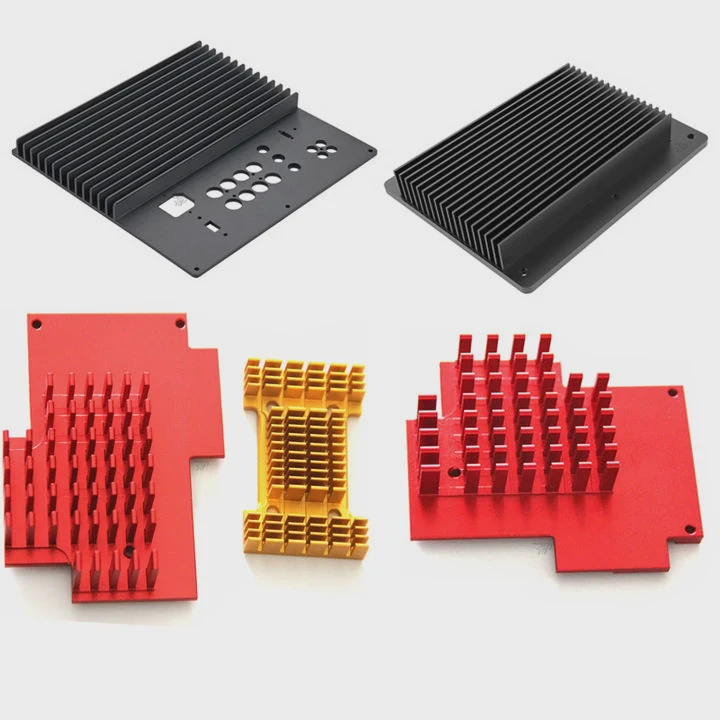
Modular sinks help when panels are crowded or have irregular shape. A single large sink might not fit. But multiple smaller sinks can be spread around heat sources. One sink might go near a high‑current busbar, another near a driver module. That way, heat is spread and removed more evenly. Modules also help avoid interference with wiring, access doors, or other components.
Benefits of modular sinks
- Layout flexibility: Modules can fit into tight spaces around cables or breakers.
- Zoned cooling: Each module can cool a specific heat source. This avoids one big sink being overloaded.
- Ease of installation: Smaller pieces are easier to place, adjust, or replace than a bulky one.
- Scalability: If load increases later, one can add another module instead of replacing the entire sink.
When modular sinks make sense
| Scenario | Modular sink advantage |
|---|---|
| Dense wiring with limited free space | Modules weave around wires, not block them |
| Multiple heat sources at different spots | Each gets its own sink module |
| Need for maintenance access | Modules can be removed individually |
| Future upgrades or load increase | Add more modules without redesigning entire sink |
Possible drawbacks
Modules require good thermal isolation between them if they cool different zones. If two modules sit too close, their cooling zones may overlap inefficiently. They may also increase number of parts and mounting points. That adds weight and design complexity. More mounting points could mean more screws or brackets. More potential failure points. Also, if airflow is not uniform, some modules may stay hot while others stay cool. Designers must ensure airflow reaches all modules. Using common fan or ventilation path helps.
In short, modular sinks can bring good benefits in complex or evolving panel designs. They offer flexibility and scalability. They suit panels with many heat sources or limited space. But they require careful planning for airflow, module placement, and isolation. Good design makes modular sinks a useful tool for panel heat management.
What codes regulate panel cooling components?
Most electrical panels must follow safety and building codes. These include limits on temperature rise, ventilation, and clearances. Some codes also require access for maintenance. Designers must know these rules before picking heat sinks.
Electrical and building codes set minimum ventilation, temperature rise, and clearance rules for heat sinks in panels, to guarantee safety and maintenance access.
Key regulations and what they demand
Many national and regional standards cover power distribution panels. They often include rules about:
- Maximum allowed surface temperature.
- Minimum clearance around live parts.
- Ventilation or forced cooling requirements.
- Accessibility for inspection or servicing.
- Fire safety and airflow passage.
Here is a simplified table showing common regulatory areas and typical requirements:
| Regulation aspect | Typical rule or requirement | Designer implication |
|---|---|---|
| Surface and ambient temp | Max surface 60–70 °C at normal load | Sink and ventilation must pass thermal tests |
| Clearance to live parts | 20–50 mm from wiring for air space | Sink must not touch wires or block air gap |
| Access for maintenance | 100 mm clearance for door opening | Sink must not block door or interior access |
| Ventilation / airflow | Must allow natural convection or forced airflow | Vent placement and sink fins must allow flow |
| Fire safety / enclosure | Non‑combustible parts, flame retardant enclosures | Sink materials and insulation must comply |
Why compliance matters
If a panel violates code, it may fail safety inspection. That can lead to fines, delays, or liability in case of accidents. For manufacturers or system builders, non‑compliance can harm reputation or end customer contracts. For users, a non‑compliant panel can overheat, cause fire, or damage equipment.
How to ensure compliance
When designing a panel, start with the code requirements in the target market. Gather all applicable national and local standards. Then check panel layout for:
- Adequate clearance between live components, sink, wires, and panel walls.
- Proper airflow path or active cooling.
- Mounting so sink does not block vents or inspection holes.
- Materials meeting fire and thermal ratings.
- Add temperature sensors if needed for high‑power panels.
If modular sinks are used, verify each module meets clearance and airflow rules. If sink fins are very close to wires, that may violate insulation clearance. It may also block airflow needed for convection.
If a sink causes surface temperature over allowed limit, choose larger sink, add active cooling, or redesign layout. Always run thermal simulation or real tests under expected load cycles.
Only after testing and documentation can the panel be certified. That gives confidence and compliance with codes, and improves safety and reliability.
Conclusion
In power distribution panels, heat sink use must balance tight space, changing loads, flexible layout, and safety codes. Good design uses proper size, accounts for load cycles, considers modular approach when needed, and respects regulations. Thoughtful thermal planning ensures safer, stable, and code‑compliant panels.
TAGS
Latest Articles

Volume discount levels for heat sink orders?
Buyers often ask when heat sink prices start to drop with volume. Many worry they’re overpaying for small orders. This guide explains how B2B volume pricing works for thermal components. Heat sink
21 Dec,2025
Heat sink long-term supply contract options?
Many buyers want stable pricing and reliable delivery for heat sinks. But without a clear contract, risks grow over time. This article explores how to secure better long-term supply deals. Long-term
21 Dec,2025
Tooling cost for new heat sink profiles?
Many engineers struggle to understand why tooling for custom heat sinks costs so much. They worry about budgeting and production timelines. This article breaks down the cost drivers behind tooling.
21 Dec,2025
Heat sink custom sample process steps?
Sometimes, starting a custom heat sink project feels overwhelming—too many steps, too many unknowns, and too many risks. You want a sample, but not endless delays. The process for requesting and
20 Dec,2025
Standard B2B terms for heat sink payments?
When buyers and sellers in B2B heat sink markets talk about payment, many don’t fully understand what’s standard. This can lead to delayed orders, miscommunication, and even lost business
20 Dec,2025
Heat sink pricing factors for large orders?
Heat sinks are vital for many systems. When prices rise, projects stall and budgets break. This problem can hit teams hard without warning. Large order heat sink pricing depends on many factors. You
20 Dec,2025Related Articles
- Heat sink selection for aerospace electronics?
- Heat sink performance in medical equipment?
- Renewable energy inverters requiring heat sink?
- Industrial automation devices needing heat sink?
- Suitable heat sink for EV battery packs?
- Heat sink solutions for telecom base stations?
- Heat sink usable in coastal high-humidity areas?
- How heat sink extrusion is manufactured?
- what is the best CNC plasma cutter?
- Heat sink machining standards for precision parts?
- Bonding methods to improve heat sink transfer?
- Dimensional inspection methods for heat sink?
Author
Dr. Emily Chen
Chief AI Researcher
Leading expert in thermal dynamics and AI optimization with over 15 years of experience in data center efficiency research.
Categories
Latest Products






Recommend Categories
- Liquid cooling plate Manufacturer
- Industrial Heat Sink Manufacturer
- Standard Heat Sink Manufacturer
- Aluminum Heat Sink Manufacturer
- Copper Heat Sink Manufacturer
- Anodized Heatsink Manufacturer
- Stamping heat sink Manufacturer
- Die Casting Heatsink Manufacturer
- Soldering heat sink Manufacturer
- CNC Parts Manufacturer
Latest Products
- Wholesale Aluminum Radiator
- Water Cooling Plate Kit
- Water Cooling Heat Sink
- Water Cooling Heat Sink Kit
- Stainless Steel Water Distributor
- Server Water Cooling Plate Kit
- Server Liquid Cooling System
- Server Aluminum Cooling Kit
- S19 Full Cover Cooling Plate
- S19 Cooling Plate Kit
- S19 Aluminum Cooling Plate
Contact Expert
Have questions about this article? Reach out to our experts directly.