How does the liquid cooling system work?
High-performance electronics generate more heat than ever before. When fans and air vents can’t keep up, liquid cooling steps in as the silent hero.
A liquid cooling system works by circulating coolant through a closed loop, absorbing heat from components, and releasing it through a radiator or heat exchanger.
It’s a simple idea with powerful results — efficient, quiet, and capable of keeping even the hottest CPUs or power modules cool under load.
What is a liquid cooling system?
Every electronic device faces one universal challenge — controlling heat. Excess heat leads to slower performance and shorter lifespan.
A liquid cooling system transfers heat using liquid flow instead of air, moving thermal energy from heat sources to radiators more efficiently.
Core components and function
A standard liquid cooling system includes:
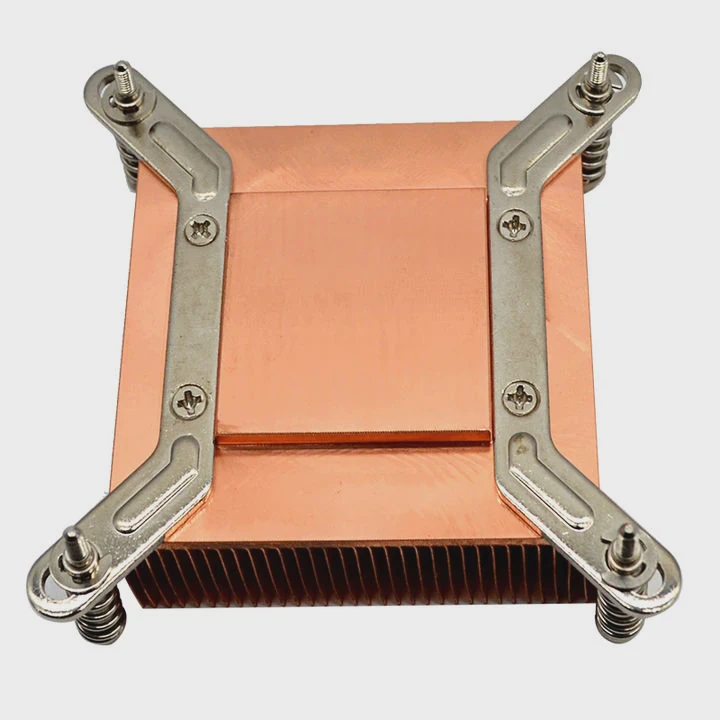
- Cold plate or water block — attached to the heat-generating component (like a CPU or power module). It absorbs heat directly.
- Coolant — the working fluid that carries heat away.
- Pump — moves the liquid through the loop.
- Radiator or heat exchanger — releases heat into the air.
- Reservoir — holds extra liquid and helps remove air bubbles.
Here’s how it works step by step:
- The coolant flows through the cold plate, absorbing heat.
- It moves through tubing to the radiator.
- Fans push air across the radiator fins, releasing heat to the environment.
- The cooled liquid returns to the cold plate, repeating the cycle.
This continuous loop keeps critical components at safe operating temperatures.
| Component | Function | Common Material |
|---|---|---|
| Cold Plate | Transfers heat from chip to liquid | Copper, aluminum |
| Pump | Circulates coolant | Ceramic, polymer |
| Radiator | Dissipates absorbed heat | Aluminum, copper |
| Coolant | Transports thermal energy | Water, glycol, nanofluid |
| Reservoir | Maintains liquid level | Acrylic, plastic |
Types of liquid cooling systems
Liquid cooling systems come in two main types:
- Closed-loop (AIO) — Pre-assembled, sealed, and maintenance-free. Perfect for consumer PCs.
- Open-loop (custom) — User-built systems allowing flexibility in design and performance, but requiring regular maintenance. In industrial fields, you’ll also find cold plate modules and immersion cooling systems that use dielectric fluids for advanced heat control.
What are its efficiency benefits?
Air has limits. As systems become smaller and more powerful, traditional cooling methods can’t move heat fast enough.
Liquid cooling offers higher heat transfer efficiency, reduced noise, and stable performance under heavy loads compared to air cooling.
Superior heat transfer
Water and coolant have far higher thermal conductivity and heat capacity than air.
This means they can absorb and transport more heat with less temperature rise.
For example, the thermal conductivity of water is about 25 times greater than that of air.
This efficiency allows liquid cooling to handle heat loads above 300W per component, while most air systems struggle past 150W.
Stable operating temperature
Air cooling performance changes with ambient temperature. Liquid systems are less affected by air conditions because they distribute heat evenly and maintain a steady flow.
This stability helps processors and modules maintain consistent speed, avoiding thermal throttling.
Noise reduction
Because liquid cooling can remove more heat per unit area, it requires fewer or slower fans. This means less noise — a big plus for workstations, medical devices, or home offices.
The sound of a smooth pump is much quieter than multiple high-speed fans.
Compact and flexible design
Liquid cooling can move heat away from crowded spaces through slim tubes or integrated cold plates.
This flexibility allows engineers to design smaller, more efficient systems, especially for electric vehicles, 5G base stations, or dense data centers.
| Benefit | Air Cooling | Liquid Cooling |
|---|---|---|
| Heat Capacity | Low | High |
| Noise Level | High | Low |
| Thermal Stability | Moderate | Excellent |
| Design Flexibility | Limited | Flexible |
| Efficiency at High Load | Poor | Outstanding |
In short, liquid cooling turns thermal management from a bottleneck into an advantage.
How to maintain it for long-term use?
A liquid cooling system can last many years — but only with care. Without maintenance, efficiency drops and leaks become likely.
To keep a liquid cooling system reliable, regularly inspect the coolant level, clean the radiator, check for leaks, and replace fluids every 12–24 months.
Regular inspection
Once every few months, inspect all tubing and joints for any signs of moisture, corrosion, or discoloration.
Look at the coolant color — it should be clear and free of bubbles or sediment. Cloudy or brown coolant indicates oxidation or algae growth.
Fluid replacement
Coolant loses effectiveness over time. Replace it every one to two years depending on use.
If you use distilled water, add corrosion inhibitors or biocides to prevent metal damage and microbial growth.
Always flush the old fluid before refilling to avoid mixing residues.
Cleaning the radiator
Dust can block radiator fins and reduce heat dissipation. Use compressed air or a soft brush to clean them gently.
For systems in dusty or industrial environments, consider installing filters on intake vents to extend cleaning intervals.
Pump and fan check
Ensure the pump operates quietly and consistently. Unusual noise may mean trapped air or mechanical wear.
Fans should run smoothly without wobbling. Replacing worn bearings early prevents larger issues later.
Temperature monitoring
Use built-in sensors or software to monitor temperatures during heavy workloads.
A gradual temperature increase over weeks might indicate a drop in coolant flow or clogged channels.
Early detection allows you to fix problems before components are damaged.
Storage and downtime
If the system is stored or unused for long periods, drain the liquid to avoid stagnation or evaporation.
Keep the components dry and clean before reuse.
| Maintenance Task | Frequency | Purpose |
|---|---|---|
| Coolant check | Monthly | Detect leaks or contamination |
| Radiator cleaning | Every 3–6 months | Maintain airflow |
| Fluid replacement | 12–24 months | Restore performance |
| Pump inspection | Every 6 months | Prevent failure |
| Temperature logging | Continuous | Detect early issues |
Proper maintenance not only keeps performance high but also extends the system’s lifespan significantly.
What are the advancements in cooling mechanisms?
The science behind cooling is evolving quickly. Engineers are developing smarter, lighter, and more efficient ways to move heat.
Recent advancements include nanofluid coolants, two-phase and vapor chamber systems, microchannel cold plates, and AI-based thermal management.
Nanofluid technology
Nanofluids enhance traditional coolants by adding microscopic metal or ceramic particles like aluminum oxide, copper, or graphene.
These nanoparticles improve thermal conductivity, allowing faster heat absorption and transfer.
Tests show nanofluids can improve cooling efficiency by up to 30% without increasing pump load or viscosity significantly.
Two-phase and vapor chamber cooling
Two-phase cooling uses both liquid and vapor to transfer heat. When the coolant absorbs heat, it vaporizes, carrying energy rapidly to a condenser where it turns back into liquid.
This process provides uniform temperatures and high heat flux capacity — ideal for processors or power modules exceeding 500W/cm².
Vapor chambers, a flat type of heat pipe, spread heat evenly across large surfaces.
They are now integrated into cold plates and even structural parts of electronics to improve performance in thin or compact devices.
Microchannel cold plates
Modern cold plates feature ultra-fine microchannels — sometimes less than 1 mm wide — that dramatically increase the surface area in contact with the coolant.
This allows extremely efficient heat exchange with minimal size.
They are commonly made from aluminum or copper using friction stir welding or diffusion bonding for strength and reliability.
AI-driven cooling control
Artificial intelligence is transforming how cooling systems are managed.
AI algorithms monitor temperature, flow rate, and power load in real time, adjusting pump speed and fan curves for optimal efficiency.
This reduces power consumption and prevents thermal stress in mission-critical applications like data centers or EV batteries.
Sustainable and hybrid cooling
Environmental impact is also shaping new designs. Engineers are creating eco-friendly fluids, sealed loops with zero evaporation, and hybrid systems combining air and liquid cooling.
These designs reduce carbon footprint while improving reliability.
Example: smart industrial cooling module
A client in power electronics once upgraded from a standard loop to a smart system with flow sensors and predictive software.
The new setup automatically adjusted pump speed based on real-time heat output, reducing energy use by 25% and extending coolant life — proof of how innovation drives efficiency.
Conclusion
A liquid cooling system works by moving heat through fluid circulation, delivering quiet, efficient, and stable performance.
Its advantages over air cooling grow with every generation of electronics. With proper maintenance and emerging technologies like nanofluids and AI control, the future of cooling looks cooler — and smarter — than ever.
TAGS
Latest Articles

Volume discount levels for heat sink orders?
Buyers often ask when heat sink prices start to drop with volume. Many worry they’re overpaying for small orders. This guide explains how B2B volume pricing works for thermal components. Heat sink
21 Dec,2025
Heat sink long-term supply contract options?
Many buyers want stable pricing and reliable delivery for heat sinks. But without a clear contract, risks grow over time. This article explores how to secure better long-term supply deals. Long-term
21 Dec,2025
Tooling cost for new heat sink profiles?
Many engineers struggle to understand why tooling for custom heat sinks costs so much. They worry about budgeting and production timelines. This article breaks down the cost drivers behind tooling.
21 Dec,2025
Heat sink custom sample process steps?
Sometimes, starting a custom heat sink project feels overwhelming—too many steps, too many unknowns, and too many risks. You want a sample, but not endless delays. The process for requesting and
20 Dec,2025
Standard B2B terms for heat sink payments?
When buyers and sellers in B2B heat sink markets talk about payment, many don’t fully understand what’s standard. This can lead to delayed orders, miscommunication, and even lost business
20 Dec,2025
Heat sink pricing factors for large orders?
Heat sinks are vital for many systems. When prices rise, projects stall and budgets break. This problem can hit teams hard without warning. Large order heat sink pricing depends on many factors. You
20 Dec,2025Related Articles
- What is liquid immersion cooling?
- What happens when you cool a liquid?
- What should my CPU temp be with liquid cooling?
- Is the Milwaukee 8 liquid cooled?
- What does liquid cooling do?
- What CPUs need liquid cooling?
- What does liquid cooled mean?
- How to install GPU liquid cooling?
- How does CPU liquid cooling work?
- Which PowerEdge server supports direct liquid cooling?
- Does Ryzen 9 5950X need liquid cooling?
- Is liquid cooling hard to install?
Author
Dr. Emily Chen
Chief AI Researcher
Leading expert in thermal dynamics and AI optimization with over 15 years of experience in data center efficiency research.
Categories
Latest Products






Recommend Categories
- Liquid cooling plate Manufacturer
- Industrial Heat Sink Manufacturer
- Standard Heat Sink Manufacturer
- Aluminum Heat Sink Manufacturer
- Copper Heat Sink Manufacturer
- Anodized Heatsink Manufacturer
- Stamping heat sink Manufacturer
- Die Casting Heatsink Manufacturer
- Soldering heat sink Manufacturer
- CNC Parts Manufacturer
Latest Products
- Wholesale Aluminum Radiator
- Water Cooling Plate Kit
- Water Cooling Heat Sink
- Water Cooling Heat Sink Kit
- Stainless Steel Water Distributor
- Server Water Cooling Plate Kit
- Server Liquid Cooling System
- Server Aluminum Cooling Kit
- S19 Full Cover Cooling Plate
- S19 Cooling Plate Kit
- S19 Aluminum Cooling Plate
Contact Expert
Have questions about this article? Reach out to our experts directly.