How long to prototype Vapor Chamber?
Are you racing against time to launch your thermal system? Prototyping a vapor chamber can become a make‑or‑break bottleneck.
Typically a custom vapor chamber prototype can take roughly 4–12 weeks from concept to physical sample, depending on complexity and tooling requirements.
Let’s dig into the details of what drives the timeline, how complexity matters, and what shortcuts you might use.
How long does it take to prototype a Vapor Chamber?
Feeling pressure to deliver a working thermal spreader? Then knowing the timeline matters.
For a standard design with minimal tooling, you might get to sample in about 6–8 weeks; full development may take 1‑4 months.
In practical terms, the prototyping of a vapor chamber involves several stages: requirements definition, design modelling (CFD/thermal), tooling or soft‑tooling setup, sample manufacture, validation testing, and then possible iteration. For example, one heat‑sink supplier describes: “typical prototype sample production (including soft tooling) takes about 6‑8 weeks; full development may run 1‑4 months depending on complexity.”
Here’s a rough breakdown of tasks and time influences:
Typical timeline steps
| Stage | Typical duration | Notes |
|---|---|---|
| Requirements & initial design | 1‑2 weeks | Define heat load, geometry, performance target |
| Thermal modelling & iteration | 1‑3 weeks | CFD or analytic modelling, refining for manufacturability |
| Tooling / soft‑tooling setup | 2‑4 weeks | If soft tooling is used for sample build (much faster than full hard tooling) |
| Sample building & testing | 1‑2 weeks | Manufacture one or few units, validate flatness, vacuum seal, wick structure |
| Feedback & revision | variable | If test results show issues, iteration adds time |
Key time‑drivers
- Tooling readiness: If you have to build hard tooling (e.g., dies, stamps) the timeline expands significantly.
- Design complexity: Thin ultra‑thin vapor chambers (1‑2 mm), or 3D shaped vapor chambers, or custom wick structures add time.
- Testing requirements: If environmental reliability (vibration, thermal cycling) is required, time increases.
- Customer feedback loop: Delays in approvals or design changes affect schedule.
What you can expect
If you engage a mature manufacturer (with design to production capability) and the design is relatively standard (flat vapor chamber, modest size, conventional materials), you might plan for about 6‑8 weeks to sample, and 2‑3 months total for refined prototype ready.
If you have high complexity (custom shape, thin profile, ultra‑high heat flux, exotic materials), plan 3‑4 months or more.
Does complexity extend the Vapor Chamber prototyping time?
Worried your exotic geometry will slow things down? You’re right to be.
Yes — increased geometry complexity, custom materials, tight flatness tolerances or multi‑dimensional structures significantly lengthen the prototyping timeline.
When you move from a standard flat vapor chamber to a more complex design (for example 3D‐shaped vapor chamber, ultra‑thin profile, multi‑source heat spreader, exotic materials), the number of technical challenges grows and each adds time. Consider the following factors:
Complexity factors and their impacts
1. Shape & geometry
If the vapor chamber is not simply a flat plate but has bent sections, pedestals, holes, or integrated fins, the tooling and manufacturing become more difficult. The manufacturer must ensure flatness across complex shapes, welding or brazing seams must be executed precisely, internal wick or support structures tailored. This results in longer tooling lead time, more sample build cycle.
2. Wick structure & internal machining
A standard vapor chamber may use a sintered mesh or grooved wick. If you require advanced capillary structures, enhanced wick performance, specialized materials (like copper lined, titanium, or hybrid), then the internal manufacturing steps (powder sintering, internal supports, vacuum processing) take more setup and iteration.
3. Ultra‑thin thickness & flatness control
When thickness drops (e.g., mm) or flatness tolerances become very tight (for direct die attach, or advanced electronics), deformation risk, warping during welding, and overall yield become issues. More iterations may be needed, adding weeks.
4. Material & finishing
If you move from commonly used copper to lighter aluminum or exotic alloys, you may need extra process validation (joining methods, corrosion resistance, finishing). Also surface treatment (nickel plating, anodising) may require additional steps.
5. Testing and qualification
Complex designs often require more thorough validation: not just thermal resistance, but reliability under variable orientation, vibration, thermal cycling. Each test adds days to weeks. Suppliers mention that modelling becomes more challenging and thus engineering time increases.
What this means for planning
If you know upfront that your vapor chamber has high complexity, you should build‐in a buffer. For example: if standard is 6‑8 weeks, add another 2‑4 weeks; if very high complexity, plan 3‑4 months. Communicate with your supplier about iteration allowances. Also design for manufacturability early (DFM) so you reduce the risk of lengthy iteration loops.
Can a prototype be made without full tooling?
Want to speed up prototype delivery by skipping expensive tooling? That’s feasible.
Yes — prototypes can be built using soft tooling, simplified fixtures or bench builds, avoiding full production tooling, to achieve faster lead‐time with manageable trade‑offs.
When you engage in prototyping a vapor chamber, one of the cost‑and‑time drivers is tooling. Full production tooling (stamps, dies, die casts, large jigs) takes time and cost. For early prototypes you can use alternatives called soft tooling or limited‑volume methods. Here’s how it works and what the trade‑offs are.
What is “without full tooling”?
| Method | Description |
|---|---|
| Soft tooling | Low-cost molds or CNC jigs instead of hardened dies |
| Bench build | Manual brazing, vacuum seal without automation |
| Simplified parts | CNC or 3D print exterior shell for form check |
| Low volume run | Produce 1-5 pieces for initial testing |
Benefits
- Much faster lead time (tooling setup can be 2‑4 weeks instead of 6‑8 or more).
- Lower upfront investment (cost is lower, easier to change if design iterates).
- Flexible for design changes — since tooling is not hardened, you can iterate easier.
Trade‑offs
- Surface finish or tolerances may be less optimal than production level.
- Yield may be lower; more variation in prototypes.
- Might not fully represent production process (so some later surprises at scale).
- Cost per unit for prototype may be higher (because small batch, manual processes).
Recommendations
- Specify upfront that this build is “prototype stage, tooling light” and expectations on finish and tolerances.
- Define key validation parameters: flatness, performance, leak‑rate. Be okay with less than full production finish.
- After prototype validation, plan production tooling as a separate phase.
- Ensure supplier gives clear documentation on what is prototype build vs production build so you manage expectations.
Is 3D printing used for Vapor Chamber prototyping?
Curious whether additive manufacturing (3D printing) can accelerate your vapor chamber prototype? The answer is: sometimes yes, but with caveats.
3D printing may be used for certain components (e.g., housing, internal support structures), but full metal vapor chambers with vacuum sealing and wick structure typically still rely on traditional manufacture.
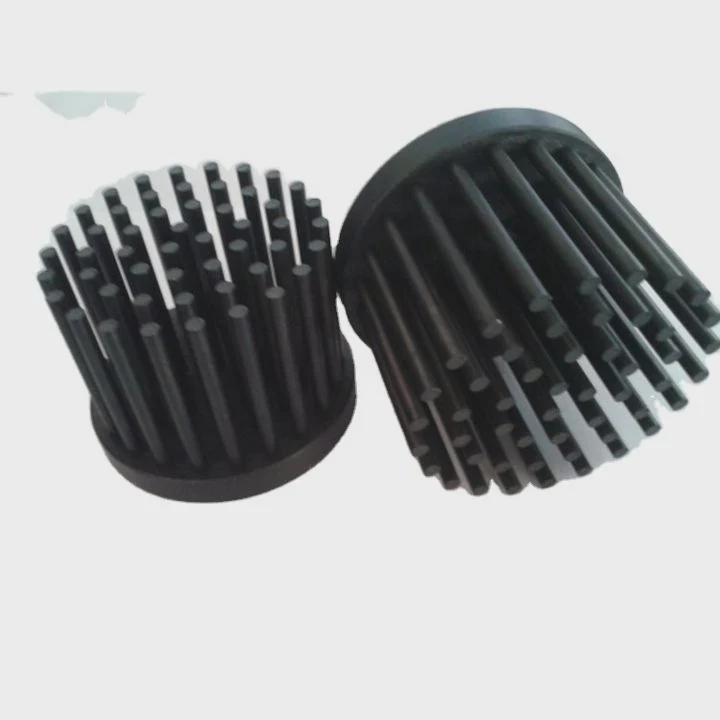
Additive manufacturing (AM) has entered many areas of thermal management. With vapor chambers, you may wonder whether 3D printing can shorten the prototyping timeline or enable more complex geometries. Here’s how it fits in and what the limitations are.
Where 3D printing is used
- Internal support structures: 3D printed metal posts inside the chamber
- Housing or external features: 3D print the chamber outline or fixture for mounting
- Geometry check: Design mockups before full tooling
Why full 3D printing of vapor chamber is still uncommon
- Vacuum sealing & fluid filling still rely on traditional methods
- Wick manufacturing: capillary structure needs sintering or special techniques
- Material finish: 3D printed metal requires post-processing to meet flatness needs
- Cost & reliability: higher cost and process risks for full 3D vapor chamber
How to use 3D printing wisely
- Use 3D print for outer shell or mockups
- Don’t rely on it for the full thermal performance prototype
- Combine 3D printed parts with machined or brazed thermal core
- Ask your supplier if they support hybrid builds
Final tip
Use 3D printing for fast iteration, early geometry check, or housing parts — not for the entire vapor chamber body. For thermal validation and vacuum sealing, stick to conventional build steps unless your partner offers advanced hybrid solutions.
Conclusion
Prototyping a custom vapor chamber is not instantaneous, but by understanding the stages, drivers and options you can set realistic expectations (typically 6–12 weeks for many designs). Complexity will extend the timeline, but you can mitigate by using soft tooling, limiting iterations, and selectively using 3D printing for non‑critical parts.
If you plan effectively, you keep your project on track without costly surprises.
TAGS
Latest Articles

Volume discount levels for heat sink orders?
Buyers often ask when heat sink prices start to drop with volume. Many worry they’re overpaying for small orders. This guide explains how B2B volume pricing works for thermal components. Heat sink
21 Dec,2025
Heat sink long-term supply contract options?
Many buyers want stable pricing and reliable delivery for heat sinks. But without a clear contract, risks grow over time. This article explores how to secure better long-term supply deals. Long-term
21 Dec,2025
Tooling cost for new heat sink profiles?
Many engineers struggle to understand why tooling for custom heat sinks costs so much. They worry about budgeting and production timelines. This article breaks down the cost drivers behind tooling.
21 Dec,2025
Heat sink custom sample process steps?
Sometimes, starting a custom heat sink project feels overwhelming—too many steps, too many unknowns, and too many risks. You want a sample, but not endless delays. The process for requesting and
20 Dec,2025
Standard B2B terms for heat sink payments?
When buyers and sellers in B2B heat sink markets talk about payment, many don’t fully understand what’s standard. This can lead to delayed orders, miscommunication, and even lost business
20 Dec,2025
Heat sink pricing factors for large orders?
Heat sinks are vital for many systems. When prices rise, projects stall and budgets break. This problem can hit teams hard without warning. Large order heat sink pricing depends on many factors. You
20 Dec,2025Related Articles
- Vapor Chamber standard Incoterms for export?
- Vapor Chamber quotation based on drawings?
- Typical Vapor Chamber mold cost?
- Vapor Chamber OEM price request?
- Usual payment terms for Vapor Chamber orders?
- Heat distribution comparison Vapor Chamber vs. heat pipe?
- Vapor Chamber packaging for export to USA?
- Customs documents needed for Vapor Chamber import?
- Best shipping method for Vapor Chamber?
- Vapor Chamber Global Shipping Lead Time?
- Vapor Chamber HS code for customs?
- How to reduce Vapor Chamber shipping cost?
Author
Dr. Emily Chen
Chief AI Researcher
Leading expert in thermal dynamics and AI optimization with over 15 years of experience in data center efficiency research.
Categories
Latest Products






Recommend Categories
- Liquid cooling plate Manufacturer
- Industrial Heat Sink Manufacturer
- Standard Heat Sink Manufacturer
- Aluminum Heat Sink Manufacturer
- Copper Heat Sink Manufacturer
- Anodized Heatsink Manufacturer
- Stamping heat sink Manufacturer
- Die Casting Heatsink Manufacturer
- Soldering heat sink Manufacturer
- CNC Parts Manufacturer
Latest Products
- Wholesale Aluminum Radiator
- Water Cooling Plate Kit
- Water Cooling Heat Sink
- Water Cooling Heat Sink Kit
- Stainless Steel Water Distributor
- Server Water Cooling Plate Kit
- Server Liquid Cooling System
- Server Aluminum Cooling Kit
- S19 Full Cover Cooling Plate
- S19 Cooling Plate Kit
- S19 Aluminum Cooling Plate
Contact Expert
Have questions about this article? Reach out to our experts directly.