Vapor Chamber standard Incoterms for export?
Struggling with unclear shipping terms while exporting vapor chambers? You’re not alone.
Yes — there are standard Incoterms® 2020 rules that apply when exporting vapor chambers that help define who pays, who insures and when risk transfers.
Let’s walk through what those rules are, which serve buyers best, whether exporters offer FOB/CIF terms and how the terms change shipping risk.
What are the standard Incoterms for exporting Vapor Chambers?
Exporting high‑end heat‑management components like vapor chambers brings many responsibilities — unclear terms cause confusion.
The main Incoterms used for exports include EXW, FCA, FOB (sea only), CPT, CIF (sea only), DAP and DDP — any of these can apply to vapor chambers depending on agreement.
When exporting vapor chambers (or any manufactured goods), both buyer and seller must be clear which Incoterm applies. According to the International Chamber of Commerce, Incoterms define “who is responsible for paying for and managing the shipment, insurance, documentation, customs clearance, and other logistical activities.”
Here’s how several of the common terms break down, and how they might apply in the context of vapor chamber export:
Key Incoterms & their meaning
| Term | Applicability | Responsibility for seller / buyer |
|---|---|---|
| EXW (Ex Works) | Any mode | Seller makes goods available; buyer handles everything else. |
| FCA (Free Carrier) | Any mode | Seller delivers cleared for export to nominated carrier; buyer from there. |
| FOB (Free On Board) | Sea / inland waterway only | Seller delivers goods on board vessel; risk passes when loaded. |
| CIF (Cost, Insurance & Freight) | Sea / inland waterway only | Seller arranges shipping and insurance to destination port; risk transfers when goods loaded. |
| CPT, CIP, DAP, DDP | Multimodal | Apply to other modes and define points of delivery and risk accordingly. |
For a high‑tech product like a vapor chamber, you’ll want clarity because:
- The component often has tight specifications (thermal resistance, manufacturing process) and may need special handling or packaging.
- Export from China to markets like US/Europe may involve customs, inspections, certification.
- The buyer (e.g., aerospace or semiconductors) may require traceability and defined risk transfer.
Thus, picking the correct Incoterm ensures both sides know who handles export clearance, freight booking, insurance, unloading at the port or destination, and who bears damage or loss risk at which point.
When I work with suppliers (or plan contracts) I always explicitly indicate: Incoterm: FOB (named port) or CIF (named port) or DAP (named place) plus version (Incoterms 2020). Using the version avoids ambiguity because older versions differ slightly.
In short: yes — there are standard Incoterms for exporting vapor chambers. What matters is how you pick and negotiate them.
Which Incoterm offers the best control for buyers?
Buyers want control over freight cost, timeline, insurance and risk — missing control can lead to surprises.
From a buyer’s perspective, terms like FOB or FCA give more control because you select carrier, manage transport and insurance — reducing hidden risks and cost mark‑ups.
When I evaluate what gives a buyer the best control, I look at who chooses the freight forwarder, who arranges shipping schedule, who bears risk at which point, and who pays for insurance. With that lens:
Why FOB often favours buyer control
- Under FOB, the seller clears export, delivers to the port, and loads the goods on board the ship. After loading, the risk and cost for the main sea freight, unloading, inland transport, import duties generally fall to the buyer.
- Because the buyer handles the key part of the sea transport, they can pick their freight forwarder, monitor shipping, negotiate freight rates, choose insurers etc.
- That gives the buyer visibility and flexibility — especially important for mission‑critical parts like vapor chambers where timing, damage risk, packaging integrity matter.
Why some buyers might prefer other terms
- If the buyer is inexperienced in global shipping they may be comfortable with CIF or DDP, where the seller takes more responsibility. But the trade‑off is less control and possibly higher cost.
- If the product requires multi‑modal transport or involves multiple handovers, a term like DAP or DDP might simplify for the buyer — but again, less control and likely higher cost.
My recommendation for buyers of vapor chambers
- Unless the buyer truly wants a turnkey delivery with minimal logistics burden, I would favour FOB (named port of shipment) or FCA (named place at seller’s country) as the preferred terms.
- Make sure the contract states clearly: “Incoterms® 2020 FOB [Port Name]” and enumerates exactly who books the carrier, who insures, etc.
- Ask the seller for export clearance documents, inspection certificate, packaging list, shipping schedule and confirm that you will pick the freight forwarder.
- Ensure you have your own insurance in place from the point risk transfers.
Thus, in many cases for vapor chamber export the best control for buyers resides under FOB or FCA, rather than full seller‑responsibility terms.
Do Vapor Chamber suppliers offer FOB and CIF terms?
When one asks a supplier for shipping terms, they often offer “FOB China” or “CIF to UK port” — but what’s realistic for vapor chamber makers?
Yes — many vapor chamber (and broader thermal management component) suppliers do offer FOB and CIF terms, though the exact feasibility depends on a supplier’s logistics capability and buyer’s destination port.
In the heat‑management components industry, including vapor chambers, liquid‑cool plates, etc., suppliers generally have export logistics experience. Based on my experience and industry practice, here’s how it usually works:
Supplier capability and term choice
- A supplier based in China typically handles export clearance, packaging, loading, and may cooperate with freight forwarders. Offering FOB (named Chinese port) is quite standard.
- Offering CIF (named destination port) is also possible and often requested by buyers who prefer minimal logistics involvement.
- Whether a given supplier wants or can offer CIF depends on their relationship with shipping lines, insurance brokers, and the destination country’s import formalities.
What you should check with the supplier
- Confirm which port is named in FOB or CIF — e.g., “FOB Foshan port, China” or “CIF Rotterdam”.
- Ask what freight terms they include: for CIF, which insurance cover (what level, who pays excess) and until which point does it apply?
- Ensure documentation such as export licence, certificate of origin, inspection report, packaging list are included.
- Clarify whether additional inland transport in the buyer country, customs clearance fees, duties are included or excluded.
In my view, yes — you can expect suppliers of vapor chambers to offer FOB and CIF terms. But you must verify the details and ensure the term suits your logistics and risk appetite.
How do Incoterms affect Vapor Chamber shipping risk?
Shipping delicate, precision‑manufactured vapor chambers is risky: damage, loss, delay, improper handling all affect value.
Incoterms directly affect when risk (loss or damage) transfers from seller to buyer and hence who must insure, monitor and manage the shipment of vapor chambers.
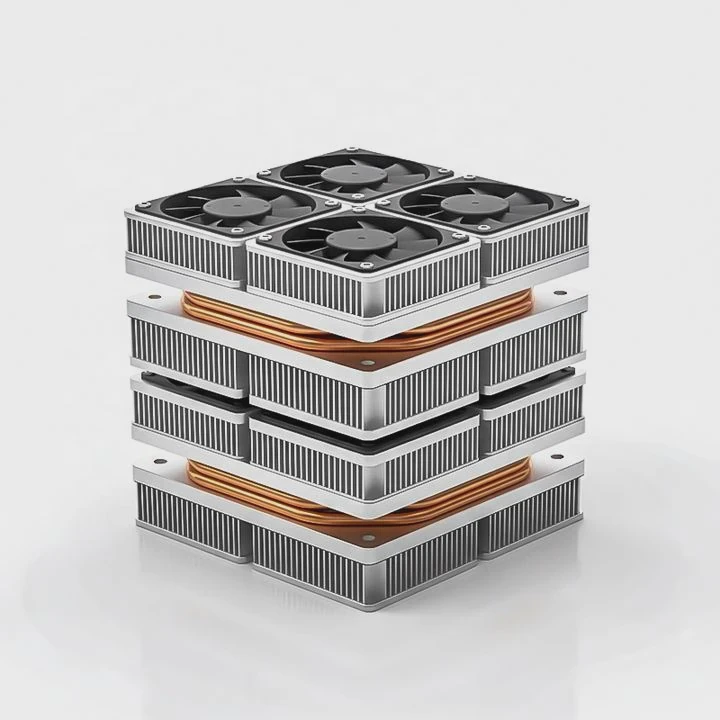
For components like vapor chambers, which have high thermal performance requirements, tight tolerances, and are often custom‑made, shipping risk is a major concern. The chosen Incoterm influences that risk a lot. Let me break down how:
Risk transfer and insurance – key points
- Under terms like FOB, the risk transfers to the buyer when the goods are loaded on board the ship. The seller’s responsibility ends at that point.
- Under CIF, seller arranges and pays freight and insurance until destination port. However, risk still transfers at loading unless otherwise agreed.
- If you choose a term like DAP or DDP, risk may transfer at a later point — such terms shift more risk burden to the seller.
Why this matters for vapor chambers
- The product might be damaged en‑route due to vibration, handling, moisture, improper stowage, or thermal shock.
- The buyer might need specific import inspections or documentation.
- Delays in shipping can affect project schedules.
- For a buyer sourcing from China, clarity on logistics route, packaging quality, inspection before loading and carrier reliability is critical.
Practical checklist to manage risk with Incoterms
| Step | Action |
|---|---|
| 1 | Confirm risk transfer point in contract |
| 2 | Arrange or verify insurance (coverage, provider) |
| 3 | Pre‑shipment inspections and loading photos |
| 4 | Monitor logistics and handle shipping delays |
| 5 | Verify product condition on arrival |
| 6 | Clarify liability for duties and customs delays |
In summary: the Incoterm you choose directly affects when and where you bear risk for those vapor chambers. By picking terms that favour clearer transfer points and aligning insurance and logistics accordingly, you reduce exposure and improve control.
Conclusion
In exporting vapor chambers, selecting the right Incoterm is vital. FOB or FCA terms give buyers more control and clearer risk transfer points. Suppliers can and often do offer both FOB and CIF, but detailed contract language matters. Understanding when risk shifts—and ensuring insurance and logistics are aligned—makes your export strategy much stronger.
TAGS
Latest Articles

Volume discount levels for heat sink orders?
Buyers often ask when heat sink prices start to drop with volume. Many worry they’re overpaying for small orders. This guide explains how B2B volume pricing works for thermal components. Heat sink
21 Dec,2025
Heat sink long-term supply contract options?
Many buyers want stable pricing and reliable delivery for heat sinks. But without a clear contract, risks grow over time. This article explores how to secure better long-term supply deals. Long-term
21 Dec,2025
Tooling cost for new heat sink profiles?
Many engineers struggle to understand why tooling for custom heat sinks costs so much. They worry about budgeting and production timelines. This article breaks down the cost drivers behind tooling.
21 Dec,2025
Heat sink custom sample process steps?
Sometimes, starting a custom heat sink project feels overwhelming—too many steps, too many unknowns, and too many risks. You want a sample, but not endless delays. The process for requesting and
20 Dec,2025
Standard B2B terms for heat sink payments?
When buyers and sellers in B2B heat sink markets talk about payment, many don’t fully understand what’s standard. This can lead to delayed orders, miscommunication, and even lost business
20 Dec,2025
Heat sink pricing factors for large orders?
Heat sinks are vital for many systems. When prices rise, projects stall and budgets break. This problem can hit teams hard without warning. Large order heat sink pricing depends on many factors. You
20 Dec,2025Related Articles
- Vapor Chamber quotation based on drawings?
- Typical Vapor Chamber mold cost?
- Vapor Chamber OEM price request?
- Usual payment terms for Vapor Chamber orders?
- Heat distribution comparison Vapor Chamber vs. heat pipe?
- Does Vapor Chamber require ventilation space?
- How long to prototype Vapor Chamber?
- Vapor Chamber packaging for export to USA?
- Customs documents needed for Vapor Chamber import?
- Best shipping method for Vapor Chamber?
- Vapor Chamber Global Shipping Lead Time?
- Vapor Chamber HS code for customs?
Author
Dr. Emily Chen
Chief AI Researcher
Leading expert in thermal dynamics and AI optimization with over 15 years of experience in data center efficiency research.
Categories
Latest Products






Recommend Categories
- Liquid cooling plate Manufacturer
- Industrial Heat Sink Manufacturer
- Standard Heat Sink Manufacturer
- Aluminum Heat Sink Manufacturer
- Copper Heat Sink Manufacturer
- Anodized Heatsink Manufacturer
- Stamping heat sink Manufacturer
- Die Casting Heatsink Manufacturer
- Soldering heat sink Manufacturer
- CNC Parts Manufacturer
Latest Products
- Wholesale Aluminum Radiator
- Water Cooling Plate Kit
- Water Cooling Heat Sink
- Water Cooling Heat Sink Kit
- Stainless Steel Water Distributor
- Server Water Cooling Plate Kit
- Server Liquid Cooling System
- Server Aluminum Cooling Kit
- S19 Full Cover Cooling Plate
- S19 Cooling Plate Kit
- S19 Aluminum Cooling Plate
Contact Expert
Have questions about this article? Reach out to our experts directly.