Vapor Chamber quotation based on drawings?
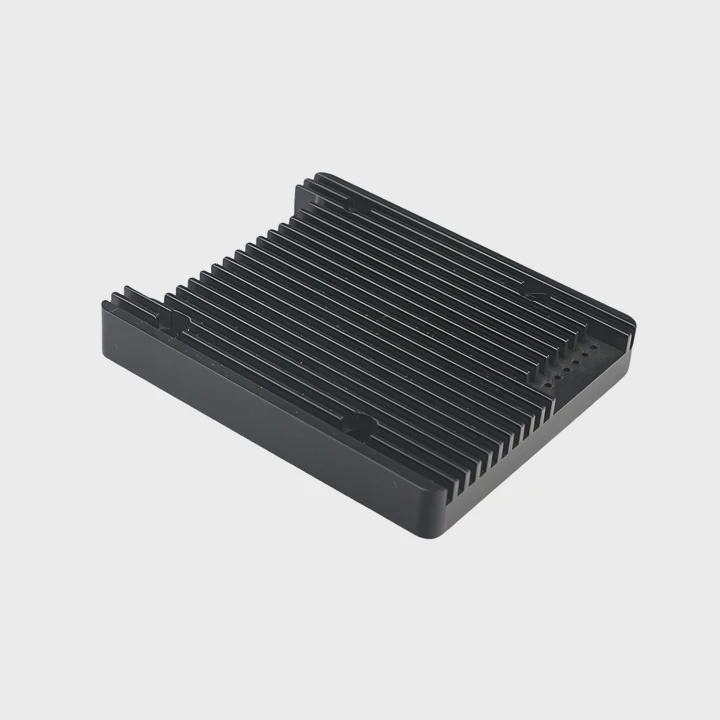
Getting a proper quotation for a vapor chamber demands clarity in your drawings, specs and communication. A well‑prepared drawing submission enables accurate OEM pricing, helps avoid hidden cost increases and sets the stage for smoother manufacturing.
In the following sections I’ll walk you through the details you must provide, how accurate the drawings need to be, the benefit of 3D files, and how revisions can impact the quote.
What details are needed for a Vapor Chamber drawing quote?
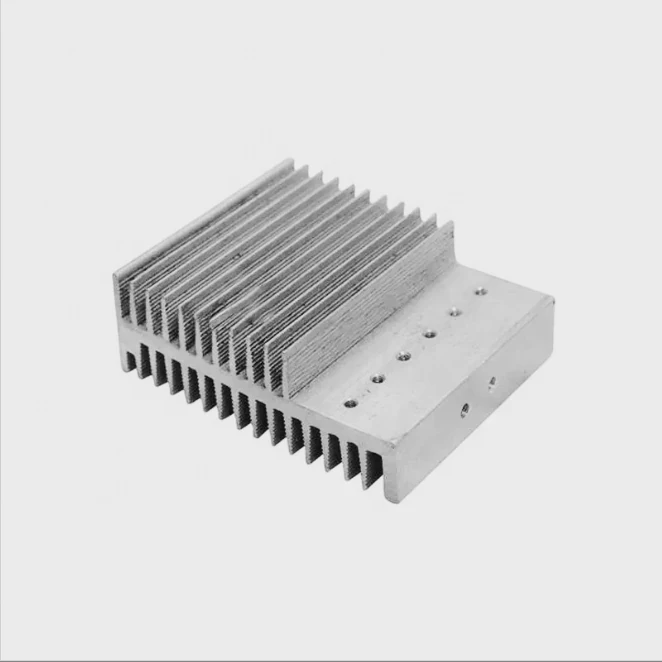
When you ask a supplier for a quote based on your drawings, the more complete your package is the better. Here are the critical elements you should include:
Required drawing details
- Outer dimensions: length, width, height/thickness of the chamber.
- Material specification: alloy (e.g., copper, aluminium or composite), thickness of wall, cover.
- Internal features: wick structure, vapor space geometry, support pillars, capillary layout.
- Sealing/weld features: location of weld seams, ports for working fluid injection, vacuum evacuation ports.
- Tolerances and flatness: for heat spreader applications you may need flatness within ± 0.05 mm or better depending on application.
- Surface finish and plating/coating: nickel‑plating, anodising, solderability, bond surfaces.
- Application environment: orientation, temperature range, heat flux, reliability cycle (if known).
- Quantities: planned order volume, initial run quantity, expected annual volume.
- Inspection/testing requirements: e.g., vacuum leak test, thermal cycle, specified defects.
- Delivery schedule: prototype lead‑time, pilot run, mass production timeline.
Why these details matter
Suppliers will base pricing on the manufacturing complexity, material cost, tooling cost, yield risk and volume market. If your drawing lacks key internal details (wick structure, welds, vacuum ports) the supplier may build in high risk contingencies or ask for higher price. The manufacturing process for vapor chambers is quite involved—e.g., vacuum sealing, wick sintering, welding or brazing operations. For example one source notes that for thin vapor chambers the production process “requires drawings in DWG/DXF/3D file formats, ensuring seamless integration with existing design systems”.
Therefore submitting fully detailed drawings helps the supplier understand your spec and quote accurately.
Table: Drawing details vs impact on quote
| Drawing element | Why supplier cares | Potential cost impact |
|---|---|---|
| Material & thickness | Different alloys & thickness mean tool changes | Higher cost for premium/lower yield |
| Internal wick/vapor structure | Complexity drives machining, yield risk | Increased price due to process risk |
| Tolerances & flatness | Tight specs lower yield, require better tools | More cost for inspections, rework |
| Quantity & volume forecast | Tooling cost amortisation depends on volume | Larger volumes reduce per‑unit cost |
| Test/inspection requirements | Additional steps add time and risk | Adds extra cost line items |
As a buyer, when you send your drawing/package to the supplier (for example your company’s R&D or procurement team), include a cover sheet with your part number, revision, material list, surface finish requirements, test plan and expected volume. That ensures you get a quote that matches your manufacturing needs, rather than a generic “lowest common denominator” quote.
How accurate must the drawings be for a quote?
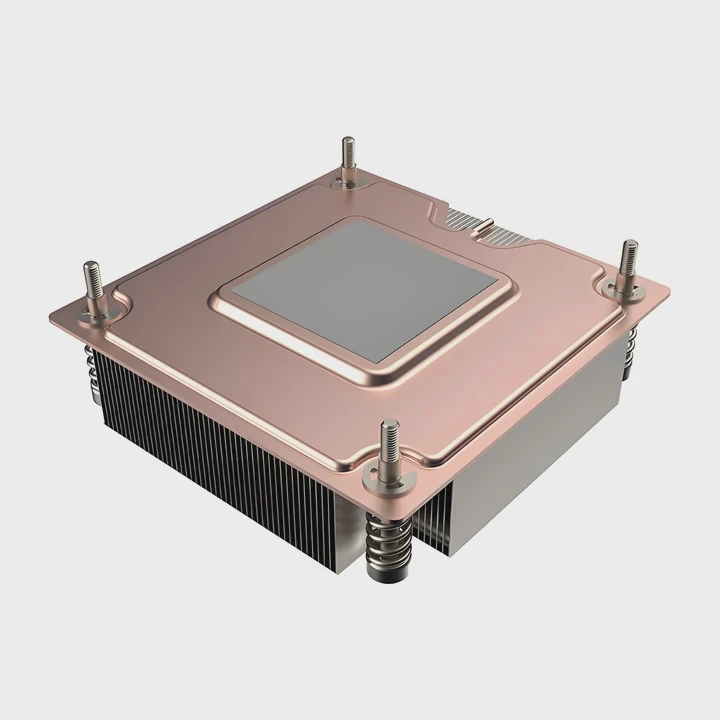
Accuracy of drawings is another key factor. On one hand you want the supplier to give you a price quickly; on the other hand if the drawing is incomplete or vague you might get a low quote that changes once details are clarified. Here’s how accurate your drawings ideally should be.
Minimum accuracy requirements
- All critical dimensions should be present with tolerances specified (or standard tolerance if agreed).
- Material and heat‑treatment/plating/coating details should be specified.
- Internal geometry relevant to manufacturing (wick, channels, vacuum cavity) should be shown, or at least annotated.
- Revision level should be clear (drawing revision A, B, etc).
- 2D drawings should include views, sections, and if necessary cross‑sections of internal features.
Why precision matters
If drawings are vague (e.g., “same as sample”, or “internal wick structure as per standard”), the supplier may treat this as higher risk and include a higher price or state “subject to change”. In the manufacturing of vapor chambers the internal structure, weld locations and vacuum integrity are very sensitive. A paper on the manufacturing method of vapor chambers emphasises that “powder filling and sintering … sealing … vacuum processing” steps are complex and cost‑driven.
Therefore you should aim for near‑production accuracy at quotation stage, or at least mark clearly which parameters are tentative and will be finalised later.
When rough drawings might suffice
- If you are requesting a budget quote or feasibility quote (not a formal firm quote).
- If you are still in concept phase and expect many changes.
- If you accept the risk that the final quoted price may change once drawings are finalised.
Buyer best practices
- Mark your quote request: “Preliminary pricing based on attached concept drawing, final quote subject to final drawing release.”
- If you expect changes, ask supplier to quote “design lock price” and “post‑release change cost”.
- Keep drawing revisions controlled—each revision can trigger cost review.
Accuracy helps both buyer and supplier. The clearer the drawing, the fewer surprises in tooling cost, yield assumptions, lead‑time risk and manufacturing margin.
Do 3D files improve quotation accuracy for Vapor Chambers?
Yes — 3D files (e.g., STEP, IGES, SolidWorks) provide significant benefits when requesting a quote for vapor chambers. Here’s why and how you should use them.
Advantages of providing 3D files
- Suppliers can rotate, section and inspect internal geometry much more easily than flat 2D drawings. They can detect under‑cuts, internal cavities, interference, thin walls or draft issues.
- The tool‑path planning, CNC programming, Will‑it‑mold/Cast analysis or stamping simulation becomes simpler when 3D geometry is available.
- Manufacturing feasibility studies (e.g., vacuum chamber fit, sintering/wick fill, welding fixtures) can be done earlier, reducing risk.
- Suppliers may quote faster and more accurately with less contingency risk margin when they have full 3D geometry.
Evidence of benefits
One thin‑vapor‑chamber manufacturer explicitly states: “requires drawings in DWG/DXF/3D file formats, ensuring seamless integration with existing design systems.” This indicates that 3D files are already part of efficient quoting and manufacturing workflow.
Therefore, by providing 3D files, you reduce ambiguity, reduce error margin, and likely get better pricing.
Best practice for buyers
- Provide both 2D detailed drawings and accompanying 3D model files.
- Ensure the 3D file is clean (no missing features, no errors, correct units, correct orientation).
- Include BOM (bill of materials) or at least material call‑out in the 3D file metadata if possible.
- If there are optional features (various surface finishes, optional ports) include them as separate configurations or named features in the model, and ask the supplier to quote each variant.
Limitations
- If your design is still in flux, a 3D model may get out of date, and the quote may need purple revision.
- Some suppliers might not require full 3D for simple off‑the‑shelf parts; then 2D drawing is sufficient.
- Even with 3D, you’ll still need to agree tolerances, material specs, inspection criteria etc.
In short: yes, including 3D files when asking for a quote for custom vapor chambers helps improve accuracy, reduces risk for supplier and buyer, and often leads to better, clearer quotes.
Can drawing revisions change the quoted price?
Yes — drawing revisions can absolutely lead to changes in the quoted price for vapor chambers. It’s one of the common reasons quoted costs escalate after initial review. Here’s how and why.
Why revisions affect cost
- A change in dimension, material, internal geometry, or process requirement changes tooling, setup, yield risk or scrap assumptions. For example, a thinner wall may reduce material cost but increase yield risk, welding complexity and QC cost.
- Changes after tooling design may require new tooling or modifications, which adds cost (tooling fee, time, resource).
- Alterations to specifications may invalidate assumptions used in the original quote: e.g., original quote assumed standard finish, now you require nickel‑plating and tighter tolerance → ups cost.
- Suppliers will often quote with “based on drawing revision X; changes after approval will be subject to re‑quote” to protect themselves.
Typical revision impact scenarios
- Minor change (e.g., change of surface finish, small port relocation) → small cost increase (maybe 2‑5%).
- Moderate change (e.g., internal wick redesign, thickness change, new alloy) → moderate cost increase (5‑20%).
- Major change (e.g., new size, new internal geometry, major material change, new application for aerospace/rail) → major cost increase (20%+ or entirely new quote).
Buyer control checklist
- Lock a drawing revision before the quotation becomes final. Then state that “no changes to drawing after X date without cost review.”
- Request supplier to quote separately for “change order price”: what happens if we revise drawing after tool approval.
- Negotiate that initial quote can hold for changes up to Y% of original specs (for example ≤10% size variation) without re‑quote, beyond that new quote.
- Document all changes: use revision history table on drawings, highlight changes to supplier, ask for impact assessment.
Summary table: Revision impact on quote
| Revision type | Likely impact on quoted price | Recommended buyer action |
|---|---|---|
| Cosmetic/non‑functional change | Small (2‑5%) | Minor change, negotiate minimal impact |
| Functional change, small scale | Moderate (5‑20%) | Supplier should re‑evaluate cost assumptions |
| Major redesign | Significant (>20% or new tooling) | Ask for a new full quote, review tooling cost |
Because your business deals with custom thermal modules and complex OEM manufacturing, drawing stability is critical. Each revision may trigger new tooling, new test plans, new yield risks. So ensure your internal design freeze milestone aligns with supplier quoting process.
Conclusion
When requesting a quotation for a vapor chamber from drawings, clarity and completeness are the keys. Provide fully detailed 2D drawings and preferably 3D files, clearly call out material, geometry, internal structure, finish, volume and test requirements. Drawing accuracy matters: the more details and fewer assumptions, the better the quote. Including 3D files improves supplier’s ability to assess manufacturing complexity and offer more accurate pricing. Be aware that revisions to drawings after quoting often change the price—so try to freeze design early or build in change‑order processes.
TAGS
Latest Articles

Volume discount levels for heat sink orders?
Buyers often ask when heat sink prices start to drop with volume. Many worry they’re overpaying for small orders. This guide explains how B2B volume pricing works for thermal components. Heat sink
21 Dec,2025
Heat sink long-term supply contract options?
Many buyers want stable pricing and reliable delivery for heat sinks. But without a clear contract, risks grow over time. This article explores how to secure better long-term supply deals. Long-term
21 Dec,2025
Tooling cost for new heat sink profiles?
Many engineers struggle to understand why tooling for custom heat sinks costs so much. They worry about budgeting and production timelines. This article breaks down the cost drivers behind tooling.
21 Dec,2025
Heat sink custom sample process steps?
Sometimes, starting a custom heat sink project feels overwhelming—too many steps, too many unknowns, and too many risks. You want a sample, but not endless delays. The process for requesting and
20 Dec,2025
Standard B2B terms for heat sink payments?
When buyers and sellers in B2B heat sink markets talk about payment, many don’t fully understand what’s standard. This can lead to delayed orders, miscommunication, and even lost business
20 Dec,2025
Heat sink pricing factors for large orders?
Heat sinks are vital for many systems. When prices rise, projects stall and budgets break. This problem can hit teams hard without warning. Large order heat sink pricing depends on many factors. You
20 Dec,2025Related Articles
- Typical Vapor Chamber mold cost?
- Vapor Chamber OEM price request?
- Usual payment terms for Vapor Chamber orders?
- Heat distribution comparison Vapor Chamber vs. heat pipe?
- Does Vapor Chamber require ventilation space?
- How to protect Vapor Chamber during transit?
- Vapor Chamber standard Incoterms for export?
- How long to prototype Vapor Chamber?
- Vapor Chamber packaging for export to USA?
- Customs documents needed for Vapor Chamber import?
- Best shipping method for Vapor Chamber?
- Vapor Chamber Global Shipping Lead Time?
Author
Dr. Emily Chen
Chief AI Researcher
Leading expert in thermal dynamics and AI optimization with over 15 years of experience in data center efficiency research.
Categories
Latest Products






Recommend Categories
- Liquid cooling plate Manufacturer
- Industrial Heat Sink Manufacturer
- Standard Heat Sink Manufacturer
- Aluminum Heat Sink Manufacturer
- Copper Heat Sink Manufacturer
- Anodized Heatsink Manufacturer
- Stamping heat sink Manufacturer
- Die Casting Heatsink Manufacturer
- Soldering heat sink Manufacturer
- CNC Parts Manufacturer
Latest Products
- Wholesale Aluminum Radiator
- Water Cooling Plate Kit
- Water Cooling Heat Sink
- Water Cooling Heat Sink Kit
- Stainless Steel Water Distributor
- Server Water Cooling Plate Kit
- Server Liquid Cooling System
- Server Aluminum Cooling Kit
- S19 Full Cover Cooling Plate
- S19 Cooling Plate Kit
- S19 Aluminum Cooling Plate
Contact Expert
Have questions about this article? Reach out to our experts directly.