how to calculate capillary limit in vapor chamber?
I face many confusing moments when I talk about capillary limits in vapor chambers. Many engineers feel the same fear when they see fluid control problems inside a sealed plate. I know this feeling well.
The capillary limit in a vapor chamber is the point where the wick can no longer return liquid to the heat source fast enough, and this failure causes dry-out. I calculate it by matching capillary pressure with liquid and vapor flow pressure drops.
I want to show you how I look at this topic in simple words so you can work with these ideas in real projects without stress.
What factors affect capillary performance?
I see many people struggle with the first step. They know the wick needs to pull liquid back, but they do not know what controls this pulling force. I remember when I made my first chamber sample and could not explain why the liquid dried out too fast.
Capillary performance depends on wick pore size, permeability, liquid properties, surface tension, working fluid saturation, and the flow path from evaporation to condensation zones. These elements shape the capillary pressure the wick can create.
When I look deeper into this topic, I start by breaking the idea into clear and simple parts. I use this method in many of my design reviews because it helps young engineers understand the full picture.
Key factors inside a wick
I always check the main variables that set the capillary strength:
| Factor | Why it matters |
|---|---|
| Pore size | Smaller pores create higher capillary pressure but reduce flow rate |
| Permeability | Higher permeability allows faster liquid flow with less resistance |
| Surface tension | Higher tension increases capillary pumping force |
| Contact angle | Better wetting increases effective capillary pressure |
| Liquid viscosity | Lower viscosity reduces drag in the wick |
How these factors combine
When I work on a real design, I use a simple form of the Young–Laplace equation:
Pc = 2·σ·cosθ / r
Where:
- Pc is capillary pressure
- σ is surface tension
- θ is contact angle
- r is pore radius
This equation seems simple, but it guides almost every wick choice I make. I know from experience that changing pore size by only a small amount can shift performance in a big way.
Flow path and geometry
Many people ignore geometry. But I learned the hard way that long return paths destroy performance. The liquid must travel through bends, thickness changes, and cross-section shifts. These steps add pressure drop and eat away the capillary head.
Fluid behavior under load
I also check how the working fluid behaves at the target temperature. I look at vapor pressure, density, and viscosity curves. Small shifts in temperature change these fluid properties, and this will change total pressure drop inside the chamber. I saw a project fail because the designer assumed room-temperature viscosity for a chamber running at 80°C.
Summary of deeper insight
When I consider all these parts together, I see capillary performance as a balance. I want high capillary pressure, but I also want low flow resistance. I want strong pumping, but I must keep pathways wide enough. This balance is the core of vapor chamber design.
How does wick structure change limits?
Many engineers ask me this question because wick structure feels abstract. I once worked on a design where two wick samples looked almost the same to the eye, but their performance dropped by over 40% due to a small change in sintering time.
Wick structure changes the capillary limit because different structures create different pore sizes, permeability levels, flow resistance, and liquid distribution patterns, and these differences shift the maximum heat load the chamber can sustain before dry-out.
When I look deeper at wick structures, I break them into a few common groups. Each group behaves in its own way.
Types of wick structures
Sintered powder wick
This is the most common type I use. It forms tiny, uniform pores. It gives stable and steady performance. It also handles high power density. But the pore size is fixed by powder size, and this sets both capillary pressure and flow resistance.
Groove wick
Groove wicks allow faster liquid return because they offer straight, low-resistance channels. But grooves cannot create very high capillary pressure, so they are not ideal for high-power spots.
Mesh wick
Mesh is easy to produce and works well for low-power cases. But it has lower capillary pressure and poor dry-out resistance. I only use it in simple builds today.
Composite wick
When I need powerful performance, I combine wick types. I use sintered powder near the heat source for high capillary strength. I use grooves or channels in outer areas to move liquid quickly. This mix gives the best range of performance.
How structure shapes pressure drop
Here is a clear view of how wick structure changes performance:
| Wick Structure | Capillary Pressure | Flow Resistance | Typical Use |
|---|---|---|---|
| Sintered | High | Medium | High heat density |
| Groove | Low | Low | Long-distance return |
| Mesh | Medium | High | Low-power designs |
| Composite | High | Low | Premium performance |
Why structure influences capillary limit
When the wick blocks liquid flow or cannot hold liquid near the heat source, the vapor chamber loses its ability to carry heat. Dry-out starts. The wick structure controls where liquid stays, how fast it returns, and how stable the flow becomes.
I learned that small changes in sintering density or mesh layer thickness can move the capillary limit by over 20%. This is why I always test samples from multiple batches.
My personal reminder for wick design
I tell my junior engineers:
“Do not guess the wick. Respect it. A vapor chamber is only as strong as its wick.”
Why is capillary limit critical?
I once joined a project where the team blamed the heat source for overheating. But the real problem was simple: the vapor chamber hit its capillary limit. Once the wick stopped sending liquid back, the heat source cooked itself.
The capillary limit is critical because it defines the maximum heat load a vapor chamber can move without dry-out, and dry-out causes temperature runaway, unstable thermal resistance, and sudden device failure.
When I look deeper at why this limit matters, I think about real failures I have seen. These failures appear fast and often without early signs.
The chain reaction of dry-out
When the heat source dries the wick, liquid cannot stay. Without liquid, evaporation stops. Without evaporation, the working cycle collapses. Temperatures rise fast. I have seen this rise happen in less than two seconds on a high-power chip.
How capillary limit protects the system
A vapor chamber works like a self-driven loop. Liquid evaporates. Vapor moves away. Vapor condenses. Liquid must return. This return step depends on the wick. If the wick fails, the loop breaks.
The simple physics of the limit
I use a basic formula:
Pc ≥ ΔP_liquid + ΔP_vapor + ΔP_gravity
Where:
- Pc is capillary pressure
- ΔP_liquid is liquid flow pressure drop
- ΔP_vapor is vapor flow pressure drop
- ΔP_gravity is the vertical lift pressure (if orientation matters)
This formula shows a simple truth. Capillary pressure must always beat fluid resistance. If it cannot, the limit is reached.
Why margin is important
Many younger designers like to match the design exactly to the expected load. I never do this. I always keep a margin, sometimes 20–30%. Real systems change. Orientation changes. Surface tension changes with fluid purity. Pore structures shift under long use. Margin protects the device.
Real impact on products
A stable capillary limit means lower operating temperatures, longer device life, and better user safety. A poor capillary design means large temperature swings and early failures. I have seen both in real devices.
Can testing verify capillary capacity?
I always trust data more than theory. Many times, theory gave me beautiful numbers, but the real chamber behaved in a far weaker way. That is why I run tests on every new structure.
Testing can verify capillary capacity by measuring temperature rise patterns, observing dry-out points under steady heating, checking liquid return behavior, and comparing performance at different orientations to see how much capillary head the wick can truly create.
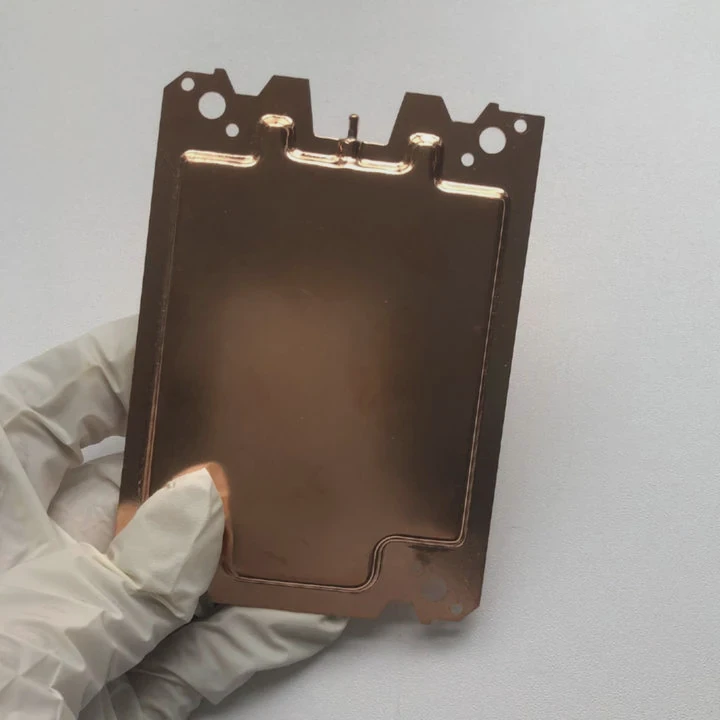
When I test capillary capacity, I follow a few simple steps that help me catch problems early.
Test methods I use
Step 1: Constant heat load test
I apply heat step by step. At each step, I wait for steady temperature. When temperature jumps sharply, the chamber is near dry-out. This gives me the limit point.
Step 2: Orientation test
I rotate the chamber. I tilt it. I flip it. I do this because gravity changes the return pressure drop. If the chamber fails at a small tilt, the capillary head is weak.
Step 3: Start–stop cycling
I turn the heat on and off. If the wick loses prime or takes too long to rewet, it has weak liquid hold. This problem shows up in many thin sintered wicks.
Step 4: Infrared imaging
I use an IR camera to see how heat spreads. A uniform map means good liquid return. A bright spot near the heat source means local dry-out.
Test patterns I look for
I never rely on a single number. I look for patterns:
- Sharp temperature spikes
- Uneven surface heat spread
- Secondary hot zones
- Slow recovery after heat shut-off
- Orientation sensitivity
These patterns tell me how strong the wick truly is.
Why testing is more honest than theory
Real vapor chambers have pores that are not perfect spheres. Paths are not smooth. Liquid mixes with tiny amounts of metal powder. Surface tension drops with age. These factors are not always part of the equations. Tests reveal the truth.
Lessons I learned from years of testing
I learned that samples from the same batch can perform differently. I learned that fine-powder wicks offer great pressure but clog more easily. I learned that grooves work well until someone bends the chamber slightly. Each lesson came from real tests, not theory.
Conclusion
Capillary limit defines how strong a vapor chamber really is. When I understand the factors, wick structures, risks, and testing methods, I can design chambers that stay safe and stable under real heat loads.
TAGS
Latest Articles

Volume discount levels for heat sink orders?
Buyers often ask when heat sink prices start to drop with volume. Many worry they’re overpaying for small orders. This guide explains how B2B volume pricing works for thermal components. Heat sink
21 Dec,2025
Heat sink long-term supply contract options?
Many buyers want stable pricing and reliable delivery for heat sinks. But without a clear contract, risks grow over time. This article explores how to secure better long-term supply deals. Long-term
21 Dec,2025
Tooling cost for new heat sink profiles?
Many engineers struggle to understand why tooling for custom heat sinks costs so much. They worry about budgeting and production timelines. This article breaks down the cost drivers behind tooling.
21 Dec,2025
Heat sink custom sample process steps?
Sometimes, starting a custom heat sink project feels overwhelming—too many steps, too many unknowns, and too many risks. You want a sample, but not endless delays. The process for requesting and
20 Dec,2025
Standard B2B terms for heat sink payments?
When buyers and sellers in B2B heat sink markets talk about payment, many don’t fully understand what’s standard. This can lead to delayed orders, miscommunication, and even lost business
20 Dec,2025
Heat sink pricing factors for large orders?
Heat sinks are vital for many systems. When prices rise, projects stall and budgets break. This problem can hit teams hard without warning. Large order heat sink pricing depends on many factors. You
20 Dec,2025Related Articles
- How does Xbox One X vapor chamber work?
- how does xbox one x vapor chamber cooling work?
- how does vapor chamber cpu coolers work?
- how does vapor chamber cooling work on laptop?
- how does a vapor chamber heatsink work?
- how coolermaster v8 gts vapor chamber works?
- how to clean a breathing vaporizer chamber?
- how to clean trippy stix vapor chamber?
- how to clean vaporizer chamber?
- how to clean wax vaporizer chamber?
- how to lower vapor pressure in a chamber?
- how to make a vapor chamber?
Author
Dr. Emily Chen
Chief AI Researcher
Leading expert in thermal dynamics and AI optimization with over 15 years of experience in data center efficiency research.
Categories
Latest Products






Recommend Categories
- Liquid cooling plate Manufacturer
- Industrial Heat Sink Manufacturer
- Standard Heat Sink Manufacturer
- Aluminum Heat Sink Manufacturer
- Copper Heat Sink Manufacturer
- Anodized Heatsink Manufacturer
- Stamping heat sink Manufacturer
- Die Casting Heatsink Manufacturer
- Soldering heat sink Manufacturer
- CNC Parts Manufacturer
Latest Products
- Wholesale Aluminum Radiator
- Water Cooling Plate Kit
- Water Cooling Heat Sink
- Water Cooling Heat Sink Kit
- Stainless Steel Water Distributor
- Server Water Cooling Plate Kit
- Server Liquid Cooling System
- Server Aluminum Cooling Kit
- S19 Full Cover Cooling Plate
- S19 Cooling Plate Kit
- S19 Aluminum Cooling Plate
Contact Expert
Have questions about this article? Reach out to our experts directly.