How to cool liquid fast?
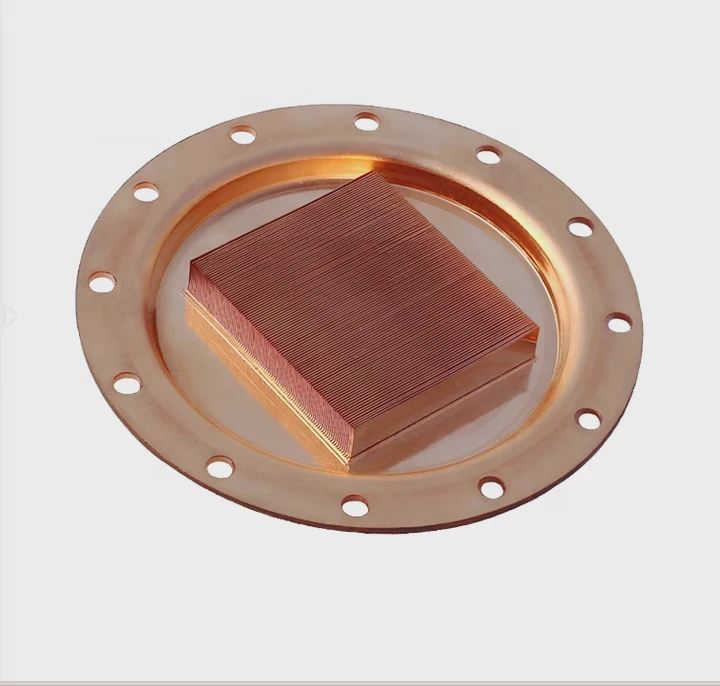
Sometimes you need to cool a liquid quickly — whether it’s for science experiments, manufacturing, or simply to chill a drink faster. Waiting for it to cool naturally is often too slow.
To cool liquid fast, increase its surface contact with a colder substance, improve heat transfer with stirring or conduction, and reduce insulation that traps heat.
From labs to industrial systems, rapid cooling is about controlling heat transfer efficiently and safely. Let’s look at how it works, what affects it, and how technology is making it faster.
What factors affect cooling rate?
The rate at which a liquid cools depends on physical, environmental, and material conditions. Some liquids cool rapidly, while others hold heat longer due to their properties.
Cooling rate depends on temperature difference, liquid type, surface area, container material, and airflow.
Main factors influencing cooling
| Factor | Effect on Cooling Rate | Description |
|---|---|---|
| Temperature difference | Higher difference → faster cooling | Heat flows quicker from hot to cold |
| Surface area | Larger surface → faster heat loss | Exposes more liquid to cooler air or surface |
| Liquid properties | High viscosity or density slows cooling | Affects internal heat movement |
| Container material | Metal cools faster than plastic | Better thermal conductivity improves rate |
| Airflow / agitation | Increases convection | Helps carry heat away from surface |
| Volume | Larger volume cools slower | More mass holds more heat |
How these factors interact
A hot liquid cools fastest when placed in a wide metal container, exposed to cool air, and stirred gently. Stirring distributes temperature evenly, while the metal conducts heat out efficiently.
If you use an ice bath, the temperature difference between the liquid and its surroundings becomes even greater — driving faster heat exchange.
These factors are the foundation of both simple and industrial cooling methods, from cooling coffee faster to controlling thermal cycles in manufacturing.
Why quick cooling is useful?
Cooling liquids fast isn’t just about convenience — it has practical, scientific, and industrial value. Quick cooling can improve safety, preserve quality, and even change material properties.
Fast cooling is useful for maintaining product quality, improving efficiency, and preventing unwanted chemical or biological reactions.
Key benefits of quick cooling
| Application | Benefit |
|---|---|
| Food and beverage | Maintains flavor, texture, and freshness |
| Industrial processes | Reduces cycle times and boosts productivity |
| Electronics manufacturing | Controls thermal stress and material bonding |
| Scientific research | Preserves samples or reactions accurately |
| Medical and biotech | Prevents bacterial growth or degradation |
Real-world relevance
In food production, rapid cooling stops bacteria from growing and preserves taste. In electronics or metalworking, it prevents heat damage and improves the strength of components.
Even in everyday life, cooling a hot drink or soup quickly helps you enjoy it sooner without waiting. Across all applications, the goal remains the same — to control temperature efficiently without damaging the material.
How to cool liquids safely and quickly?
Fast cooling must be done safely, especially with hot or volatile liquids. Improper handling can cause splashing, cracking containers, or contamination.
To cool liquids safely and quickly, use indirect methods such as ice baths, metal heat exchangers, or circulating coolant systems. Avoid pouring hot liquids directly onto ice or into fragile containers.
Effective methods for safe cooling
| Method | Description | Safety Notes |
|---|---|---|
| Ice bath | Place container in ice and salt mix | Avoid glass cracking from rapid temperature change |
| Metal container | Use aluminum or stainless steel for fast conduction | Handle with gloves if hot |
| Stirring or agitation | Promotes even temperature distribution | Use insulated tools |
| Evaporative cooling | Use fans or airflow over liquid | Ensure no contamination |
| Coolant circulation | Pump chilled liquid through heat exchanger | Ideal for labs or industry |
Step-by-step example: Ice bath cooling
- Fill a larger bowl with ice and add water for better surface contact.
- Optionally, add salt to lower the freezing point and speed cooling.
- Place the liquid container (preferably metal) inside the bath.
- Stir gently to keep temperature even.
- Monitor temperature to prevent overcooling or freezing.
This approach combines high surface area, strong temperature difference, and efficient heat conduction — the three keys to rapid cooling.
What are the advances in rapid cooling?
Technology continues to push the limits of how quickly and safely we can cool liquids. From high-speed industrial chillers to phase-change systems, new methods are improving efficiency across fields.
Modern rapid cooling technologies use advanced materials, AI-controlled systems, and phase-change techniques to achieve faster and safer heat transfer.
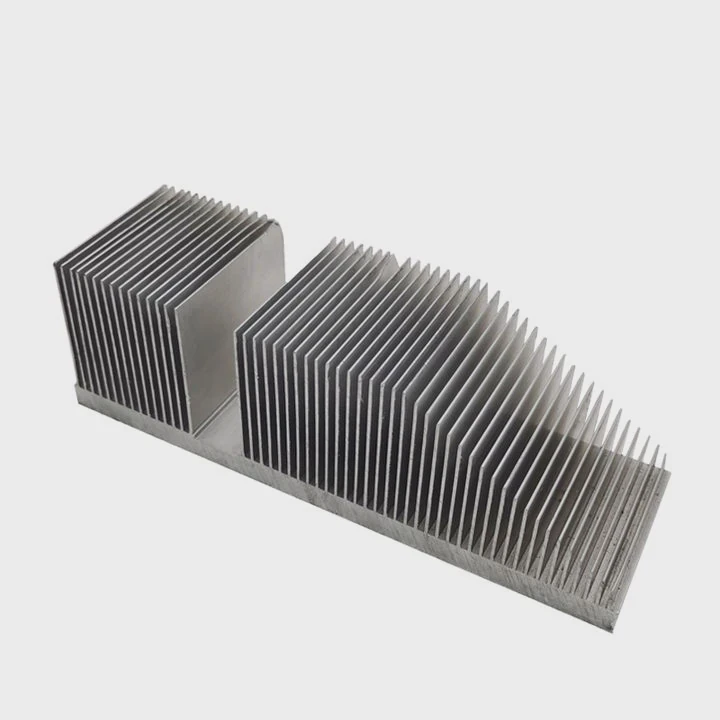
Cutting-edge cooling innovations
| Technology | Description |
|---|---|
| Phase-change cooling | Uses vaporization and condensation to absorb large heat loads |
| Liquid immersion cooling | Submerges components in non-conductive fluid for extreme cooling |
| Nanofluid coolants | Fluids enhanced with nanoparticles for higher thermal conductivity |
| AI thermal management | Adjusts cooling automatically based on temperature patterns |
| Cryogenic systems | Uses liquid nitrogen or CO₂ for ultra-fast temperature drops |
The future of rapid cooling
Industries are now combining AI with smart sensors to monitor and adjust cooling rates in real time. This approach minimizes energy use while maximizing efficiency.
Nanofluid coolants are another breakthrough — tiny conductive particles in liquids boost heat transfer by up to 30%. In high-end data centers, immersion cooling is becoming a standard for handling massive heat loads quietly and safely.
Meanwhile, cryogenic cooling enables ultra-fast temperature drops for scientific and medical applications, like preserving biological samples or cooling superconductors.
As technology evolves, rapid cooling will continue to become faster, smarter, and more sustainable, offering better control and safety across every industry.
Conclusion
To cool a liquid fast, focus on maximizing heat transfer — use metal containers, stirring, and strong temperature differences. Rapid cooling improves efficiency, safety, and product quality. With innovations like nanofluids and AI thermal control, the future of cooling is becoming faster, cleaner, and smarter.
TAGS
Latest Articles

Volume discount levels for heat sink orders?
Buyers often ask when heat sink prices start to drop with volume. Many worry they’re overpaying for small orders. This guide explains how B2B volume pricing works for thermal components. Heat sink
21 Dec,2025
Heat sink long-term supply contract options?
Many buyers want stable pricing and reliable delivery for heat sinks. But without a clear contract, risks grow over time. This article explores how to secure better long-term supply deals. Long-term
21 Dec,2025
Tooling cost for new heat sink profiles?
Many engineers struggle to understand why tooling for custom heat sinks costs so much. They worry about budgeting and production timelines. This article breaks down the cost drivers behind tooling.
21 Dec,2025
Heat sink custom sample process steps?
Sometimes, starting a custom heat sink project feels overwhelming—too many steps, too many unknowns, and too many risks. You want a sample, but not endless delays. The process for requesting and
20 Dec,2025
Standard B2B terms for heat sink payments?
When buyers and sellers in B2B heat sink markets talk about payment, many don’t fully understand what’s standard. This can lead to delayed orders, miscommunication, and even lost business
20 Dec,2025
Heat sink pricing factors for large orders?
Heat sinks are vital for many systems. When prices rise, projects stall and budgets break. This problem can hit teams hard without warning. Large order heat sink pricing depends on many factors. You
20 Dec,2025Related Articles
- When is liquid cooling necessary?
- What Is the Difference Between Liquid-Cooled and Air-Cooled?
- Is liquid cooling quieter than air cooling?
- Why glass is called super cooled liquid?
- Does 5800X3D need liquid cooling?
- Does a liquid cooler need thermal paste?
- Is PS5 liquid cooled?
- Is air-cooled or liquid-cooled better?
- What is better, air-cooled or liquid-cooled?
- How to add liquid cooling to GPU?
- Is liquid cooling easy to install?
- How to cool a liquid quickly?
Author
Dr. Emily Chen
Chief AI Researcher
Leading expert in thermal dynamics and AI optimization with over 15 years of experience in data center efficiency research.
Categories
Latest Products






Recommend Categories
- Liquid cooling plate Manufacturer
- Industrial Heat Sink Manufacturer
- Standard Heat Sink Manufacturer
- Aluminum Heat Sink Manufacturer
- Copper Heat Sink Manufacturer
- Anodized Heatsink Manufacturer
- Stamping heat sink Manufacturer
- Die Casting Heatsink Manufacturer
- Soldering heat sink Manufacturer
- CNC Parts Manufacturer
Latest Products
- Wholesale Aluminum Radiator
- Water Cooling Plate Kit
- Water Cooling Heat Sink
- Water Cooling Heat Sink Kit
- Stainless Steel Water Distributor
- Server Water Cooling Plate Kit
- Server Liquid Cooling System
- Server Aluminum Cooling Kit
- S19 Full Cover Cooling Plate
- S19 Cooling Plate Kit
- S19 Aluminum Cooling Plate
Contact Expert
Have questions about this article? Reach out to our experts directly.