Is PS5 liquid cooled?
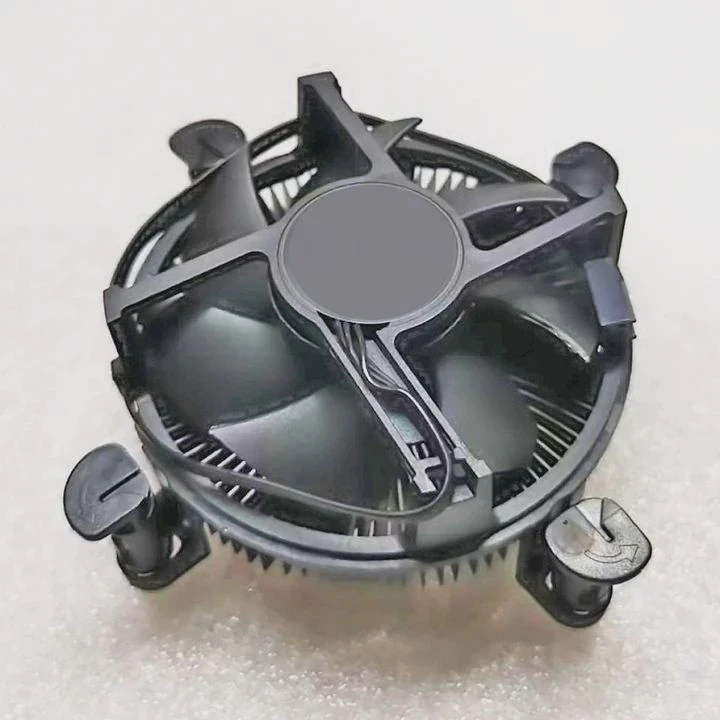
Many gamers assume the PlayStation 5 must use liquid cooling because of its massive size and quiet performance. After all, it runs powerful hardware in a compact case. But is it really liquid cooled?
No, the PS5 is not liquid cooled. It uses an advanced air cooling system with a large heatsink, vapor chamber, and dual-sided fan to manage heat efficiently.
Although the PS5’s cooling design borrows ideas from liquid systems, it remains entirely air-based. Let’s break down how it works and how it compares to PC cooling solutions.
What cooling method does PS5 use?
The PlayStation 5 relies on a custom air-based thermal system rather than traditional liquid cooling.
PS5 uses a large aluminum and copper heatsink, liquid metal thermal interface, and high-performance fans to dissipate heat from its CPU and GPU.
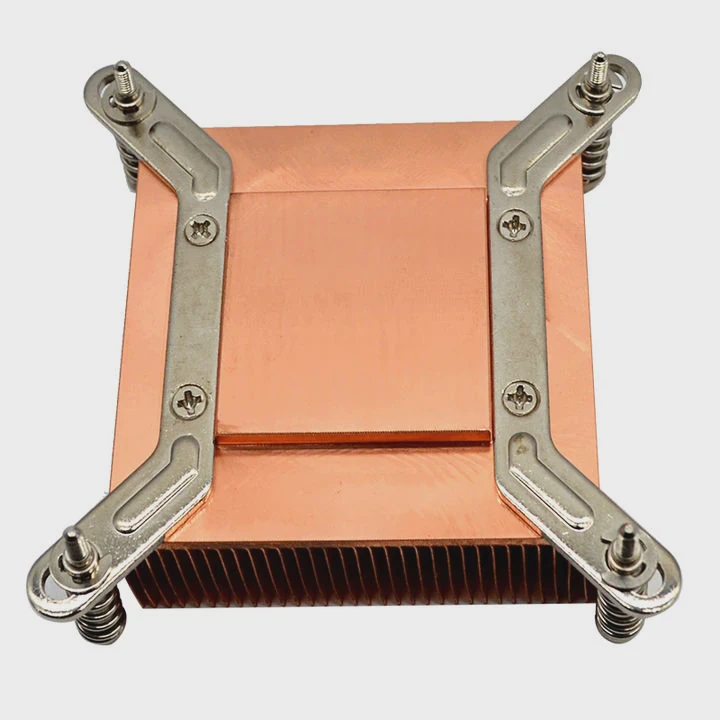
Key components of the PS5 cooling system
| Component | Description | Function |
|---|---|---|
| Heatsink | Large fin structure made of aluminum and copper | Absorbs and spreads heat from chips |
| Liquid metal TIM | Conductive liquid layer between CPU/GPU and heatsink | Maximizes heat transfer efficiency |
| Dual-sided fan | 120mm centrifugal blower | Pushes air across heatsink and out vents |
| Air ducts | Directed flow paths within the chassis | Guides cool and hot air efficiently |
| Vapor chamber (in newer models) | Flat metal chamber with phase-change fluid | Spreads heat evenly across large surfaces |
The PS5’s liquid metal TIM (thermal interface material) often causes confusion. It’s not the same as a liquid cooling system—it’s a microscopic liquid layer between the processor and heatsink, not circulating coolant.
How the system works
When the console runs games, the CPU and GPU generate heat. This heat moves through the liquid metal interface into the large heatsink. The fan then forces air through the fins, releasing heat from the console’s sides and back. The process repeats continuously to maintain a stable temperature.
Why Sony chose air cooling
Sony designed the PS5 to balance quiet operation, long lifespan, and cost efficiency. Liquid cooling, while powerful, would increase complexity, maintenance, and price. With liquid metal and an oversized heatsink, Sony achieved near-liquid cooling performance without those downsides.
What are the benefits of liquid cooling for consoles?
If the PS5 isn’t liquid cooled, you might wonder what benefits a console could gain if it were.
Liquid cooling offers lower temperatures, quieter operation, and higher thermal efficiency, but it also adds cost and design challenges.
Benefits overview
| Benefit | Description |
|---|---|
| Better temperature control | Keeps CPU/GPU cooler during long sessions |
| Reduced noise | Pumps are quieter than high-speed fans |
| Improved performance stability | Prevents thermal throttling in demanding games |
| Increased lifespan | Reduces wear on electronic components |
| Smaller size potential | Efficient heat transfer allows compact designs |
Challenges of liquid cooling in consoles
Despite the benefits, liquid cooling faces serious obstacles in mass-market consoles:
- Cost: Pumps, radiators, and coolant add expense.
- Maintenance: Sealed loops must last many years without leaks or refills.
- Durability: Moving parts (like pumps) may fail over time.
- Manufacturing scale: Millions of units must be built consistently and safely.
That’s why major console makers, including Sony, Microsoft, and Nintendo, have stuck with enhanced air cooling designs instead of full liquid systems.
Example of experimental liquid-cooled consoles
Some enthusiasts have created custom water-cooled PS5 or Xbox builds. These are impressive but remain limited to hobby projects or small custom PC shops. They demonstrate potential but not practicality for mass production.
How to compare PS5 cooling to PCs?
Modern gaming PCs and consoles share similar components, but their cooling strategies differ significantly.
Compared to gaming PCs, the PS5 uses compact air cooling optimized for space and efficiency, while PCs can use larger or liquid-based systems for maximum performance.
Cooling comparison
| Feature | PS5 Cooling | PC Cooling |
|---|---|---|
| Type | Air cooling with liquid metal TIM | Air or liquid (AIO/custom loops) |
| Heat dissipation | ~250–300W total | 400W+ for high-end GPUs |
| Noise level | Very low | Depends on fan/pump setup |
| Maintenance | None required | Occasional cleaning and coolant change |
| Thermal capacity | Fixed by design | Can be upgraded |
| Flexibility | Limited | Highly customizable |
Design philosophy differences
- PS5: Designed for plug-and-play consistency. Its cooling is tuned to maintain stable performance and low noise under all workloads.
- PCs: Focused on customization and scalability. Users can install massive radiators or custom water loops for extreme cooling and overclocking.
Despite being air-cooled, the PS5 performs exceptionally well for its compact size. Its liquid metal interface helps close the gap between traditional air and liquid-cooled systems.
Real-world temperature comparison
| Device | Cooling Type | Typical Load Temp (CPU/GPU) |
|---|---|---|
| PS5 | Air + liquid metal | 65–75°C |
| Gaming PC (air) | Air | 70–85°C |
| Gaming PC (AIO liquid) | Liquid | 50–65°C |
These numbers show that the PS5’s hybrid system is efficient enough to compete with many PC setups while keeping noise levels extremely low.
What are console cooling trends?
Console cooling technology has come a long way since the days of small fans and metal plates.
Modern console cooling trends focus on vapor chambers, smart fan control, and miniaturized thermal systems inspired by PC design.
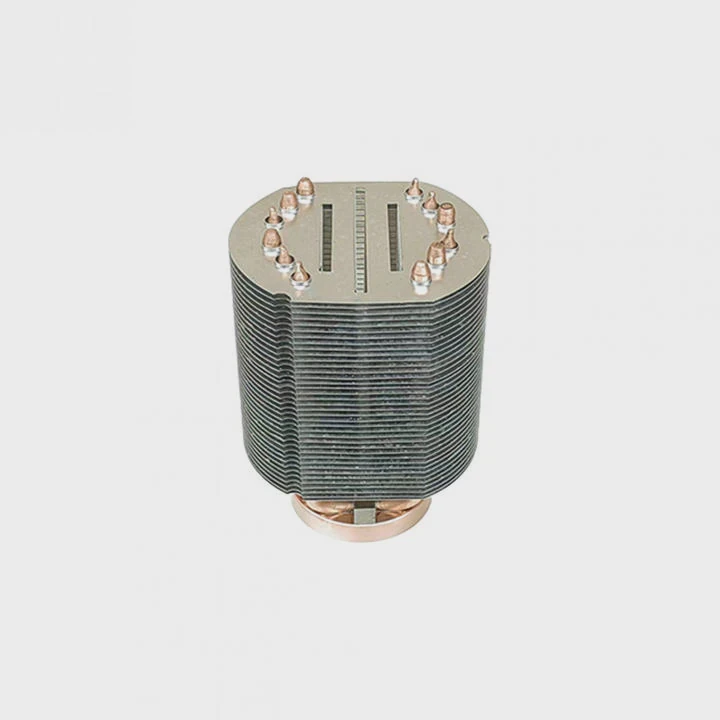
Trend 1: Vapor chamber integration
Future consoles are adopting vapor chambers, similar to high-end graphics cards. These use phase-change liquid inside sealed metal plates to spread heat quickly across surfaces.
Trend 2: Smart adaptive fans
Fans in new consoles use AI-based speed curves and temperature sensors to optimize noise and cooling dynamically. The PS5 already uses temperature feedback from multiple zones for precise control.
Trend 3: Compact high-efficiency heatsinks
Manufacturers are developing dense fin arrays and copper heatpipes to improve thermal efficiency without increasing size. Some designs combine vapor chambers with direct-contact heatpipes for hybrid cooling.
Trend 4: Phase-change and immersion cooling experiments
Researchers and small-scale projects are testing phase-change materials and dielectric liquid immersion for console-sized systems. While not commercial yet, they show potential for next-gen compact cooling.
Trend 5: Sustainable materials and low-noise engineering
New materials, like graphene composites and recyclable aluminum, are replacing traditional metals in heatsinks. Low-noise fan bearings and optimized airflow paths improve user comfort and sustainability.
Trend 6: Cross-pollination with PC cooling
As consoles adopt more PC-like architectures, they increasingly borrow cooling concepts from high-performance PCs—liquid metal, vapor chambers, and intelligent thermal design.
The road ahead
Next-generation consoles may not use full liquid loops, but they’ll likely integrate hybrid solutions combining vapor chambers, nano-coatings, and AI-controlled fans. These innovations will deliver near-liquid performance without maintenance or risk.
Conclusion
The PS5 is not liquid cooled—it uses an advanced air-based system enhanced with liquid metal and a large heatsink. This hybrid design achieves excellent cooling and quiet performance, proving that well-engineered air systems can rival liquid cooling in efficiency for consumer consoles.
TAGS
Latest Articles

Volume discount levels for heat sink orders?
Buyers often ask when heat sink prices start to drop with volume. Many worry they’re overpaying for small orders. This guide explains how B2B volume pricing works for thermal components. Heat sink
21 Dec,2025
Heat sink long-term supply contract options?
Many buyers want stable pricing and reliable delivery for heat sinks. But without a clear contract, risks grow over time. This article explores how to secure better long-term supply deals. Long-term
21 Dec,2025
Tooling cost for new heat sink profiles?
Many engineers struggle to understand why tooling for custom heat sinks costs so much. They worry about budgeting and production timelines. This article breaks down the cost drivers behind tooling.
21 Dec,2025
Heat sink custom sample process steps?
Sometimes, starting a custom heat sink project feels overwhelming—too many steps, too many unknowns, and too many risks. You want a sample, but not endless delays. The process for requesting and
20 Dec,2025
Standard B2B terms for heat sink payments?
When buyers and sellers in B2B heat sink markets talk about payment, many don’t fully understand what’s standard. This can lead to delayed orders, miscommunication, and even lost business
20 Dec,2025
Heat sink pricing factors for large orders?
Heat sinks are vital for many systems. When prices rise, projects stall and budgets break. This problem can hit teams hard without warning. Large order heat sink pricing depends on many factors. You
20 Dec,2025Related Articles
- How to cool liquid fast?
- When is liquid cooling necessary?
- What Is the Difference Between Liquid-Cooled and Air-Cooled?
- Is liquid cooling quieter than air cooling?
- Why glass is called super cooled liquid?
- Does 5800X3D need liquid cooling?
- Is air-cooled or liquid-cooled better?
- What is better, air-cooled or liquid-cooled?
- How to add liquid cooling to GPU?
- Is liquid cooling easy to install?
- How to cool a liquid quickly?
- How long does a liquid CPU cooler last?
Author
Dr. Emily Chen
Chief AI Researcher
Leading expert in thermal dynamics and AI optimization with over 15 years of experience in data center efficiency research.
Categories
Latest Products






Recommend Categories
- Liquid cooling plate Manufacturer
- Industrial Heat Sink Manufacturer
- Standard Heat Sink Manufacturer
- Aluminum Heat Sink Manufacturer
- Copper Heat Sink Manufacturer
- Anodized Heatsink Manufacturer
- Stamping heat sink Manufacturer
- Die Casting Heatsink Manufacturer
- Soldering heat sink Manufacturer
- CNC Parts Manufacturer
Latest Products
- Wholesale Aluminum Radiator
- Water Cooling Plate Kit
- Water Cooling Heat Sink
- Water Cooling Heat Sink Kit
- Stainless Steel Water Distributor
- Server Water Cooling Plate Kit
- Server Liquid Cooling System
- Server Aluminum Cooling Kit
- S19 Full Cover Cooling Plate
- S19 Cooling Plate Kit
- S19 Aluminum Cooling Plate
Contact Expert
Have questions about this article? Reach out to our experts directly.