Is air-cooled or liquid-cooled better?
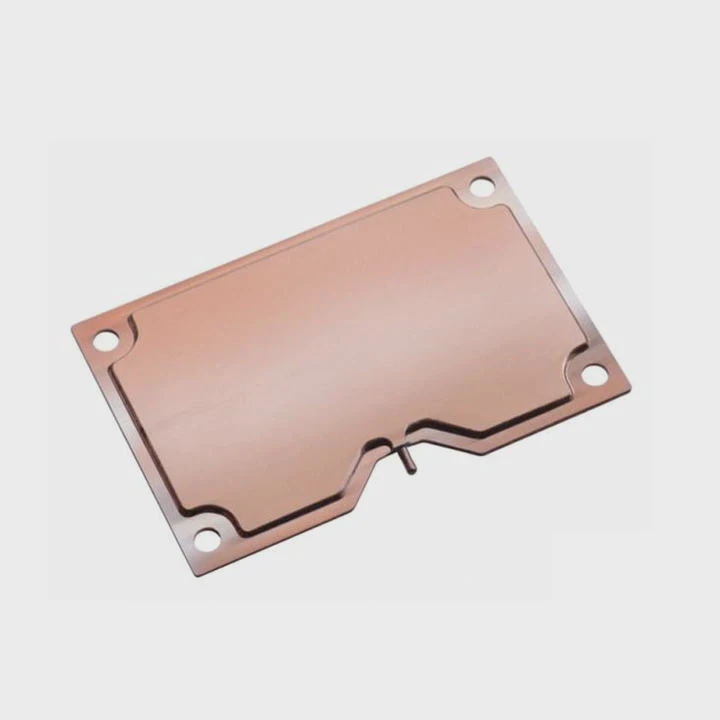
In today’s high-performance electronics world, heat is the silent enemy. When systems overheat, efficiency drops, and reliability fades fast.
Air and liquid cooling systems each have strengths and weaknesses. Liquid cooling offers higher efficiency for demanding systems, while air cooling provides simplicity and lower costs for general applications.
The key is not just which is better overall, but which fits your actual needs. Let’s explore how both systems work, how they differ, and where the market is heading.
What are air and liquid cooling systems?
Overheating can kill performance and shorten the lifespan of electronic components. This problem grows with smaller and more powerful devices.
Air cooling uses fans and heat sinks to move heat away from components, while liquid cooling circulates coolant through pipes or plates to absorb and release heat more efficiently.
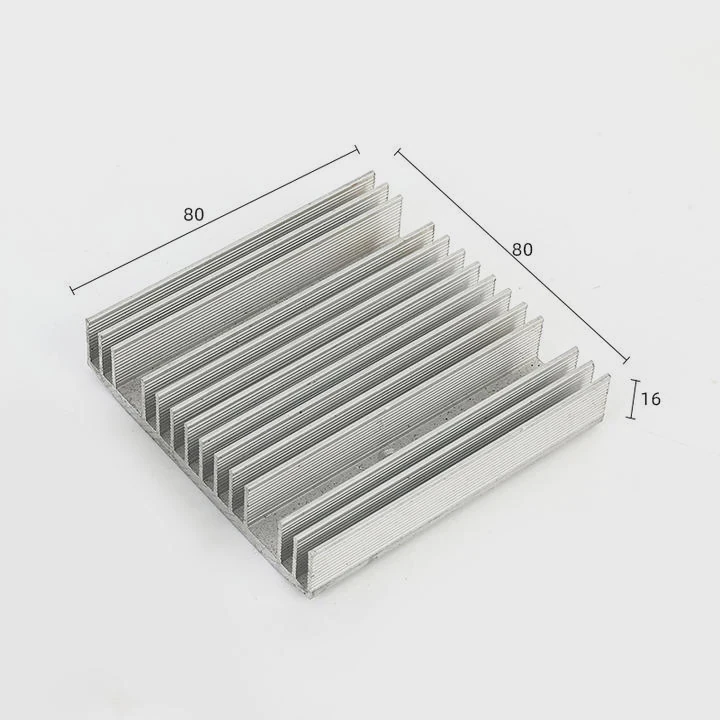
How air cooling works
Air cooling relies on a simple idea — transfer heat from a hot surface to cooler air. A heat sink, usually made from aluminum or copper, draws heat from chips or modules. Then, a fan blows air across it to carry the heat away.
It’s affordable, reliable, and easy to maintain. However, air has a low heat capacity. This means its ability to carry heat is limited, especially when the system’s thermal load is high. As devices become smaller but more powerful, air cooling starts to struggle to keep temperatures stable.
How liquid cooling works
Liquid cooling replaces air with a fluid, usually water or a special coolant. It runs through metal channels or pipes attached to heat-generating components. The liquid absorbs heat quickly and transfers it to a radiator or a cooling plate where it’s released into the air.
Because liquids have much higher thermal conductivity than air, this system manages heat more efficiently. It’s common in servers, EV batteries, and power electronics where performance and temperature stability are critical.
| Cooling Type | Working Medium | Heat Transfer Method | Typical Use |
|---|---|---|---|
| Air Cooling | Air | Convection through fins and fans | PCs, consumer electronics |
| Liquid Cooling | Coolant (water, glycol, etc.) | Circulation through channels or plates | Servers, EVs, industrial modules |
Both systems share one goal: to maintain safe and stable operating temperatures. The difference lies in the method and the scale of efficiency.
What are their performance differences?
As systems grow more powerful, performance and efficiency matter more than ever.
Liquid cooling outperforms air cooling in heat transfer efficiency, temperature stability, and noise reduction, while air cooling wins in cost, simplicity, and maintenance.

Comparing efficiency and stability
Air cooling systems can handle moderate heat loads up to around 100–200 watts per component. Beyond that, temperature control becomes difficult. The fan must spin faster, increasing noise and energy use.
Liquid cooling, on the other hand, can manage over 500 watts per module with excellent stability. Its cooling liquid can absorb heat faster, and the thermal resistance between the component and the coolant is much lower.
This difference is why data centers, high-end GPUs, and EV power modules increasingly use liquid-based systems.
Durability and maintenance
Air systems have few moving parts — usually just fans. They are durable and easy to clean or replace. But dust accumulation can reduce airflow, and fans wear out over time.
Liquid systems require pumps, seals, and sometimes sensors. These add complexity and potential leak risks. However, modern designs with sealed modules or vacuum-brazed channels minimize those issues, improving long-term reliability.
| Feature | Air Cooling | Liquid Cooling |
|---|---|---|
| Heat Dissipation | Moderate | Excellent |
| Noise Level | Higher | Lower |
| Maintenance | Simple | More complex |
| Lifespan | Long | Long (if sealed) |
| Cost | Low | Higher |
| Efficiency | Medium | High |
Design flexibility
Air cooling is limited by airflow space. It’s hard to fit fans in compact, sealed, or high-density systems. Liquid systems are more flexible — they can transfer heat away from tight spots using slim pipes or embedded cold plates.
For modular or integrated systems, this flexibility allows engineers to optimize layouts without worrying about air circulation paths.
How to select based on user needs?
Choosing the right cooling system isn’t just about performance. It’s about context — the application, environment, and reliability requirements.
Users should choose air cooling for general applications with low heat loads, and liquid cooling for high-power, space-limited, or mission-critical systems that demand temperature precision.
Identify the heat load
The first step is to calculate how much heat your system generates. For low to medium heat loads under 150W, air cooling is usually enough. For higher loads, especially continuous operation above 300W, liquid cooling provides better safety margins.
Systems such as industrial power converters or battery packs often generate dense and localized heat, which liquid systems handle more effectively.
Consider the operating environment
If the system runs in a dusty, hot, or enclosed environment, air cooling may lose efficiency quickly. Dust clogs fins, and airflow becomes weak.
Liquid cooling works well in sealed enclosures or harsh environments because it isolates heat sources from external air. That’s why it’s preferred in electric vehicles, renewable energy equipment, and aerospace systems.
Evaluate cost versus performance
Air cooling is less expensive both in components and maintenance. It’s ideal when cost and simplicity matter more than peak performance.
Liquid cooling, while costlier, reduces thermal stress and extends component life. Over time, this can save more in reliability and energy efficiency. Many engineers now see it as an investment rather than an expense.
Real-world selection example
A small 5G base station may use air cooling for cost control, but a high-density data center or EV battery module needs liquid cooling to stay within safe thermal limits.
I once helped a client replace a large fan system with a liquid cold plate assembly. The temperature dropped by 18°C, while noise was reduced by half — and the system became more compact.
What are the market trends in cooling?
The cooling industry is evolving fast, driven by new technologies and sustainability goals.
The global market is shifting from traditional air cooling to hybrid and liquid-based solutions, especially in data centers, EVs, and renewable energy systems.
The rise of high-density systems
As computing, electric transport, and industrial automation grow, components pack more power into smaller spaces. Air cooling can no longer meet the required heat flux densities, which now exceed 200W/cm² in some chips.
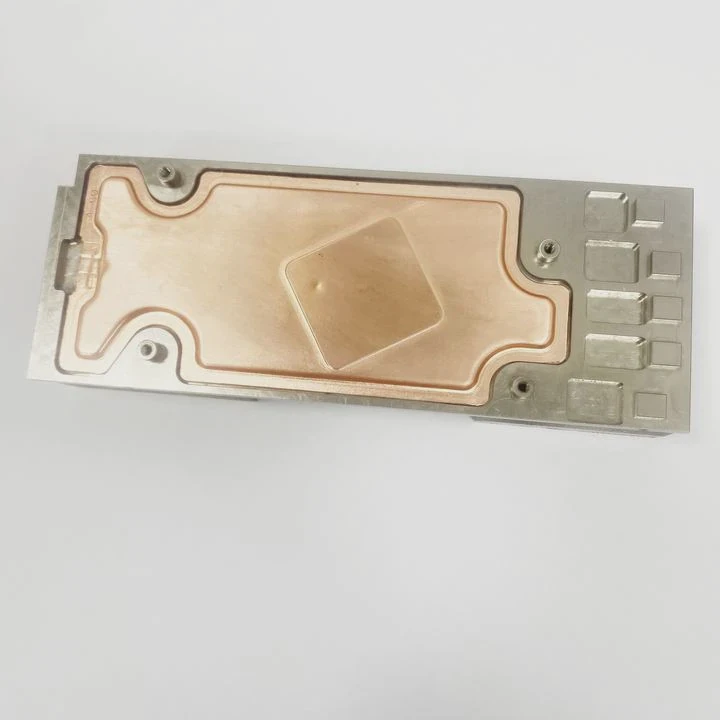
Liquid cooling — including direct-to-chip cold plates and immersion systems — offers a scalable solution. This shift is particularly visible in AI servers, EV power modules, and energy storage systems.
Sustainability and energy efficiency
Energy efficiency is now a key factor in cooling design. Air cooling consumes more power because of continuous fan operation, while advanced liquid systems can reduce energy use by up to 40%.
Also, liquid systems can reuse waste heat for other processes like heating or desalination, improving total energy utilization.
Integration and modularization
Manufacturers are developing integrated thermal modules, combining heat pipes, vapor chambers, and liquid channels into one structure. This reduces system complexity and improves reliability.
In aerospace and 5G sectors, integrated aluminum cold plates with diffusion or friction stir welding are becoming the new standard due to their lightweight and high conductivity.
Market outlook
Recent reports show that the liquid cooling market is expected to grow at over 20% CAGR in the next five years. Meanwhile, air cooling remains strong in cost-sensitive sectors like consumer electronics.
Hybrid systems, which combine both methods, are emerging as a balanced solution for mixed environments.
Future directions
Looking forward, new coolants and materials — such as phase-change materials (PCM) and nanofluids — promise even higher heat transfer rates. Aluminum and copper composites, advanced joining processes, and AI-based thermal control will further reshape how we think about heat management.
In the end, the future belongs to efficient, integrated, and intelligent cooling solutions that adapt to each application.
Conclusion
Air and liquid cooling are not rivals but tools for different needs. Air systems bring simplici
TAGS
Latest Articles

Volume discount levels for heat sink orders?
Buyers often ask when heat sink prices start to drop with volume. Many worry they’re overpaying for small orders. This guide explains how B2B volume pricing works for thermal components. Heat sink
21 Dec,2025
Heat sink long-term supply contract options?
Many buyers want stable pricing and reliable delivery for heat sinks. But without a clear contract, risks grow over time. This article explores how to secure better long-term supply deals. Long-term
21 Dec,2025
Tooling cost for new heat sink profiles?
Many engineers struggle to understand why tooling for custom heat sinks costs so much. They worry about budgeting and production timelines. This article breaks down the cost drivers behind tooling.
21 Dec,2025
Heat sink custom sample process steps?
Sometimes, starting a custom heat sink project feels overwhelming—too many steps, too many unknowns, and too many risks. You want a sample, but not endless delays. The process for requesting and
20 Dec,2025
Standard B2B terms for heat sink payments?
When buyers and sellers in B2B heat sink markets talk about payment, many don’t fully understand what’s standard. This can lead to delayed orders, miscommunication, and even lost business
20 Dec,2025
Heat sink pricing factors for large orders?
Heat sinks are vital for many systems. When prices rise, projects stall and budgets break. This problem can hit teams hard without warning. Large order heat sink pricing depends on many factors. You
20 Dec,2025Related Articles
- Is PS5 liquid cooled?
- How to cool liquid fast?
- When is liquid cooling necessary?
- What Is the Difference Between Liquid-Cooled and Air-Cooled?
- Is liquid cooling quieter than air cooling?
- Why glass is called super cooled liquid?
- What is better, air-cooled or liquid-cooled?
- How to add liquid cooling to GPU?
- Is liquid cooling easy to install?
- How to cool a liquid quickly?
- How long does a liquid CPU cooler last?
- Is liquid cooler better?
Author
Dr. Emily Chen
Chief AI Researcher
Leading expert in thermal dynamics and AI optimization with over 15 years of experience in data center efficiency research.
Categories
Latest Products






Recommend Categories
- Liquid cooling plate Manufacturer
- Industrial Heat Sink Manufacturer
- Standard Heat Sink Manufacturer
- Aluminum Heat Sink Manufacturer
- Copper Heat Sink Manufacturer
- Anodized Heatsink Manufacturer
- Stamping heat sink Manufacturer
- Die Casting Heatsink Manufacturer
- Soldering heat sink Manufacturer
- CNC Parts Manufacturer
Latest Products
- Wholesale Aluminum Radiator
- Water Cooling Plate Kit
- Water Cooling Heat Sink
- Water Cooling Heat Sink Kit
- Stainless Steel Water Distributor
- Server Water Cooling Plate Kit
- Server Liquid Cooling System
- Server Aluminum Cooling Kit
- S19 Full Cover Cooling Plate
- S19 Cooling Plate Kit
- S19 Aluminum Cooling Plate
Contact Expert
Have questions about this article? Reach out to our experts directly.