Is the PS5 liquid cooled?
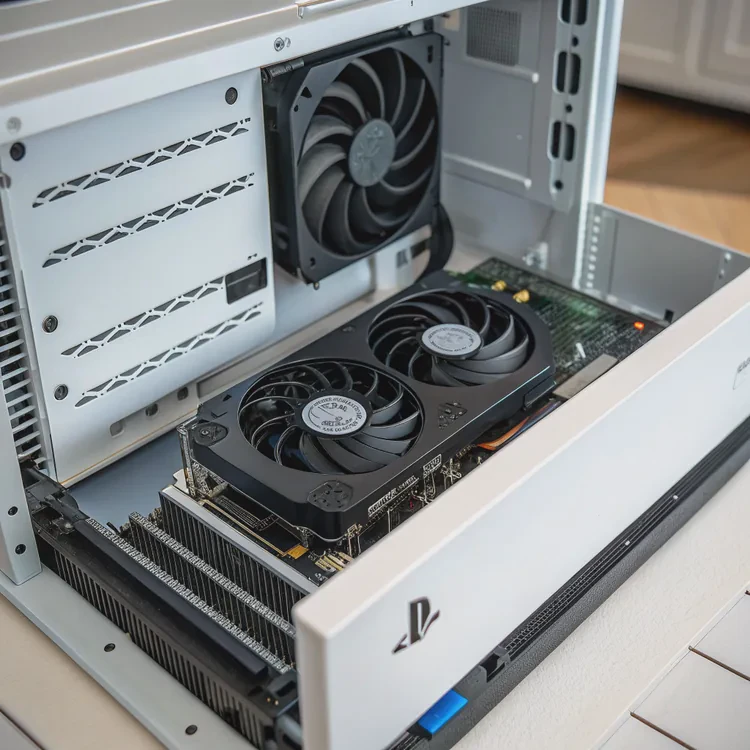
When the PlayStation 5 was released, many gamers wondered whether such a powerful console used liquid cooling like high-end PCs do. Its large fans and sleek design suggested something advanced was happening inside.
The PS5 is not liquid cooled; it uses an advanced air cooling system with a large heat sink, vapor chamber, and high-performance fan to manage heat efficiently.
Sony engineered the PS5 to deliver high thermal performance while remaining cost-effective and reliable. Although it doesn’t use traditional liquid cooling, its system is one of the most innovative ever built for a console.
What is the PS5 cooling system?
The PS5’s cooling design focuses on air management and efficient heat dissipation. Sony invested heavily in research to ensure it runs quietly and maintains safe operating temperatures, even under heavy gaming loads.
The PS5 cooling system combines a vapor chamber-style heat sink, liquid metal thermal interface material, and a powerful 120mm fan for efficient, quiet air cooling.
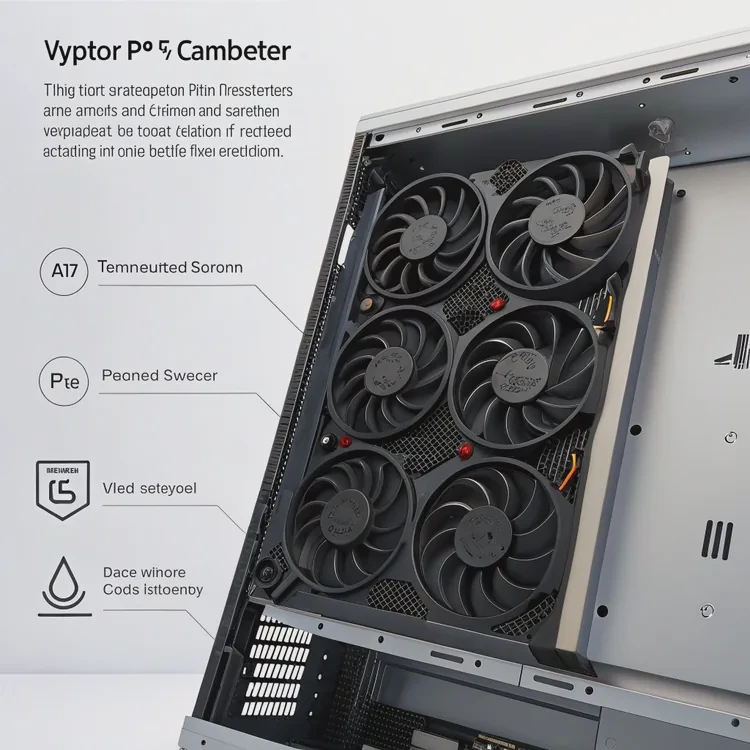
Breakdown of key components
| Component | Description | Function |
|---|---|---|
| Vapor Chamber Heat Sink | Large copper and aluminum assembly | Spreads heat from CPU and GPU evenly |
| Liquid Metal TIM | Conductive thermal interface between chip and cooler | Maximizes heat transfer |
| 120mm Axial Fan | Dual-sided intake fan | Pushes air across the heat sink and out the rear |
| Airflow Channels | Designed into chassis | Guides cool and warm air efficiently |
| Temperature Sensors | Placed throughout system | Adjust fan speed dynamically |
The PS5’s vapor chamber functions similarly to heat pipes in high-end PCs. It moves heat quickly away from the main processor, while liquid metal—a gallium-based alloy—acts as a thermal bridge between the chip and the cooler. This metal interface dramatically improves heat transfer compared to standard thermal pastes.
Smart cooling management
The PS5 includes multiple onboard temperature sensors that track thermal behavior in real time. Fan speed automatically adjusts to maintain balance between noise and cooling. Later firmware updates even allow the fan curve to evolve based on user data collected globally, improving performance over time.
What benefits would liquid cooling provide?
Liquid cooling could, in theory, make the PS5 even cooler and quieter. However, the console’s design already achieves these goals through air-based engineering optimized for reliability and cost.
Liquid cooling would lower temperatures further, reduce noise under heavy load, and allow for more compact or powerful hardware designs in future consoles.
Potential advantages of liquid cooling
| Benefit | Description |
|---|---|
| Lower Operating Temperatures | Coolant absorbs and dissipates heat more efficiently than air |
| Quieter Operation | Pumps and slow-moving fans make less noise |
| Improved Overclocking Headroom | Keeps processors stable at higher clock speeds |
| Smaller Form Factor | Better heat removal allows for denser component layouts |
| Longer Component Life | Stable temperatures reduce thermal fatigue |
Why Sony avoided it (for now)
While liquid cooling offers strong thermal performance, it’s not ideal for mass-market consoles. There are several practical reasons:
- Cost: Liquid systems are more expensive to produce and maintain.
- Durability: Pumps and seals wear over time, reducing lifespan.
- Complexity: Assembly and repair become harder at scale.
- Risk: Even sealed systems can leak, which is unacceptable in consumer electronics.
Instead, Sony chose a middle path—liquid metal thermal material—which captures some benefits of liquid cooling without adding mechanical complexity.
Future possibility
If consoles continue to increase in power density, we may see hybrid cooling (air + liquid loops) in future generations. For now, the PS5’s air-based solution achieves similar results safely and affordably.
How to compare PS5 cooling with liquid systems?
The PS5’s cooling system performs impressively for an air design. To compare fairly, it helps to look at heat transfer efficiency, temperature stability, and noise output.
Compared to liquid cooling, the PS5’s system offers lower maintenance and excellent thermal balance, though with slightly higher temperatures and noise.
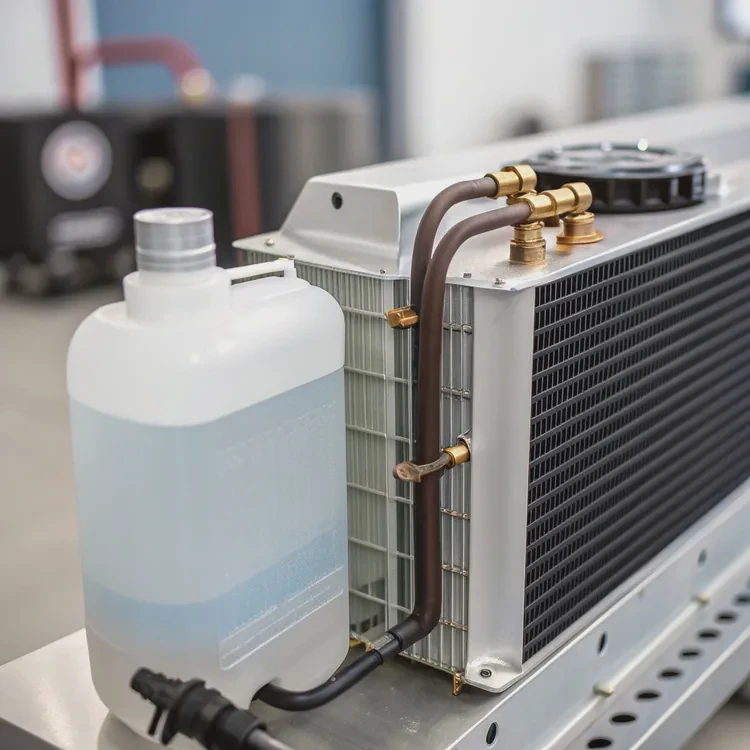
Comparison overview
| Feature | PS5 Air Cooling | Liquid Cooling PC |
|---|---|---|
| Cooling Medium | Air and vapor chamber | Liquid coolant |
| Thermal Interface | Liquid metal TIM | Thermal paste or liquid metal |
| Maintenance | None required | Periodic checks for leaks |
| Noise Level | 30–40 dB(A) | 25–35 dB(A) |
| Average CPU Temp | 65–75°C | 50–65°C |
| Lifespan | 6–10 years | 3–7 years (depending on pump) |
| Cost | Included in console | $100–300 additional |
Real-world difference
In actual use, the PS5’s temperature management keeps it stable during long gaming sessions without noticeable throttling. Even though liquid cooling systems can achieve lower temperatures, the performance difference in gaming is minimal for the PS5’s fixed hardware configuration.
The PS5’s vapor chamber provides heat-spreading performance similar to small liquid loops but without moving parts. Its fan noise remains lower than most gaming PCs during typical gameplay.
Reliability advantage
The console’s sealed, passive vapor chamber and smart fan control make it essentially maintenance-free—a big advantage over custom liquid loops that require fluid replacement or leak checks. This makes it ideal for millions of everyday users who just want quiet performance without the hassle.
What are console cooling trends?
Console cooling is entering a new phase where power efficiency, compact design, and advanced materials are at the forefront. Manufacturers are experimenting with hybrid and adaptive cooling technologies.
Current trends include vapor chambers, phase-change materials, smart fans, and future hybrid liquid systems for next-generation consoles.

Emerging cooling technologies in consoles
- Vapor Chambers: Now standard in high-end models for efficient, even heat spreading.
- Liquid Metal Interfaces: Increasingly used for high thermal conductivity and compact designs.
- AI-Driven Fan Control: Adjusts speed and direction based on temperature patterns.
- Phase-Change Materials (PCM): Store and release heat during temperature peaks.
- Hybrid Cooling Prototypes: Combining micro liquid loops with air cooling for compact systems.
Industry direction
Manufacturers like Sony, Microsoft, and handheld device makers are focusing on long-term reliability rather than raw cooling power. The goal is to achieve consistent performance over years of use, not just short bursts of maximum speed.
At the same time, miniaturization of chips and increased GPU power make thermal management more critical. Expect to see AI-optimized cooling and smart venting systems that adapt to how users play.
Future outlook
By the next console generation, hybrid systems may become mainstream. Compact sealed liquid modules or electrohydrodynamic coolers could appear in PS6 or Xbox successors, blending silence, efficiency, and high power density.
Conclusion
The PS5 is not liquid cooled but uses a highly efficient air-based cooling system with a vapor chamber and liquid metal interface. This design provides powerful, quiet, and reliable thermal management — proving that with smart engineering, air cooling can still rival liquid systems in performance.
TAGS
Latest Articles

Volume discount levels for heat sink orders?
Buyers often ask when heat sink prices start to drop with volume. Many worry they’re overpaying for small orders. This guide explains how B2B volume pricing works for thermal components. Heat sink
21 Dec,2025
Heat sink long-term supply contract options?
Many buyers want stable pricing and reliable delivery for heat sinks. But without a clear contract, risks grow over time. This article explores how to secure better long-term supply deals. Long-term
21 Dec,2025
Tooling cost for new heat sink profiles?
Many engineers struggle to understand why tooling for custom heat sinks costs so much. They worry about budgeting and production timelines. This article breaks down the cost drivers behind tooling.
21 Dec,2025
Heat sink custom sample process steps?
Sometimes, starting a custom heat sink project feels overwhelming—too many steps, too many unknowns, and too many risks. You want a sample, but not endless delays. The process for requesting and
20 Dec,2025
Standard B2B terms for heat sink payments?
When buyers and sellers in B2B heat sink markets talk about payment, many don’t fully understand what’s standard. This can lead to delayed orders, miscommunication, and even lost business
20 Dec,2025
Heat sink pricing factors for large orders?
Heat sinks are vital for many systems. When prices rise, projects stall and budgets break. This problem can hit teams hard without warning. Large order heat sink pricing depends on many factors. You
20 Dec,2025Related Articles
- What is liquid metal cooling?
- How to remove a liquid cooler?
- When a sample of liquid is cooled, its thermal energy?
- Is iBUYPOWER liquid cooling good?
- How to test a liquid cooling system?
- Is liquid cooling louder than air?
- Why use liquid cooling?
- How to refill liquid cooling?
- How to install liquid cooling on GPU?
- Is it hard to install liquid cooling?
- How does liquid cooling work in computers?
- How to cool hot liquid fast?
Author
Dr. Emily Chen
Chief AI Researcher
Leading expert in thermal dynamics and AI optimization with over 15 years of experience in data center efficiency research.
Categories
Latest Products
Recommend Categories
- Liquid cooling plate Manufacturer
- Industrial Heat Sink Manufacturer
- Standard Heat Sink Manufacturer
- Aluminum Heat Sink Manufacturer
- Copper Heat Sink Manufacturer
- Anodized Heatsink Manufacturer
- Stamping heat sink Manufacturer
- Die Casting Heatsink Manufacturer
- Soldering heat sink Manufacturer
- CNC Parts Manufacturer
Latest Products
- Wholesale Aluminum Radiator
- Water Cooling Plate Kit
- Water Cooling Heat Sink
- Water Cooling Heat Sink Kit
- Stainless Steel Water Distributor
- Server Water Cooling Plate Kit
- Server Liquid Cooling System
- Server Aluminum Cooling Kit
- S19 Full Cover Cooling Plate
- S19 Cooling Plate Kit
- S19 Aluminum Cooling Plate
Contact Expert
Have questions about this article? Reach out to our experts directly.