When a sample of liquid is cooled, its thermal energy?
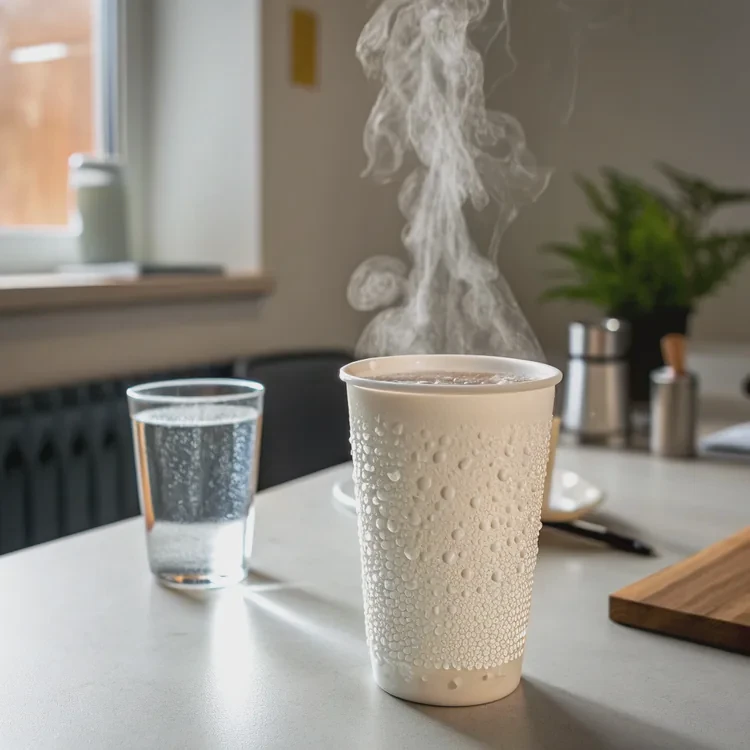
Every time you place a cup of hot water on a table, something invisible happens. The water loses warmth, the air gains it, and energy quietly changes hands.
When a liquid is cooled, its thermal energy decreases as its particles lose kinetic energy and move slower, lowering its temperature.
This simple process explains how heat moves, how materials behave under temperature change, and even how engineers design better thermal management systems.
What is thermal energy in liquids?
Thermal energy is not some mysterious quantity—it’s just the total energy from the motion of particles inside a substance. In liquids, that motion is constant and dynamic.
Thermal energy in a liquid is the sum of kinetic energy from the random motion of its particles and potential energy from interactions between them.
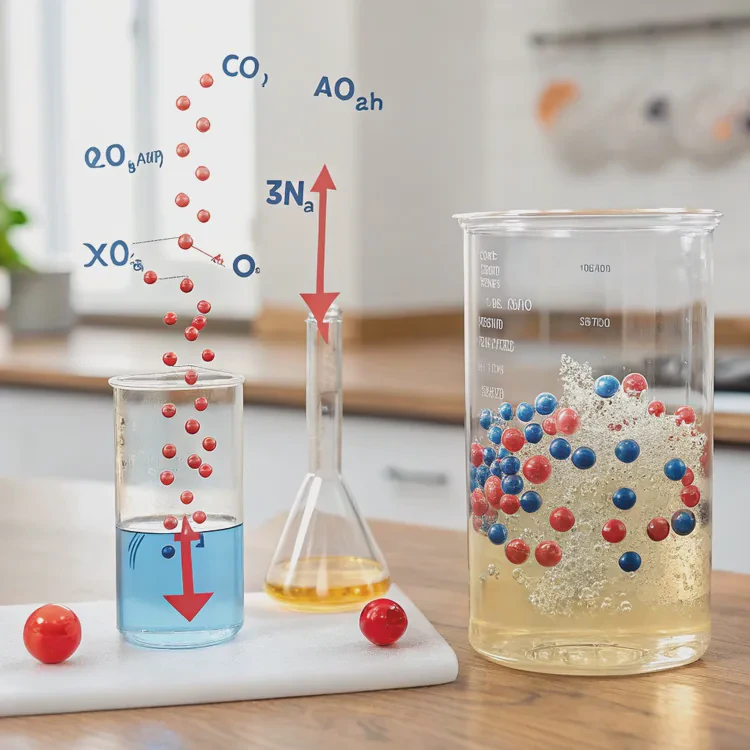
In a liquid, molecules are close together but still free to move. They slide past one another, constantly colliding and transferring momentum. The faster they move, the higher the thermal energy. That’s why temperature directly measures this average motion.
Key properties of thermal energy in liquids
| Property | Description | Example |
|---|---|---|
| Kinetic Energy | Motion of molecules | Hot water molecules move faster |
| Potential Energy | Intermolecular attraction | Molecules vibrate around equilibrium |
| Internal Energy | Sum of kinetic + potential | Total stored energy in system |
| Temperature | Average kinetic energy | Indicates particle speed |
When you heat a liquid, molecules gain kinetic energy. When you cool it, they lose energy. This exchange defines every thermal process we experience — from boiling water to cooling metal during manufacturing.
How it works physically
Imagine each molecule as a small ball bouncing in a box. The more heat it has, the faster it moves and collides. Cooling slows them down, reducing both their motion and their ability to transfer heat to neighboring molecules. That reduction in movement is exactly what we call a loss of thermal energy.
What happens when a liquid cools down?
When you cool a liquid, its molecules slow down. As they lose energy, their motion decreases, and the distance between them often becomes smaller. This can cause the liquid to contract or even change its phase.
As a liquid cools down, its molecules move slower, thermal energy decreases, and the temperature drops. In some cases, the liquid solidifies into a solid state.

Step-by-step energy behavior
- Heat transfer begins – Energy moves from the liquid to the surrounding air or surface.
- Molecular motion slows – Average kinetic energy drops.
- Temperature falls – The system loses internal energy.
- Intermolecular forces increase – Molecules move closer together.
- Phase change (optional) – If cooled enough, it freezes into a solid.
Example: Cooling of water
When water cools from 80°C to 20°C, its molecules lose kinetic energy gradually. Near 0°C, hydrogen bonds become more organized, forming ice crystals. This transformation shows how the reduction of energy changes not only motion but also structure.
Visualizing the process
| Stage | Temperature | Molecular Activity | Energy State |
|---|---|---|---|
| Hot Liquid | 80°C | Fast, disordered motion | High energy |
| Cooling | 40°C | Slower, more interaction | Decreasing |
| Near Freezing | 5°C | Very slow motion | Low energy |
| Frozen Solid | 0°C or below | Locked lattice | Minimal energy |
As the liquid loses energy, it transfers that energy to the environment, which explains why the surrounding air or container warms slightly. Energy is never lost — it just moves.
How does this process affect energy transfer?
Every cooling process is a story of energy movement. When one object cools, another gains energy. This flow continues until everything reaches the same temperature — a state called thermal equilibrium.
When a liquid cools, energy transfers from the liquid to its surroundings through conduction, convection, or radiation until equilibrium is reached.
Three main energy transfer methods
| Transfer Type | Description | Example |
|---|---|---|
| Conduction | Direct contact energy exchange | Liquid touching a cold surface |
| Convection | Movement of fluid carrying heat | Warm water rises, cool water sinks |
| Radiation | Infrared energy emission | Heat radiates from warm liquid surface |
Understanding the flow
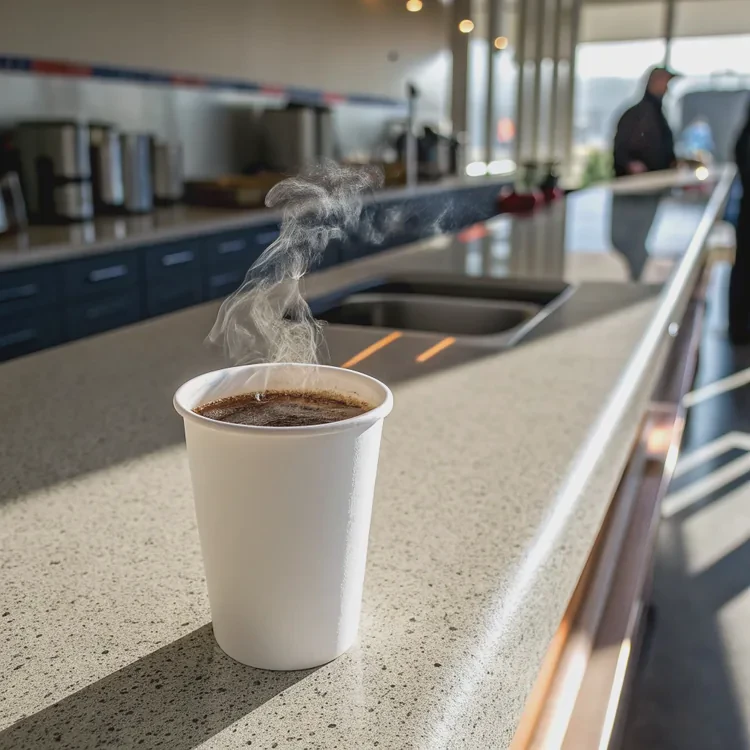
- Conduction happens first at the liquid boundary. When you place a hot cup on a cold counter, molecules at the surface lose energy to the counter material.
- Convection takes over inside the liquid. Warmer parts rise, cooler parts sink, forming a circulating current.
- Radiation plays a smaller role but still carries energy away into the air as infrared waves.
Real-world connection
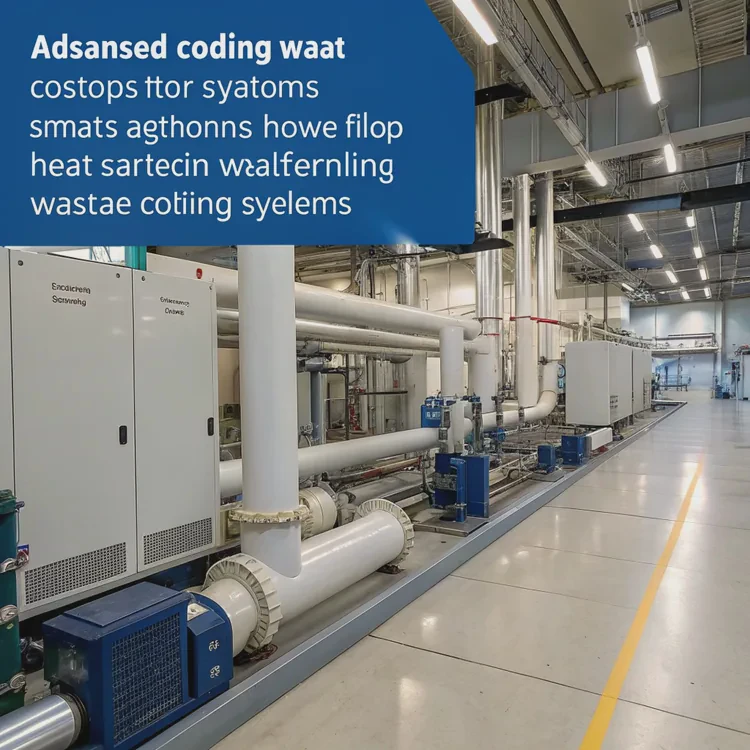
In engineering, this principle is used in liquid cooling systems for electronics. The liquid absorbs heat from hot components and releases it through radiators using the same transfer methods. Cooling is not just temperature change—it’s the heart of every thermal control process.
The balance of energy
Energy balance is expressed simply:
[ Q{lost} = Q{gained} ]
The energy lost by the liquid equals the energy gained by its surroundings. Nothing disappears; it just moves until temperatures match.
What are the trends in thermal energy research?
The science of heat transfer may sound old, but research in thermal energy is rapidly evolving, driven by energy efficiency and next-generation materials.
Modern thermal energy research focuses on nanofluids, phase-change materials, and smart systems that store and transfer heat more efficiently.
Emerging focus areas
- Nanofluids: Liquids infused with nanoparticles to enhance heat transfer rates.
- Phase-Change Materials (PCM): Store and release energy during melting/freezing for thermal management.
- Microchannel Cooling: Tiny pathways that maximize surface contact in compact systems.
- Thermal Batteries: Store solar or waste heat for later use in power systems.
- AI-Controlled Cooling: Smart algorithms adjust flow and temperature in real-time.
Nanotechnology and enhanced fluids
Nanofluids, made by adding nanoparticles like aluminum oxide or copper, can increase thermal conductivity by 10–30%. Researchers now explore stability and cost efficiency for industrial adoption. These fluids are finding use in electronics, electric vehicles, and renewable systems.
Phase-change innovation
Phase-change materials absorb heat when melting and release it when solidifying. They act like energy sponges, stabilizing temperatures. Modern PCMs made from organic compounds or metallic alloys help regulate heat in buildings, batteries, and aerospace systems.
Digital and smart thermal control
The next leap is AI-driven cooling systems that predict heat patterns and adjust flow rates automatically. Combined with data from sensors, they optimize thermal energy distribution dynamically, improving system performance while reducing energy waste.
Looking forward
Future thermal research will focus on combining advanced materials, machine learning, and sustainable design to improve how we capture, store, and reuse heat. From household appliances to spacecraft, every application will rely on smarter ways to manage energy flow.
Conclusion
When a liquid cools, its thermal energy decreases because molecular motion slows and energy transfers to the surroundings. This simple yet powerful process drives everything from natural weather patterns to high-tech cooling systems and continues to inspire modern thermal research.
TAGS
Latest Articles

Volume discount levels for heat sink orders?
Buyers often ask when heat sink prices start to drop with volume. Many worry they’re overpaying for small orders. This guide explains how B2B volume pricing works for thermal components. Heat sink
21 Dec,2025
Heat sink long-term supply contract options?
Many buyers want stable pricing and reliable delivery for heat sinks. But without a clear contract, risks grow over time. This article explores how to secure better long-term supply deals. Long-term
21 Dec,2025
Tooling cost for new heat sink profiles?
Many engineers struggle to understand why tooling for custom heat sinks costs so much. They worry about budgeting and production timelines. This article breaks down the cost drivers behind tooling.
21 Dec,2025
Heat sink custom sample process steps?
Sometimes, starting a custom heat sink project feels overwhelming—too many steps, too many unknowns, and too many risks. You want a sample, but not endless delays. The process for requesting and
20 Dec,2025
Standard B2B terms for heat sink payments?
When buyers and sellers in B2B heat sink markets talk about payment, many don’t fully understand what’s standard. This can lead to delayed orders, miscommunication, and even lost business
20 Dec,2025
Heat sink pricing factors for large orders?
Heat sinks are vital for many systems. When prices rise, projects stall and budgets break. This problem can hit teams hard without warning. Large order heat sink pricing depends on many factors. You
20 Dec,2025Related Articles
- Is iBUYPOWER liquid cooling good?
- How to test a liquid cooling system?
- Is liquid cooling louder than air?
- How to flush liquid cooling system?
- Is liquid cooling necessary?
- Does 7800X3D need liquid cooling?
- How to remove a liquid cooler?
- What is liquid metal cooling?
- Is the PS5 liquid cooled?
- Why use liquid cooling?
- How to refill liquid cooling?
- How to install liquid cooling on GPU?
Author
Dr. Emily Chen
Chief AI Researcher
Leading expert in thermal dynamics and AI optimization with over 15 years of experience in data center efficiency research.
Categories
Latest Products






Recommend Categories
- Liquid cooling plate Manufacturer
- Industrial Heat Sink Manufacturer
- Standard Heat Sink Manufacturer
- Aluminum Heat Sink Manufacturer
- Copper Heat Sink Manufacturer
- Anodized Heatsink Manufacturer
- Stamping heat sink Manufacturer
- Die Casting Heatsink Manufacturer
- Soldering heat sink Manufacturer
- CNC Parts Manufacturer
Latest Products
- Wholesale Aluminum Radiator
- Water Cooling Plate Kit
- Water Cooling Heat Sink
- Water Cooling Heat Sink Kit
- Stainless Steel Water Distributor
- Server Water Cooling Plate Kit
- Server Liquid Cooling System
- Server Aluminum Cooling Kit
- S19 Full Cover Cooling Plate
- S19 Cooling Plate Kit
- S19 Aluminum Cooling Plate
Contact Expert
Have questions about this article? Reach out to our experts directly.