Is liquid cooling louder than air?
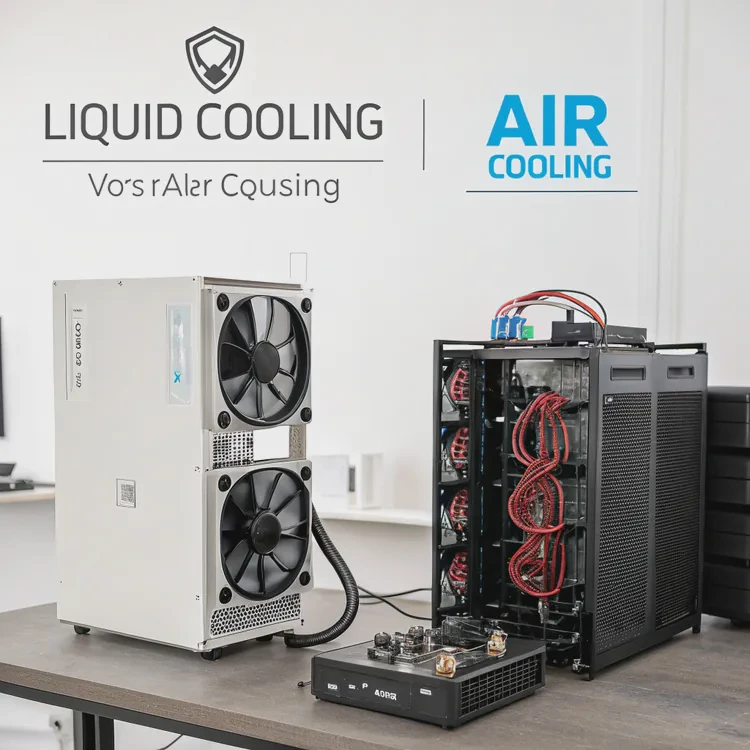
When people build high-performance systems, noise becomes a key factor. Many assume liquid cooling is always quieter, but that’s not always true.
Liquid cooling can be quieter than air cooling, but it depends on pump design, radiator fans, and system setup. Air systems can also be silent if well-optimized.
Choosing between air and liquid cooling is not about noise alone. It’s about how each system transfers heat and manages airflow. To truly know which is quieter, we need to understand what makes noise in both types.
What determines cooling noise levels?
Every cooling system makes sound from moving parts. The fan blades, bearings, and pumps all contribute. Poor design or dust buildup increases that noise quickly.
Cooling noise levels come mainly from airflow turbulence, fan speed, bearing friction, and pump vibration. Design quality and mounting also affect how much sound escapes.
Main factors that shape noise
| Factor | Description | Typical Impact |
|---|---|---|
| Fan Speed | Faster fans move more air but create more turbulence | +5–10 dB(A) increase |
| Bearing Type | Sleeve vs ball bearings affect tone and vibration | Smoother or harsher sound |
| Pump Design | Flow rate and impeller balance control vibration | Can add low-frequency hum |
| Radiator Placement | Tight spaces amplify sound resonance | Noise reflection or echo |
When air passes through tight fins or small vents, it makes turbulence. This turbulence is often the loudest part of an air-cooled setup. Liquid systems add another noise source — the pump. If the pump vibrates or if air bubbles get trapped inside, the system can make a buzzing or humming sound. Mounting surfaces also matter. Hard surfaces amplify vibration, while rubber mounts can absorb it.
Good design reduces these noises. Low-speed fans, rubber dampers, and balanced impellers make a huge difference. That’s why premium cooling solutions often advertise decibel ratings — even small design choices matter a lot.
What makes liquid cooling quieter or louder?
When I first used a liquid cooling system, I thought it would be silent. Then I learned pumps have personalities — some whisper, some growl. It depends on build quality.
Liquid cooling can be quieter if the pump is smooth and fans run slower, but loud if the pump vibrates or air bubbles form. Installation quality is critical.
Comparing liquid vs air noise sources
| Component | Air Cooling Noise | Liquid Cooling Noise |
|---|---|---|
| Fans | Primary source, especially at high RPM | Needed but often slower |
| Pump | N/A | Adds low-frequency hum or vibration |
| Air Turbulence | Around heatsink fins | Around radiator fins |
| Vibration | From fan motors | From pump mount or tubing |
Liquid systems often allow lower fan speeds since radiators have more surface area. This helps reduce airflow noise. However, liquid introduces other mechanical components — pumps, hoses, and coolant flow paths — each adding possible noise points.
A poorly mounted pump can transfer vibration through the chassis. Also, when air pockets remain inside the loop, the pump struggles, producing rattling or gurgling sounds. Radiators placed vertically can trap bubbles, increasing that risk.
A closer look at frequency and perception
Our ears hear high-frequency fan whines more sharply, while low hums from pumps feel softer but can still be annoying. Engineers use acoustic foam or water block isolation to minimize resonance. A balanced setup — silent pump, large radiator, and slow fans — can reach under 25 dB(A), nearly silent in a quiet room.
In contrast, a cheap AIO cooler can hit 35–40 dB(A) under load. So, brand, build, and setup make or break the result. Silent performance requires tuning, not luck.
How to reduce noise in liquid systems?
When I help clients optimize their liquid cooling setups, noise is usually their biggest complaint. Fortunately, most noise problems are easy to fix with a few steps.
You can reduce liquid cooling noise by lowering fan speed, isolating the pump, removing trapped air, and using vibration-dampening mounts.
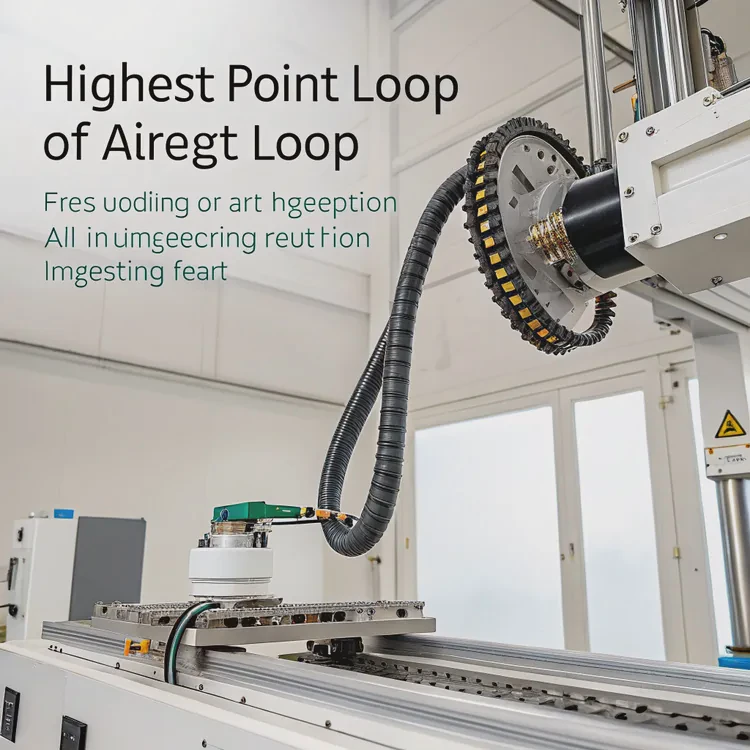
Step-by-step approach
- Bleed the system – Remove air bubbles trapped in the loop. Tilt the case gently during operation.
- Check pump orientation – Keep the pump below the highest point of the loop to avoid air ingestion.
- Use PWM control – Adjust fan and pump curves to match temperature instead of fixed speeds.
- Install rubber mounts – Decouple pump and radiator fans from the chassis to reduce vibration transfer.
- Upgrade fans – Choose larger fans with fluid-dynamic bearings. They spin slower but move more air.
Practical tuning tips
Try setting a fan curve in BIOS or software. Keep pump speeds moderate (around 60–70%) during idle. Many pumps have a sweet spot — too low and coolant flow suffers, too high and vibration spikes.
Add sound-dampening foam around the case panels if structure-borne noise persists. It helps absorb low-frequency hums.
Lastly, clean the radiators regularly. Dust forces fans to spin faster, creating more noise. A well-maintained loop stays quiet for years.
Example setup
In one workstation project, we used a 360mm radiator with three 120mm fans capped at 800 RPM. Combined with a PWM pump curve and rubber isolation mounts, the entire system ran at 23 dB(A) during load — quieter than a typical office background.
What are the trends in silent cooling?
The push for quiet performance has become an industry focus. Users want power without the noise of a jet engine. Cooling engineers are rethinking design from the inside out.
Modern trends in silent cooling include magnetic levitation fans, smart pump control, passive radiators, and hybrid thermoelectric modules.
Emerging technologies
- Maglev Fans: Use magnetic bearings to eliminate friction and bearing noise.
- AI Fan Curves: Intelligent software adjusts cooling dynamically, avoiding sudden RPM jumps.
- Passive Cooling Blocks: For low-power systems, heat pipes and vapor chambers now handle full cooling silently.
- Hybrid Liquid Systems: Combine phase-change materials with water loops to store and release heat quietly.
How manufacturers innovate
Manufacturers invest heavily in acoustic labs. They test airflow turbulence using CFD simulations and even add micro-textures on blades to reduce noise. Pumps are shifting toward brushless DC motors, cutting mechanical vibration dramatically.
Smart monitoring chips inside coolers now analyze flow, pressure, and sound, adjusting parameters in real time. The goal is “thermal comfort,” where users never hear the cooling system, even during heavy workloads.
The future of quiet performance
Looking forward, silent cooling will rely less on brute airflow and more on thermal material innovation — new aluminum composites, microchannels, and graphene-infused coolants. As designs evolve, the line between air and liquid noise levels will blur. We will soon see hybrid systems as the new standard: quiet, compact, and efficient.
Conclusion
Liquid cooling can be quieter than air, but it’s not guaranteed. Pump design, fan quality, and system tuning decide everything. With the right setup, both methods can achieve near-silent operation, giving performance without the noise.
TAGS
Latest Articles

Volume discount levels for heat sink orders?
Buyers often ask when heat sink prices start to drop with volume. Many worry they’re overpaying for small orders. This guide explains how B2B volume pricing works for thermal components. Heat sink
21 Dec,2025
Heat sink long-term supply contract options?
Many buyers want stable pricing and reliable delivery for heat sinks. But without a clear contract, risks grow over time. This article explores how to secure better long-term supply deals. Long-term
21 Dec,2025
Tooling cost for new heat sink profiles?
Many engineers struggle to understand why tooling for custom heat sinks costs so much. They worry about budgeting and production timelines. This article breaks down the cost drivers behind tooling.
21 Dec,2025
Heat sink custom sample process steps?
Sometimes, starting a custom heat sink project feels overwhelming—too many steps, too many unknowns, and too many risks. You want a sample, but not endless delays. The process for requesting and
20 Dec,2025
Standard B2B terms for heat sink payments?
When buyers and sellers in B2B heat sink markets talk about payment, many don’t fully understand what’s standard. This can lead to delayed orders, miscommunication, and even lost business
20 Dec,2025
Heat sink pricing factors for large orders?
Heat sinks are vital for many systems. When prices rise, projects stall and budgets break. This problem can hit teams hard without warning. Large order heat sink pricing depends on many factors. You
20 Dec,2025Related Articles
- How to flush liquid cooling system?
- Is liquid cooling necessary?
- Does 7800X3D need liquid cooling?
- Does Liquid Cooling Run Out?
- How Good Is Liquid Cooling?
- What is liquid cool technology?
- How to test a liquid cooling system?
- Is iBUYPOWER liquid cooling good?
- When a sample of liquid is cooled, its thermal energy?
- How to remove a liquid cooler?
- What is liquid metal cooling?
- Is the PS5 liquid cooled?
Author
Dr. Emily Chen
Chief AI Researcher
Leading expert in thermal dynamics and AI optimization with over 15 years of experience in data center efficiency research.
Categories
Latest Products






Recommend Categories
- Liquid cooling plate Manufacturer
- Industrial Heat Sink Manufacturer
- Standard Heat Sink Manufacturer
- Aluminum Heat Sink Manufacturer
- Copper Heat Sink Manufacturer
- Anodized Heatsink Manufacturer
- Stamping heat sink Manufacturer
- Die Casting Heatsink Manufacturer
- Soldering heat sink Manufacturer
- CNC Parts Manufacturer
Latest Products
- Wholesale Aluminum Radiator
- Water Cooling Plate Kit
- Water Cooling Heat Sink
- Water Cooling Heat Sink Kit
- Stainless Steel Water Distributor
- Server Water Cooling Plate Kit
- Server Liquid Cooling System
- Server Aluminum Cooling Kit
- S19 Full Cover Cooling Plate
- S19 Cooling Plate Kit
- S19 Aluminum Cooling Plate
Contact Expert
Have questions about this article? Reach out to our experts directly.